Physical Address
304 North Cardinal St.
Dorchester Center, MA 02124
Physical Address
304 North Cardinal St.
Dorchester Center, MA 02124

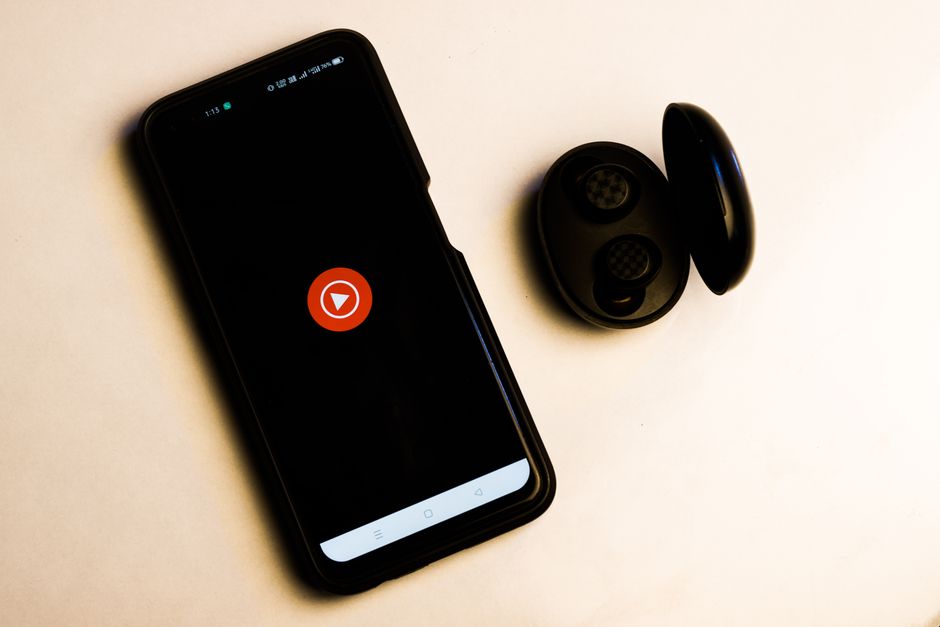
We compare the Sony WF-1000XM6 and Bose QuietComfort Ultra Gen 2 in this ultimate 2026 battle for active noise cancellation supremacy.
In the premium true wireless earbud market, the battle for active noise cancellation (ANC) supremacy has historically been a two-horse race. Sony and Bose have spent years trading blows, with each brand refining its engineering to capture the ears of audiophiles, daily commuters, and frequent flyers alike. In 2026, this rivalry has reached a fascinating turning point with the release of two highly advanced flagships: the Sony WF-1000XM6 and the Bose QuietComfort Ultra Earbuds (2nd Gen).
Sony officially launched the WF-1000XM6 in February 2026, introducing a series of major structural and internal changes to its flagship line. Driven by the new QN3e processor, these earbuds deliver next-generation adaptive noise cancelling alongside high-res audio and smart integration with Google Gemini. However, these cutting-edge features come with a price increase, with Sony raising the starting MSRP to $329.99.
Meanwhile, Bose has fortified its position with the Bose QuietComfort Ultra Earbuds (2nd Gen), retailing at $299.00. Rather than rebuilding from scratch, Bose focused on correcting the small design annoyances of its first-generation model. The Gen 2 earbuds add a native wireless charging case, a protective mesh wax guard on the ear tips, and a massive upgrade to microphone clarity and treble response. This head-to-head comparison will break down every technical spec and real-world performance metric to help you decide which pair deserves a spot in your daily carry.
Before diving into the detailed evaluations, let’s look at how these two premium models stack up on paper across their core specifications.
| Feature | Sony WF-1000XM6 | Bose QuietComfort Ultra Gen 2 |
|---|---|---|
| MSRP Launch Price | $329.99 | $299.00 |
| Release Date | February 2026 | Summer/Fall 2025 |
| Processor / Chipset | Sony QN3e | Custom Proprietary (CustomTune) |
| Bluetooth Version | Bluetooth 5.3 | Bluetooth 5.4 |
| High-Res Audio Codecs | LDAC, LC3, AAC, SBC | aptX Adaptive, AAC, SBC |
| Battery Life (Earbuds) | Up to 8 hours (ANC On) | Up to 6 hours (ANC On) |
| Total Battery (With Case) | Up to 24 hours | Up to 24 hours |
| Water Resistance Rating | IPX4 | IPX4 |
| Wireless Charging Case | Yes (Native) | Yes (Native on Gen 2) |
| Smart Voice Integration | Google Gemini | Standard Mobile Assistant |
To declare a true winner, we must examine how both brands approach physical comfort, computational silence, audio fidelity, and day-to-day usability in 2026.
Pricing is a key differentiator in 2026. The Sony WF-1000XM6 launches at a premium $329.99, which represents a $30 price bump over the previous generation. Sony justifies this increase through its newly designed compact architecture, the highly efficient QN3e processor, and enhanced multi-microphone configurations. However, crossing the $300 mark places these earbuds in a very high tier of consumer audio.
Bose, on the other hand, chose to hold its price point steady at $299.00 for the QuietComfort Ultra Gen 2. Because it is a slightly older release compared to the brand-new XM6, you can frequently find the Bose QC Ultra Gen 2 on sale at major retailers like Amazon and Best Buy for around $249.00. From a pure dollar-for-value perspective, Bose’s strategy of addressing previous design flaws without raising the retail price makes it a highly competitive choice.
Sony completely revamped the design of the WF-1000XM6, making the earbuds and the case significantly more compact than their predecessor. Sony continues to include its signature polyurethane memory foam eartips. While these foam tips provide an exceptional physical seal to block out high-frequency noise, they apply gentle pressure in the ear canal and can take a few seconds to warm up and expand. For some users, finding a secure, long-lasting fit with Sony’s foam tips requires a bit of trial and error.
Bose utilizes a modular, two-piece mechanical fit system called the Bose Fit Kit. Instead of relying solely on friction, Bose includes three sizes of soft silicone umbrella-shaped tips and three sizes of separate stability bands. The stability bands hook into the outer ridge of your ear, locking the earbuds firmly in place. This makes the QC Ultra Gen 2 incredibly comfortable for all-day wear and highly secure during active workouts or runs. Bose also added a crucial structural design upgrade in the Gen 2: a protective mesh wax guard integrated directly into the ear tips, which prevents debris from entering the driver housing.
The battle of the ANC architectures is where these two giants diverge. Bose employs CustomTune technology. Every time you place the QC Ultra Gen 2 in your ears, the earbuds play a quick chime to measure the acoustic properties of your unique ear canal, instantly optimizing the noise cancellation filters. This produces an incredibly dense, near-impenetrable vacuum effect. If your primary goal is to mute low-frequency ambient sounds—like the constant drone of jet engines, train tracks, or heavy highway traffic—the Bose QC Ultra Gen 2 remains the undisputed champion of low-frequency attenuation.
Sony’s WF-1000XM6 counters with the QN3e processor and a newly optimized 8-microphone array. Rather than creating an intense, pressurized vacuum, the XM6 delivers a natural void. It adapts dynamically to your environment, smoothly transitioning between levels of isolation without causing the ear fatigue associated with aggressive ANC. The QN3e chip excels at identifying and suppressing random, mid-to-high frequency noises—such as sudden office chatter, keystrokes, and clattering plates—making the XM6 exceptionally efficient in hybrid work and office environments.
For music lovers, the Sony WF-1000XM6 is a powerhouse. It supports high-resolution streaming via the LDAC and LC3 codecs, letting you stream up to 24-bit/96kHz audio on supported Android devices. Out of the box, the XM6 delivers a remarkably precise, neutral, and balanced soundstage with tight bass response and sparkling vocal clarity. Crucially, Sony’s Headphones Connect application features a fully custom 10-band equalizer. This tool allows audiophiles to finely tune every frequency register to match their exact sonic preferences.
The Bose QC Ultra Gen 2 represents a major acoustic leap forward compared to its predecessor, which suffered from overbearing, muddy bass. Bose tuned the Gen 2 to have much cleaner treble detail and far more forward vocal representation. It supports Snapdragon Sound and aptX Adaptive for high-res streaming on compatible devices. However, the Bose app only provides a basic 3-band equalizer, limiting deep customization. Where Bose shines is with its Immersive Audio feature. This proprietary spatial audio engine offers Still and Motion modes, accurately simulating a multi-dimensional speaker array in front of you, which is fantastic for watching movies or listening to live albums.
Battery performance is another area where Sony takes the lead. The WF-1000XM6 delivers a reliable 8 hours of continuous playback with ANC enabled, reaching up to 24 hours total when factoring in the charging case. The Bose QC Ultra Gen 2 yields a maximum of 6 hours of playback on a single charge with ANC on. If you activate Bose’s resource-heavy Immersive Audio, that battery life dips down to just over 4 hours. Fortunately, Bose corrected a major oversight from the first generation: the Gen 2 charging case now features native wireless charging without needing an aftermarket accessory sleeve.
For calls, both models offer vast improvements. Sony’s 8-mic array, coupled with bone-conduction sensors, keeps your voice clear even when walking down windy city streets. Bose also redesigned the microphone layout for the Gen 2, offering much better high-frequency voice pickup and robust background noise filtering during phone calls and virtual meetings.
When deciding between these two elite-tier active noise cancelling earbuds in 2026, your choice should depend on your daily routines, operating system, and physical fit preferences.
Choose the Sony WF-1000XM6 if:
Choose the Bose QuietComfort Ultra Gen 2 if:
Yes. Unlike the first-generation QuietComfort Ultra earbuds, which required users to purchase a separate wireless charging cover, the Gen 2 model includes native wireless charging built directly into the main charging case out of the box.
The Sony QN3e chip handles advanced active noise cancellation computations. It powers real-time, adaptive noise cancellation that continuously samples external sounds to block mid-to-high frequency distractions more naturally. Additionally, it provides the processing power required for hands-free voice assistant features and Google Gemini integration.
Both the Sony WF-1000XM6 and the Bose QuietComfort Ultra Gen 2 feature an IPX4 water resistance rating. This means they are fully protected against sweat and light splashes of water, making them perfect for workouts. However, they are not designed to be submerged in water, so you should not wear them while swimming.
Yes, both models fully support Bluetooth multipoint connectivity. This allows you to simultaneously connect to two devices—such as your smartphone and your work laptop—and easily switch audio between them depending on which device is playing sound or receiving an incoming call.
Choosing between the Sony WF-1000XM6 and the Bose QuietComfort Ultra Gen 2 is exceptionally close, as both are among the best ANC earbuds available in 2026. However, taking all engineering, acoustic, and smart features into account, the Sony WF-1000XM6 takes the overall crown.
While the Sony XM6 is slightly more expensive at $329.99, it delivers a more complete and future-proof package. Its 8-hour battery life, superior high-res LDAC codec support, and incredibly precise custom EQ options make it the clear winner for audio purists. Add in the highly functional Google Gemini integration and a natural, fatigue-free approach to active noise cancellation, and Sony has built the ultimate daily companion.
That said, if your daily commute involves noisy flights or train rides, or if you struggle with earbuds falling out during intense workouts, the Bose QuietComfort Ultra Gen 2 remains an elite alternative. Its CustomTune ANC technology remains unmatched at creating a pure vacuum of silence, and its secure stability bands offer unparalleled physical security.
Prices and features mentioned are accurate as of the date of publication. Always check the official provider website for the most current pricing and availability.