Physical Address
304 North Cardinal St.
Dorchester Center, MA 02124
Physical Address
304 North Cardinal St.
Dorchester Center, MA 02124

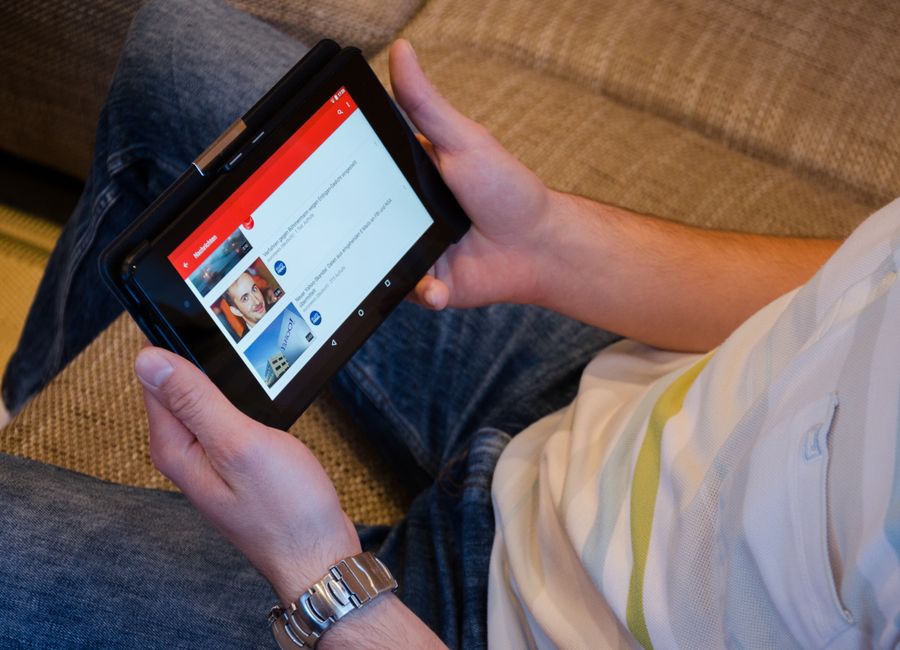
Compare T-Mobile, Verizon, and AT&T 5G home internet in 2026. Discover current plan pricing, real-world speeds, and the best bundled deals.
The home broadband landscape has shifted dramatically, and 2026 marks a historic turning point. Cable monopolies are on the defensive as 5G Fixed Wireless Access (FWA) matures into a premier home connectivity standard. Instead of waiting for a technician to dig up your yard, millions are choosing the sheer simplicity of plugging in a sleek wireless gateway near a window.
But picking the right carrier is no longer a simple decision. In 2026, the big three telecom giants—T-Mobile, Verizon, and AT&T—have aggressively restructured their lineups to win your business. T-Mobile has launched a tiered structure featuring its new Rely, Amplified, and All-In plans while shifting legacy users to newer plans. Meanwhile, Verizon has unlocked speeds up to 1 Gbps on premium tiers, and AT&T continues to scale its Internet Air footprint across the nation.
Whether you are a remote worker needing consistent uploads, a family streaming 4K video, or a casual browser looking to slash your monthly utility bills, this guide has you covered. We have analyzed the latest 2026 plan rates, hardware updates, network management policies, and promotional perks to crown the ultimate 5G home internet champion.
To help you see how the big three compare at a glance, we have compiled their core 2026 specs and pricing in the table below. Note that all listed prices include AutoPay discounts, which typically save you $5 to $10 per month.
| Feature / Metric | T-Mobile 5G Home Internet | Verizon 5G Home Internet | AT&T Internet Air |
|---|---|---|---|
| Core 2026 Plans | Rely, Amplified, All-In | 5G Home, 5G Home Plus, 5G Home Ultimate | Internet Air, Internet Air Advanced |
| Standalone Cost (with AutoPay) | $50 to $70/mo | $50 to $75/mo | $60/mo |
| Bundled Cost (with Mobile) | $35 to $55/mo | $35 to $60/mo | $47/mo |
| Typical Download Speeds | 133 – 415 Mbps | 85 – 1,000 Mbps | 40 – 250 Mbps |
| Data Allowance | Unlimited (Prioritized up to 1.2 TB) | Truly Unlimited (No deprioritization on premium plans) | Unlimited (Temporary congestion slowdowns possible) |
| Price-Lock Guarantee | 5 Years (All tiers) | 3 to 5 Years (Tier dependent) | No contracts (Rates subject to change) |
| Top Included Gateway | Premium Wi-Fi 7 Gateway | Verizon Internet Gateway | AT&T All-Fi Hub |
While standalone pricing remains highly competitive across all three networks, the true savings unlock when you bundle your home broadband with your existing mobile service. Additionally, the inclusion of cutting-edge hardware like Wi-Fi 7 represents a massive leap forward for wireless reliability this year.
Each carrier leverages its unique network infrastructure to deliver wireless broadband. Let us examine exactly how T-Mobile, Verizon, and AT&T structure their 5G home internet products in 2026, including plans, pricing, real-world speeds, and network management.
T-Mobile’s fixed wireless footprint remains massive, powered by its robust mid-band Ultra Capacity (UC) network. In 2026, the Un-carrier has completely segmented its home internet into three distinct tiers: Rely, Amplified, and All-In. This represents a major shift from their previous single-plan model, offering varying hardware and software perks based on your budget.
The entry-level Rely plan starts at $50 per month standalone, dropping to $35 with an eligible T-Mobile voice line and AutoPay. It provides solid, fast speeds using a standard high-performance gateway. The middle-tier Amplified plan costs $60 standalone ($45 bundled) and upgrades you to a premium Wi-Fi 7 gateway and up to two mesh extenders. Finally, the flagship All-In plan sits at $70 standalone ($55 bundled) and includes advanced cybersecurity, 24/7 personal tech support, free mesh extenders, a gateway upgrade after year three, and high-value streaming perks like Hulu (with Ads) and Paramount+ Essential.
Performance on T-Mobile is highly impressive, with typical download speeds ranging between 133 Mbps and 415 Mbps. However, T-Mobile does implement network management policies that power users should keep in mind. During times of severe local cell tower congestion, home internet traffic is prioritized behind mobile phone data, and exceeding 1.2 TB of data in a single billing cycle may trigger further speed reductions.
Verizon has doubled down on high-performance fixed wireless, expanding its C-band and millimeter-wave (mmWave) 5G Ultra Wideband coverage to over 900 cities. In 2026, Verizon offers three highly customized plans: 5G Home, 5G Home Plus, and 5G Home Ultimate. These plans focus on delivering consistent, uncapped speeds that rival traditional cable and fiber connections.
The entry-level 5G Home plan is priced at $50 standalone, or $35 when paired with a qualifying Verizon mobile plan and AutoPay. It offers download speeds up to 300 Mbps (typical speeds of 85-300 Mbps) and a 3-year price lock. The popular 5G Home Plus plan costs $60 standalone ($45 bundled), pushing speeds up to 500 Mbps (typical 200-500 Mbps) and extending the price lock to 4 years. For extreme power users, the premium 5G Home Ultimate plan costs $75 standalone ($60 bundled), delivering blazing-fast gigabit speeds up to 1,000 Mbps (typical 300-1,000 Mbps), a 5-year price lock, and a Whole-Home Wi-Fi extender.
What truly sets Verizon apart in 2026 is its network management policy. Unlike its competitors, Verizon’s Home Plus and Ultimate tiers offer truly unlimited premium data with zero deprioritization or throttling, regardless of how much data you consume. When you factor in promotional deals like up to $400 in Samsung tech credits and a 3-month trial of the FOX One perk, Verizon stands out as an incredibly compelling package.
AT&T was the last of the major carriers to enter the 5G home wireless arena, but its AT&T Internet Air platform has established itself as an exceptionally reliable option. Rather than complicating things with multiple tiers, AT&T focuses on straightforward, transparent pricing and reliable connectivity, particularly in areas where fiber is unavailable.
The standard AT&T Internet Air plan costs a flat $60 per month standalone. If you are an AT&T wireless customer, you can leverage their expanded Build-A-Plan interface to bundle the service for just $47 per month. For busier households, AT&T also offers Internet Air Advanced for $70 per month standalone (bundled discounts apply), which bumps the maximum speed threshold up to 250 Mbps. Both plans come with the state-of-the-art AT&T All-Fi Hub gateway and ActiveArmor cybersecurity at no extra cost.
Typical download speeds for standard Internet Air sit between 40 Mbps and 200 Mbps, while upload speeds average 5 to 30 Mbps. While these speeds are slower than Verizon’s premium plans, AT&T’s network optimization makes it incredibly consistent for daily tasks. There are no annual contracts or hidden equipment fees, though AT&T may temporarily slow down speeds for a minimum of 30 minutes in rare cases of extreme local network congestion.
Selecting the ideal 5G home internet provider depends on your budget, household data habits, and existing mobile carriers. Keep these four crucial factors in mind when making your final decision.
1. Verify Your Precise Address Coverage: FWA performance is highly local and depends heavily on your distance from the nearest cell tower. A carrier might deliver exceptional gigabit speeds on one side of a block and struggle to maintain a basic connection on the other. Always enter your exact address into each provider’s coverage tool before ordering. If you are in a Verizon mmWave zone, you can achieve fiber-like speeds, while T-Mobile’s mid-band coverage is often superior in suburban and rural markets.
2. Maximize Your Bundling Discounts: The most affordable way to get 5G home internet is to align it with your current cell phone provider. By bundling, both T-Mobile and Verizon drop their base plan rates to an incredibly low $35 per month. AT&T also offers a strong incentive, lowering their standard rate to $47 per month. If you are not planning to bundle, standalone pricing is much closer, meaning your decision should focus on performance and perks.
3. Analyze Your Household Data Demands: Consider how many heavy internet users live under your roof. If your home is packed with remote workers, serious online gamers, and constant 4K video streamers, Verizon’s non-deprioritized Home Plus or Ultimate plans are your best bet. T-Mobile’s 1.2 TB threshold is generous, but those who exceed it may experience frustration during peak evening congestion hours.
4. Evaluate Hardware and Value Perks: Don’t forget to look at the equipment and entertainment extras included in premium plans. In 2026, T-Mobile’s All-In plan stands out by bundling Hulu (with Ads) and Paramount+ Essential, saving you over $20 per month in separate streaming bills. If you have a larger home, opting for plans like Verizon Plus/Ultimate or T-Mobile Amplified/All-In is highly beneficial because they include free, high-performance mesh extenders to blanket your home in Wi-Fi.
Yes, 5G home internet has become a highly viable option for casual and semi-competitive multiplayer gaming. While it inherently carries slightly higher latency (ping) than physical fiber-optic lines, Verizon’s Ultra Wideband network delivers impressive pings ranging from 20 to 40 milliseconds. For competitive, twitch-reflex shooters, fiber remains the gold standard, but the vast majority of players will find 5G wireless gaming to be incredibly smooth.
No, professional installation is not required for any of the big three FWA providers. T-Mobile, Verizon, and AT&T all design their systems for easy, 15-minute self-installation. You simply plug the gateway into a power outlet near a window, download the companion smartphone app, and follow the simple step-by-step instructions to position the hub for the strongest possible cellular signal.
No, standard 5G home internet gateways are geo-locked to your registered residential address. Attempting to use the device away from your home can violate the provider’s terms of service and result in automatic suspension. If you need portable internet for an RV or travel, you should look into dedicated cellular mobile hotspots or T-Mobile’s specialized “Away” wireless plans.
The primary difference lies in the transmission medium. Fiber-optic internet uses underground physical cables to transmit data via light, providing symmetrical speeds (identical upload and download speeds) and incredibly low latency. 5G home internet transmits data wirelessly through the air from cell towers to your gateway, resulting in asymmetrical speeds (slower upload speeds) and performance that can fluctuate based on weather and tower traffic.
After a thorough analysis of pricing, plan structures, and network stability, the crown for the best 5G home internet provider in 2026 goes to Verizon 5G Home Internet. Verizon’s three-tiered myHome system allows users to customize their speed requirements up to an incredible 1,000 Mbps. More importantly, Verizon’s policy of offering truly unlimited data with zero deprioritization on its premium plans makes it the most robust, cable-like wireless replacement available.
However, T-Mobile 5G Home Internet remains an exceptionally close runner-up and wins the award for the best overall value. If you want a service that includes cutting-edge Wi-Fi 7 hardware and rolls in popular streaming subscriptions like Hulu and Paramount+, T-Mobile’s flagship “All-In” plan represents an astonishingly good deal that can save your household hundreds of dollars a year.
Ultimately, your final decision will be dictated by local tower coverage. If Verizon’s high-speed Ultra Wideband network is available at your address, it is the superior technical choice. If T-Mobile’s mid-band UC network is stronger in your neighborhood, their feature-packed plans are highly rewarding. For those in underserved regions, AT&T Internet Air remains a reliable, hassle-free option to get your home connected in minutes.
Prices and features mentioned are accurate as of the date of publication. Always check the official provider website for the most current pricing and availability.