Physical Address
304 North Cardinal St.
Dorchester Center, MA 02124
Physical Address
304 North Cardinal St.
Dorchester Center, MA 02124

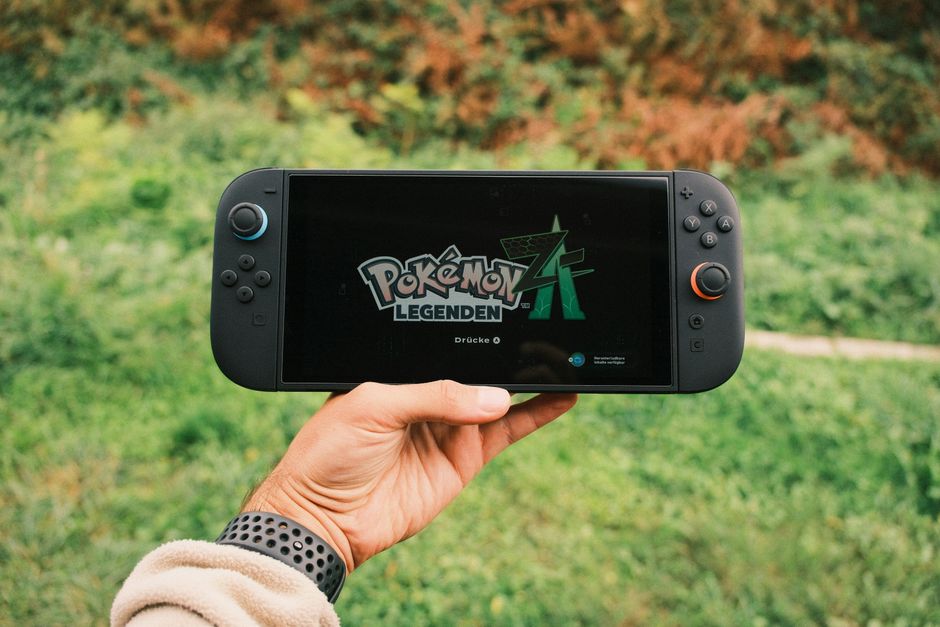
Should you upgrade to the Nintendo Switch 2 in 2026? Compare specs, displays, performance, and the looming price hike against the iconic Switch OLED.
We are now more than a year into the lifecycle of the ground-breaking Nintendo Switch 2, which launched to massive fanfare on June 5, 2025. It is safe to say that the landscape of portable gaming has been completely redefined. Boasting a highly powerful custom Nvidia Tegra processor, stunning 4K docked output, and a butter-smooth 120Hz refresh rate, the Switch 2 is a dream come true for technology enthusiasts. However, its predecessor, the beloved Nintendo Switch OLED (released in late 2021), refuses to quietly fade away. In 2026, the Switch OLED remains a highly sought-after gaming console, especially for budget-conscious gamers who are content with its massive, highly established library.
The comparison between these two systems has taken on a new level of urgency in mid-2026. Nintendo recently announced an impending global price hike for the Switch 2, scheduled to take effect on September 1, 2026. This increase will raise the retail price in the United States from $449.99 to $499.99. For gamers who have been sitting on the fence, this creates a critical, time-sensitive window: do you pull the trigger and upgrade to the next-generation hardware before the price rises, or do you save your money and opt for the beautiful, heavily discounted Switch OLED?
In this comprehensive 2026 upgrade guide, we will break down the hardware performance, display capabilities, storage constraints, and unique controller features of both systems. Whether you are looking to purchase your first Nintendo console or trying to decide if it is finally time to trade in your old model, we have all the current data you need to make an informed financial decision.
Let’s examine the essential specifications of both consoles side-by-side to understand how they stack up against each other in 2026.
| Specification | Nintendo Switch 2 | Nintendo Switch OLED |
|---|---|---|
| Release Date | June 5, 2025 | October 8, 2021 |
| Current Price (Mid-2026) | $449.99 (Rising to $499.99 on Sept 1, 2026) | ~$339.00 (New) / ~$160.00–$200.00 (Used) |
| Handheld Display | 7.9-inch LCD, 1080p, up to 120Hz, HDR10, VRR | 7.0-inch OLED, 720p, 60Hz |
| TV Docked Resolution | Up to 4K @ 60Hz (with DLSS) | Up to 1080p @ 60Hz |
| Processor (SoC) | Custom Nvidia Tegra T239 (“Drake”) | Custom Nvidia Tegra X1 |
| System Memory (RAM) | 12 GB LPDDR5X | 4 GB LPDDR4 |
| Internal Storage | 256 GB UFS 3.1 | 64 GB eMMC |
| Expandable Storage | microSD Express (Standard microSD incompatible) | Standard microSD (up to 2 TB) |
| Joy-Con Type | Joy-Con 2 (Magnetic, built-in mic, “C” button) | Classic Joy-Con (Mechanical rails, HD rumble) |
The architectural differences between these two consoles represent a massive leap in processing technology. The Nintendo Switch OLED is built around the aging custom Nvidia Tegra X1 processor and only 4 GB of older LPDDR4 memory. While this hardware was highly impressive back in 2017, by 2026, it is struggling to keep pace with modern game design. Developers frequently have to scale resolutions down to blurry sub-720p ranges and disable visual effects just to keep frame rates close to 30 frames per second.
In comparison, the Nintendo Switch 2 is a modern beast. It utilizes a custom Nvidia Tegra T239 processor (codenamed “Drake”) featuring an octa-core ARM Cortex-A78C CPU and a powerful Ampere-based GPU with 1,536 CUDA cores. Backed by a substantial 12 GB of high-speed LPDDR5X memory, the Switch 2 can easily handle complex graphics rendering, ray tracing, and DLSS upscaling. Docked to a TV, the console outputs up to a native 4K resolution at 60 Hz via HDMI 2.1, allowing titles like Metroid Prime 4: Beyond to run at breathtaking levels of fidelity. When played in handheld mode, the system drops the resolution to 1080p but scales performance to deliver up to 120 frames per second. If performance, visual crispness, and zero stutter are important to you, the Switch 2 is in a completely different league.
The display comparison is where things get highly subjective. The Switch OLED earns its name from its gorgeous, organic light-emitting diode (OLED) panel. Measuring 7.0 inches, the screen operates at a native 720p resolution in handheld mode. Because OLED pixels emit their own light, this display offers true blacks, infinite contrast, and highly saturated colors. For cozy, atmospheric games like The Legend of Zelda: Tears of the Kingdom, playing in handheld mode on the OLED screen is an absolute visual treat.
The Switch 2 steps up the display size to a generous 7.9 inches, but it utilizes a liquid-crystal display (LCD) panel rather than an OLED. While some purists were initially disappointed by the lack of OLED technology, Nintendo compensated by stuffing the LCD panel with high-end features. The Switch 2 screen boasts a crisp 1080p Full HD resolution, HDR10 support, and a highly responsive 120Hz refresh rate. It also supports Variable Refresh Rate (VRR), which completely eliminates screen tearing and stutter during intense action sequences. In mid-2026, Korean supply chain reports suggest that Nintendo is considering a future Switch 2 OLED model featuring Samsung panels, but that premium console is estimated to launch no earlier than late 2027 or 2028. For now, you are choosing between the rich, colorful contrast of the older Switch OLED or the razor-sharp, ultra-fluid motion of the Switch 2 LCD.
Storage is another area where Nintendo has implemented major changes. The original Switch OLED comes with a tiny 64 GB of eMMC storage, which fills up almost immediately if you download digital titles. However, expanding this storage is incredibly cheap. The OLED model is compatible with standard, universally accessible microSD cards, meaning you can easily buy a 512 GB card for under $40 to store your massive library.
The Switch 2 drastically improves the out-of-the-box experience by equipping the system with 256 GB of modern, high-speed UFS 3.1 storage. This faster storage format is vital for reducing in-game loading screens and handling the high-bandwidth texture files of modern games. However, there is a major financial catch. Due to these speed requirements, standard microSD cards are physically and electronically incompatible with the Switch 2. Instead, you must purchase microSD Express cards. While these cards offer incredible transfer speeds that rival desktop SSDs, they are significantly more expensive in 2026, meaning your expansion costs will be considerably higher if you run out of that initial 256 GB.
The Joy-Con 2 controllers on the Switch 2 represent an excellent ergonomic and mechanical upgrade over the original design. Instead of using mechanical sliding rails that can wear down over time, the Joy-Con 2 controllers attach magnetically to the sides of the system. The analog sticks are larger and built with drift-resistant technology, and the SL/SR buttons are larger and more comfortable when using a single controller for local multiplayer. The controllers can also function as a virtual mouse on compatible strategy and puzzle games.
The most important addition is the dedicated “C” button. Built alongside a high-quality microphone at the top of the console, the “C” button activates Nintendo’s new “GameChat” feature. With a single press, you can instantly start voice chats, connect with friends online, and screenshare your current game with other players. The classic Joy-Cons on the Switch OLED lack these integrated social features entirely, requiring players to rely on clunky external mobile apps for voice communication.
Perhaps the most critical factor in your decision today is the current financial environment of 2026. Since its launch, the Switch 2 has retailed for $449.99 in the United States. However, Nintendo recently announced a global price adjustment effective September 1, 2026. Due to a persistent global shortage of memory and semiconductor components, as well as rising international shipping and tariff costs, the price of the Switch 2 will increase by $50 to $499.99 USD in the United States. Similar hikes will take place globally, with Canada’s price rising to $679.99 CAD and Europe’s increasing to €499.99 (Japan’s price already increased to ¥59,980 on May 25, 2026).
This upcoming increase means that the summer of 2026 is the absolute final window to purchase a Switch 2 at its original, lower price. Meanwhile, the Switch OLED has plummeted in price. While its brand-new retail price is around $339.00 on major storefronts like Amazon, the secondary market is incredibly active. You can easily find high-quality, refurbished, or used Switch OLED models on platforms like eBay or Swappa for anywhere between $160.00 and $200.00. This makes the older system an incredibly low-cost option for budget gamers.
With both consoles actively supported in 2026, your choice ultimately comes down to your budget, your preferred playing style, and how much you care about playing the latest, exclusive titles. Here is how to decide which console deserves a spot on your entertainment center.
Choose the Nintendo Switch 2 if:
Choose the Nintendo Switch OLED if:
Yes. The Nintendo Switch 2 features full backward compatibility with both physical cartridges and digital game purchases from the original Nintendo Switch. While a tiny minority of games might require patches or run with slight visual adjustments, your existing catalog of Switch games will carry over seamlessly to the new system, often enjoying faster load times and improved performance.
To keep the initial retail price under $450 at launch, Nintendo decided to use a high-quality 7.9-inch 1080p LCD panel rather than an OLED panel. To make up for this, the screen supports modern features like HDR10, a butter-smooth 120Hz refresh rate, and Variable Refresh Rate (VRR) to minimize screen tearing. Rumors suggest an OLED version of the Switch 2 may arrive around late 2027 or 2028, but it is not currently available.
No. Due to the high speed and bandwidth requirements of the custom Tegra T239 chip and modern games, the Switch 2 requires microSD Express cards. Standard microSD cards are physically and electronically incompatible. If you need to expand your storage beyond the built-in 256 GB, you will need to buy a microSD Express card.
Effective September 1, 2026, the retail price of the Switch 2 in the United States will increase from $449.99 to $499.99. Nintendo announced this global price adjustment in response to persistent memory chip shortages, rising component manufacturing costs, and unstable global market conditions.
In 2026, the Nintendo Switch 2 is the definitive winner for most gamers. Its massive jump in graphical performance, 120Hz refresh rate, 4K docked output, backward compatibility, and magnetic Joy-Con 2 controllers make it a true generational upgrade. If you have the funds, you should absolutely pull the trigger before the September 1, 2026 price hike raises the cost to $499.99.
However, the Nintendo Switch OLED remains an legendary budget alternative. If you are a handheld purist who plays mostly cozy or indie games and values ink-black screen contrast over high frame rates, buying a discounted or used Switch OLED in 2026 is an absolute steal that will provide endless hours of entertainment without draining your wallet.
Prices and features mentioned are accurate as of the date of publication. Always check the official provider website for the most current pricing and availability.




