Physical Address
304 North Cardinal St.
Dorchester Center, MA 02124
Physical Address
304 North Cardinal St.
Dorchester Center, MA 02124

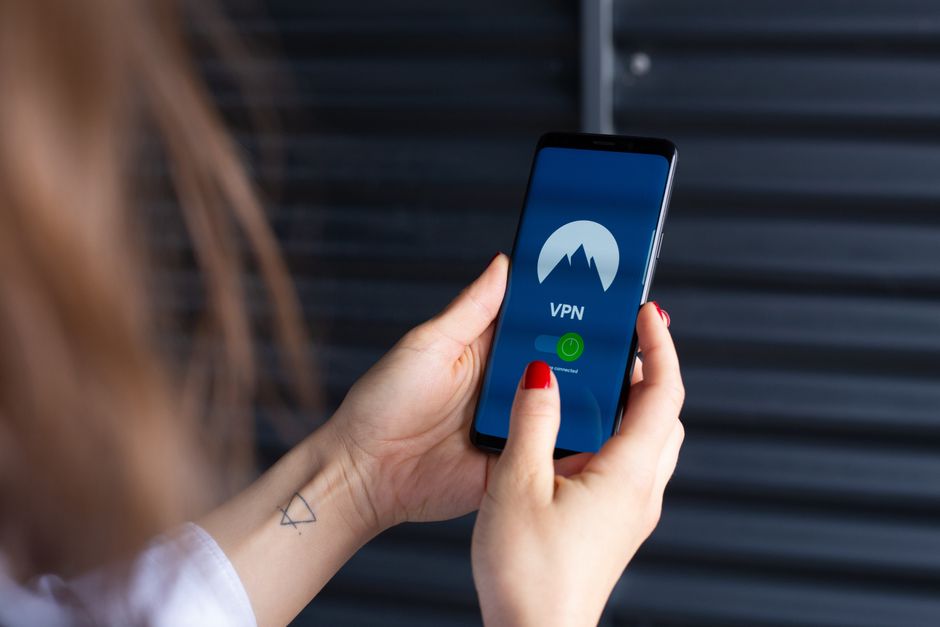
Compare the best decentralized VPNs (dVPNs) in 2026. Discover features, pricing, and pros/cons for Mysterium VPN, Sentinel, and NymVPN.
For years, commercial Virtual Private Networks (VPNs) marketed themselves as the ultimate shields for online privacy. However, as the cybersecurity landscape has matured in 2026, users have increasingly recognized a fundamental flaw in the traditional VPN model: centralization. When you use a centralized VPN, you are not eliminating the threat of surveillance; you are simply shifting your trust from your Internet Service Provider (ISP) to a single VPN corporation. If that corporation is subpoenaed, acquired, or compromised, your entire browsing history can be exposed.
Decentralized VPNs (dVPNs) solve this trust issue by utilizing Decentralized Physical Infrastructure Networks (DePIN). Instead of routing your traffic through corporate-owned data centers, dVPNs distribute your data across a global network of independent, user-operated nodes. No single entity controls the entire network, and no single party can log your traffic.
In 2026, the dVPN market has reached a state of high usability, moving past the clunky, crypto-only interfaces of the past to offer seamless, consumer-friendly applications. Three heavyweights dominate the conversation this year: Mysterium VPN, Sentinel dVPN, and NymVPN. Each represents a distinct philosophy on decentralized architecture, ranging from residential IP sharing to multi-hop metadata mixing. In this comprehensive review, we will break down their specifications, pricing, performance, and features to help you choose the best decentralized VPN for your threat model.
To give you an immediate overview of how these three decentralized giants stack up, we have compiled their key specifications, pricing models, and primary use cases as of mid-2026:
| Feature/Spec | Mysterium VPN | Sentinel dVPN (Sentinel P2P) | NymVPN |
|---|---|---|---|
| Primary Strength | Bypassing geo-blocks & streaming via residential IPs | Highly customizable, open-source white-label ecosystem | Extreme metadata masking & post-quantum protection |
| Network Size | 7,500+ residential active nodes in 135+ countries | 1,500+ bandwidth providers in 70+ countries | 200+ mixnet nodes in 85 countries |
| Key Protocols | OpenVPN, WireGuard | WireGuard, V2Ray | AmneziaWG (2-hop), Sphinx Mixnet (5-hop) |
| Starting Price | From $2.49 / month (2-year subscription) | Pay-per-GB (fractions of a cent) or flat $3.99 / month | From $2.39 / month (2-year subscription) |
| Simultaneous Devices | Up to 15 devices | Varies by client app (unlimited to 5+) | Up to 10 devices |
| Anonymous Onboarding | Yes (No email required, pays with crypto) | Yes (On-chain session authorization) | Yes (24-word key login, zk-nym credentials) |
Engineering by Switzerland-based Nym Technologies, NymVPN is widely regarded as the most advanced dVPN in 2026 for combatting sophisticated traffic-analysis and state-level surveillance. Unlike traditional VPNs, which only hide your IP address, NymVPN protects your metadata—the information about who you are communicating with, when, and from where. It achieves this through a unique dual-mode architecture that lets users toggle between maximum privacy and everyday high speeds.
Under its “Anonymous Mode,” NymVPN routes your traffic through a five-hop decentralized “mixnet” utilizing the Sphinx packet format. This process breaks your data into identical packets, delays them at micro-intervals, and inserts continuous “cover traffic” (decoy packets). This makes it mathematically impossible for external observers to correlate incoming and outgoing traffic patterns. For standard daily usage where speed is a priority, NymVPN features a “Fast Mode” powered by AmneziaWG (a stealth-focused fork of WireGuard) which routes through a faster two-hop path.
In mid-2026, NymVPN rolled out its milestone 2026.7 update, introducing split tunneling beta for Windows and post-quantum key exchange across all platforms via the newly developed Lewes Protocol. This protocol protects your current encrypted traffic from the threat of future decryption by quantum computers. Additionally, NymVPN has debuted a “Pay as You Go” model that eliminates the need for traditional accounts or email sign-ups. By utilizing zero-knowledge proofs (zk-nyms), users can pay for access anonymously using Bitcoin, Monero, or NYM tokens and receive cryptographic access credentials that cannot be linked back to their payment method.
Pricing: NymVPN’s pricing starts at a competitive $2.39 per month on its 2-year subscription plan, rising to $7.99 for a rolling 1-month plan. If you pay using native $NYM tokens, you receive a direct 50% discount on these rates. It supports up to 10 simultaneous connections and has undergone thorough security audits by Cryspen and Cure53.
If NymVPN is built for maximum anonymity, Mysterium VPN is designed to conquer geo-censorship and content blocks. The core strength of Mysterium is its massive network of over 7,500 active residential nodes spread across 135 countries. Traditional commercial VPNs rely on servers hosted in massive data centers, which are easily detected and blacklisted by popular streaming services like Netflix, Hulu, and BBC iPlayer, as well as strict state firewalls. Mysterium routes your traffic through residential IP addresses owned by everyday internet users, making your VPN traffic look indistinguishable from standard home internet traffic.
Mysterium operates on a peer-to-peer sharing economy where individuals are rewarded for sharing their unused bandwidth. From a technical standpoint, Mysterium VPN has evolved rapidly in 2026, integrating robust security features including an automatic Kill Switch, DNS leak protection, Perfect Forward Secrecy, and an integrated malware and ad-blocking module. The open-source client has been streamlined and now supports up to 15 simultaneous devices under a single subscription, with native applications for Windows, macOS, Linux, Android, iOS, and multiple browser extensions.
While the speeds on Mysterium can be unpredictable because they depend on the connection quality of individual residential node hosts, the sheer volume of available nodes means that finding a high-speed, low-latency connection is rarely a challenge. Furthermore, because the network is entirely decentralized, there is no centralized database of user activity, ensuring a high baseline of privacy.
Pricing: Mysterium VPN has simplified its pricing model for 2026, offering subscriptions starting at $2.49 per month on its 2-year plan (a 78% discount) and a flexible $4.99 rolling monthly option. It also features a limited free trial tier for new users. Payment methods include traditional credit cards as well as anonymous cryptocurrency options.
Sentinel (recently rebranded on some exchanges as Sentinel P2P) is fundamentally different from both Mysterium and NymVPN. It is not just a single consumer-facing app, but an open-source Layer 1 blockchain built on the Cosmos SDK that serves as a peer-to-peer bandwidth marketplace. Sentinel acts as the infrastructural “engine room” that allows independent developers and organizations to build their own custom dVPN applications.
Because of this white-label design, the Sentinel ecosystem supports a variety of popular apps, including Sentinel Shield dVPN, DVPN by Norse Labs, Meile dVPN, and Independent dVPN. Together, these applications serve over 1.4 million users worldwide. Sentinel utilizes both standard WireGuard and the obfuscated V2Ray protocol. V2Ray is highly valued by users in heavily censored regions, such as China and Iran, because it mimics standard HTTPS traffic, making it incredibly resilient against deep packet inspection (DPI).
In 2026, Sentinel has successfully overcome one of its oldest barriers: user onboarding complexity. In the past, users had to purchase and manage volatile cryptocurrency tokens like $DVPN to pay for bandwidth. Today, applications like DVPN by Norse Labs feature native integration with Google Play and Apple App Store in-app purchases, masking the underlying blockchain transactions behind fiat-friendly “bandwidth credits” or standard subscription models. However, advanced users can still pay directly with $DVPN or stake their tokens to earn passive income for securing the validator network.
Pricing: Pricing on Sentinel is incredibly flexible and depends entirely on the client application you choose. Some community-driven white-labels charge a pure pay-as-you-go rate measured in fractions of a cent per gigabyte, meaning a single dollar can sometimes buy up to 50 GB of high-speed data. Meanwhile, premium clients like Norse Labs’ DVPN Plus offer flat-rate packages at $0.99 per week or $3.99 per month with a 3-day free trial.
Deciding which decentralized VPN is right for you depends entirely on your primary digital goals and threat model. Consider the following guidelines when making your choice:
Yes, dVPNs are highly secure, but they operate under a different safety model than traditional VPNs. Because your traffic is routed through nodes run by independent individuals, dVPNs utilize strict end-to-end encryption (such as WireGuard or Sphinx) to ensure that node operators can never see the contents of your data. However, because exit node hosts provide your final point of connection to the open web, you should always ensure you are visiting HTTPS-secured websites to prevent local packet inspection.
Traditional VPNs own or rent high-performance servers in enterprise data centers that boast massive bandwidth pipelines. dVPNs, on the other hand, rely on nodes hosted on residential and consumer connections. If you connect to an exit node operated by someone with a slow home fiber line, your speed will be limited by their upload bandwidth. In NymVPN’s case, the 5-hop mixnet mode deliberately introduces micro-delays to obfuscate timing metadata, trading speed for unprecedented levels of anonymity.
Yes! One of the biggest changes in 2026 is the user accessibility of dVPNs. While all three providers natively support anonymous cryptocurrency payments (like Bitcoin, Monero, or their own utility tokens), they also support standard payment options like credit cards, Apple Pay, and Google Pay through their consumer-facing client applications.
No. Traditional VPNs claim to have “no-logs” policies, but users must trust their legal promises. With a dVPN, “no-logs” is a technical guarantee. Because the server software is open-source and the network is distributed across thousands of independent nodes globally, there is no central database or physical server where logs could physically be recorded or seized.
Each of these three platforms excels in a specific category, making a single, definitive “winner” dependent on your personal priorities. However, from a pure privacy and innovation standpoint, NymVPN is the standout champion of 2026. Nym’s implementation of a decentralized 5-hop mixnet alongside post-quantum key exchange addresses vulnerabilities that standard VPNs cannot touch, securing your metadata against the future of cyber threats.
For users who are primarily concerned with bypassing commercial web blocks, streaming, and maintaining high daily speeds, Mysterium VPN remains the most practical everyday choice due to its massive, highly reliable residential IP network. If you are looking for highly specialized protocols, robust resistance to censorship, or low-cost micro-payments, the Cosmos-backed Sentinel ecosystem provides the absolute best value and flexibility. Ultimately, the transition to dVPNs represents a critical step forward in taking back control of your digital footprint, and all three of these options represent the absolute state of the art in 2026.
Prices and features mentioned are accurate as of the date of publication. Always check the official provider website for the most current pricing and availability.