Physical Address
304 North Cardinal St.
Dorchester Center, MA 02124
Physical Address
304 North Cardinal St.
Dorchester Center, MA 02124

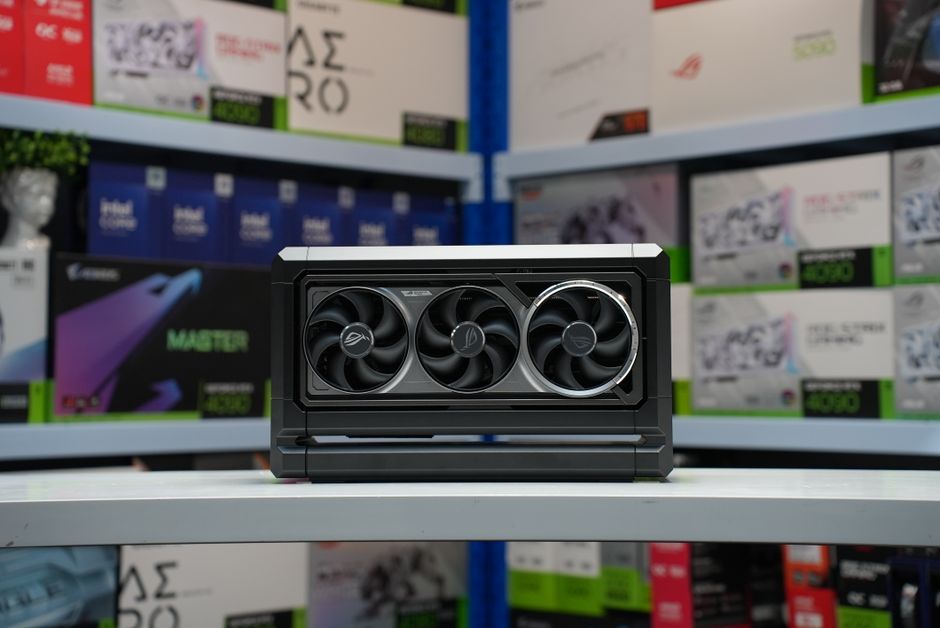
Our in-depth 2026 comparison between the ASUS ROG Xbox Ally X ($999) and Steam Deck OLED ($789-$949). Which handheld gaming PC is worth your money?
The landscape of handheld gaming has shifted dramatically over the past several years. What once started as a niche experimental category has solidified into a primary platform for millions of gamers. In 2026, portable gaming PCs are no longer just for enthusiasts; they are mainstream devices capable of replacing traditional home consoles and mid-range gaming laptops. If you are looking to purchase a premium gaming handheld today, two primary systems dominate the market: the ASUS ROG Xbox Ally X and the Valve Steam Deck OLED.
This comparison is more critical than ever due to massive economic shifts. A severe global shortage of memory and storage components, colloquially termed ‘RAMageddon’ by tech analysts, forced Valve to implement a substantial price increase in May 2026. With the Steam Deck OLED now costing up to $949, and the newly released ASUS ROG Xbox Ally X maintaining its $999.99 MSRP, the traditional value rules have been rewritten. No longer is the Steam Deck the default budget choice; both devices now occupy the same high-end premium tier.
In this comprehensive comparison, we will analyze these two hardware powerhouses across raw performance, ergonomics, battery endurance, software stability, and overall value. Whether you prefer the console-like polish of SteamOS or the raw graphical horsepower of Windows 11, we will help you make the right investment. Let’s dive into the details to see which handheld deserves a spot in your gaming setup in 2026.
To help you see the hardware differences at a glance, here is a detailed breakdown of the specifications and current 2026 market prices for both handheld systems:
| Feature / Spec | ASUS ROG Xbox Ally X (2025/2026) | Valve Steam Deck OLED (2026) |
|---|---|---|
| Release Date | October 16, 2025 | November 16, 2023 |
| Current Price (2026) | $999.99 USD ERP | $789 USD (512GB) / $949 USD (1TB) |
| Processor (APU) | AMD Ryzen™ AI Z2 Extreme (8 Cores, 16 Threads, up to 5.0GHz) | Custom AMD ‘Sephiroth’ APU (4 Cores, 8 Threads, up to 3.5GHz) |
| Memory (RAM) | 24GB LPDDR5X (on board) | 16GB LPDDR5 |
| Storage Options | 1TB PCIe® 4.0 NVMe™ M.2 SSD (Standard 2280 slot) | 512GB or 1TB NVMe SSD (M.2 2230 slot) |
| Display Details | 7-inch 1080p IPS, 120Hz, 500 nits, Variable Refresh Rate (VRR) | 7.4-inch 800p HDR OLED, 90Hz, 1000 nits peak |
| Battery Capacity | 80 Wh | 50 Wh |
| Operating System | Windows 11 Home with customized Xbox Mode & Armoury Crate SE | SteamOS (Linux-based) |
| Weight | 715g (1.57 lbs) | 640g (1.41 lbs) |
The hardware landscape has shifted, leading to pronounced advantages for both sides. To give you a clear look at their practical strengths, let’s explore their direct pros and cons.
ASUS ROG Xbox Ally X Pros:
ASUS ROG Xbox Ally X Cons:
Valve Steam Deck OLED Pros:
Valve Steam Deck OLED Cons:
The ASUS ROG Xbox Ally X represents a massive leap forward for Windows-based handhelds. Released as a collaborative project between ASUS and Microsoft, this device was specifically built to merge high-end PC hardware with a console-like Xbox environment. Under the hood, the Ally X is powered by the AMD Ryzen™ AI Z2 Extreme chip, featuring 8 processor cores, 16 threads, and a dedicated NPU delivering up to 50 TOPS of AI processing power. Backed by 24GB of LPDDR5X memory, it handles heavy multitasking and system-intensive games with absolute ease.
Real-world benchmarks highlight the performance gap between these two systems. At its native 1080p resolution, the ROG Xbox Ally X easily cruises through modern AAA titles. Resource-heavy games like Doom: The Dark Ages and Cyberpunk 2077 maintain exceptionally smooth framerates, often running at 60 FPS with upscaling enabled. Furthermore, its 7-inch display includes a 120Hz refresh rate and Variable Refresh Rate (VRR) with AMD FreeSync Premium. This means that even if a game’s framerate fluctuates, you will not experience any screen tearing or stuttering.
ASUS also fixed the biggest flaw of previous generations: battery life. By cramming a massive 80 Wh battery into the chassis, the Ally X doubles the capacity of its predecessor. Gamers can now expect between 2 to 4 hours of heavy AAA gaming in its demanding 25W Turbo Mode, and up to 8 hours on lighter indie titles. The layout is also highly practical, featuring dual USB-C ports, including a full USB4 port for external graphics cards or fast docking setups. In addition, upgrading storage is incredibly simple, as the device uses a standard, full-sized 2280 M.2 SSD slot.
The Valve Steam Deck OLED is widely regarded as the most user-friendly handheld gaming PC ever built, though its value proposition in 2026 has been heavily impacted. Once praised as an unbeatable budget device, Valve had to significantly adjust its pricing structure on May 27, 2026. Due to ‘RAMageddon’—the global semiconductor shortage where AI data centers bought up the world’s RAM and storage supply—the Steam Deck OLED now costs $789 for the 512GB model and a steep $949 for the 1TB configuration. It is no longer a budget alternative, but rather a direct competitor to high-end devices.
The core strength of the Steam Deck OLED lies in its custom 6nm AMD ‘Sephiroth’ APU and its beautiful display. While its 4-core, 8-thread CPU architecture is showing its age against newer chips, it remains exceptionally efficient. The highlight is the gorgeous 7.4-inch HDR OLED display. Running at 90Hz and hitting a peak brightness of 1,000 nits under HDR, the contrast, color accuracy, and true blacks are absolutely unmatched by any IPS panel. If you prioritize visual vibrance and battery efficiency over raw processing speeds, the Steam Deck OLED remains the gold standard.
From a software standpoint, SteamOS is an absolute joy to use. It offers a dedicated console UI, seamless cloud saves, and a flawless sleep/wake function that allows you to instantly suspend your game. The inclusion of dual trackpads also sets it apart, making mouse-heavy PC games perfectly playable on a controller layout. However, because SteamOS is built on Linux, it cannot play games that require kernel-level anti-cheat software, such as Valorant or Call of Duty, without installing Windows. For strictly Steam-based libraries, though, the software optimization is unmatched.
With both handhelds priced within $50 of each other in 2026, choosing the right system comes down to your personal priorities and gaming habits. Let’s break down the deciding factors to help you make your final choice.
If you want to play demanding modern games at high framerates, the ASUS ROG Xbox Ally X is the clear winner. Its AMD Ryzen™ AI Z2 Extreme processor has twice the CPU cores of the Steam Deck OLED and a far superior graphical engine. Additionally, the Ally X features a 1080p screen that supports a 120Hz refresh rate. While the Steam Deck OLED‘s 800p screen looks amazing, it cannot compete with the sheer graphical horsepower, smoother framerates, and high-resolution details of the Ally X in heavy AAA titles.
For gamers who prioritize rich colors and deep contrast over raw performance, the Steam Deck OLED is unbeatable. Its HDR OLED display delivers vibrant, lifelike visuals that an IPS panel simply cannot match. If you play mostly indie games, atmospheric platformers, or older PC titles, they will look noticeably better on the Steam Deck OLED. Additionally, the slightly larger 7.4-inch display provides a more immersive viewing experience compared to the 7-inch display of the Ally X.
Your choice of operating system is crucial. The Steam Deck OLED runs on SteamOS, which behaves like a dedicated console. It is incredibly stable, boots directly into your library, and features an excellent sleep/resume function. On the other hand, the ROG Xbox Ally X runs on Windows 11 Home, complete with a customized Xbox Mode. While the Xbox integration has made Windows gaming much more seamless, it is still a PC operating system. You will occasionally need to deal with Windows updates, driver configurations, and typical desktop quirks.
If your gaming library spans across multiple platforms, the ROG Xbox Ally X is the vastly superior choice. Because it runs Windows 11, it natively supports Xbox Game Pass, Epic Games Store, Battle.net, GOG, and Ubisoft Connect. You can play popular competitive titles that use strict anti-cheat software without any complex workarounds. The Steam Deck OLED can run other launchers, but it requires using desktop workarounds, and major competitive games like Destiny 2 will simply not run natively on SteamOS.
How the device feels in your hands is a massive factor. The Steam Deck OLED is lighter at 640 grams and has wider, more ergonomic grips that fit naturally in larger hands. Its dual haptic trackpads are also a lifesaver for navigating classic RTS games. The ROG Xbox Ally X is heavier at 715 grams due to its massive battery, but it features premium Hall Effect joysticks and triggers. These sensors prevent controller drift entirely, ensuring that your analog inputs remain incredibly accurate for years to come.
Why did the Steam Deck OLED prices increase so dramatically in 2026?
A severe global memory and storage shortage in 2026, driven by massive demands from generative AI data centers, skyrocketed the manufacturing costs of LPDDR5 and NAND flash storage. Valve raised the pricing of the Steam Deck OLED on May 27, 2026, to reflect these logistics and component costs, which brought the 512GB model to $789 and the 1TB model to $949.
Can the ASUS ROG Xbox Ally X play Steam games?
Yes, absolutely. Because the ROG Xbox Ally X runs a full version of Windows 11, you can install the standard Steam desktop application and play your entire library. You can also run other major digital game stores like the Epic Games Store, GOG, and native Xbox Game Pass games.
Does the ROG Xbox Ally X support a quick sleep and wake function?
While Windows 11 has historically struggled with sleep states, the collaborative updates between Microsoft and ASUS on the Ally X have greatly improved this feature. Its dedicated ‘Xbox Mode’ supports a reliable hibernate and resume function. However, the Steam Deck’s instant-suspend feature on SteamOS is still slightly faster and more reliable.
Is the SD card reader issue fixed on the ROG Xbox Ally X?
Yes. ASUS completely redesigned the interior motherboard layout for the Ally X, moving the MicroSD card slot far away from the heavy thermal exhaust vents. Additionally, the improved dual fan cooling system ensures that the reader and your SD cards remain cool and safe from heat damage.
Which handheld has better battery life in 2026?
The ASUS ROG Xbox Ally X wins in terms of raw capacity, sporting a massive 80 Wh battery compared to the Steam Deck OLED‘s 50 Wh battery. In heavy AAA gaming at high power draws (15W to 25W), the Ally X lasts significantly longer. However, if you are playing lightweight indie games at ultra-low TDPs, the Steam Deck OLED‘s efficient screen and optimized OS can yield highly competitive battery runtimes.
The premium handheld gaming market of 2026 is closer than ever, but the final verdict is clear: the ASUS ROG Xbox Ally X is the best handheld gaming PC to buy today.
The massive May 2026 price hike on the Steam Deck OLED completely upended the value equation. It is impossible to ignore the fact that a 1TB Steam Deck OLED now costs $949, while the ASUS ROG Xbox Ally X sits at $999.99. For a mere $50 price difference, the Ally X offers double the processor cores (8 cores vs 4 cores), a state-of-the-art AMD Ryzen™ AI Z2 Extreme chip, a massive 24GB of high-speed LPDDR5X memory, and a much larger 80 Wh battery. From a pure hardware value perspective, the Ally X is vastly superior.
While the Steam Deck OLED still boasts the most beautiful HDR display and the polished ease of SteamOS, the raw performance gap and the freedom of Windows 11 make the ASUS device a much more future-proof investment. If you want a device that can natively play Xbox Game Pass, handle modern AAA releases at 1080p, and offer massive battery life under heavy loads, the ROG Xbox Ally X is the undisputed champion of 2026.
Prices and features mentioned are accurate as of the date of publication. Always check the official provider website for the most current pricing and availability.