Physical Address
304 North Cardinal St.
Dorchester Center, MA 02124
Physical Address
304 North Cardinal St.
Dorchester Center, MA 02124

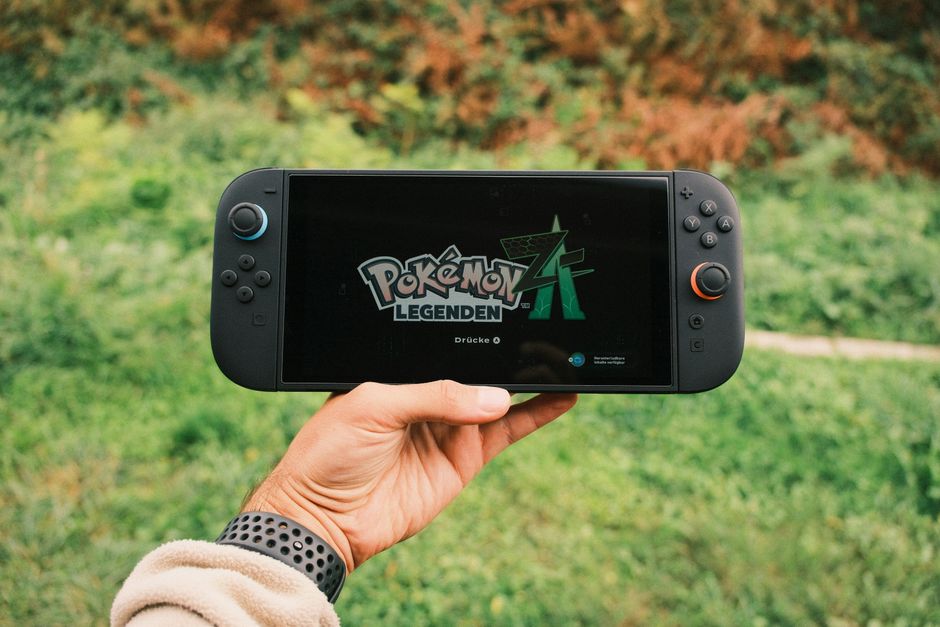
Compare the Nintendo Switch 2 and PlayStation 5 Pro in 2026. Discover key specs, games, and the latest 2026 price hikes to make the best choice.
The gaming console market in 2026 looks radically different from anything we have seen before. For the first time in industry history, major hardware manufacturers are navigating a landscape defined not by post-launch discounts, but by unprecedented global price hikes. Driven by severe DRAM and NAND flash memory shortages associated with the massive boom in artificial intelligence datacenters, both Sony and Nintendo have adjusted their pricing strategies mid-generation.
If you are looking to purchase a premium gaming system in 2026, you face a fascinating crossroad: Nintendo’s highly successful hybrid, the Nintendo Switch 2, which launched on June 5, 2025, or Sony’s supercharged powerhouse, the PlayStation 5 Pro, which debuted in late 2024. Both platforms cater to entirely different styles of play, but the gap in their financial investments has never been wider.
While the Nintendo Switch 2 has enjoyed a stellar first year on the market with over 23 million units sold, its retail price is undergoing a major shift. After launching at $449.99, its price is officially set to increase to $499.99 on September 1, 2026. On the other end of the spectrum, Sony shocked the gaming community on April 2, 2026, by raising the PlayStation 5 Pro’s price to an eye-watering $899.99—a figure that does not even include a disc drive.
In this detailed comparison, we will break down the hardware specifications, real-world performance metrics, current library offerings, and total cost of ownership for both systems in 2026 to help you make the right choice.
Here is an at-a-glance breakdown of how the Nintendo Switch 2 and the PlayStation 5 Pro compare in 2026:
| Feature | Nintendo Switch 2 | PlayStation 5 Pro |
|---|---|---|
| Form Factor | Hybrid (Handheld, Tabletop, Docked TV Mode) | Traditional Home Console (Digital Only out of the box) |
| Current Price (US) | $449.99 (Increases to $499.99 on Sept 1, 2026) | $899.99 (After April 2, 2026 price hike) |
| Display / Resolution | 7.9-inch 1080p LCD (120Hz, VRR, HDR10); Docked up to 4K at 60Hz | Up to 4K at 120Hz (Enhanced via PSSR), Supports up to 8K |
| Processor (SoC) | Custom Nvidia Tegra T239 ‘Drake’ (Octa-core ARM Cortex-A78C) | Custom AMD 8-core Zen 2 (up to 3.85 GHz) |
| GPU Power | Custom Nvidia Ampere-based (1,536 CUDA Cores) | Custom AMD Radeon (16.7 TFLOPS peak rendering) |
| Memory (RAM) | 12 GB LPDDR5X | 16 GB GDDR6 + 2 GB DDR5 system cache |
| Internal Storage | 256 GB UFS 3.1 (Expandable to 2 TB via microSD Express) | 2 TB Custom PCIe 4.0 NVMe SSD (Expandable via M.2) |
| Backward Compatibility | Full support for original Nintendo Switch games (physical and digital) | Plays over 8,500 PS4 games and the entire PS5 library |
| Target Audience | Casual, family, and core gamers who value portability and Nintendo IP | Enthusiasts demanding maximum visual fidelity and stable framerates |
As the table above illustrates, these two consoles represent entirely different design philosophies. While Sony focuses on raw graphical compute power and advanced upscaling algorithms, Nintendo has continued to perfect its versatile hybrid model. However, hardware specifications only tell half the story. To understand which system truly earns its spot under your television or in your travel bag, we must delve deeper into what makes each console tick in 2026.
Launched on June 5, 2025, the Nintendo Switch 2 is far more than a simple mid-generation refresh. It is a full hardware generation jump that successfully modernizes the hybrid concept. At the core of the Switch 2 is the custom Nvidia Tegra T239 ‘Drake’ processor, representing an enormous step forward from the aging Tegra X1 found in the original console. Combining an octa-core ARM Cortex-A78C CPU with an Ampere-based GPU featuring 1,536 CUDA cores, this chipset provides roughly ten times the graphical power of its predecessor.
In handheld mode, players are treated to a gorgeous 7.9-inch wide color gamut LCD screen that supports a 1080p resolution, HDR10, and a variable refresh rate (VRR) of up to 120Hz. While some fans were disappointed by the lack of an OLED panel at launch, the high-speed VRR and richer color accuracy make it a stellar display. When docked, the console utilizes Nvidia’s customized DLSS (Deep Learning Super Sampling) upscaling to output crisp 4K resolution at 60Hz. The new dock even features an integrated cooling fan to maintain thermal efficiency during intense, high-resolution gaming sessions on your television.
Storage has also received a massive boost. The Switch 2 boasts 256GB of fast UFS 3.1 internal memory—eight times that of the original Switch—and supports expandable storage of up to 2TB via next-generation microSD Express cards. Crucially, your entire library of physical game cards and digital purchases from the original Nintendo Switch carries over seamlessly, protecting your long-term library investment.
However, Nintendo is not immune to the economic pressures of 2026. The console launched at $449.99, but Nintendo has officially announced a permanent $50 price increase taking effect on September 1, 2026, bringing the base price to $499.99. If you are reading this before September 1, you can still secure the console at its original $449.99 MSRP. Alternatively, you can look into the three ‘Choose Your Game’ bundles introduced in June 2026 for $499.99, which throw in a digital download for blockbuster titles like Mario Kart World, Pokémon Pokopia, or Donkey Kong Bonanza.
If Nintendo’s console represents the pinnacle of versatility, Sony’s PlayStation 5 Pro represents the absolute peak of home console performance. Initially released in late 2024, the PS5 Pro was designed as a premium, mid-generation upgrade for gamers who refuse to compromise on visual fidelity.
The console’s primary upgrade lies in its supercharged GPU. Jumping from the standard PS5’s 10.28 TFLOPS to a massive 16.7 TFLOPS of peak rendering power, the PS5 Pro’s graphics processor is roughly 67% more powerful. This allows games to maintain incredibly high native resolutions while targeting a stable 60 or 120 frames per second. Furthermore, the system processes advanced ray tracing reflections, shadows, and global illumination up to three times faster than the base PS5.
Crucially, the PS5 Pro introduces PlayStation Spectral Super Resolution (PSSR). This is Sony’s proprietary, AI-driven machine-learning upscaling technology. Similar to Nvidia’s DLSS, PSSR takes lower-resolution internal images (such as 1080p or 1440p) and reconstructs them into breathtaking 4K outputs with razor-sharp detail, completely eliminating the blurry edges that often plague traditional software upscaling.
The system also features a massive 2TB custom PCIe 4.0 NVMe SSD, providing ample room for 2026’s massive triple-A installations. It is also fully compatible with Wi-Fi 7, which significantly lowers latency and boosts download speeds if you have a compatible router.
The elephant in the room for the PlayStation 5 Pro in 2026 is its price. On April 2, 2026, Sony increased the retail price to an astonishing $899.99 in the United States. To make matters more challenging for physical media collectors, the console is strictly digital-only out of the box. Buying the official external Blu-ray disc drive accessory costs an additional $79.99, pushing the overall entry price past the $1,000 threshold when you account for sales tax and a vertical stand. It is a luxurious, high-end investment aimed squarely at dedicated enthusiasts with the living room setups to match.
Choosing between the Nintendo Switch 2 and the PlayStation 5 Pro in 2026 comes down to how, where, and what you want to play, alongside your budget comfort level.
Before dropping hundreds of dollars on a console, look at your display. The PlayStation 5 Pro is a highly specialized piece of technology. To get your money’s worth out of its $899.99 price tag, you ideally need a high-end 4K television or monitor that supports a 120Hz refresh rate, HDR, and Variable Refresh Rate (VRR). If you are playing on a standard 60Hz 1080p TV, the visual improvements of the PS5 Pro over a standard console will be largely wasted. On the other hand, the Nintendo Switch 2 is built to look phenomenal on its own built-in screen, and its 4K upscaling tech makes it look right at home on almost any modern living room television without requiring premium AV hardware.
Are you someone who only games on the couch, or do you find yourself playing during commutes, flights, or in bed? The Nintendo Switch 2 remains the undisputed king of hybrid design. Its magnetic Joy-Con 2 controllers, 7.9-inch display, and solid 2-to-6.5-hour battery life make it the perfect companion for an active lifestyle. The PlayStation 5 Pro is a massive, heavy, power-hungry machine meant to stay firmly anchored to your entertainment center.
Exclusives are the lifeblood of console gaming. If your dream is to play deeply immersive, highly detailed single-player adventures like Grand Theft Auto 6, Marvel’s Spider-Man 2, or Black Myth: Wukong at maximum graphical settings, the PS5 Pro is the only console that can deliver that experience. However, if you want to experience the sheer joy of Nintendo’s legendary first-party lineup—such as Mario Kart World, Pokémon Pokopia, or the highly anticipated Metroid Prime 4 and The Legend of Zelda: Ocarina of Time remake—the Switch 2 is your only gateway.
In 2026, the financial barrier to entry cannot be ignored. The PlayStation 5 Pro represents a premium, high-luxury tier of gaming. At $899.99 without a disc drive, it costs twice as much as the Nintendo Switch 2, even after Nintendo’s upcoming September price hike to $499.99. For many families and casual gamers, the Switch 2 offers a far superior value proposition, leaving plenty of extra budget to purchase games and accessories.
As of late August 2026, the Nintendo Switch 2 is priced at $449.99, but this will permanently increase to $499.99 on September 1, 2026. Special ‘Choose Your Game’ bundles are currently available for $499.99. The PlayStation 5 Pro currently retails for $899.99 following a major global price increase on April 2, 2026.
Yes, the Nintendo Switch 2 features complete backward compatibility. It can play physical game cards and digital purchases from the original Nintendo Switch library. Furthermore, select games can take advantage of the Switch 2‘s faster hardware through free or paid software updates.
No, the PlayStation 5 Pro is a digital-only console out of the box. If you wish to play physical PS5 or PS4 game discs, you must purchase the official external ultra-HD Blu-ray disc drive accessory separately for approximately $79.99.
Yes, but only when it is docked and connected to a compatible television. The Switch 2 uses custom Nvidia DLSS upscaling technology to output a reconstructed 4K signal at 60Hz. In handheld mode, the system runs at a native 1080p resolution.
The PlayStation 5 Pro holds a clear edge for competitive gaming due to its compatibility with Wi-Fi 7, which offers significantly lower latency and faster wireless transfer speeds. It also boasts a massive library of high-refresh-rate online shooters running at a stable 120Hz.
For the vast majority of gamers in 2026, the Nintendo Switch 2 is the recommended purchase. It offers the best blend of portability, cost-effective performance, and legendary games.
While the PlayStation 5 Pro is an absolute technical marvel, its current $899.99 price point makes it an incredibly niche luxury item. Once you add the necessary disc drive and a couple of games, the total cost quickly approaches $1,000. It is a phenomenal machine for enthusiasts with high-end home theaters, but it is simply too expensive for the mainstream market.
The Nintendo Switch 2, on the other hand, delivers a massive generational leap over its predecessor, bringing 4K docked output, a gorgeous 120Hz HDR handheld display, and a stellar games library. Even with its upcoming price hike to $499.99, the Switch 2 remains a highly competitive, versatile, and joy-filled console that offers the absolute best value for your money in 2026. If you want to save some cash, we highly recommend picking one up before the September 1st price increase kicks in.
Prices and features mentioned are accurate as of the date of publication. Always check the official provider website for the most current pricing and availability.