Physical Address
304 North Cardinal St.
Dorchester Center, MA 02124
Physical Address
304 North Cardinal St.
Dorchester Center, MA 02124

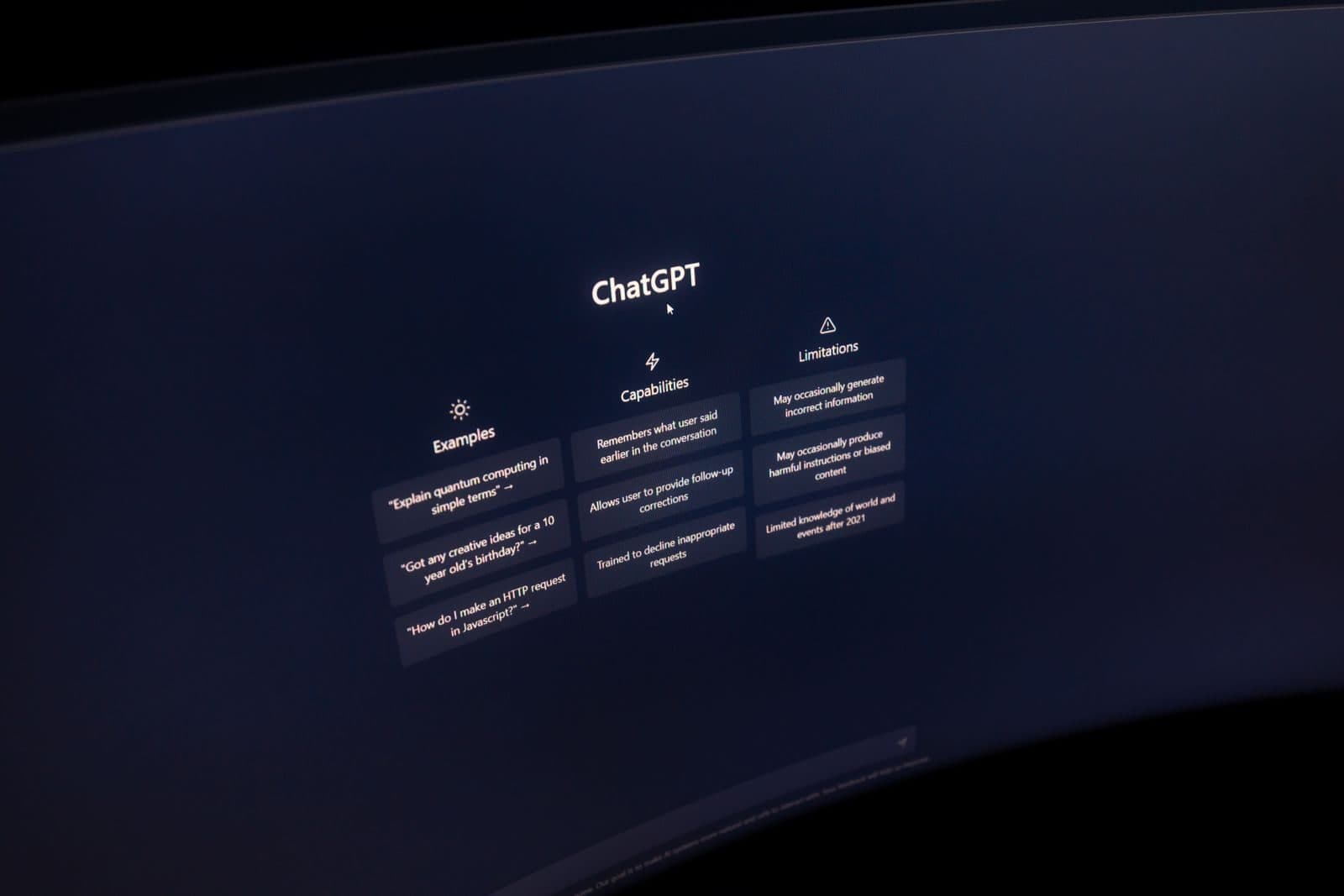
Compare ChatGPT Operator (Work), Claude Cowork, and OpenClaw. Discover the best AI agent of 2026 with specs, real costs, and performance data.
In 2026, the artificial intelligence landscape has undergone a monumental paradigm shift. We have officially moved past the era of static, text-based chatbots that wait for your next prompt. Today, the industry is dominated by autonomous AI Agents—intelligent systems capable of executing complex, multi-step workflows, navigating browsers, managing files, and operating entirely in the background. AI is no longer just a writing partner; it is an active, digital teammate.
As businesses and tech-savvy professionals rush to deploy these agents, three distinct titans have emerged, each representing a unique philosophy in workflow automation. First is ChatGPT Operator, which OpenAI recently evolved into its deeply integrated ChatGPT Work ecosystem powered by the GPT-5.6 model family. Second is Anthropic’s Claude Cowork, a native desktop powerhouse that leverages the state-of-the-art Opus 5 and Sonnet 5 models. Finally, we have OpenClaw, a viral, open-source, local-first framework that runs on your own hardware or virtual private servers (VPS), meeting you directly inside the messaging apps you already use daily.
Choosing the right agent is no longer about which model writes the prettiest prose. It is about understanding the fundamental trade-offs between system power, operational security, and deployment simplicity. In this comprehensive ComparisonMath review, we pitch these three bleeding-edge AI agents head-to-head to help you decide which tool deserves a permanent spot in your 2026 workflow.
Before diving into the granular mechanics of each agent, let us look at how they stack up across key decision-making metrics. This high-level overview highlights the distinct design philosophies of each tool.
| Metric | ChatGPT Operator (ChatGPT Work) | Claude Cowork | OpenClaw |
|---|---|---|---|
| Primary Developer | OpenAI | Anthropic | Open-Source Community |
| Underlying Models | GPT-5.6 Sol, Terra, Luna | Claude Opus 5, Sonnet 5 | BYO Model (OpenAI, Anthropic, Llama, etc.) |
| Deployment Mode | Native Cloud / Desktop App | Desktop App with Cloud execution | Local Hardware, VPS, or Managed Cloud |
| Always-On Background Run | No (Interactive session-bound) | No (Requires desktop app active) | Yes (24/7 autonomous background engine) |
| Primary Interfaces | ChatGPT Web UI & Desktop App | Claude Desktop (built-in side-browser) | WhatsApp, Discord, Telegram, Android App |
| Key Strong Suit | Deep cognitive reasoning & Google Workspace integration | Polished MS Office deliverables & cookie import login | Zero-lock-in, scheduled cron tasks, chat integration |
| Core Entry Pricing (2026) | Bundled in $20/mo Plus, $100/mo Pro, $20/seat Business | Bundled in $20/mo Pro, $100/mo Max, $25/seat Team | Free (Self-Hosted) or $29–$59/mo Managed Cloud |
What started in early 2025 as a limited “Operator” web-browsing preview has fully matured. In mid-2026, OpenAI officially consolidated its agentic capabilities into ChatGPT Work, integrating “Agent Mode” directly into the core ChatGPT interface across desktop and web applications. Powered by the cutting-edge GPT-5.6 Sol flagship model, ChatGPT Work is built to handle deep, highly analytical workflows.
A standout feature of ChatGPT Work is its intuitive “Plan Mode”. When you assign a broad outcome—such as reconciling months of financial records and spotting discrepancies—the agent does not just start blindly clicking. It pauses, drafts a highly detailed execution plan, asks for your feedback, and then executes. Furthermore, ChatGPT Work features robust native data connectors for enterprise mainstays like Google Workspace, Microsoft 365, Slack, and GitHub, allowing it to seamlessly read from and write to shared cloud directories.
However, ChatGPT Work is not without its limitations. It operates in an interactive, session-bound environment. You cannot schedule tasks to run 24/7 in the background while your computer is off, nor does it run as an always-on background micro-service. From a pricing perspective, ChatGPT Work is bundled into OpenAI’s standard subscription tiers (such as the $20/month Plus plan, the $100 or $200/month Pro tiers, and the $20/seat Business plan). However, because autonomous agent runs require numerous consecutive model calls, heavy usage will quickly consume your tier’s monthly credit limits, necessitating an upgrade to the higher-end Pro or Business plans.
Launched in early 2026, Anthropic’s Claude Cowork has established itself as the premier cognitive coworker for professional desktop environments. Powered by the highly anticipated Claude Opus 5 and Sonnet 5 models, Claude Cowork takes a highly integrated approach to browser and local file manipulation.
Its definitive breakthrough arrived with the August 2026 update, which introduced a built-in sandboxed browser operating directly inside the Claude Desktop application. Unlike traditional browser extensions that require access to your personal active tabs, Claude’s built-in browser opens in a side panel. The agent can autonomously click, type, scroll, and read pages completely separate from your active browser session. Even better, it features an “Import Cookies” function. This lets you import your saved logins from Chrome, Firefox, or Edge on a site-by-site basis, allowing Claude to bypass CAPTCHAs and login screens on secure corporate portals effortlessly.
In head-to-head testing, Claude Cowork excels at generating polished corporate deliverables. Unlike ChatGPT Work, which often defaults to writing plain markdown, Claude Cowork writes directly to Microsoft Word, Excel, and PowerPoint files with immaculate corporate formatting. Claude Cowork is bundled for free within Claude Pro ($20/month) and Claude Max ($100 to $200/month) plans. However, because Cowork runs consume enormous amounts of tokens as Claude coordinates sub-agents and processes files, serious business users will find themselves upgrading to the $100/month Max tier to avoid hitting daily usage walls.
If ChatGPT and Claude are curated corporate walled gardens, OpenClaw is the wild, infinitely powerful open frontier. Rising to viral prominence in early 2026, OpenClaw is an open-source, local-first autonomous AI framework designed to run continuously on your own terms. Instead of interacting with it through a proprietary web browser or a locked-down desktop app, OpenClaw integrates directly into the messaging channels you already use, such as WhatsApp, Telegram, or Discord.
The secret weapon of OpenClaw is its background engine. Because you can host it locally on your computer or a virtual private server (such as Hostinger or DigitalOcean), OpenClaw can run 24/7 background cron jobs. You can command your OpenClaw agent to check bank feeds every morning at 6:00 AM, monitor social media trends, scrape specific sites, or automate smart home systems while your computer is entirely powered down. It utilizes “Skills” which can be easily downloaded and shared from its central registry, “ClawHub”.
While OpenClaw is completely free to self-host (excluding the cost of your third-party API keys and VPS hosting), setting it up requires some technical comfort with Docker, API keys, and environment variables. To bridge this gap, several managed hosting solutions like OpenClaw Cloud, ClawBox, and ClawRapid have emerged in 2026. These services offer a fully managed OpenClaw instance with pre-configured secure servers, sandbox code execution, and built-in AI credits for a flat rate ranging from $29 to $59/month. The major risk with OpenClaw is “billing shock”: if your agent gets stuck in an uncontrolled logic loop, it can rack up hundreds of dollars in API token costs overnight unless strict spending limits are set.
Selecting the best AI agent for your workflow depends heavily on your technical comfort, your privacy requirements, and the specific nature of your daily tasks. Consider the following guidelines when making your choice:
Only OpenClaw can run while your computer is turned off, provided you host it on a Virtual Private Server (VPS) or use a managed hosting service like OpenClaw Cloud. Both ChatGPT Work and Claude Cowork are session-based tools; they require their respective web interfaces or desktop applications to remain active and online to execute browser-based tasks.
AI agents consume significantly more tokens than standard chat. While a normal chat only processes your single prompt and the AI’s direct response, an agent runs in an autonomous “loop”. A single multi-step task might involve the agent making 5 to 10 consecutive model calls, feeding its own system instructions, web screenshots, and file variables back into the model each time. This is why heavy agent use makes higher-tier plans like Claude Max or ChatGPT Pro necessary.
No, provided you are on the correct tiers. Both OpenAI and Anthropic explicitly state that data submitted through ChatGPT Business/Enterprise and Claude Team/Enterprise plans is not used to train their models. With OpenClaw, because you own the server and connect directly to model APIs (which have strict no-training policies for commercial endpoints), your data remains entirely private and under your direct control.
Yes. Because most advanced agent integrations, prompts, and tool skills are configured using portable Markdown and standardized JSON APIs, migrating your setup is relatively seamless. In practical tests, transferring custom instructions and skills from Claude Cowork to ChatGPT Work took only a few minutes, meaning you are never truly locked into one specific provider.
While all three options are incredibly powerful in 2026, the clear overall winner for the vast majority of business professionals and everyday office workers is Claude Cowork. Anthropic has designed an exceptional user experience that bridges the gap between raw AI power and frictionless utility. The integration of the built-in desktop side-panel browser—complete with safe cookie importing—solves the ultimate headache of web-browsing agents: logging past secure portals. Combine this with its ability to generate beautifully formatted, native Word and PowerPoint files, and Claude Cowork stands out as the ultimate productivity booster.
For developers, privacy advocates, and automation geeks who require an agent that never sleeps, OpenClaw is the undisputed champion. Its ability to run background cron jobs and interact seamlessly over WhatsApp or Telegram offers a level of personal automation that commercial platforms simply cannot replicate.
Lastly, ChatGPT Work remains a formidable runner-up. If your daily operations live entirely inside Google Workspace or Microsoft 365, or if your tasks require the heavy reasoning capabilities of GPT-5.6 Sol, ChatGPT Work is an exceptional, cloud-native partner. However, for effortless daily execution and pristine document creation, Claude Cowork takes the crown in 2026.
Prices and features mentioned are accurate as of the date of publication. Always check the official provider website for the most current pricing and availability.




