Physical Address
304 North Cardinal St.
Dorchester Center, MA 02124
Physical Address
304 North Cardinal St.
Dorchester Center, MA 02124

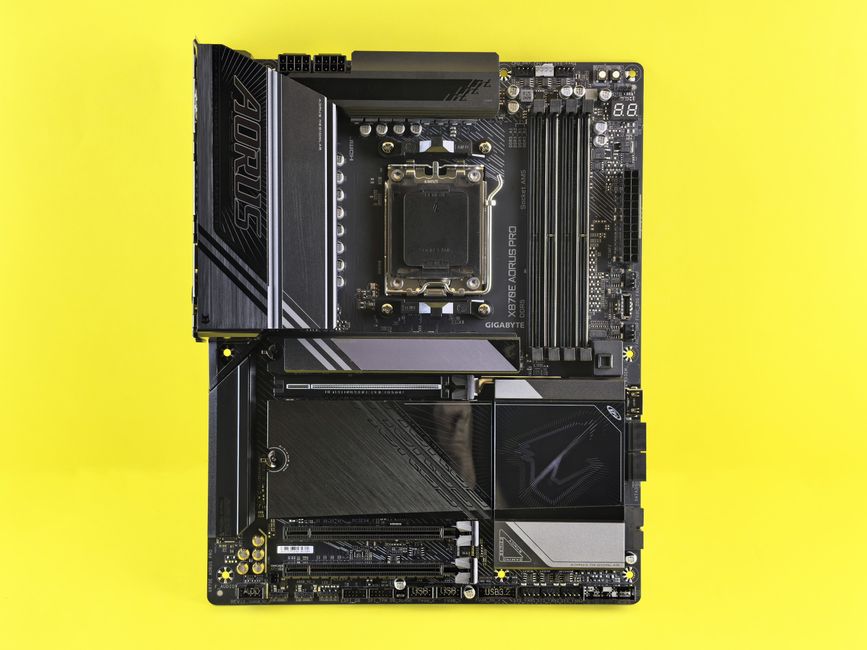
Explore the top PCIe 5.0 motherboards of 2026. We compare AMD's X870E and Intel's Z890 chipsets, detailing specs, prices, and helping you choose the best platform for your next-gen build.
Welcome to September 2026, where the pinnacle of PC performance is increasingly defined by the lightning-fast capabilities of PCIe 5.0. As the bedrock of any high-performance system, a motherboard equipped with the latest standards is not just an upgrade; it’s a necessity for enthusiasts, gamers, and content creators pushing the boundaries of computing. With next-generation GPUs, NVMe SSDs, and advanced peripherals now fully leveraging this bandwidth, choosing the right platform is more crucial than ever.
This year, the battle for supremacy in the enthusiast motherboard market heats up with AMD’s X870E and Intel’s Z890 chipsets. Both platforms promise unparalleled speed, extensive connectivity, and robust power delivery to handle the most demanding CPUs from their respective camps. For anyone planning a top-tier build or considering a significant upgrade, understanding the nuances between these two titans is essential.
Our comprehensive comparison dives deep into the architecture, features, and real-world implications of the X870E and Z890 motherboards available in 2026. We’ll explore specific models, current market pricing, and guide you through the decision-making process. By the end, you’ll have a clear picture of which chipset aligns best with your performance needs and budget, ensuring your investment is future-proofed for years to come.
| Feature | AMD X870E (AM5) | Intel Z890 (LGA1851) |
|---|---|---|
| CPU Socket | AM5 | LGA1851 |
| Compatible CPUs (2026) | Ryzen 9000 & Ryzen 10000 Series | 15th Gen Core ‘Arrow Lake-S’ & 16th Gen Core ‘Raptor Lake-S Refresh’ |
| PCIe 5.0 GPU Slots | Typically 1-2 (x16/x8) | Typically 1-2 (x16/x8) |
| PCIe 5.0 M.2 Slots | Typically 3-5 | Typically 3-4 |
| Memory Support | DDR5-7200+ (EXPO) | DDR5-7600+ (XMP) |
| Connectivity Highlights | USB4 (40Gbps), Wi-Fi 7, 10GbE LAN | Thunderbolt 5 (80Gbps), Wi-Fi 7, 10GbE LAN |
| Typical Price Range (USD) | $350 – $950 | $400 – $1000+ |
| Key Advantage | Long-term platform support, multi-core prowess | Peak gaming performance, leading single-core IPC |
AMD’s X870E chipset, an evolution from the X670E, continues to champion the AM5 socket, promising longevity and upgrade paths well into the future. Designed to support the latest Ryzen 9000 series and the recently released Ryzen 10000 series processors, X870E boards are built for users demanding extensive PCIe 5.0 connectivity across both graphics and storage. The ‘E’ designation signifies enhanced PCIe 5.0 support, ensuring at least one PCIe 5.0 x16 slot for your GPU and multiple PCIe 5.0 M.2 slots for the fastest NVMe SSDs available.
These boards typically feature robust power delivery systems, often boasting 20+ phase VRMs to stabilize power for overclocked Ryzen 10000 series chips. DDR5 memory support has matured significantly, with X870E boards routinely supporting kits exceeding DDR5-7200 via AMD EXPO profiles. Advanced networking, including integrated Wi-Fi 7 and 10 Gigabit Ethernet, is standard on most high-end models, along with comprehensive USB4 connectivity.
The ASUS ROG Crosshair X870E Extreme remains a flagship choice for AMD enthusiasts. Released in Q1 2026, this board spares no expense, featuring an impressive 24+2 phase power delivery system, 105A power stages, and an integrated active cooling solution for the VRM and multiple M.2 slots. It offers two PCIe 5.0 x16 slots (operating at x16/x0 or x8/x8), ensuring full bandwidth for dual-GPU setups or future expansion cards.
Storage options are plentiful with five PCIe 5.0 M.2 slots, all equipped with substantial heatsinks, including one capable of 22110 form factor drives. Connectivity is cutting-edge, boasting two USB4 ports (40Gbps), Wi-Fi 7, Bluetooth 5.4, and a dual LAN setup with one 10GbE and one 2.5GbE port. Priced at approximately $929, it targets the ultra-high-end market where performance and features are paramount.
The MSI MPG X870E Carbon WiFi strikes an excellent balance between premium features and a more accessible price point. Launched in Q2 2026, this board features a solid 18+2+1 phase VRM with 90A power stages, capable of handling even the Ryzen 9 10950X without breaking a sweat. It includes one PCIe 5.0 x16 slot and three PCIe 5.0 M.2 slots, providing ample next-gen storage capacity.
Its connectivity suite includes Wi-Fi 7, Bluetooth 5.4, a 2.5GbE LAN port, and a range of USB 3.2 Gen 2×2 Type-C ports. DDR5 memory support extends to DDR5-7600 with EXPO profiles, making it suitable for high-speed memory kits. Retailing around $499, the Carbon WiFi offers robust performance and essential PCIe 5.0 features for serious gamers and creators.
Gigabyte’s AORUS Master X870E, hitting shelves in early 2026, is a formidable contender known for its exceptional build quality and thermal design. It sports a 20+2+2 phase digital VRM with 100A power stages, ensuring stable power delivery for highly overclocked CPUs. The board provides two PCIe 5.0 x16 slots (running at x16/x0 or x8/x8) and four PCIe 5.0 M.2 slots, all with Gigabyte’s renowned large M.2 Thermal Guards.
Key features include Wi-Fi 7, Bluetooth 5.4, a 10GbE LAN port, and two USB4 ports. It also offers advanced audio solutions with an integrated ESS SABRE DAC. The AORUS Master X870E is priced at approximately $789, positioning it as a premium option for users who prioritize cooling, power, and comprehensive PCIe 5.0 implementation.
Intel’s Z890 chipset, replacing the Z790, is the flagship platform for their LGA1851 socket, supporting the 15th Gen Core ‘Arrow Lake-S’ processors and preparing for the upcoming 16th Gen ‘Raptor Lake-S Refresh’ later in 2026. Designed for peak gaming performance and single-core prowess, Z890 motherboards bring cutting-edge features including native Thunderbolt 5 support, pushing data transfer speeds to an incredible 80Gbps.
Like its AMD counterpart, Z890 is fully committed to PCIe 5.0, offering dedicated PCIe 5.0 x16 slots for GPUs and multiple PCIe 5.0 M.2 slots. Power delivery systems are equally formidable, with many boards featuring 20+ phase VRMs optimized for Intel’s demanding high-frequency CPUs. DDR5 memory is standard, with Z890 boards often showcasing even higher native speeds, supporting kits well beyond DDR5-7600 via Intel XMP 3.0 profiles.
The ASUS ROG Maximus Z890 Hero, released in Q1 2026, stands as a top-tier choice for Intel enthusiasts. It features a robust 20+1+2 phase VRM design with 90A power stages, optimized for stable power delivery to even the most overclocked 15th Gen Core i9 processors. The Hero offers one PCIe 5.0 x16 slot for the primary GPU and two PCIe 5.0 M.2 slots for ultra-fast storage, alongside a PCIe 4.0 x4 M.2 slot.
Its connectivity includes two Thunderbolt 5 ports (80Gbps), Wi-Fi 7, Bluetooth 5.4, and a 2.5GbE LAN port. The board also features ASUS’s AI Overclocking and AI Cooling II technologies for simplified performance tuning. With a price tag of around $649, the Z890 Hero offers a premium Intel experience without reaching the Extreme-tier pricing.
The MSI MEG Z890 ACE, available since Q2 2026, is a powerhouse known for its aggressive aesthetic and high-performance capabilities. It boasts an impressive 22+2+1 phase VRM with 105A power stages, making it ideal for extreme overclocking. The ACE provides one PCIe 5.0 x16 slot, along with four PCIe 5.0 M.2 slots, ensuring ample room for multiple high-speed NVMe drives.
Connectivity options are exhaustive, including two Thunderbolt 5 ports, Wi-Fi 7, Bluetooth 5.4, and a dual LAN setup featuring 10GbE and 2.5GbE ports. The board’s advanced thermal design includes a stacked fin array heatsink and a heat pipe for superior VRM cooling. Positioned at roughly $829, the MEG Z890 ACE caters to users seeking uncompromising performance and extensive features.
The Gigabyte AORUS Tachyon Z890, launched in Q1 2026, is specifically designed for extreme overclockers and performance enthusiasts. This board features a highly optimized 24+1+2 phase VRM with 105A power stages, meticulously tuned for pushing Intel CPUs to their limits. It offers one PCIe 5.0 x16 slot and three PCIe 5.0 M.2 slots, alongside two PCIe 4.0 M.2 slots for additional storage flexibility.
Unique features include onboard overclocking buttons and switches, a robust BIOS tailored for voltage tweaking, and dedicated sub-zero cooling features. Connectivity comprises two Thunderbolt 5 ports, Wi-Fi 7, Bluetooth 5.4, and a 5GbE LAN port. Priced at approximately $769, the AORUS Tachyon Z890 is a niche but incredibly powerful option for those who live and breathe overclocking.
Selecting the best PCIe 5.0 motherboard in 2026 involves more than just picking between AMD and Intel. It requires a careful assessment of your specific needs, budget, and future upgrade plans. Here’s a breakdown of factors to consider:
Your choice of CPU is the primary determinant. If you’re committed to AMD’s Ryzen 9000/10000 series, an X870E board is your path. AMD’s AM5 socket offers commendable platform longevity. If Intel’s 15th Gen ‘Arrow Lake-S’ or 16th Gen ‘Raptor Lake-S Refresh’ is your target, the Z890 platform is necessary. Intel typically excels in raw single-core gaming performance, while AMD often offers better multi-core value for productivity tasks.
High-end X870E and Z890 motherboards can range from $350 to over $1000. Define your budget early. Mid-range options like the MSI MPG X870E Carbon WiFi or ASUS ROG Maximus Z890 Hero offer excellent feature sets without breaking the bank, while Extreme or ACE models cater to the no-compromise builder. Remember to factor in the cost of a compatible CPU, DDR5 RAM, and a PCIe 5.0 NVMe SSD to fully utilize the board’s capabilities.
Gaming: Both platforms offer phenomenal gaming performance. Intel Z890 might have a slight edge in raw FPS for some titles due to higher single-core IPC, but AMD X870E is very competitive. Prioritize robust VRMs, high-speed DDR5 support, and a primary PCIe 5.0 x16 slot.
Content Creation/Workstation: For tasks like video editing, 3D rendering, or heavy multitasking, AMD’s Ryzen processors on X870E boards often provide superior multi-core performance. Look for boards with numerous PCIe 5.0 M.2 slots for fast project storage, excellent memory capacity, and robust networking (10GbE LAN is a plus).
Consider your peripheral ecosystem. Do you need multiple high-speed USB4 (AMD) or Thunderbolt 5 (Intel) ports for external drives or displays? Wi-Fi 7 and 10GbE LAN are standard on many high-end boards, crucial for fast network transfers. Assess the number of PCIe 5.0 M.2 slots you’ll need for storage expansion, as well as regular PCIe slots for capture cards or other add-ins.
If you plan to push your CPU and RAM to their limits, invest in a motherboard with an exceptionally strong VRM (voltage regulator module) and robust cooling solutions. Boards like the Gigabyte AORUS Tachyon Z890 or ASUS ROG Crosshair X870E Extreme are purpose-built for extreme overclocking, offering superior power delivery and dedicated features.
While subjective, the aesthetics of your motherboard can be important for a showcase build. Consider RGB lighting integration, heatsink designs, and overall color scheme. Build quality, including durable components and effective thermal management for VRMs and M.2 drives, contributes to system stability and longevity.
While current high-end GPUs like the NVIDIA GeForce RTX 5090 and AMD Radeon RX 8900 XT can fully utilize a PCIe 5.0 x16 slot, the performance uplift over PCIe 4.0 x16 for gaming alone is often marginal, typically less than 5% in most scenarios. However, for future-proofing, especially with forthcoming GPU generations and incredibly fast PCIe 5.0 NVMe SSDs that offer significant load time reductions and productivity gains, investing in PCIe 5.0 is highly recommended. It’s becoming the standard.
The core difference lies in their respective CPU support and unique platform features. X870E supports AMD’s AM5 Ryzen 9000/10000 series, known for strong multi-core performance and platform longevity. Z890 supports Intel’s LGA1851 15th/16th Gen Core processors, often leading in single-core performance and gaming FPS. Z890 also natively integrates Thunderbolt 5 (80Gbps), while X870E typically offers USB4 (40Gbps).
For most users, 32GB of DDR5 RAM (2x16GB sticks) running at speeds of DDR5-6400 to DDR5-7200 is the sweet spot for gaming and general productivity in 2026. Content creators, video editors, and users running virtual machines or complex simulations might benefit from 64GB (2x32GB or 4x16GB) or even 128GB of DDR5, especially with faster kits like DDR5-7600 to DDR5-8400 becoming more common and affordable.
No. While they all offer PCIe 5.0 bandwidth, performance can vary based on several factors. Some slots might be directly connected to the CPU for maximum bandwidth, while others might route through the chipset, potentially adding slight latency. Additionally, the cooling solution for each M.2 slot is crucial. Larger, more effective heatsinks prevent thermal throttling, ensuring sustained high performance from your PCIe 5.0 NVMe SSDs, which can generate significant heat.
In the high-stakes arena of 2026’s top-tier motherboards, both AMD’s X870E and Intel’s Z890 chipsets deliver unparalleled performance and future-proof connectivity with comprehensive PCIe 5.0 implementation. The choice ultimately hinges on your processor allegiance and specific use case.
For users prioritizing raw multi-core horsepower, excellent value in CPU performance, and a platform with a strong commitment to long-term socket support, the AMD X870E chipset is an outstanding choice. The ASUS ROG Crosshair X870E Extreme is our top recommendation for the no-compromise AMD builder, while the MSI MPG X870E Carbon WiFi offers exceptional features at a more palatable price.
Conversely, for those who demand the absolute peak in gaming performance, leading single-core instruction per clock (IPC), and cutting-edge Thunderbolt 5 connectivity, the Intel Z890 chipset stands supreme. The MSI MEG Z890 ACE is our pick for Intel enthusiasts seeking maximum features and overclocking potential, with the ASUS ROG Maximus Z890 Hero providing a fantastic premium experience without reaching the very top of the price ladder.
Regardless of your choice, both X870E and Z890 platforms are engineering marvels designed to power the next generation of computing. Whichever you choose, you’ll be investing in a foundation capable of handling the most demanding tasks and games for years to come.
Prices and features mentioned are accurate as of the date of publication. Always check the official provider website for the most current pricing and availability.




