Physical Address
304 North Cardinal St.
Dorchester Center, MA 02124
Physical Address
304 North Cardinal St.
Dorchester Center, MA 02124

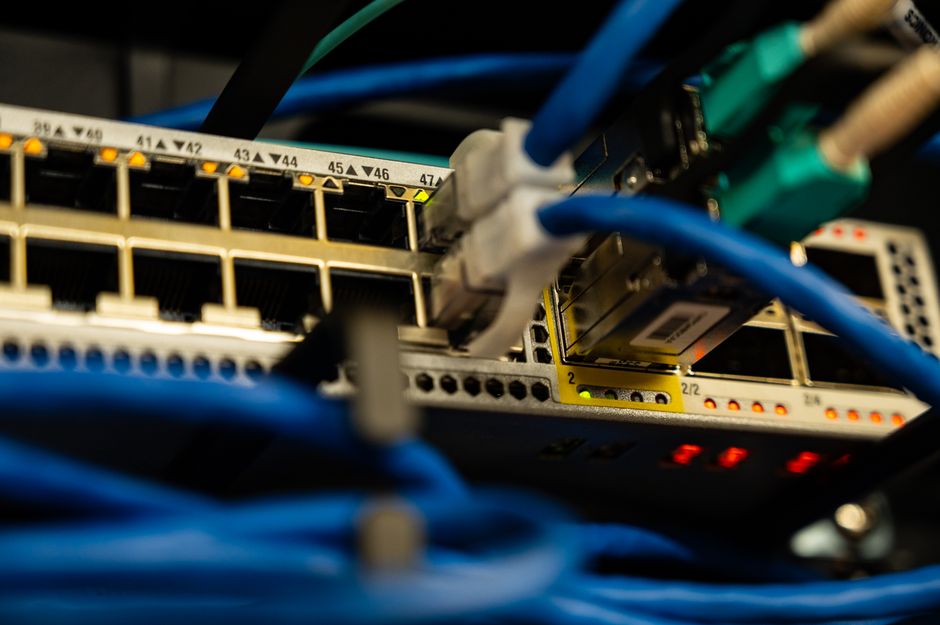
Comparing InfiniBand vs. Ethernet for AI data centers in 2026. Discover current specs, pricing, and expert recommendations for your AI infrastructure.
The relentless pace of Artificial Intelligence development continues to redefine the demands on data center infrastructure. As of October 2026, the era of trillion-parameter models and distributed training has firmly arrived, pushing the boundaries of traditional networking. GPUs, the workhorses of AI, require an equally powerful network fabric to communicate efficiently, preventing costly bottlenecks that can cripple training times and inference performance.
At the heart of this challenge lies a critical decision for data center architects and AI engineers: which network fabric reigns supreme for AI workloads? For years, InfiniBand held a near-monopoly on high-performance computing (HPC) and early AI deployments due to its superior latency and throughput. However, the rapid evolution of Ethernet, specifically with advancements like RDMA over Converged Ethernet (RoCE), 800GbE, and emerging 1.6TbE standards, has made it a formidable contender.
This article, tailored for the tech landscape of October 2026, dives deep into the battle between InfiniBand and advanced Ethernet solutions. We’ll explore their latest capabilities, current market offerings, real-world pricing, and help you navigate the complexities of choosing the best network fabric for your AI data center. The right choice can mean the difference between groundbreaking AI innovation and costly computational delays.
| Feature | InfiniBand (2026) | Ethernet (2026) |
|---|---|---|
| Primary Benefit | Extremely Low Latency, High Bandwidth, Native RDMA | Ubiquity, Cost-Effectiveness at Scale, Flexibility, Open Standards |
| Typical Throughput (Port) | NVIDIA XDR (800Gbps), YDR (1.6Tbps – emerging) | 800GbE (widespread), 1.6TbE (emerging) |
| Latency (Typical) | <0.5 microsecond (end-to-end) | 1-2 microseconds (end-to-end with RoCE) |
| RDMA Support | Native, highly optimized | RoCE v2.1 (mature, widely adopted) |
| Congestion Management | Hardware-accelerated, highly effective | PFC, ECN, Adaptive Routing (improving rapidly) |
| Ecosystem | NVIDIA-centric (Mellanox), specialized | Broad, multi-vendor (Cisco, Arista, Juniper, Broadcom) |
| Cost per Port | Higher initial investment | Generally lower, especially at scale |
| Scalability | Excellent for scale-up, tightly coupled clusters | Excellent for scale-out, hyperscale environments |
| Use Cases | Large-scale AI training, HPC, tightly coupled GPU clusters | AI inference, distributed training, general data center, cloud |
As of October 2026, InfiniBand continues its reign in environments demanding the absolute lowest latency and highest deterministic performance. NVIDIA, through its Mellanox acquisition, remains the primary driver of InfiniBand innovation. The dominant standard for new deployments is NVIDIA’s XDR (Extended Data Rate), delivering 800 Gigabits per second (Gbps) per port. Early adopters are already experimenting with NVIDIA’s next-generation YDR standard, promising 1.6 Terabits per second (Tbps) per port, pushing latency even further down to sub-500 nanoseconds end-to-end.
InfiniBand’s core strength lies in its native support for Remote Direct Memory Access (RDMA). This allows GPUs and CPUs to directly access memory on remote machines without involving the operating system, significantly reducing CPU overhead and latency. NVIDIA’s ConnectX-8 network adapters, widely available now, seamlessly integrate with their GPUs, creating a tightly coupled ecosystem. The NVIDIA Spectrum-X platform further enhances InfiniBand’s capabilities for AI, combining advanced switches with sophisticated congestion management, making it ideal for large-scale AI training clusters where every microsecond counts.
Pricing for InfiniBand solutions, while higher than mainstream Ethernet, reflects its specialized performance. A typical NVIDIA ConnectX-8 XDR adapter might cost around $2,500 – $4,000 per card, while an XDR 64-port switch could range from $150,000 to $300,000, depending on features and port density. For tightly coupled AI supercomputing systems, particularly those relying on NVIDIA’s NVSwitch within nodes for intra-GPU communication, InfiniBand provides the critical inter-node fabric, ensuring that massive GPU clusters act as one cohesive unit.
Ethernet, once seen as a general-purpose network, has transformed into a robust contender for AI workloads by October 2026. The key to its resurgence is the widespread adoption and maturity of RoCE v2.1 (RDMA over Converged Ethernet), which brings the benefits of RDMA to standard Ethernet infrastructure. Coupled with advancements in switch silicon and network protocols, Ethernet now delivers performance that rivals InfiniBand for many AI applications, particularly at hyperscale.
Current mainstream deployments utilize 400GbE, but 800GbE is now standard for new AI-focused deployments, with major vendors like Cisco (Nexus 9800 series), Arista (7800/7900 R-Series), and Juniper (PTX10000 series) offering full product lines. Broadcom’s Tomahawk 6 and Jericho3-AI chipsets are powering many of these next-generation switches, providing unprecedented packet processing and AI-specific features like enhanced congestion management and telemetry. Emerging 1.6TbE standards are also entering trial phases, promising even greater bandwidth within the next 12-18 months.
The major appeal of Ethernet for AI lies in its ubiquity, flexibility, and cost-effectiveness at scale. With an open ecosystem and multiple vendors, competition keeps prices competitive. An 800GbE RoCE-enabled NIC might cost $1,000 – $2,000 per card, while an 800GbE switch with 32 ports can range from $80,000 to $180,000. For large-scale AI supercomputing that demands vast scale-out capabilities, Ethernet is increasingly seen as the backbone, leveraging its existing infrastructure and talent pool, as highlighted by industry trends in August 2026 regarding Ethernet becoming the backbone of AI supercomputing.
Selecting the optimal network fabric for your AI data center in 2026 hinges on several critical factors, balancing performance needs with practical considerations like budget, existing infrastructure, and future scalability goals. There isn’t a single ‘best’ choice; rather, it’s about the best fit for your specific use case.
For highly specialized, tightly coupled AI training clusters where minimal latency and maximum throughput are paramount, and where the budget allows for a premium, InfiniBand remains the gold standard. If your primary objective is to train a single, massive AI model across thousands of GPUs with the fastest possible time-to-solution, NVIDIA’s InfiniBand solutions, complemented by NVSwitch within nodes, will offer unparalleled performance. Consider this if you are building an AI supercomputer or a dedicated AI research facility.
Conversely, for more general-purpose AI data centers, large-scale inference deployments, distributed training across geographically dispersed nodes, or environments requiring broad interoperability with existing IT infrastructure, advanced Ethernet with RoCE v2.1 is increasingly the pragmatic choice. Its lower cost per port, open standards, and the growing maturity of 800GbE and 1.6TbE make it highly attractive for hyperscale AI operations and enterprises looking for a converged network. If your AI workloads are diverse and you prioritize flexibility, ease of management, and cost-efficiency at a massive scale, Ethernet is likely your stronger contender.
Evaluate your current infrastructure: If you already have a significant investment in Ethernet, upgrading to 800GbE with RoCE capabilities might be more cost-effective than a complete rip-and-replace for InfiniBand. Conversely, if you’re building from scratch or expanding an existing InfiniBand-heavy HPC setup, continuing with InfiniBand offers a streamlined path. Finally, consider the skills of your IT team; InfiniBand requires specialized knowledge, whereas Ethernet benefits from a wider talent pool.
RDMA (Remote Direct Memory Access) allows a network adapter to directly access the memory of another computer without involving the CPU. This bypasses the operating system’s kernel, reducing latency and CPU overhead significantly. For AI, where GPUs need to exchange massive amounts of data rapidly during training, RDMA is crucial for preventing bottlenecks and maximizing GPU utilization, leading to faster model training times.
Yes, it’s common for AI data centers to employ a hybrid approach. InfiniBand might be used for the most critical, tightly coupled GPU clusters requiring ultra-low latency, while Ethernet handles storage, general-purpose compute, management traffic, and scale-out inference clusters. This allows organizations to leverage the strengths of each technology where it makes the most sense.
In 2026, the primary technologies are RoCE v2.1 for RDMA capabilities, 800GbE and emerging 1.6TbE for high bandwidth, and advanced congestion management features like Priority Flow Control (PFC) and Explicit Congestion Notification (ECN). Chipsets like Broadcom’s Jericho3-AI also integrate AI-specific features for optimal performance.
NVIDIA NVSwitch is complementary, not a competitor, to InfiniBand and Ethernet. NVSwitch facilitates ultra-high-speed, low-latency communication *between GPUs within a single server node*. InfiniBand and Ethernet, on the other hand, provide the network fabric for communication *between different server nodes*. NVSwitch optimizes the intra-node GPU topology, while InfiniBand/Ethernet optimizes inter-node communication for distributed AI.
As of October 2026, the landscape of AI data center network fabrics is more dynamic than ever. While InfiniBand, particularly NVIDIA’s XDR and the emerging YDR solutions, continues to offer the absolute pinnacle of low-latency, high-bandwidth performance for tightly coupled, scale-up AI training, Ethernet has made tremendous strides. With mature RoCE implementations, widespread 800GbE, and the advent of 1.6TbE, Ethernet is proving to be a highly competitive and often more flexible choice for a broader range of AI workloads, especially at hyperscale.
For organizations building dedicated AI supercomputers or those pushing the very limits of single, massive model training, InfiniBand remains the clear performance leader. Its specialized hardware and optimized stack provide a deterministic, high-efficiency fabric that minimizes bottlenecks in the most demanding scenarios. The initial investment is higher, but the performance gains for specific, critical workloads can justify the cost.
However, for the vast majority of AI data centers that prioritize flexibility, cost-effectiveness, ease of integration into existing IT infrastructure, and the ability to scale out horizontally, advanced Ethernet solutions are increasingly the dominant force. The convergence of network and compute, coupled with a robust multi-vendor ecosystem, makes Ethernet a compelling choice for both distributed AI training and large-scale inference. Our recommendation leans towards advanced Ethernet for most enterprises building new AI infrastructure, reserving InfiniBand for niche, extreme-performance, scale-up AI requirements where budgets are less constrained.
Prices and features mentioned are accurate as of the date of publication. Always check the official provider website for the most current pricing and availability.




