Physical Address
304 North Cardinal St.
Dorchester Center, MA 02124
Physical Address
304 North Cardinal St.
Dorchester Center, MA 02124

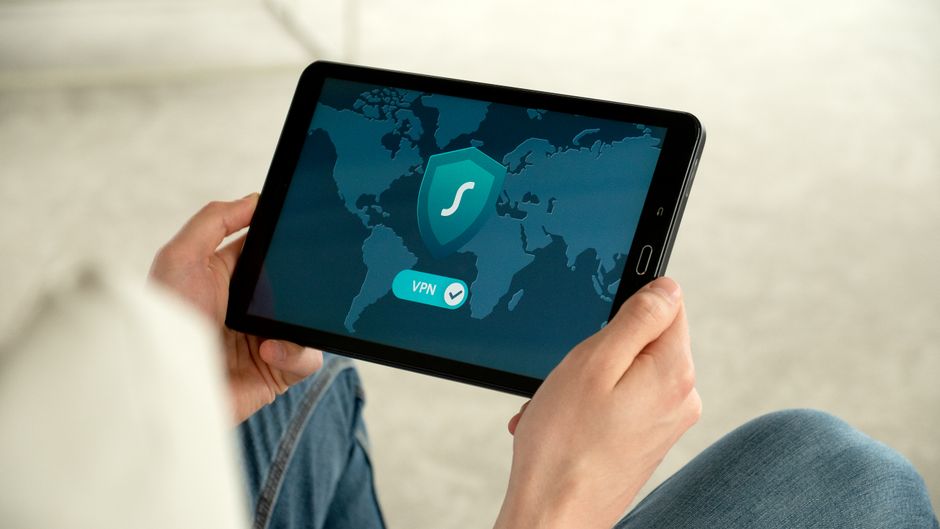
Compare the top VPN Security Posture Management (VSPM) platforms for 2026. Enhance your network security with our expert analysis and buying guide.
In the rapidly evolving digital landscape of 2026, where remote work is the norm and hybrid cloud infrastructures dominate, Virtual Private Networks (VPNs) remain a critical component for secure remote access. However, simply deploying a VPN is no longer enough. The dynamic nature of cyber threats, coupled with complex network configurations and stringent compliance demands, necessitates a proactive approach to managing your VPN’s security posture. This is where VPN Security Posture Management (VSPM) platforms become indispensable.
VSPM platforms go beyond basic VPN functionality, offering comprehensive tools to monitor, assess, and enforce security policies across your VPN infrastructure. They identify misconfigurations, flag vulnerabilities, ensure regulatory compliance, and provide real-time visibility into who and what is accessing your network. For organizations aiming to fortify their defenses against sophisticated attacks and maintain a robust security stance, understanding the leading VSPM solutions available in 2026 is paramount. ComparisonMath is here to guide you through the top contenders, ensuring you make an informed decision for your organization’s future security.
| Platform | Key Strengths | Key Considerations | 2026 Pricing Model (Typical) |
|---|---|---|---|
| AlgoSec Security Management Platform | Comprehensive firewall & network policy automation, strong compliance reporting, hybrid cloud support. | Steep learning curve, primarily enterprise-focused, higher cost. | Quote-based, often $25,000 – $50,000+ annually. |
| Tufin Orchestration Suite | Robust policy automation, real-time network visibility, multi-vendor support, predictive risk analysis. | Complex for SMBs, significant resource investment required, high entry cost. | Quote-based, often $20,000 – $45,000+ annually. |
| Zscaler Private Access (ZPA) | True Zero Trust Network Access (ZTNA), enhanced endpoint posture assessment, superior user experience, cloud-native. | Requires architectural shift (not direct VPN replacement), per-user subscription model. | Per-user subscription, typically $6 – $15 per user/month. |
| Palo Alto Networks Prisma Access / GlobalProtect | Unified SASE platform, robust ZTNA, advanced threat prevention, flexible for hybrid environments. | High cost, potential vendor lock-in, complexity for smaller IT teams. | Variable (bandwidth, users, modules), often $10,000+ annually. |
| Tenable.io (Network & Cloud Security) | Excellent vulnerability management, predictive prioritization, broad asset discovery, strong compliance for network devices. | Primarily vulnerability-focused (not policy enforcement), generates large data sets, additional tools needed for full orchestration. | Asset-based subscription, typically $1,500 – $5,000+ for 100-250 assets annually. |
As of October 2026, AlgoSec continues to be a leader in network security policy management, offering a robust platform crucial for maintaining the security posture of complex VPN environments. Its core strength lies in automating and orchestrating security policy changes across firewalls, routers, and VPN gateways from various vendors. This ensures consistent policy enforcement and minimizes human error, a common cause of security breaches.
AlgoSec’s 2026 iteration boasts deeper integration with modern SASE (Secure Access Service Edge) frameworks and AI-driven risk assessment capabilities, specifically for hybrid cloud VPN configurations. It provides unparalleled visibility into network connectivity and security policies, allowing organizations to visualize VPN traffic flows and identify potential policy violations or shadow IT. Enterprises appreciate its comprehensive compliance reporting, which streamlines audits for standards like GDPR, HIPAA, and PCI DSS by demonstrating adherence to security policies across all VPN components. Pricing is typically quote-based, reflecting the complexity and scale of the deployment, with annual costs often starting from $25,000 for mid-sized enterprises and scaling significantly upwards for large, multi-vendor environments.
Tufin remains a formidable competitor in the network security policy automation space in 2026, delivering an Orchestration Suite that is highly relevant for VPN security posture management. The platform provides end-to-end visibility, automation, and control over network security policies across on-premises, hybrid, and cloud environments, encompassing firewalls, routers, and VPN gateways.
In 2026, Tufin has enhanced its suite with improved support for Kubernetes and containerized VPN services, reflecting the shift towards microservices architectures. Its powerful API-driven integrations facilitate security-as-code practices, allowing organizations to embed security policy checks directly into CI/CD pipelines for their VPN deployments. Predictive risk assessment capabilities help administrators understand the security impact of proposed VPN policy changes before they are implemented, preventing misconfigurations. Tufin’s pricing structure, similar to AlgoSec, is quote-based and depends on the number of devices and features, typically ranging from $20,000 to $45,000+ annually for enterprise clients.
Zscaler Private Access (ZPA) redefined secure access and, in 2026, stands as a prime example of modern “VPN Security Posture Management” through a Zero Trust lens. While not a traditional VPN, ZPA securely connects authorized users directly to internal applications without placing them on the network, effectively eliminating the traditional VPN attack surface. This architectural shift inherently improves security posture by default.
ZPA’s 2026 enhancements include advanced AI-powered adaptive access control, which dynamically adjusts user privileges based on real-time risk factors, device posture, and identity context. Its robust endpoint posture assessment capabilities check for OS patching, anti-malware status, and device certificates before granting access to applications, not just the network. This ensures only healthy, compliant devices can connect, a superior form of “VPN security.” ZPA also offers new secure access features for IoT/OT devices, extending its reach. Pricing is a per-user subscription model, typically ranging from $6 to $15 per user per month, depending on the feature set and volume, making it highly scalable and predictable.
Palo Alto Networks offers a comprehensive approach to secure remote access and network security posture management through its Prisma Access SASE platform, complemented by GlobalProtect. In 2026, Prisma Access has matured into a fully unified cloud-delivered security service that seamlessly integrates ZTNA, Cloud SWG (Secure Web Gateway), CASB (Cloud Access Security Broker), and SD-WAN functionalities.
For VPN security posture, Prisma Access’s ZTNA capabilities are crucial. It provides granular access control based on user identity, device posture, and application context, moving beyond traditional network-centric VPN access. GlobalProtect, a component of the platform, provides traditional VPN capabilities but is increasingly integrated into the broader ZTNA framework, offering advanced threat prevention and AI/ML-driven threat detection for all traffic, including VPN connections. Its deep integrations with third-party posture agents and enhanced IoT security features ensure comprehensive device security. Pricing for Prisma Access is highly variable, based on bandwidth consumption, number of users, and selected security modules, often ranging from $10,000 annually for smaller deployments to several hundreds of thousands for large-scale enterprises.
Tenable.io, while primarily a vulnerability management platform, plays a critical role in VPN Security Posture Management by providing unparalleled visibility into the security health of network devices, including VPN gateways and firewalls. As of October 2026, Tenable.io offers a unified platform for managing cyber exposure across modern attack surfaces, including hybrid cloud and on-premises infrastructure.
Its 2026 iteration features predictive prioritization using advanced analytics and machine learning, helping organizations focus on vulnerabilities that pose the greatest risk to their VPN infrastructure. Enhanced attack path analysis incorporates network topology, allowing security teams to understand how an attacker could leverage a vulnerability on a VPN server. Agentless scanning for OT/IoT devices ensures that even non-traditional network components are assessed for weaknesses. While Tenable.io doesn’t directly enforce network policies, its comprehensive vulnerability and configuration assessment capabilities are foundational for identifying and remediating weaknesses in your VPN setup. Pricing is asset-based, typically starting around $1,500 to $5,000 annually for 100-250 assets, with costs scaling based on the number of assets and additional modules.
Selecting the best VPN Security Posture Management platform in 2026 requires a careful evaluation of your organization’s specific needs, existing infrastructure, and long-term security strategy. Here’s a breakdown of key factors to consider:
1. Understand Your Current VPN Architecture: Are you heavily reliant on traditional, on-premises VPNs, or are you transitioning to a hybrid cloud model? Solutions like AlgoSec and Tufin excel in managing complex, multi-vendor traditional network policy environments. If you’re embracing a cloud-first or Zero Trust strategy, Zscaler ZPA or Palo Alto Networks Prisma Access will be more aligned with your future state, fundamentally altering how secure access is managed.
2. Assess Your Compliance Requirements: Regulatory mandates such as GDPR, HIPAA, PCI DSS, or SOC 2 heavily influence the need for robust logging, auditing, and policy enforcement capabilities. Platforms like AlgoSec and Tufin offer detailed compliance reporting and automation features that can significantly ease audit burdens. Tenable.io also provides strong compliance checks for vulnerabilities and configurations, essential for demonstrating due diligence.
3. Evaluate Your Budget and Resources: These platforms vary widely in cost and complexity. Enterprise-grade solutions like AlgoSec, Tufin, and Palo Alto Networks Prisma Access often involve significant upfront investment and require dedicated security teams for optimal management. Zscaler ZPA’s per-user model can offer predictable scaling, while Tenable.io’s asset-based pricing is efficient for vulnerability management. Consider not just the software cost but also implementation, training, and ongoing maintenance.
4. Prioritize Key Features: Do you need comprehensive network policy automation and orchestration across diverse devices (AlgoSec, Tufin)? Is real-time endpoint posture assessment and identity-driven access control your priority (Zscaler ZPA, Palo Alto Networks Prisma Access)? Or is foundational vulnerability management and configuration assessment the primary gap (Tenable.io)? Many organizations will find a combination of these capabilities necessary, potentially integrating multiple tools.
5. Consider Future-Proofing with ZTNA and SASE: The cybersecurity landscape is rapidly moving towards Zero Trust Network Access (ZTNA) and Secure Access Service Edge (SASE) architectures. Solutions from Zscaler and Palo Alto Networks are at the forefront of this evolution, offering platforms that inherently improve your security posture by shifting from network-centric to identity and application-centric access. Investing in these can significantly future-proof your secure remote access strategy.
By thoroughly evaluating these points, you can narrow down the options and choose a VSPM platform that not only addresses your immediate security needs but also supports your long-term strategic objectives.
1. What is VPN Security Posture Management (VSPM)?
VPN Security Posture Management (VSPM) refers to a set of processes and tools designed to continuously monitor, assess, and enforce security policies and configurations across an organization’s VPN infrastructure. It ensures that VPN gateways, policies, and connecting devices meet required security standards, minimize vulnerabilities, and comply with regulatory requirements. This goes beyond simply running a VPN, focusing instead on the holistic security health of the VPN environment.
2. How do VSPM platforms differ from traditional VPNs?
Traditional VPNs primarily provide encrypted tunnels for secure communication over untrusted networks. They establish connectivity. VSPM platforms, on the other hand, focus on managing the *security* of that connectivity and the underlying infrastructure. They provide visibility into configurations, detect vulnerabilities in VPN gateways, automate policy changes, ensure compliance, and often extend to assessing the security posture of devices *before* they are allowed to connect via VPN. Some modern VSPM concepts are even integrated into Zero Trust Network Access (ZTNA) solutions that aim to replace traditional VPNs entirely by providing more granular, identity-driven access based on continuous posture assessment.
3. Can VSPM platforms integrate with Zero Trust Network Access (ZTNA)?
Absolutely. In 2026, the lines between advanced VSPM and ZTNA are increasingly blurred. Modern VSPM platforms, especially those that are part of SASE frameworks like Zscaler Private Access or Palo Alto Networks Prisma Access, incorporate ZTNA principles. They leverage endpoint posture assessment, identity verification, and least-privilege access to ensure that only authorized and healthy devices and users can access specific applications, regardless of their network location. This represents the most advanced form of “VPN security posture management” by proactively minimizing the attack surface and continuously verifying trust.
4. What are the key benefits of implementing a VSPM solution?
Implementing a robust VSPM solution offers numerous benefits. It significantly reduces the risk of security breaches by identifying and remediating misconfigurations and vulnerabilities in your VPN infrastructure. It streamlines compliance audits through automated reporting and policy enforcement. VSPM improves operational efficiency by automating routine security tasks and providing centralized visibility. Ultimately, it strengthens your overall cybersecurity posture, enhances remote access security, and builds greater resilience against evolving cyber threats.
5. Is VSPM necessary if I’m already using a firewall?
Yes, VSPM is highly beneficial even if you have firewalls in place. While firewalls are crucial for controlling network traffic, they typically manage perimeter security. VSPM platforms, especially those focused on network policy management, provide a higher level of orchestration and automation for firewall rules, ensuring they are optimized, consistent, and free from conflicts across all your network devices, including VPN gateways. They provide visibility into how firewall rules impact VPN access, audit changes, and ensure compliance in a way a standalone firewall management interface cannot. For ZTNA-centric solutions, the approach to access is fundamentally different and more granular than traditional firewall rules alone.
After a thorough examination of the leading platforms available in October 2026, the clear winner for comprehensive VPN Security Posture Management, especially for organizations looking to future-proof their secure remote access, is Zscaler Private Access (ZPA). While traditional network policy managers like AlgoSec and Tufin remain indispensable for complex legacy and hybrid VPN environments, ZPA truly embodies the evolution of secure access by integrating security posture management at its core within a Zero Trust framework.
ZPA’s ability to eliminate the traditional VPN attack surface, coupled with its advanced AI-powered adaptive access control and robust endpoint posture assessment, provides a superior and inherently more secure approach to managing how users and devices connect to applications. It addresses the fundamental challenges of modern remote work and hybrid infrastructures by continuously verifying trust and granting least-privilege access. Its cloud-native architecture offers unparalleled scalability, a superior user experience, and a streamlined management experience compared to the complexities of managing traditional VPN infrastructure. For organizations ready to embrace the future of secure access, Zscaler Private Access provides the most proactive and resilient VPN security posture management solution in 2026.
Prices and features mentioned are accurate as of the date of publication. Always check the official provider website for the most current pricing and availability.