Physical Address
304 North Cardinal St.
Dorchester Center, MA 02124
Physical Address
304 North Cardinal St.
Dorchester Center, MA 02124

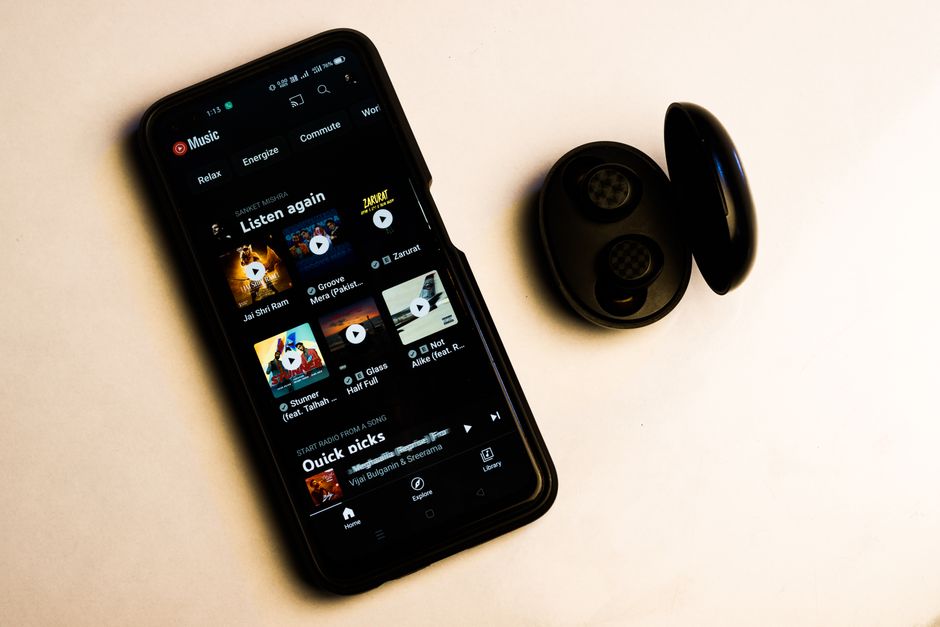
Compare wireless earbuds and in-ear monitors in 2026. Explore sound quality, active noise cancellation, pricing, and find the right audio gear.
Choosing the right personal audio gear in late 2026 can feel overwhelming with so many advanced options flooding the market. Whether you are commuting, working out, or mixing tracks in a home studio, understanding the fundamental differences between consumer wireless earbuds and audiophile-grade in-ear monitors (IEMs) is essential. While both sit snugly inside your ear canal, their engineering philosophies, sound signatures, and use cases diverge significantly.
Consumer earbuds have evolved rapidly, featuring cutting-edge active noise cancellation (ANC), spatial audio processing, and seamless Bluetooth connectivity. On the other hand, in-ear monitors prioritize pure acoustic fidelity, precise frequency response curves, and physical noise isolation through wired connections. For everyday users and audiophiles alike, knowing which category best fits your lifestyle prevents buyer’s remorse and ensures optimal sound reproduction.
This comprehensive 2026 comparison breaks down the pros and cons, deep-dives into industry-leading products, and guides you through the ultimate purchasing decision. Let us examine how modern earbuds and IEMs stack up against one another in today’s competitive audio landscape.
The following table provides an at-a-glance overview comparing typical consumer wireless earbuds and wired in-ear monitors across core performance metrics.
| Feature | Consumer Wireless Earbuds | In-Ear Monitors (IEMs) |
|---|---|---|
| Primary Connectivity | Bluetooth 5.4 / LE Audio (Wireless) | Detachable 3.5mm, 4.4mm, or USB-C (Wired) |
| Sound Signature | V-shaped, bass-boosted, DSP-enhanced | Flat, studio-neutral, highly accurate |
| Active Noise Cancellation | Advanced digital ANC with transparency modes | Passive isolation via foam/silicone tips |
| Price Range | $100 to $400+ | $30 to $1,500+ |
| Durability & Repair | Low (battery degradation limits lifespan) | High (replaceable cables, no internal batteries) |
| Best Use Case | Commuting, workouts, hands-free calls | Critical listening, stage monitoring, audiophiles |
To truly understand the debate between earbuds and in-ear monitors, we must evaluate the standout market offerings defining late 2026. We will look at two industry benchmarks: the Apple AirPods Pro 2 (Lightning/USB-C refreshed model) representing the pinnacle of wireless earbuds, and the Moondrop Blessing 3 representing standard-setting mid-tier in-ear monitors.
The Apple AirPods Pro 2 retail for around $249 and represent the gold standard for mainstream wireless convenience. Equipped with Apple’s H2 chip, these earbuds deliver exceptional active noise cancellation that effectively silences low-frequency commuter drone and office chatter. They feature seamless device switching within the Apple ecosystem, spatial audio with dynamic head tracking, and robust IP54 dust, sweat, and water resistance. However, their reliance on integrated lithium-ion batteries means performance will inevitably degrade after two to three years of heavy use, rendering them electronic waste once the battery cell fails entirely.
Conversely, the Moondrop Blessing 3 retails for approximately $319 and takes a radically different hardware approach. Designed for critical listeners, these hybrid IEMs utilize a dual-dynamic driver and four balanced armature driver configuration per earpiece to deliver astonishingly clear separation and a balanced frequency response. There is no Bluetooth lag, no signal compression, and zero battery degradation because they rely on a detachable physical braided cable terminating in standard audio jacks. While they lack active noise cancellation and smart features, their passive isolation achieved via deep-insertion silicone tips blocks out ambient noise effectively, and they will easily last for decades with basic care.
Selecting between earbuds and in-ear monitors ultimately depends on your daily environment, budget, and listening priorities. If your routine involves frequent traveling, taking conference calls on the go, or exercising at the gym, wireless earbuds are the clear winner. Their lack of cables ensures total freedom of movement, while built-in microphones and active noise cancellation make urban commuting vastly more comfortable.
If your primary goal is pure music appreciation, home studio production, or enjoying high-resolution lossless audio tracks without digital compression, in-ear monitors are the superior investment. IEMs offer vastly better durability since cables can be swapped out if damaged, and their multi-driver acoustic architecture reveals subtle details in complex music tracks that consumer wireless buds simply smooth over. Consider your tolerance for cables versus the convenience of wireless charging cases before making your final purchase.
Can I use in-ear monitors with my smartphone?
Yes, but most modern smartphones lack a 3.5mm headphone jack. You will likely need a high-resolution portable USB-C to 3.5mm dongle DAC (Digital-to-Analog Converter) to get the best audio quality from wired IEMs.
Do wireless earbuds sound as good as wired IEMs?
While high-end wireless earbuds sound remarkably good thanks to advanced digital signal processing (DSP) and high-bitrate codecs, wired IEMs generally provide more natural timbre, wider soundstage, and superior resolution at equivalent price points.
Are in-ear monitors waterproof or suitable for workouts?
Most IEMs are designed for studio monitoring or casual indoor listening and lack official IP water-resistance ratings. Sweating heavily into complex multi-driver IEM housings can damage the internal components, making wireless earbuds a safer gym companion.
The choice between earbuds and in-ear monitors boils down to a classic trade-off between modern convenience and uncompromising acoustic fidelity. Wireless earbuds like the Apple AirPods Pro 2 dominate daily life through active noise cancellation, smart features, and cable-free portability, making them the best option for 90 percent of general consumers. However, for true music lovers, musicians, and audio purists willing to manage a wired connection, in-ear monitors like the Moondrop Blessing 3 deliver superior sound clarity, longevity, and long-term value that digital earbuds cannot match.
Prices and features mentioned are accurate as of the date of publication. Always check the official provider website for the most current pricing and availability.




