Physical Address
304 North Cardinal St.
Dorchester Center, MA 02124
Physical Address
304 North Cardinal St.
Dorchester Center, MA 02124

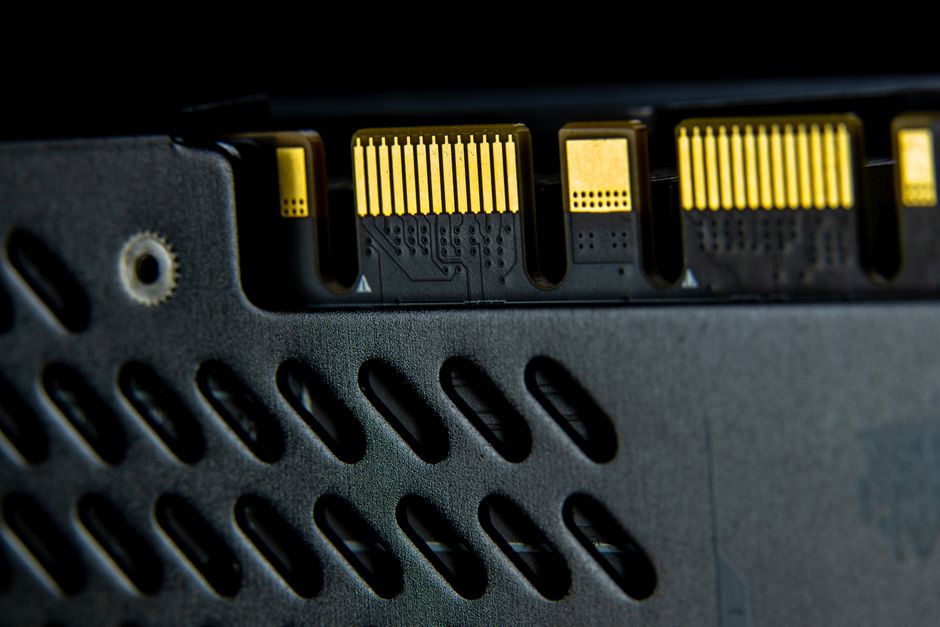
Compare the best 25GbE and 100GbE Network Interface Cards for rugged computing platforms in 2026. Get detailed specs, pricing, and a buying guide.
In today’s data-driven world, the need for high-speed, reliable networking extends far beyond climate-controlled data centers. From the unforgiving battlefields and autonomous vehicles to remote industrial sites and subsea exploration, rugged computing platforms are at the forefront of innovation. These systems demand network interface cards (NICs) that can withstand extreme conditions while delivering uncompromised data throughput and ultra-low latency.
As of October 2026, the discussion around high-performance networking in rugged environments often centers on two formidable contenders: 25 Gigabit Ethernet (25GbE) and 100 Gigabit Ethernet (100GbE). Each offers distinct advantages, but choosing the right one can significantly impact system performance, power consumption, and overall cost. This comprehensive guide from ComparisonMath will delve into the leading 25GbE and 100GbE NICs available for rugged computing platforms this year, helping you make an informed decision.
The rapid proliferation of edge AI, sensor fusion, and real-time data processing in critical applications necessitates a meticulous evaluation of networking capabilities. Whether you’re upgrading an existing system or designing a new, cutting-edge rugged solution, understanding the nuances between 25GbE and 100GbE NICs is paramount. We’ll explore the latest product offerings, current pricing, and key specifications to navigate this crucial technology choice.
| Feature | 25GbE NICs (General) | 100GbE NICs (General) |
|---|---|---|
| Maximum Throughput | 25 Gbps per port | 100 Gbps per port |
| Cost (Estimated 2026) | Moderate ($500 – $1,000) | High ($1,800 – $4,000+) |
| Power Consumption | Lower (10-25W typical) | Higher (30-60W typical) |
| Latency (Typical) | Very Low (<1.5 µs) | Extremely Low (<0.8 µs) |
| PCIe Interface (2026) | PCIe 5.0 x8/x16 | PCIe 6.0 x16 |
| Port Connector Type | SFP28 | QSFP28 / OSFP |
| Use Cases (Rugged) | Edge processing, Industrial IoT, Sensor aggregation, Moderate AI inference | High-performance computing (HPC), Extreme Edge AI, Real-time sensor fusion, Massive data ingest, Defense & Aerospace |
| Cooling Requirements | Moderate | Significant (often with heat sinks) |
25GbE has firmly established itself as the sweet spot for many demanding rugged applications, offering a substantial performance upgrade over 10GbE without the significant cost and power overhead of 100GbE. Its adoption is widespread, with platforms like Core Systems’ ATMOS2 rugged computing system now incorporating 25GbE ultra-low-latency networking solutions as a standard offering, demonstrating its maturity and reliability in harsh environments.
The NVIDIA ConnectX-8 R25 represents the pinnacle of 25GbE technology tailored for rugged deployments. Building on NVIDIA’s rich heritage with Mellanox, this card leverages advanced offload engines and the latest PCIe 5.0 x8 interface to deliver exceptional throughput with minimal CPU utilization. Its dual-port SFP28 configuration ensures redundancy and high-density connectivity.
Key features for the 2026 ConnectX-8 R25 include enhanced hardware offloads for RDMA over Converged Ethernet (RoCE), GPUDirect Storage, and advanced packet processing, critical for AI and data-intensive edge workloads. It boasts an operating temperature range of -40°C to 85°C, compliance with MIL-STD 810H standards for shock and vibration, and an estimated power consumption of around 18-22W. Pricing for the dual-port ConnectX-8 R25 is approximately $750.
Intel continues its strong presence in the networking space with the E827-25G-R, a robust 25GbE solution designed for industrial and military applications. This dual-port SFP28 NIC utilizes a PCIe 5.0 x8 interface, providing excellent bandwidth and low-latency performance. Intel’s Application Device Queues (ADQ) and Dynamic Device Personalization (DDP) are key differentiators, allowing for optimized data flow and enhanced network efficiency.
The E827-25G-R supports iWARP RDMA and offers comprehensive hardware-based security features, making it ideal for secure communications in challenging environments. Its rugged design ensures reliable operation from -40°C to 85°C and compliance with various industrial certifications. Expect power consumption in the 15-20W range. The approximate street price for the dual-port Intel E827-25G-R is around $600.
Broadcom’s NetXtreme E-BCM57500-R is another formidable contender, emphasizing multi-host capabilities and power efficiency for rugged edge deployments. This dual-port SFP28 NIC integrates seamlessly with PCIe 5.0 x8 systems, offering robust performance for a variety of tasks, from sensor data aggregation to real-time control systems. Its advanced TruePHY technology ensures reliable link establishment even in noisy environments.
The BCM57500-R features robust hardware offloads, secure boot functionality, and extensive virtualization support, catering to complex ruggedized server and embedded applications. It’s built to withstand extreme temperatures (-40°C to 85°C) and demanding physical conditions, typically consuming around 16-21W. The dual-port Broadcom NetXtreme E-BCM57500-R is priced competitively at approximately $650.
For applications where every microsecond and every gigabit counts, 100GbE NICs are indispensable. These cards are engineered for the most demanding workloads at the extreme edge, including high-resolution sensor processing, massive AI model inference, and real-time distributed computing in aerospace and defense.
The NVIDIA ConnectX-9 V100 sets a new benchmark for 100GbE performance in rugged environments. Designed for the most intensive AI, HPC, and data analytics workloads, this dual-port QSFP28/OSFP NIC utilizes a cutting-edge PCIe 6.0 x16 interface. It delivers unparalleled throughput and sub-microsecond latency, making it essential for mission-critical applications.
The V100 incorporates NVIDIA’s Quantum-X offload engines, offering advanced capabilities like enhanced GPUDirect RDMA, in-network computing, and sophisticated network virtualization. Its rugged design ensures operation in harsh conditions (-40°C to 85°C, MIL-STD 810H). Power consumption is higher, typically in the 45-55W range, reflecting its extreme performance. The estimated price for the dual-port ConnectX-9 V100 is around $3,000.
Intel’s E910-100G-R is a powerful 100GbE solution targeting ruggedized data processing units and high-end embedded systems. Featuring a PCIe 6.0 x16 interface and dual QSFP28 ports, this NIC provides robust and consistent performance for applications requiring massive data throughput. Its enhanced Dynamic Device Personalization (DDP) and programmable T-NIC (Telemetry NIC) capabilities offer unparalleled flexibility for network traffic management and monitoring.
This card is engineered for ultra-low latency and supports advanced hardware-based security features, crucial for defense and aerospace. It maintains reliable operation across a -40°C to 85°C temperature range and meets stringent environmental standards. Power usage typically falls between 40-50W. The Intel E910-100G-R dual-port NIC is currently priced at approximately $2,500.
Marvell’s Aquantia NovaNet R-100 offers a compelling 100GbE solution with a strong focus on power efficiency without sacrificing performance. This dual-port QSFP28 NIC leverages a PCIe 6.0 x16 interface to provide high bandwidth and low latency, making it suitable for high-density edge computing and AI inference. Marvell’s expertise in robust PHY design ensures excellent signal integrity and reliability.
The NovaNet R-100 features advanced traffic management, secure data path, and broad operating system support, simplifying integration into diverse rugged platforms. It operates reliably from -40°C to 85°C and consumes a relatively efficient 35-45W for its class. The estimated price for the dual-port Marvell Aquantia NovaNet R-100 is around $2,200, offering a competitive high-performance option.
Selecting the ideal network interface card for your rugged computing platform in 2026 requires a careful evaluation of several critical factors. The decision between 25GbE and 100GbE isn’t just about raw speed; it’s about optimizing for your specific application’s demands, budget, and environmental constraints.
First, assess your **performance requirements**. Do your applications involve massive data ingestion, real-time AI inference, or high-fidelity sensor fusion? If so, the sub-microsecond latency and immense bandwidth of 100GbE might be justified. For general-purpose edge computing, industrial IoT gateways, or moderate AI tasks, 25GbE often provides more than sufficient performance, such as in Core Systems’ ATMOS2 platforms.
Next, consider **cost and budget**. 100GbE NICs, along with their associated transceivers and cabling, are significantly more expensive than their 25GbE counterparts. A 25GbE setup can be two to three times more cost-effective. Evaluate if the performance uplift of 100GbE genuinely translates into a tangible return on investment for your use case.
**Power consumption and thermal management** are paramount in rugged systems, which often operate in passively cooled or tightly constrained enclosures. 100GbE NICs typically consume significantly more power and generate more heat than 25GbE cards. Ensure your platform’s power delivery and cooling infrastructure can adequately support the chosen NIC, especially under extreme ambient temperatures.
**Ruggedization standards and operating environment** cannot be overlooked. Ensure the NIC is explicitly rated for the temperatures, shock, vibration, and humidity levels it will encounter. Look for certifications like MIL-STD 810H/G or relevant industrial IP ratings. Most rugged NICs are fanless, relying on robust heatsinks for thermal dissipation.
Finally, examine the **ecosystem and integration complexity**. Consider driver support, management tools, and compatibility with your existing network infrastructure and operating system. While both 25GbE and 100GbE are mature technologies, ensure seamless integration with other components of your rugged computing platform, such as GPUs for AI workloads or specialized storage solutions.
A: Yes, for a wide range of rugged applications, 25GbE offers an excellent balance of performance, cost, and power efficiency. It provides a significant upgrade over 10GbE and is capable of handling most edge processing, sensor aggregation, and moderate AI inference tasks. Platforms like the Core Systems ATMOS2 leverage 25GbE effectively for many mission-critical deployments.
A: The primary drivers for 100GbE in rugged platforms are extremely high data throughput requirements, ultra-low latency for real-time decision-making, and massive parallel processing for advanced AI/ML models or sensor fusion. This is common in defense, autonomous vehicles, and high-performance scientific edge computing.
A: Yes. 25GbE NICs typically use SFP28 transceivers and cables, while 100GbE NICs generally use QSFP28 or the newer OSFP transceivers and cables. For rugged deployments, Active Optical Cables (AOCs) are often preferred for longer distances due to their immunity to electromagnetic interference and lighter weight compared to Direct Attach Copper (DAC) cables.
A: It is strongly advised against using commercial-grade NICs in rugged platforms. Commercial cards are not designed to withstand extreme temperatures, shock, vibration, humidity, or electromagnetic interference. Ruggedized NICs feature specialized components, robust thermal solutions, and reinforced designs to ensure reliability and longevity in harsh environments, which is critical for mission-critical applications.
A: Ruggedized NICs typically employ larger, more robust passive heatsinks and are designed to operate without active fans, which would be vulnerable to dust, moisture, and shock. They rely on the cooling mechanisms of the host rugged computing chassis, such as conduction cooling or advanced convection designs, to dissipate heat effectively.
For most rugged computing platforms in 2026, **25GbE Network Interface Cards represent the optimal choice**. They strike an excellent balance between high performance, manageable power consumption, and cost-effectiveness. Solutions like the NVIDIA ConnectX-8 R25, Intel E827-25G-R, and Broadcom NetXtreme E-BCM57500-R offer significant bandwidth and low latency suitable for a vast array of demanding edge applications, from industrial automation to sophisticated sensor networks. The widespread adoption by platforms such as the Core Systems ATMOS2 solidifies 25GbE’s position as a mature and highly reliable networking standard for harsh environments.
However, for specialized applications demanding the absolute pinnacle of networking performance—where sub-microsecond latency is non-negotiable, and massive data pipelines for extreme AI or real-time sensor fusion are critical—**100GbE NICs are indispensable**. Cards like the NVIDIA ConnectX-9 V100, Intel E910-100G-R, and Marvell Aquantia NovaNet R-100 provide the necessary horsepower. These platforms are typically found in advanced defense systems, high-fidelity autonomous vehicles, and next-generation scientific research deployments at the extreme edge where budget constraints are secondary to performance imperatives. Ultimately, your choice should align directly with your application’s specific data throughput, latency, and environmental resilience requirements, keeping a keen eye on the total cost of ownership and power footprint.
Prices and features mentioned are accurate as of the date of publication. Always check the official provider website for the most current pricing and availability.




