Physical Address
304 North Cardinal St.
Dorchester Center, MA 02124
Physical Address
304 North Cardinal St.
Dorchester Center, MA 02124

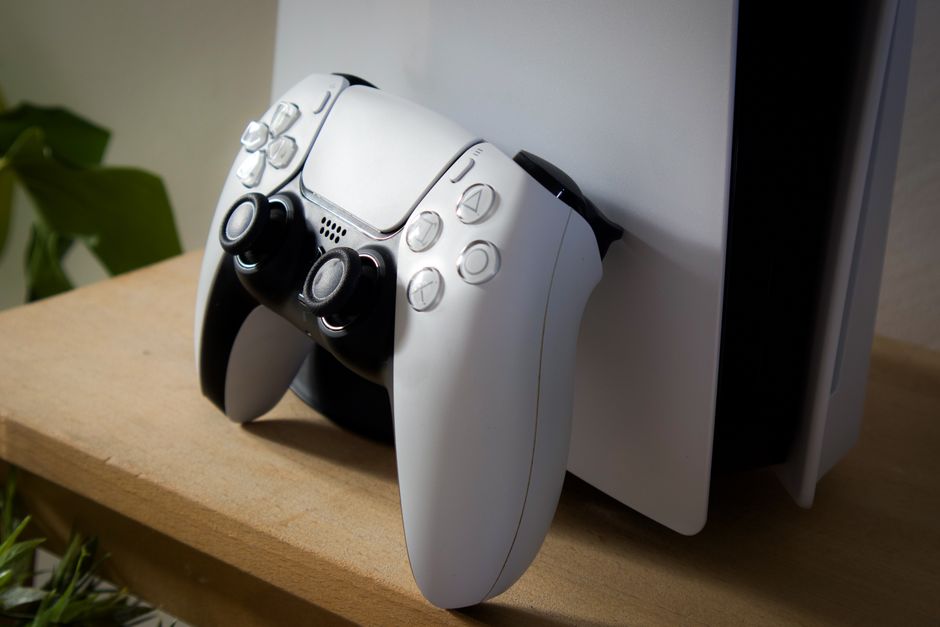
Can Valve's $1,049 Steam Machine beat Sony's $699 PS5 Pro in the living room? We compare specs, performance, library, and value to find the true winner.
The console gaming market has long been defined by a predictable rhythm, with players historically choosing between the walled gardens of Sony, Microsoft, or Nintendo. However, the living room landscape has shifted dramatically in 2026. On June 29, 2026, Valve surprised the gaming world by launching its brand-new Steam Machine, codenamed “Fremont”. Packing the open-source power of SteamOS 3.8 into a compact, six-inch black cube, this premium device aims to bring the endless freedom of PC gaming straight to your television. It enters a market fiercely defended by Sony’s mid-generation juggernaut: the PlayStation 5 Pro.
Originally released in late 2024 for $699.99, the PS5 Pro has established itself as the gold standard for high-fidelity console gaming. With bespoke hardware-accelerated ray tracing and AI upscaling via PlayStation Spectral Super Resolution (PSSR), Sony’s machine represents the peak of mainstream “plug-and-play” performance. In contrast, Valve’s 2026 Steam Machine bridges the gap between console convenience and PC openness, though it arrives with a jaw-dropping starting price of $1,049 due to severe component shortages. This leaves gamers with a massive dilemma: should you invest in Valve’s flexible desktop-hybrid, or stick to Sony’s refined, cost-effective powerhouse?
To understand how these two titans stack up on paper, here is a detailed comparison of their pricing, hardware architectures, and operating systems. While the PS5 Pro focuses heavily on custom graphical bandwidth, the Steam Machine leverages newer, more efficient processing architectures.
| Feature | Valve Steam Machine (2026) | Sony PlayStation 5 Pro |
|---|---|---|
| Launch Date | June 29, 2026 | November 7, 2024 |
| Starting Price | $1,049 (512GB, no controller) | $699.99 (2TB, no disc drive) |
| Processor (CPU) | Semi-custom AMD Zen 4 (Ryzen 5 7540U equivalent) | Custom 8-core AMD Zen 2 (up to 3.85 GHz) |
| Graphics (GPU) | Semi-custom AMD RDNA 3 (Radeon RX 7600M equivalent) | Custom AMD Radeon RDNA 2/3 (16.7 TFLOPS) |
| System Memory | 16 GB DDR5 | 16 GB GDDR6 (576 GB/s) + 2 GB DDR5 (OS) |
| Internal Storage | 512 GB or 2 TB NVMe SSD | 2 TB Custom NVMe SSD |
| Operating System | SteamOS 3.8 (Linux-based) | Proprietary PlayStation OS |
| Upscaling Tech | AMD FSR 4.1 | PlayStation Spectral Super Resolution (PSSR) |
| Form Factor | 6-inch black cube (152 x 162 x 156 mm) | Tower (386 x 216 x 89 mm) |
As the table demonstrates, these systems approach the living room from opposite directions. While the PS5 Pro leans on a customized, high-speed graphics processor coupled with high-speed unified memory, the Steam Machine utilizes modular, modern PC components that offer massive flexibility at a higher entry price.
The 2026 Valve Steam Machine, affectionately dubbed the “Gabecube,” is a marvel of small-form-factor engineering. Measuring roughly six inches on all sides and weighing 2.6 kilograms, it packs an integrated power supply, gigabit Ethernet, DisplayPort 1.4, HDMI 2.0, and multiple USB ports into an exceptionally compact form factor. Unlike traditional gaming PCs, it operates entirely without a bulky external brick.
Under the hood, the Steam Machine is powered by a semi-custom AMD Zen 4 CPU and a semi-custom AMD RDNA 3 GPU. The system is backed by 16 GB of DDR5 memory. The base 512 GB SSD configuration starts at a steep $1,049, while a higher-end 2 TB model is priced at $1,349. These prices jump to $1,128 and $1,428, respectively, if you opt for bundles that include Valve’s new second-generation Steam Controller.
Valve has explained that a global shortage of RAM and SSD components forced their hand. While the Steam Deck was sold practically at a loss, the Steam Machine’s price reflects the hard reality of 2026 manufacturing costs. Running SteamOS 3.8, it offers a console-like Big Picture interface with fast suspend/resume. Crucially, Valve has kept the system completely open; you can drop into a full Linux desktop, install third-party storefronts like GOG, or run standard PC programs. Starting with SteamOS 3.8, players can even build their own equivalent machines using off-the-shelf components.
Sony’s PlayStation 5 Pro represents the pinnacle of dedicated console hardware. The PS5 Pro retains the standard console’s design but features a slightly ribbed aesthetic and lacks an out-of-the-box disc drive, which is sold separately for $79.99 alongside a $29.99 vertical stand. Even with these additions, its $699.99 entry price makes it significantly cheaper than Valve’s machine while including a generous 2 TB custom NVMe SSD.
The PS5 Pro’s silicon is an interesting mix of technologies. It features an 8-core AMD Zen 2 CPU running at up to 3.85 GHz. The custom GPU features 60 Compute Units delivering 16.7 TFLOPS of base performance, with ray tracing features augmented by AMD’s newer RDNA 4 architecture. To keep the system running smoothly, Sony paired the GPU with 16 GB of ultra-fast GDDR6 unified memory and added 2 GB of slower DDR5 system RAM dedicated entirely to background operating system tasks.
Sony’s primary weapon in the visual department is PlayStation Spectral Super Resolution (PSSR). This proprietary, hardware-accelerated AI upscaling technique uses Machine Learning to reconstruct images in real-time. It allows the PS5 Pro to deliver the razor-sharp image quality of a native 4K display while maintaining a locked 60 frames per second. Combined with Wi-Fi 7 connectivity, backward compatibility, and a highly polished television interface, the PS5 Pro is built to deliver high-end gaming with absolute simplicity.
Comparing the gaming performance of these devices reveals a fascinating trade-off, with the PS5 Pro acting as the undisputed graphics champion. Its custom GPU delivers 16.7 TFLOPS of power coupled with high-bandwidth GDDR6 memory (576 GB/s), whereas the Steam Machine’s RX 7600M-equivalent graphics chip functions closer to a mid-range PC. On a 4K television, the PS5 Pro’s PSSR upscaling yields an incredibly clean, stable image that easily outperforms AMD’s software-based FSR 4.1 upscaling on the Steam Machine.
However, the Steam Machine holds a massive advantage in its central processing unit (CPU). The Zen 4 architecture inside the Steam Machine is generations ahead of the PS5 Pro‘s aging Zen 2 CPU. In highly complex, CPU-heavy games—such as grand strategy titles, simulation games, and titles with dense crowds—the Steam Machine will deliver much more consistent frame rates. Furthermore, the Steam Machine’s custom thermal design keeps the system whisper-quiet, even under heavy loads, whereas the PS5 Pro can occasionally ramp up its fan noise during intense ray-traced sequences.
One must also consider the reality of software optimization. Games developed for the PS5 Pro are custom-tailored to a single set of hardware specifications, allowing developers to extract every drop of performance from the silicon. The Steam Machine relies on Valve’s Proton compatibility layer to translate Windows games into Linux in real-time. Consequently, while the Steam Machine can target up to 4K gaming, it is generally much happier delivering high-refresh-rate 1080p or 1440p gameplay compared to the PS5 Pro‘s native-like 4K output.
The choice between these two consoles ultimately comes down to how you prefer to acquire and play your games. The Steam Machine is built on Valve’s ecosystem, meaning if you already own a gaming PC or a Steam Deck, your entire library is instantly available on day one with zero extra charges. You will never have to pay a monthly subscription fee to play multiplayer games online, and you can take advantage of Steam’s legendary seasonal sales. Additionally, because the Steam Machine runs a fully open operating system, you are free to install mods, use emulation software to play retro classics, or use the machine as a fully functional desktop Linux PC.
Sony, by contrast, operates a traditional walled garden. To play multiplayer games online, you must subscribe to PlayStation Plus, which adds an ongoing yearly cost. Digital games are locked to the PlayStation Store, where prices tend to remain at the full retail price of $70 for much longer. However, Sony’s walled garden has two massive advantages: exclusive games and release windows. Franchises like Marvel’s Spider-Man are either completely unavailable on PC or delayed by several years.
Crucially, the release window disparity is highlighted by the upcoming launch of Grand Theft Auto VI (GTA 6). Rockstar Games has confirmed that GTA 6 will launch on consoles like the PS5 Pro first, with no PC version announced for day one. Because the Steam Machine plays PC builds, Valve’s thousand-dollar console will be entirely unable to play the biggest game of the generation at launch. For many mainstream gamers, this platform exclusivity and immediate access to massive AAA blockbusters make the PlayStation ecosystem an easy choice.
Both the Valve Steam Machine and the Sony PlayStation 5 Pro are incredible machines, but they cater to entirely different types of players. Your decision should be guided by your existing game collection, your budget, and how much you value ecosystem freedom.
You should choose the Sony PlayStation 5 Pro if:
You should choose the Valve Steam Machine if:
Q: Does the 2026 Steam Machine come with a controller?
A: No, the base $1,049 Steam Machine does not include a controller in the box. To get the second-generation Steam Controller, you must purchase the bundled configuration for $1,128, or buy the controller separately.
Q: Can the Steam Machine play Grand Theft Auto VI at launch?
A: No. Rockstar Games has scheduled GTA 6 to release exclusively on consoles first, meaning there will be no day-one PC version available on Steam. Steam Machine owners will have to wait for an official PC port to be announced and released.
Q: Is it possible to build your own Steam Machine?
A: Yes! Valve has officially confirmed that with the release of SteamOS 3.8, users can download the operating system for free and install it on their own custom-built PC hardware, allowing you to build an equivalent living room console for less money.
Q: Can the PS5 Pro play physical disc games?
A: No, it is a digital-only console out of the box. However, you can purchase and attach an official modular Ultra HD Blu-ray Disc Drive separately for $79.99.
Q: Which console runs quieter and cooler?
A: The Valve Steam Machine runs whisper-quiet even under heavy loads due to its highly efficient custom thermal design. While the PS5 Pro runs cooler than the base model, its fans can still become audible during demanding ray-traced sequences.
The battle for the 2026 living room is a spectacular showcase of modern technology, but it has a very clear, pragmatic winner for the majority of gamers. The Sony PlayStation 5 Pro takes the crown. At $699.99, it offers a level of graphical performance, specialized AI upscaling (PSSR), and ray tracing capability that the Steam Machine simply cannot match at a reasonable price point. With day-one access to generational blockbusters like Grand Theft Auto VI and Sony’s legendary first-party exclusives, the PS5 Pro stands out as the ultimate television gaming console.
Still, the Valve Steam Machine is an incredibly charming and powerful piece of open-source engineering. For PC enthusiasts with a deep hatred for multiplayer subscriptions and a desire to customize their experience, it is an absolute joy to own. However, with component shortages driving its price to a staggering $1,049, it remains a luxury enthusiast niche. For mainstream players looking for high-end, hassle-free TV gaming, the PS5 Pro remains the smarter, more powerful, and far more affordable choice.
Prices and features mentioned are accurate as of the date of publication. Always check the official provider website for the most current pricing and availability.