Physical Address
304 North Cardinal St.
Dorchester Center, MA 02124
Physical Address
304 North Cardinal St.
Dorchester Center, MA 02124

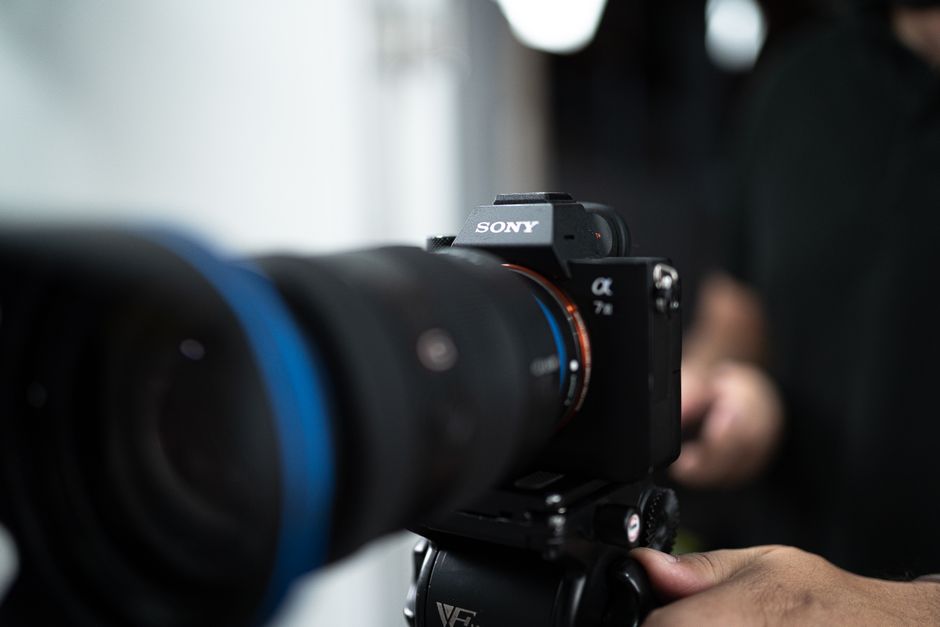
Deciding between the Sony A7 V and Canon EOS R6 Mark III? Our deep-dive 2026 comparison reviews specs, autofocus, video, and prices to help you choose.
The year 2026 has ushered in an exciting new chapter in the legendary camera rivalry between Sony and Canon. For years, the ‘7’ and ‘6’ series from both brands have represented the absolute sweet spot for enthusiast and professional hybrid photographers. These cameras are expected to do it all: capture stunning high-resolution stills of fast-moving action and record broadcast-quality video, all without breaking the bank. Today, we are pitching two of the newest and most advanced contenders in this space against each other: the Sony Alpha 7 V (Sony A7 V) and the Canon EOS R6 Mark III.
Sony released the A7 V at an MSRP of $2,899 (body only), introducing a highly anticipated ‘partially stacked’ 33-megapixel sensor to fix the slow readout speeds that plagued its predecessor. Meanwhile, Canon has launched the EOS R6 Mark III at $2,799 (body only), offering a massive 32.5-megapixel resolution upgrade and a suite of high-end cinema tools inherited from its professional lines. If you are looking to upgrade your hybrid setup, choosing between these two masterpieces is no easy feat. This comprehensive 2026 guide will break down the specifications, real-world performance, and ecosystem details of both systems to help you make an informed decision.
Before diving into our in-depth analysis, let us look at the key specifications of both cameras side-by-side to see how they compare on paper.
| Specification | Sony A7 V (ILCE-7M5) | Canon EOS R6 Mark III |
|---|---|---|
| Launch Price (Body Only) | $2,899 USD | $2,799 USD |
| Sensor Resolution | 33.0 Megapixels | 32.5 Megapixels |
| Sensor Type | Partially Stacked Exmor RS CMOS | Front-Side Illuminated (FSI) CMOS |
| Image Processor | BIONZ XR2 with Dedicated AI Unit | DIGIC X |
| Max Continuous Burst (Electronic) | 30 fps (Blackout-Free, 14-bit RAW) | 40 fps (with some rolling shutter) |
| In-Body Stabilization (IBIS) | Up to 7.5 stops (Center-rated) | Up to 8.5 stops |
| Max Video Capability | 4K up to 120p (1.5x crop), 4K 60p oversampled | 7K 60p RAW (Internal), 7K 3:2 Open Gate 30p |
| Memory Card Slots | Dual slots (Both accept SD UHS-II or CFexpress A) | Dual slots (1x CFexpress B, 1x SD UHS-II) |
| LCD Screen | 3.2-inch, 4-Axis Tilting & Articulating (2.1M dots) | 3.0-inch, Fully Articulating Vari-angle (1.62M dots) |
The sensor is the heart of any camera, revealing the core technological difference between these models. The Sony A7 V introduces a brand-new, full-frame 33-megapixel partially stacked Exmor RS CMOS sensor. By integrating high-speed readout circuitry onto the sensor’s edges, Sony has dramatically reduced rolling shutter distortion while preserving the rich dynamic range and clean shadow performance of traditional BSI sensors. The resulting files are exceptionally sharp, offering clean details and brilliant latitude for shadow recovery in post-production.
Conversely, Canon equipped the EOS R6 Mark III with a 32.5-megapixel Front-Side Illuminated (FSI) CMOS sensor—a massive 34% resolution upgrade over its predecessor. This sensor, shared with the cinema-focused EOS C50, delivers spectacular color rendition and warm skin tones out of the box. However, because it is not a stacked design, its 13.2ms readout speed makes it slightly more vulnerable to rolling shutter distortion in electronic shutter modes than the Sony A7 V.
Autofocus performance is elite on both systems, but they use different strengths. The Sony A7 V relies on its BIONZ XR2 processor paired with a dedicated AI processing unit. This configuration drives a 759-point phase-detection system with ultra-sticky Real-time Tracking for humans, animals, birds, insects, and vehicles. The AI is incredibly adept at keeping focus locked even if a subject turns around or gets temporarily obscured.
Canon’s EOS R6 Mark III employs the legendary Dual Pixel CMOS AF II, introducing ‘Register People Priority’ ported from the flagship EOS R1. This allows photographers to pre-register specific faces in-camera so the system prioritizes them over background crowds. Canon also retains an edge in low-light environments, achieving autofocus in near-total darkness where other systems struggle.
Speed is where these cameras diverge. The Sony A7 V capitalizes on its partially stacked sensor to deliver 30 fps continuous shooting with its electronic shutter. Crucially, this burst is blackout-free and features a Pre-Burst buffer up to 1 second. Thanks to the fast sensor readout, rolling shutter is virtually non-existent, making the electronic shutter fully usable for action, sports, and wildlife.
The Canon EOS R6 Mark III boasts a faster 40 fps electronic burst and 12 fps mechanical rate, complete with a 20-frame Pre-Continuous shooting mode. However, since the R6 Mark III relies on an FSI sensor, its 13.2ms readout speed produces noticeable rolling shutter distortion during fast panning. For fast action and tracking, Sony’s 30 fps is cleaner and far more practical in real-world scenarios.
For filmmakers and hybrid video creators, the landscape shifts dramatically. The Sony A7 V is a solid performer, recording oversampled 4K up to 60p and 4K up to 120p, though the latter incurs a severe 1.5x crop. It features S-Cinetone, S-Log3, and AI-based Auto-Framing, but lacks open-gate recording or internal RAW video options.
The Canon EOS R6 Mark III, however, is a video powerhouse. Borrowing tech from Canon’s Cinema EOS C50, it supports internal 12-bit Canon Cinema RAW Light at up to 7K 60p, alongside 3:2 Open Gate 7K recording up to 30p. Open Gate lets creators shoot a single full-sensor clip and seamlessly crop high-resolution vertical 9:16 vertical reels and horizontal 16:9 YouTube content. For serious video production, Canon takes the lead.
Design and handling are equally crucial. The Sony A7 V boasts a beautiful 3.2-inch 4-axis multi-angle touchscreen (2.1M dots), offering the best of both tilting and fully articulating designs. It also features dual matching card slots (both accepting SD or CFexpress Type A cards) and dual USB-C ports—allowing you to power the body while transferring data at the same time.
The Canon EOS R6 Mark III emphasizes ergonomics with a deeper, exceptionally comfortable grip and a 3.0-inch 1.62M-dot articulating screen. Canon opts for an asymmetrical storage setup: one fast, budget-friendly CFexpress Type B slot and one SD slot. It also upgrades to a robust, full-size HDMI Type A port, a welcome durability improvement over fragile micro-HDMI connections.
Ecosystem and budget choices go hand-in-hand. Sony’s E-mount is highly mature in 2026, giving creators access to hundreds of affordable, high-quality third-party lenses from Sigma, Tamron, and Samyang. This makes building a versatile kit incredibly cost-effective.
Canon’s RF mount features stellar optics, but remains more restrictive. While the R6 Mark III body is $100 cheaper than the A7 V, the lack of third-party zoom lenses means purchasing expensive L-series glass, potentially elevating the overall cost of your kit.
To simplify your buying decision, match the camera to your primary workflow:
Because the Canon EOS R6 Mark III lacks active internal cooling fans, continuous recording in 7K 60p Cinema RAW Light can hit thermal limits in warm environments. For typical commercial clips and standard hybrid use, overheating is rarely an issue. However, for long-form events or interviews, switching to oversampled 4K is recommended.
CFexpress Type B (used by Canon) is physically larger, significantly faster (up to 1700+ MB/s), and much cheaper per gigabyte. Sony’s CFexpress Type A is smaller, allowing Sony to keep compact, dual-purpose card slots that accept both SD and CFexpress Type A. However, Type A cards are slower and much more expensive.
Yes, if you shoot fast-moving action. A partially stacked sensor has a dramatically faster readout speed than the Canon’s FSI sensor. This prevents rolling shutter distortion (where fast-moving objects appear skewed or warped) when shooting at high frame rates with the electronic shutter.
Choosing between these hybrid heavyweights in 2026 depends entirely on your primary output.
For video-first creators and hybrid filmmakers, the Canon EOS R6 Mark III is the winner. Its internal 12-bit 7K Cinema RAW Light and 3:2 Open Gate capabilities are unparalleled for content creators crossing between vertical and horizontal platforms.
For action, sports, and wildlife photographers, the Sony A7 V takes the crown. The partially stacked sensor delivers a distortion-free 30 fps electronic shutter experience that is far more reliable for fast-moving subjects. Paired with Sony’s vast, cost-effective E-mount third-party lens ecosystem, the A7 V is the ultimate hybrid camera of 2026.
Prices and features mentioned are accurate as of the date of publication. Always check the official provider website for the most current pricing and availability.




