Physical Address
304 North Cardinal St.
Dorchester Center, MA 02124
Physical Address
304 North Cardinal St.
Dorchester Center, MA 02124

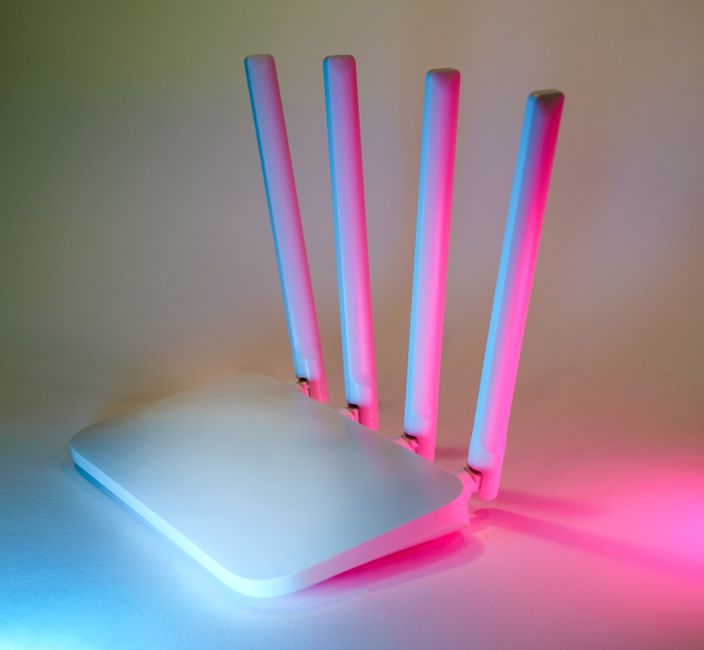
Compare Asus ZenWiFi BT10 vs Netgear Orbi 970. Discover which flagship Wi-Fi 7 mesh system offers the best speeds, coverage, and value in 2026.
Wi-Fi 7 has officially graduated from a luxury tech showcase to an absolute home necessity in 2026. With modern smartphones, ultra-portable laptops, and smart-home ecosystems universally adopting the 802.11be standard, domestic networks are facing unprecedented bandwidth demands. To keep pace, homeowners are looking to upgrade to top-tier mesh Wi-Fi systems that offer the widest channels, highest throughput, and lowest possible latency. In this premium tier, two heavyweights stand head and shoulders above the rest: the Asus ZenWiFi BT10 and the Netgear Orbi 970.
Both of these flagship systems promise to blanket large homes with multi-gigabit wireless speeds and eliminate dead zones. However, they approach the Wi-Fi 7 transition from fundamentally different design philosophies and, crucially, completely different price points. While Netgear positions its Orbi 970 as an uncompromised, quad-band luxury titan designed for maximum raw wireless performance, Asus presents the ZenWiFi BT10 as a highly advanced, feature-rich tri-band powerhouse that prioritizes dual-10G wired connectivity and unmatched financial value.
For smart homeowners, this comparison is more than just a battle of technical specifications. It is a decision about long-term network flexibility, configuration complexity, and total cost of ownership. In this deep-dive comparison, we evaluate the hardware, wireless performance, wired port selection, software ecosystems, and real-world economics of both systems to help you choose the ultimate centerpiece for your smart home.
To help you see the key differences at a glance, we have outlined the core specifications, pricing, and hardware configurations of both flagship mesh systems below:
| Specification / Feature | Asus ZenWiFi BT10 | Netgear Orbi 970 |
|---|---|---|
| Wi-Fi Classification | BE18000 (Tri-Band) | BE27000 (Quad-Band) |
| Bands Supported | 2.4 GHz, 5 GHz, 6 GHz | 2.4 GHz, 5 GHz-1, 5 GHz-2, 6 GHz |
| Coverage (2-Pack / 3-Pack) | Up to 6,000 sq. ft. / 9,000 sq. ft. | Up to 6,600 sq. ft. / 10,000 sq. ft. |
| Ethernet Ports (Router Node) | 2x 10 Gbps (WAN/LAN + LAN), 1x 1 Gbps | 1x 10 Gbps WAN, 1x 10 Gbps LAN, 4x 2.5 Gbps LAN |
| Ethernet Ports (Satellite Node) | 2x 10 Gbps (WAN/LAN + LAN), 1x 1 Gbps | 1x 10 Gbps LAN, 2x 2.5 Gbps LAN |
| USB Interface | 1x USB 3.0 (4G/5G Tethering / NAS) | None |
| Network Security Suite | AiProtection Pro (Lifetime Free) | Netgear Armor (Paid Subscription Required) |
| Average Price (2-Pack) | ~$690 – $850 | ~$1,699.99 |
| Average Price (3-Pack) | ~$1,350 | ~$1,999.99 – $2,299.99 |
Below is a quick overview of the essential pros and cons of both setups:
The Asus ZenWiFi BT10 represents a modern, balanced approach to the Wi-Fi 7 era. Classified under the BE18000 speed rating, it is a tri-band mesh system capable of reaching theoretical throughput speeds up to 18 Gbps across its three operating frequencies. Specifically, it delivers up to 11,530 Mbps on the 6GHz band, 5,764 Mbps on the 5GHz band, and 688 Mbps on the 2.4GHz band. Outfitted with eight high-gain internal antennas and ten front-end modules (FEMs), a standard two-pack of the BT10 blankets up to 6,000 square feet with exceptional ease.
From a hardware perspective, Asus took a bold step by including dual 10Gbps Ethernet ports on every single node in the package. This is a game-changing addition for anyone who possesses a high-speed fiber internet connection. It allows you to ingest a 10Gbps fiber WAN feed and then use the second 10Gbps LAN port to feed a multi-gig switch or establish a lightning-fast wired backhaul to the satellite node. In addition to the dual 10G ports, each node features a standard 1Gbps LAN port and a USB 3.0 port. This USB port is uniquely versatile, allowing users to attach a hard drive for local network storage or plug in a smartphone to act as an automatic 4G/5G cellular failover in case primary internet services go down.
Where Asus truly pulls ahead is in its software ecosystem and cost-effectiveness. Running on the highly praised AsusWRT 5.0 platform, the BT10 gives power users total control over their local network. You can configure advanced routing, leverage VPN Fusion to route specific household devices through different VPN tunnels, and utilize the Smart Home Master network to create up to three segmented SSIDs for IoT devices, guests, or children. Best of all, commercial-grade security (AiProtection Pro powered by Trend Micro) and advanced parental controls are free for the lifetime of the product, ensuring zero recurring subscription costs.
If the Asus BT10 represents smart, calculated luxury, the Netgear Orbi 970 represents uncompromised, over-engineered dominance. The Orbi 970 is a quad-band masterpiece boasting an aggregate speed rating of BE27000. It splits its monstrous 27 Gbps of potential throughput across four dedicated lanes: 11,530 Mbps on the 6GHz band, 8,647 Mbps on the high-frequency 5GHz band, 5,765 Mbps on the low-frequency 5GHz band, and 1,147 Mbps on the 2.4GHz band. With twelve high-performance internal antennas and high-power amplifiers, the three-pack covers a sprawling 10,000 square feet.
The Orbi 970\’s secret weapon is its dedicated quad-band backhaul. While tri-band systems like the Asus BT10 must force client devices and node-to-node backhaul communication to share the same frequency bands, Netgear uses its patented system to reserve an exclusive, ultra-wide channel for communication between the router and satellites. This means that even under heavy, multi-device stress, wireless performance between the nodes remains perfectly fast and isolated. This makes the Orbi 970 the absolute best wireless mesh system on the planet for homes where running Ethernet cables through walls is not an option.
Wired connectivity is also incredibly robust on the Orbi 970. The main router features a 10Gbps WAN, a 10Gbps LAN, and four 2.5Gbps LAN ports. The satellites are equipped with a 10Gbps LAN and two 2.5Gbps LAN ports. However, this unmatched hardware comes with a massive software caveat. Netgear\’s mobile application is elegant and incredibly easy to use, but advanced networking settings are deeply locked down. More frustratingly, Netgear places essential security features behind a steep paywall. Netgear Armor (powered by Bitdefender) and advanced smart parental controls require active annual subscriptions after their initial trials. Adding around $100 to $170 in yearly subscriptions to a system that already costs thousands upfront is a tough pill to swallow for many tech buyers.
Selecting between the Asus ZenWiFi BT10 and the Netgear Orbi 970 largely boils down to your budget, your physical home environment, and your tolerance for subscription services. Consider these critical factors before making your final purchase:
If your home is pre-wired with modern Ethernet routing (Cat 6a, Cat 7, or Cat 8), buying the Netgear Orbi 970 is an expensive waste of its core capabilities. Since you can establish a direct, wired physical link between your mesh nodes, you do not need the Orbi\’s expensive dedicated quad-band wireless backhaul. In this scenario, the Asus ZenWiFi BT10 is the superior choice, as its dual 10Gbps ports allow you to build a flawless 10G wired backbone for less than half the price of the Netgear system. Conversely, if you are relying entirely on a wireless connection to link your nodes across a massive, multi-story home, the Orbi 970\’s dedicated wireless backhaul will deliver significantly higher speeds and lower latency at the outer limits of your property.
The financial contrast between these two systems is immense. The Asus ZenWiFi BT10 2-pack can be found at retail for around $690 to $850, and it carries zero ongoing costs. Its advanced parental controls and malware protection are completely free forever. On the other hand, the Netgear Orbi 970 3-pack costs around $2,299.99 upfront, while the 2-pack sits at $1,699.99. When you factor in the annual subscription costs of Netgear Armor and smart parental controls, the five-year total cost of ownership for the Orbi 970 can easily surge past $3,000. If return on investment and value are important to you, the Asus system is the undisputed winner.
Think about the physical hardware you need to connect to your network. If you run a demanding home office or a professional media server with multiple desktop computers, gaming consoles, and NAS units, the Netgear Orbi 970\’s array of 2.5Gbps and 10Gbps ports on both the router and satellites is unbeatable. However, if you require specialized capabilities like cellular backup, the Asus BT10\’s USB 3.0 port is a critical asset. Plugging a smartphone into the BT10 instantly activates 4G/5G tethering, ensuring your home remains online during broadband outages—a feature completely absent from the Orbi 970.
Do you enjoy tweaking IP addresses, setting up specialized VPN client tunnels, and dividing your smart home devices into dedicated virtual local area networks? If so, the AsusWRT software on the ZenWiFi BT10 will feel like a dream, providing professional-grade network administration tools without requiring a computer science degree. However, if you prefer a streamlined \’set-and-forget\’ experience managed entirely through a clean smartphone app, the Orbi 970 is wonderfully accessible, despite its simplified advanced settings and locked features.
You do not need a Wi-Fi 7 system to fully maximize an internet connection under 1 Gbps, but you will still notice real-world benefits. Wi-Fi 7 introduces Multi-Link Operation (MLO) and wider 320 MHz channels, which drastically reduce signal interference, improve local file transfers (like casting to a TV or backing up a computer to a local server), and offer vastly superior device-handling capacity compared to older Wi-Fi 6 or 6E systems.
In a standard tri-band mesh network like the Asus ZenWiFi BT10, the nodes must use the same wireless frequencies (2.4GHz, 5GHz, or 6GHz) to talk to each other as they do to connect to your smartphones and computers. This can lead to minor bandwidth congestion. A quad-band network like the Netgear Orbi 970 introduces a fourth, separate high-frequency wireless band that is exclusively used as a \’highway\’ for the nodes to communicate, leaving the other three bands completely free for your household devices.
Yes. The ZenWiFi BT10 features Asus\’s proprietary AiMesh technology. This means you do not have to buy another expensive BT10 node to expand your coverage. You can pair it with any other AiMesh-compatible Asus router, allowing you to use a budget-friendly Asus Wi-Fi 6 or Wi-Fi 7 router as a cheap satellite node in garage or outdoor areas.
No. The Orbi 970 will perform all primary routing, wireless networking, and guest access features completely fine out of the box without paying a dime. However, high-value advanced features—such as real-time cyber protection, automatic network security scans, and granular screen-time limits for children—will require paid subscriptions to Netgear Armor and Smart Parental Controls once the initial trial periods end.
Both the Asus ZenWiFi BT10 and the Netgear Orbi 970 are masterpieces of home networking, but they serve two very different audiences. After exhaustive analysis, the Asus ZenWiFi BT10 is our definitive choice for the best overall flagship Wi-Fi 7 mesh system for most people.
Asus has delivered a package that is exceptionally fast, highly customizable, and vastly superior in lifetime value. By equipping each node with dual 10Gbps ports and a versatile USB port, Asus provides the physical backbone necessary to maximize ultra-high-speed fiber. Combined with lifetime free security, no mandatory paywalls, and a reasonable price point that is less than half the cost of its competitor, the ZenWiFi BT10 represents the smartest way to future-proof your home.
On the other hand, the Netgear Orbi 970 remains the ultimate choice for those with absolute \’money-is-no-object\’ budgets. If you reside in a massive estate, cannot run physical ethernet backhaul cables, and demand the absolute peak wireless transfer speeds regardless of cost, the Orbi 970\’s quad-band dedicated backhaul and superb physical port layout make it an incredibly powerful, albeit wildly expensive, statement piece.
Prices and features mentioned are accurate as of the date of publication. Always check the official provider website for the most current pricing and availability.