Physical Address
304 North Cardinal St.
Dorchester Center, MA 02124
Physical Address
304 North Cardinal St.
Dorchester Center, MA 02124

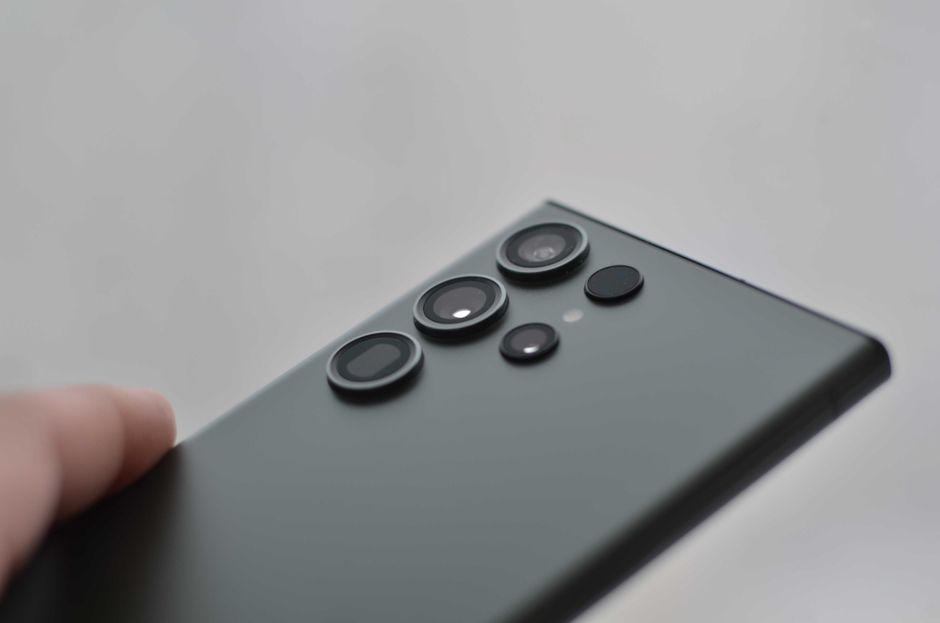
Compare the Samsung Galaxy S26 Ultra and OPPO Find X9 Ultra. Discover which 2026 Android flagship dominates in cameras, performance, and battery life.
The premium Android market in 2026 is no longer a race of subtle, incremental improvements. Instead, we are witnessing a dramatic clash of philosophies. For years, manufacturers followed a predictable playbook of minor processor bumps and slight camera refreshes. But this year, the script has been completely rewritten. Samsung has doubled down on sophisticated refinement, computational intelligence, and everyday ergonomics, while OPPO has unleashed an uncompromising hardware titan aimed squarely at mobile photography purists and power users.
Samsung’s Galaxy S26 Ultra, launched globally on March 11, 2026, represents the pinnacle of premium mainstream usability. It integrates productivity, security, and refined design into a chassis that feels like an expensive piece of modern art. Meanwhile, the Oppo Find X9 Ultra, which made its highly anticipated global debut on May 2, 2026, is a raw technology transformer. Packing massive camera sensors and an unprecedented battery capacity, it marks the first time OPPO has officially brought its “Ultra” flagship to the global stage. This comparison dives deep into the details to help you decide which device deserves the crown of the ultimate 2026 Android flagship.
Before breaking down each feature in detail, let’s look at how these two flagships compare across core specifications, pricing, and key features.
| Specification/Feature | Samsung Galaxy S26 Ultra | Oppo Find X9 Ultra |
|---|---|---|
| Release Date | March 11, 2026 | May 2, 2026 |
| Starting Price | $1,299 USD / £1,279 | $1,123 USD (import) / £1,449 (UK) |
| Processor | Snapdragon 8 Elite Gen 5 (Customized) | Snapdragon 8 Elite Gen 5 |
| Display | 6.9-inch Dynamic AMOLED 2X, Privacy Display, 2600 nits | 6.82-inch LTPO AMOLED, 144Hz, 3600 nits |
| RAM & Storage | 12GB / 16GB RAM | 256GB / 512GB / 1TB | 12GB / 16GB RAM | 256GB / 512GB / 1TB |
| Primary Camera | 200MP f/1.4, 1/1.3″ sensor, OIS | 200MP f/1.5 Sony LYTIA 901 (1/1.12″), OIS |
| Telephoto System | 10MP f/2.4 (3x) + 50MP f/2.9 (5x periscope) | 200MP f/2.2 (3x periscope) + 50MP f/3.5 (10x optical) |
| Battery & Charging | 5,000 mAh | 60W Wired, 25W Qi2 Wireless | 7,050 mAh (Silicon-Carbon) | 100W Wired, 50W Wireless |
| Unique Selling Point | Built-in S Pen, Privacy Display, Galaxy Genie AI | Hasselblad Master Camera, Earth Explorer Photography Kit |
To truly understand how these titans square off in real-world use, we must evaluate them across the critical pillars of premium smartphone ownership: design, screen technology, processing performance, battery, cameras, and software ecosystems.
Samsung has taken the feedback of past generations to heart, focusing on absolute comfort and premium refinement. The Galaxy S26 Ultra transitions to a sleeker 7.9mm profile and drops its weight to a comfortable 214 grams. Built using Armor Aluminum 2.0, the device features slightly softened, rounded corners. This makes it significantly more pleasant to hold than the blocky, hand-fatiguing frames of the past. Additionally, the signature S Pen remains beautifully integrated into the bottom chassis, ready for instant note-taking or digital sketching.
OPPO, conversely, has built a tank. The Find X9 Ultra is thick, bold, and heavy, measuring 9.1mm in thickness and weighing in at 236 grams. To offset this bulk, OPPO has wrapped the back in beautiful, premium vegan leather (available in the Grand Canyon-inspired Canyon Orange and the Scandinavian-inspired Tundra Umber). A massive, knurled hexagonal camera ring dominates the rear, nodding to Hasselblad’s historic camera design. While it is a masterpiece to look at, it is a massive phone that demands two-handed operation.
On paper, both displays are absolute triumphs, but they focus on very different user priorities. Samsung features a gorgeous 6.9-inch Dynamic AMOLED 2X panel covered in Corning Gorilla Glass Armor. This special glass remains a massive advantage, cutting ambient reflections by up to 75% for superb outdoor visibility. More impressively, the S26 Ultra debuts a hardware-level “Privacy Display”. When viewed from the side, the screen dims and polarizes, preventing visual snooping on public transit or in business meetings.
OPPO counter-attacks with sheer, unadulterated spec sheet dominance. The Find X9 Ultra boasts a 6.82-inch 2K LTPO AMOLED screen that reaches a staggering peak brightness of 3600 nits and supports a buttery-smooth 144Hz refresh rate. While the display lacks Samsung’s anti-reflective coating, its blinding peak brightness easily combats direct sunlight. For gamers, the 144Hz display offers a more responsive, fluid visual experience compared to Samsung’s standard 120Hz cap.
Under the hood, both smartphones represent the pinnacle of 2026 processing power, utilizing Qualcomm’s flagship Snapdragon 8 Elite Gen 5 processor. Built on a highly efficient 3nm architecture, this processor features custom Oryon CPU cores that absolutely demolish demanding games and local machine-learning tasks with ease.
Where they differ is in thermal management and memory configurations. Samsung’s customized chip features a highly efficient vapor chamber cooling system that allows for sustained performance during intense multi-tasking sessions. OPPO, meanwhile, utilizes an advanced, larger cooling module that caters directly to heavy mobile gaming. Furthermore, while both offer 12GB or 16GB RAM configurations alongside up to 1TB of ultra-fast UFS 4.0 storage, OPPO’s custom architecture gives it a slight edge in raw read/write speeds during massive file transfers.
This is where the paradigm shift of 2026 becomes incredibly evident. The Galaxy S26 Ultra features a standard 5,000 mAh lithium-ion battery. Thanks to the efficient Snapdragon 8 Elite chip, the phone comfortably delivers a solid day of heavier mixed use. Samsung has also finally upgraded its charging speeds to a more respectable 60W wired Super Fast Charging and 25W Qi2-certified wireless charging.
However, OPPO completely changes the rules of the game. Utilizing next-generation silicon-carbon chemistry, the Find X9 Ultra manages to squeeze a gargantuan 7,050 mAh “Glacier Battery” into its chassis without making the phone impossibly thick. This technology provides incredible energy density, translating to true 1.5 to 2-day battery life on a single charge. When you do run low, OPPO’s 100W SUPERVOOC wired charging can top up the massive battery from 0 to 100% in under 35 minutes, supported by a blazing-fast 50W AIRVOOC wireless charging system.
The camera comparison between these two devices represents the ultimate battle of computational science versus raw glass and sensor size. Samsung’s S26 Ultra features an upgraded 200MP f/1.4 primary sensor with a wider aperture that dramatically improves night shot light-capture. It is flanked by a 50MP ultra-wide, a 10MP 3x telephoto, and a 50MP 5x periscope lens. Samsung’s computational prowess is its greatest weapon, introducing a superb Horizon Lock video mode that keeps video feeds completely flat even if the phone is flipped 360 degrees.
OPPO, however, has built a dream machine for photography enthusiasts. The Find X9 Ultra’s Hasselblad Master Camera System features a dual-200MP setup. The main camera utilizes a massive Sony 1/1.12-inch LYTIA 901 sensor with an f/1.5 aperture. It also sports a dedicated 200MP 3x periscope telephoto lens with the largest sensor of its kind, a 50MP ultra-wide, and a true 50MP 10x optical zoom lens that can achieve breathtaking clarity even at 20x hybrid zoom.
To make matters even more compelling, OPPO offers the Hasselblad Earth Explorer Kit. This optional accessory is a physical photography case containing a tactile grip, a two-stage physical shutter button, a custom zoom lever, and a massive, external f/2.2 300mm teleconverter lens that mounts directly over the phone’s camera module to deliver unrivaled telephoto reach.
Software is where Samsung pulls ahead for mainstream consumers. The Galaxy S26 Ultra ships with One UI 8.5 on top of Android 16. Backed by an industry-leading commitment to 7 years of major OS and security upgrades, it is built to last. Samsung’s newly developed “Galaxy Genie” AI is integrated deeply into the core experience, performing highly complex language translation, notification summarization, and photograph editing entirely locally on the device.
OPPO’s ColorOS 16 on top of Android 16 is wonderfully smooth and visually minimalist, but lacks the deep, systemic local AI intelligence of Samsung’s One UI. While it features outstanding photography-centric software modes developed with Hasselblad, OPPO only promises 4 years of major OS updates and 5 years of security patches, falling short of Samsung’s exceptional longevity commitment.
Choosing between these two incredible 2026 flagships comes down to prioritizing either computational reliability or raw hardware enthusiast features.
Q: Does the Samsung Galaxy S26 Ultra’s Privacy Display affect everyday screen quality?
A: No. When viewed straight-on, the Dynamic AMOLED 2X display is incredibly sharp, clear, and bright. The polarization and dimming effect only kick in when the phone is tilted past a 30-degree angle, keeping onlookers from reading your screen while maintaining a pristine view for you.
Q: Is the Oppo Find X9 Ultra’s Earth Explorer Kit included in the box?
A: No. The Earth Explorer Kit (which includes the Hasselblad physical grip case and the 300mm external lens) is sold separately or offered as a limited pre-order bundle in select global markets.
Q: Are both of these devices compatible with international cellular carriers?
A: Yes. Both smartphones offer comprehensive global 5G band support. However, because OPPO does not sell its devices directly via US carriers, US-based buyers must purchase the global unlocked import version to use it on networks like T-Mobile or AT&T.
Q: Does silicon-carbon battery technology degrade faster than traditional lithium-ion?
A: Actually, next-generation silicon-carbon battery technology exhibits excellent long-term health and stability. Thanks to smart thermal management and the chemistry itself, it maintains its health comparable to, or even better than, traditional high-capacity lithium-ion cells over several years of use.
Both Samsung and OPPO have delivered phenomenal flagship devices in 2026, but the overall winner for the average consumer is the Samsung Galaxy S26 Ultra. By delivering a lighter, more ergonomic design, an anti-reflective screen with unique privacy features, an integrated S Pen, and a class-leading 7-year software upgrade guarantee, Samsung has crafted the most complete, versatile, and future-proof smartphone on the market.
However, for creative professionals, mobile photography enthusiasts, and power users who require absolute maximum battery endurance, the Oppo Find X9 Ultra is an unmatched technical masterpiece. Its class-leading 7,050 mAh battery, legendary 10x true optical zoom periscope camera, and professional Hasselblad accessories make it the undisputed king of raw mobile imaging.
Prices and features mentioned are accurate as of the date of publication. Always check the official provider website for the most current pricing and availability.




