Physical Address
304 North Cardinal St.
Dorchester Center, MA 02124
Physical Address
304 North Cardinal St.
Dorchester Center, MA 02124

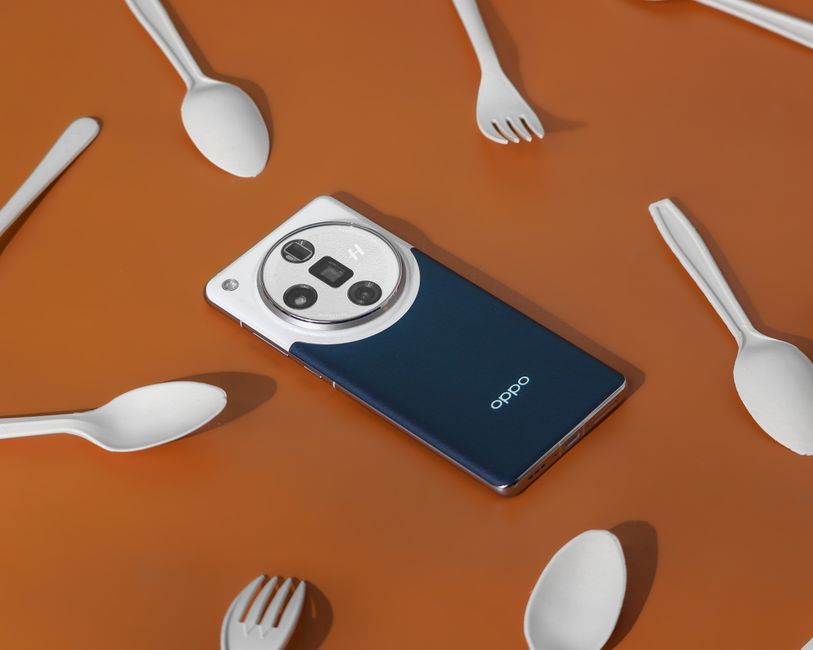
We compare the Samsung Galaxy S26 Ultra and Oppo Find X9 Ultra. Discover which flagship rules 2026 in cameras, battery life, and display tech.
The premium flagship smartphone market of 2026 has witnessed some of the most dramatic technological leaps in recent memory. Driven by hyper-efficient 3-nanometer silicon and groundbreaking advancements in camera sensor design, the competition has moved far beyond incremental updates. Two undisputed titans now stand at the pinnacle of this year’s Android landscape: the Samsung Galaxy S26 Ultra and the Oppo Find X9 Ultra. Samsung launched its productivity beast on March 11, 2026, offering refined ergonomics, the beloved S Pen, and an innovative focus on screen privacy. Oppo, meanwhile, sent shockwaves through the industry with the global release of its Find X9 Ultra on May 2, 2026. This marks the first time Oppo has officially made its top-tier “Ultra” device available to global markets, directly challenging Samsung outside of Asia. In this detailed comparison, we put these two powerhouses head-to-head to determine which ultra-flagship deserves your hard-earned money.
Before diving into the detailed specifications, here is an at-a-glance comparison of the core features, pros, and cons of each flagship device to help you understand how they match up on paper.
| Specification / Feature | Samsung Galaxy S26 Ultra | Oppo Find X9 Ultra |
|---|---|---|
| Release Date | March 11, 2026 | May 2, 2026 |
| Starting Price | $1,299.99 (256GB / 12GB) | €1,699 / £1,449 (~$1,850+) |
| Display | 6.9″ Dynamic LTPO AMOLED 2X, 120Hz, Anti-reflective coating, Privacy Display | 6.82″ LTPO AMOLED, 144Hz, 3600 nits peak, Dolby Vision |
| Processor | Snapdragon 8 Elite Gen 5 (for Galaxy) | Snapdragon 8 Elite Gen 5 (3 nm) |
| RAM & Storage | 12GB/16GB RAM, UFS 4.0 (up to 1TB) | 12GB/16GB RAM, UFS 4.1 (up to 1TB) |
| Rear Camera System | 200MP f/1.4 main, 10MP (3x zoom), 50MP (5x zoom), 50MP ultrawide | 200MP f/1.5 main, 200MP (3x periscope), 50MP (10x periscope), 50MP ultrawide |
| Battery & Charging | 5,000 mAh, 60W Wired, 25W Wireless | 7,050 mAh, 100W Wired, 50W Wireless |
| Software Support | Android 16, One UI 8.5 (7 Major Upgrades) | Android 16, ColorOS 16 (5 Major Upgrades) |
| Key Pros | Built-in S Pen, unmatched anti-reflective screen, 7 years of software support | Immense battery life, dual 200MP/50MP periscope zoom lenses, 100W ultra-fast charging |
| Key Cons | Slow 60W charging, smaller 5,000 mAh battery, lower-tier secondary cameras | No official US release, very expensive import price, shorter update window |
Samsung and Oppo have taken radically different paths in their design philosophies for 2026. The Samsung Galaxy S26 Ultra retains its signature blocky, rectangular shape with razor-sharp corners and a flat frame. Weighing in at 214 grams and measuring an impressively thin 7.9mm, it is remarkably easy to hold for a phone with a massive screen. Samsung has utilized a reinforced armor-grade metal frame and the new Corning Gorilla Armor 2 on the front to ensure maximum protection against drops and micro-scratches. It feels industrial, premium, and built for business.
Conversely, the Oppo Find X9 Ultra embraces luxury and ergonomics. Tipping the scales at a hefty 235 grams and measuring 8.7mm to 9.1mm in thickness, the Find X9 Ultra is undeniably a bulky device. However, Oppo has masterfully disguised this bulk by curving the back panel and wrapping it in a gorgeous, tactile vegan leather finish or a sleek fiber-reinforced material on the Canyon Orange variant. On the back, a massive, circular Hasselblad-branded camera dome dominates the design, evoking the feel of a professional standalone camera. Furthermore, Oppo has taken durability to a level rarely seen in mainstream flagships by offering a triple-certified IP66, IP68, and IP69 rating—meaning it can withstand high-pressure water jets that would easily destroy other devices.
A notable hardware feature of the Find X9 Ultra is the new customizable “Quick Button” located on the right side. Much like the touch-sensitive camera control buttons seen on competitors, this pressure-sensitive key allows you to quickly launch the camera, double-press to snap a photo, and swipe back and forth to dynamically adjust the focal length. This makes the shooting experience feel highly tactile, which is a major advantage for mobile photography enthusiasts.
The battle of the displays is a classic clash of utility versus raw performance. The Samsung Galaxy S26 Ultra packs a sprawling 6.9-inch Dynamic LTPO AMOLED 2X panel with a crisp QHD+ resolution of 1440 x 3120 pixels (501 ppi). Rather than chasing numbers, Samsung has focused on features that make a tangible difference in daily life. First is the DX anti-reflective coating, which drastically reduces reflections, making the display easily readable under harsh sunlight even without cranking the brightness to its absolute limit. Second is the introduction of a hardware-enabled “Privacy Display”. When activated, this feature restricts the viewing angles, making it incredibly difficult for shoulder-surfers or people sitting next to you on a train to see what is on your screen. However, Samsung still omits Dolby Vision and limits the panel to 8-bit color depth with FRC and a standard 120Hz refresh rate.
Oppo’s Find X9 Ultra counters with a slightly smaller 6.82-inch LTPO AMOLED display with a 1440 x 3168 resolution. Where Samsung prioritizes privacy and outdoor usability, Oppo shoots for sheer cinematic perfection. The Find X9 Ultra display supports native 10-bit color, Dolby Vision, HDR10+, and boasts a blazing-fast 144Hz refresh rate for butter-smooth animations and gaming. Furthermore, it reaches an astronomical peak brightness of 3,600 nits under automatic high-brightness mode (HBM), surpassing Samsung’s 2,600 nits peak. If you consume a lot of high-quality HDR video content or play competitive mobile games, the Find X9 Ultra’s display is the superior option.
When it comes to processing power, both devices are absolute speed demons. Both phones are equipped with the top-tier Qualcomm Snapdragon 8 Elite Gen 5 chipset, manufactured on an advanced 3-nanometer architecture. Performance in apps, heavy multi-tasking, 3D gaming, and productivity is identical on paper. The Snapdragon 8 Elite Gen 5 handles demanding tasks like heavy emulation and on-device AI tasks without stuttering.
The divergence comes in memory and storage speeds. The base Samsung Galaxy S26 Ultra starts at $1,299.99, which only gives you 12GB of LPDDR5X RAM and 256GB of UFS 4.0 storage. To upgrade to 16GB of RAM, you are forced to purchase the more expensive 512GB or 1TB models. Oppo, on the other hand, starts with 12GB of RAM on its base model, but offers 16GB of RAM configurations on its 512GB and 1TB tiers which utilize the newer, slightly faster UFS 4.1 storage protocol. This makes the Oppo Find X9 Ultra slightly more future-proof for heavy multitasking and local on-device AI model processing.
The cameras are where these two giants truly separate themselves. The Galaxy S26 Ultra features a quad-camera array headlined by an upgraded 200MP primary sensor with an incredibly wide f/1.4 aperture. This ultra-wide aperture allows for incredible natural background bokeh and lets in an immense amount of light, resolving a great deal of detail in low-light environments without relying too heavily on artificial night mode processing. It is accompanied by a 50MP ultrawide, a 10MP 3x telephoto, and a 50MP 5x periscope telephoto. Samsung’s camera assistant software, combined with advanced AI processing and creative tools like the virtual reflector, delivers stunning, color-accurate images. It also offers creators advanced cinematic options like APV Log and built-in LUTs for raw video grading. However, critics have noted that the 10MP 3x sensor and 50MP 5x telephoto feel somewhat dated when compared to what the competition is offering.
That brings us to the Oppo Find X9 Ultra, which is arguably the most advanced camera system ever put into a mobile phone. Developed in collaboration with Hasselblad, it utilizes a quad-lens system that features not one, but two periscope telephoto lenses. The main camera is a massive 200MP shooter with an f/1.5 aperture and a near 1-inch-type 1/1.12″ sensor, capturing an incredible amount of light. The primary telephoto is a groundbreaking 200MP 3x periscope lens (1/1.28″ sensor), which captures mind-boggling detail for portraits and medium-range shots. For ultra-long range, Oppo uses a 50MP 10x periscope telephoto with a unique quintuple prism design. This design allows the physical lens to remain bright (f/3.5) even at a 230mm equivalent focal length. Color accuracy is managed by a dedicated 3.2MP True Color multispectral sensor and Hasselblad Color Calibration. The result is unmatched color science, spectacular portrait rendering, and highly detailed zoom shots up to 30x that leave Samsung’s telephoto capabilities in the dust.
If battery endurance and charging speeds are important to you, there is only one winner here. The Samsung Galaxy S26 Ultra carries a standard 5,000 mAh Lithium-Ion battery. While One UI 8.5 and the Snapdragon 8 Elite Gen 5 processor are highly optimized, the phone is strictly a one-and-a-half-day device under moderate use. Samsung has finally upgraded its wired charging to 60W (up from the 45W cap on previous generations), bringing a full charge down to around 50 minutes. Wireless charging remains capped at a respectable 25W.
Oppo has completely rewritten the playbook by utilizing a high-density silicon-carbon anode battery. This next-generation battery technology allows Oppo to pack an astonishing 7,050 mAh capacity into a chassis that is only marginally thicker than previous models. In real-world testing, the Find X9 Ultra is an absolute endurance beast, easily lasting two full days of heavy usage and stretching into three days under moderate use. When it is time to juice up, Oppo’s 100W wired SuperVOOC charging can charge this massive battery from 0% to 100% in just under 40 minutes. Additionally, its 50W wireless charging speed is twice as fast as Samsung’s wired charging. It is a absolute landslide victory for Oppo.
Where Samsung loses in battery and charging, it claws back points in software sophistication and long-term support. The Galaxy S26 Ultra ships with Android 16 skinned with One UI 8.5. Samsung’s software is remarkably polished, providing seamless multi-window multitasking, deep integration with Windows PCs, and Samsung DeX, which transforms your phone into a desktop-like workstation. Samsung has also committed to an industry-leading 7 years of major OS and security upgrades, guaranteeing that your phone will remain fully updated and secure until 2033. Furthermore, its suite of Galaxy AI tools, including real-time translation, generative photo editing, and automated note-taking, is highly mature and integrated deeply into the user interface.
Oppo’s Find X9 Ultra runs ColorOS 16 based on Android 16. ColorOS is highly customizable, fluid, and packed with neat features like smart file docks and sidebar tools. Oppo has promised 5 major Android upgrades for the Find X9 Ultra, which is very respectable but falls two years short of Samsung’s exceptional standard. While ColorOS is highly functional, it lacks some of the specialized software optimizations of Samsung’s productivity ecosystem, and it does not have an equivalent to the S Pen stylus, which remains a massive selling point for the S26 Ultra.
Deciding between these two premium flagships boils down to where your priorities lie and where you live in the world.
Choose the Samsung Galaxy S26 Ultra if:
Choose the Oppo Find X9 Ultra if:
1. Is the Oppo Find X9 Ultra officially available in the United States?
No, Oppo does not officially distribute its phones through US carriers or retail stores. While the global version of the Find X9 Ultra is available in parts of Europe and Asia, US buyers must import the phone through specialized online retailers. Keep in mind that imported versions may not support all US carrier 5G bands, specifically Verizon and AT&T’s mmWave networks.
2. How much bigger is the battery on the Oppo Find X9 Ultra compared to the Samsung S26 Ultra?
The Oppo Find X9 Ultra features a massive 7,050 mAh battery, which is 41% larger than the 5,000 mAh battery found in the Samsung Galaxy S26 Ultra. Despite the massive capacity increase, the Oppo remains only 8.7mm to 9.1mm thick, thanks to high-density silicon-carbon anode technology.
3. Does the Samsung Galaxy S26 Ultra’s Privacy Display affect screen quality?
According to independent lab tests, the Privacy Display does not negatively impact normal, head-on screen viewing. The panel still reaches manual brightness levels above 700 nits and auto-brightness levels over 2,800 nits. However, viewing the screen from a side angle will make the display look significantly dimmer to protect your privacy.
4. Which phone has better video recording features?
Both phones support high-end 8K video recording and 4K up to 120fps. However, Samsung’s S26 Ultra is slightly better suited for content creators, as it offers direct APV Log video recording, built-in cinematic LUT support, and adjustable microphone gain. Oppo excels in zoom video but is slightly less optimized for professional post-production video workflows.
The Oppo Find X9 Ultra is green-lighted as the hardware champion of 2026. On pure innovation, its massive 7,050 mAh battery, blazing-fast 100W charging, and unmatched Hasselblad dual-periscope camera system represent a giant leap forward that dwarfs Samsung’s more conservative hardware upgrades. If you are an enthusiast who wants the absolute best camera and battery technology currently available, and you do not mind importing a device, the Oppo Find X9 Ultra is a masterpiece.
However, for the vast majority of consumers, the Samsung Galaxy S26 Ultra is the smarter, more practical purchase. It offers seamless global carrier compatibility, the unique utility of the S Pen, a highly mature Galaxy AI suite, and an industry-leading 7-year software support commitment that ensures it will hold its value for years to come. The S26 Ultra is the ultimate, reliable daily driver, while the Oppo Find X9 Ultra remains the exciting, boundary-pushing dream machine.
Prices and features mentioned are accurate as of the date of publication. Always check the official provider website for the most current pricing and availability.