Physical Address
304 North Cardinal St.
Dorchester Center, MA 02124
Physical Address
304 North Cardinal St.
Dorchester Center, MA 02124

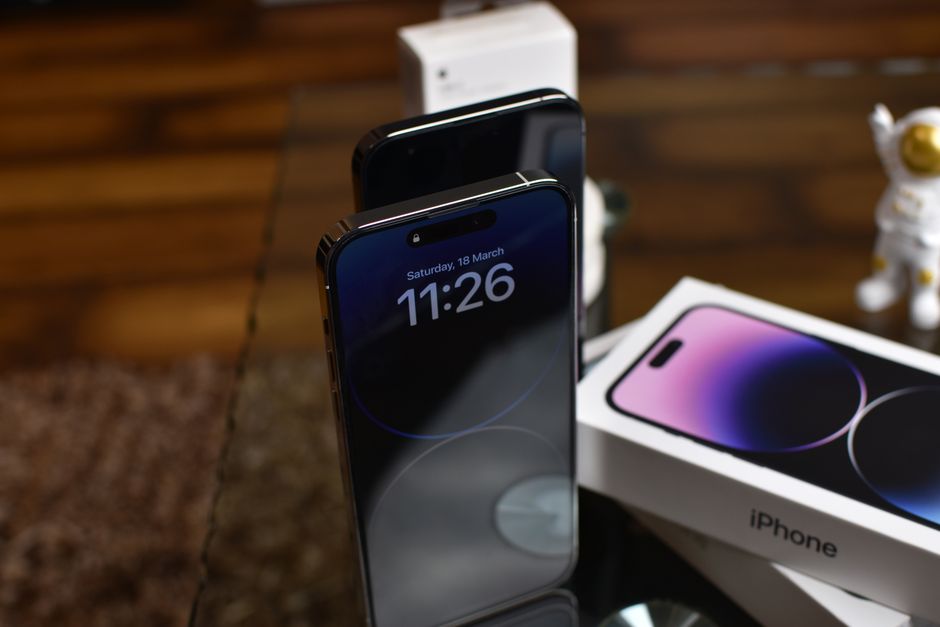
Compare the Samsung Galaxy S26 Ultra and iPhone 17 Pro Max. Discover prices, camera specs, performance benchmarks, and which premium flagship is worth the money.
Choosing a flagship smartphone has never been more challenging—or more expensive. In 2026, the battle for mobile supremacy has reached its absolute peak with the clash of two consumer-tech giants: the Samsung Galaxy S26 Ultra and the Apple iPhone 17 Pro Max. These devices represent the pinnacle of engineering from their respective ecosystems, offering unmatched processing power, professional-grade camera suites, and deeply integrated artificial intelligence. However, purchasing either model requires a significant financial commitment, making a thorough side-by-side comparison essential before you swipe your card.
Samsung officially launched the Galaxy S26 Ultra on March 11, 2026, following its announcement at the Galaxy Unpacked event in late February. The phone aims to redefine physical security and productivity, boasting a revolutionary hardware-level Privacy Display and retaining the beloved built-in S Pen. Meanwhile, Apple released the iPhone 17 Pro Max on September 19, 2025. It introduced a dramatic software rebranding under iOS 26, a major jump to 12GB of RAM, and a visually striking triple-lens 48MP camera system.
With Samsung starting at a premium retail price of $1,299.99 and Apple starting slightly lower at $1,199.00, you are looking at a major investment. Both brands promise multi-year lifespans, cutting-edge hardware, and robust ecosystem perks. In this comprehensive comparison by ComparisonMath, we will break down the design, performance, camera capability, battery efficiency, and overall financial value of these two titans to help you determine which premium handset is truly worth your hard-earned money.
Before diving into the complex nuances of each flagship, let us take an at-a-glance look at how the core specifications, dimensions, and baseline prices of the Samsung Galaxy S26 Ultra and the Apple iPhone 17 Pro Max stack up side by side.
| Feature | Samsung Galaxy S26 Ultra | Apple iPhone 17 Pro Max |
|---|---|---|
| Release Date | March 11, 2026 | September 19, 2025 |
| Starting Price | $1,299.99 (256GB) | $1,199.00 (256GB) |
| Display | 6.9-inch Dynamic AMOLED 2X, QHD+, 120Hz, Privacy Display | 6.9-inch Super Retina XDR OLED, 120Hz ProMotion, 3000 nits |
| Processor | Snapdragon 8 Elite Gen 5 (3nm) | Apple A19 Pro (3nm) |
| Memory (RAM) | 12GB / 16GB LPDDR5X | 12GB LPDDR5X |
| Storage Options | 256GB, 512GB, 1TB | 256GB, 512GB, 1TB, 2TB |
| Rear Camera | 200MP Main + 50MP Ultrawide + 50MP Periscope (5x) + 10MP (3x) | 48MP Main + 48MP Ultrawide + 48MP Periscope (8x optical) |
| Front Camera | 12MP Dual Pixel AF | 18MP Center Stage |
| Battery & Charging | 5,000 mAh, 60W Wired, 25W Wireless | Up to 5,088 mAh, 40W Wired, MagSafe/Qi2 |
| Software | Android 16 with One UI 8.5 (7 Years of Upgrades) | iOS 26 with Liquid Glass UI |
| Dimensions & Weight | 163.6 x 78.1 x 7.9 mm; 214g | 163.4 x 78.0 x 8.75 mm; 233g |
To summarize their real-world performance, here are the core pros and cons of both premium flagships:
Samsung Galaxy S26 Ultra Pros:
Samsung Galaxy S26 Ultra Cons:
Apple iPhone 17 Pro Max Pros:
Apple iPhone 17 Pro Max Cons:
Both manufacturers have opted for high-grade titanium alloys in their construction. However, they approach ergonomics and screen security very differently. The Samsung Galaxy S26 Ultra has successfully shaved off bulk, maintaining a sleek 7.9mm thickness and weighing only 214g. Its boxy, sharp-cornered design is comfortable to hold but remains quite tall. Its standout physical innovation is the new Privacy Display. This specialized hardware limits screen visibility to directly in front of the device, preventing nosey neighbors on public transit or in business meetings from viewing your screen.
Apple, by contrast, has made the iPhone 17 Pro Max slightly thicker at 8.75mm and heavier at 233g. While it is a heavier phone to carry daily, the build quality is exceptionally robust, utilizing a second-generation Ceramic Shield front glass. Apple offers striking new finishes, including Deep Blue and Cosmic Orange. While Apple lacks a built-in privacy filter, it retains the highly functional physical Action Button, which can be configured to execute complex shortcuts instantly.
Both displays are massive 6.9-inch LTPO panels capable of dynamic 1Hz to 120Hz refresh rates. Samsung employs a Dynamic AMOLED 2X display with a Quad HD+ resolution of 3120 x 1440 pixels. It is protected by Corning Gorilla Armor 2, which reduces ambient reflections by up to 75% compared to standard glass. This makes the S26 Ultra significantly easier to view in direct sunlight, even without boosting brightness to maximum levels.
Apple’s Super Retina XDR OLED panel comes in with a resolution of 2868 x 1320 pixels. While it technically has fewer pixels per inch than Samsung, it makes up for it with a peak outdoor brightness of 3,000 nits. Furthermore, Apple has designed iOS 26 around its new “Liquid Glass” visual system. This rendering technique makes UI windows, icons, and notification panels look like translucent glass that refracts underlying colors and reacts dynamically to how you tilt the physical phone.
Under the hood, these devices feature the absolute best mobile silicon on the planet. The Galaxy S26 Ultra runs on the Qualcomm Snapdragon 8 Elite Gen 5 processor, which delivers blisteringly fast speeds and excellent thermal management. Paired with up to 16GB of RAM, the Galaxy S26 Ultra is a multitasking beast, allowing users to run complex on-device AI tasks, open multiple apps in split-screen, and launch heavy mobile games without a hint of lag.
Apple’s custom A19 Pro chip powers the iPhone 17 Pro Max. To accommodate the computational demands of Apple Intelligence, Apple upgraded the Pro Max’s RAM to 12GB LPDDR5X. The A19 Pro remains the industry king of single-core CPU speeds and graphics rendering, running console-quality games flawlessly. While both models easily handle standard multitasking, Samsung’s 16GB RAM capability gives it a slight edge for power users who heavily utilize desktop modes like Samsung DeX.
Camera technology remains a key differentiator. The Galaxy S26 Ultra uses a four-lens setup: a massive 200MP wide-angle main sensor, a 50MP ultra-wide sensor, a 50MP periscope telephoto lens with 5x optical zoom, and a 10MP telephoto lens with 3x optical zoom. It can achieve an optical-quality 10x digital crop and up to 100x Space Zoom. The wide apertures and enhanced night processing capture stunning details of distant subjects, though Samsung’s computational processing can occasionally over-sharpen complex scenes.
Apple has moved to a highly balanced, symmetrical triple 48MP camera array (Fusion Main, Fusion Ultrawide, and Fusion Telephoto). The periscope telephoto lens now provides a highly capable 8x optical zoom. Because all three lenses share the same 48MP resolution, color accuracy, exposure, and dynamic range remain incredibly uniform when switching lenses. Additionally, Apple remains the gold standard for mobile videography, capturing clean, cinematic ProRes footage with professional color-grading support directly on the device. For selfie lovers, the iPhone’s new 18MP Center Stage front camera easily outperforms Samsung’s 12MP sensor.
Power management is top-tier on both sides. The Galaxy S26 Ultra features a 5,000 mAh battery. It easily delivers all-day usage, but its real benefit is charging speed. It supports 60W wired fast charging, allowing you to charge the phone from 0% to nearly 70% in roughly 30 minutes. However, the S26 Ultra unfortunately lacks support for the newer Qi2 magnetic wireless charging standard, limiting it to traditional 25W wireless options.
Apple packs up to a 5,088 mAh battery into the eSIM-only variant of the iPhone 17 Pro Max. Combined with the hyper-efficient A19 Pro chip, Apple promises a class-leading 39 hours of continuous video playback. In real-world mixed usage, the iPhone consistently squeezes out slightly better longevity than Samsung. When it is time to recharge, Apple supports Qi2 wireless charging for snap-on convenience and up to 40W fast wired charging, though it is noticeably slower than Samsung’s 60W solution.
Samsung ships the Galaxy S26 Ultra with Android 16 and One UI 8.5. One UI is famous for its dense customization options, split-screen multi-window support, and productivity tools like Samsung DeX. Best of all, Samsung guarantees up to seven full years of major OS upgrades and security patches, extending support all the way to February 2033.
Apple ships the iPhone 17 Pro Max with iOS 26. Apple bypassed the “iOS 19” moniker to synchronize operating system versions with the calendar year. Aside from the beautiful physics-based Liquid Glass UI, iOS 26 runs a deeply optimized suite of Apple Intelligence features. Siri is highly context-aware, capable of interacting directly with on-screen content. Apple’s software support remains industry-leading, but Samsung’s explicit 7-year commitment is incredibly competitive.
When deciding where to direct your financial resources, consider which features align best with your day-to-day workflow and long-term habits.
Choose the Samsung Galaxy S26 Ultra if:
Choose the Apple iPhone 17 Pro Max if:
Is the Privacy Display on the Galaxy S26 Ultra removable?
No, the Privacy Display is a physical, hardware-level microscopic structure built directly into the screen panel itself. It works constantly to restrict side viewing angles, and cannot be switched off like a software feature.
Why is Apple’s latest software called iOS 26 instead of iOS 19?
During WWDC 2025, Apple rebranded its entire suite of operating systems. Going forward, Apple names its software after the calendar year of its release cycle (2025–2026) to simplify version tracking across iOS, macOS, iPadOS, and watchOS.
Does the S26 Ultra support magnetic Qi2 chargers?
No, the Samsung Galaxy S26 Ultra does not natively support the Qi2 magnetic standard out of the box. However, you can achieve similar magnetic alignment by using specialized third-party protective cases.
Which of these phones has a longer software support window?
Samsung officially promises 7 years of major OS upgrades for the Galaxy S26 Ultra, supporting it until February 2033. Apple typically supports its iPhones for 5 to 7 years, but does not state a concrete final support date at launch.
Both the Samsung Galaxy S26 Ultra and the Apple iPhone 17 Pro Max are engineering triumphs, but from a purely financial “value-for-money” perspective, the Apple iPhone 17 Pro Max is the winner for most mainstream buyers in 2026.
By pricing the iPhone 17 Pro Max at $1,199.00—$100 cheaper than Samsung’s flagship—while upgrading it to a highly capable 12GB of RAM, a brilliant triple 48MP camera system, and the beautiful iOS 26 Liquid Glass UI, Apple has delivered a remarkably complete package. It offers unmatched video capture, superior resale value, and a more accessible entry point for premium performance.
That said, if you are a power user who depends on the S Pen for work, requires DeX to replace a laptop, or absolutely needs the physical security of the Privacy Display, the Galaxy S26 Ultra easily justifies its $1,299.99 price tag as the ultimate productivity machine. But for the average premium smartphone shopper, Apple’s flagship delivers the most refined and cost-effective daily experience.
Prices and features mentioned are accurate as of the date of publication. Always check the official provider website for the most current pricing and availability.




