Physical Address
304 North Cardinal St.
Dorchester Center, MA 02124
Physical Address
304 North Cardinal St.
Dorchester Center, MA 02124

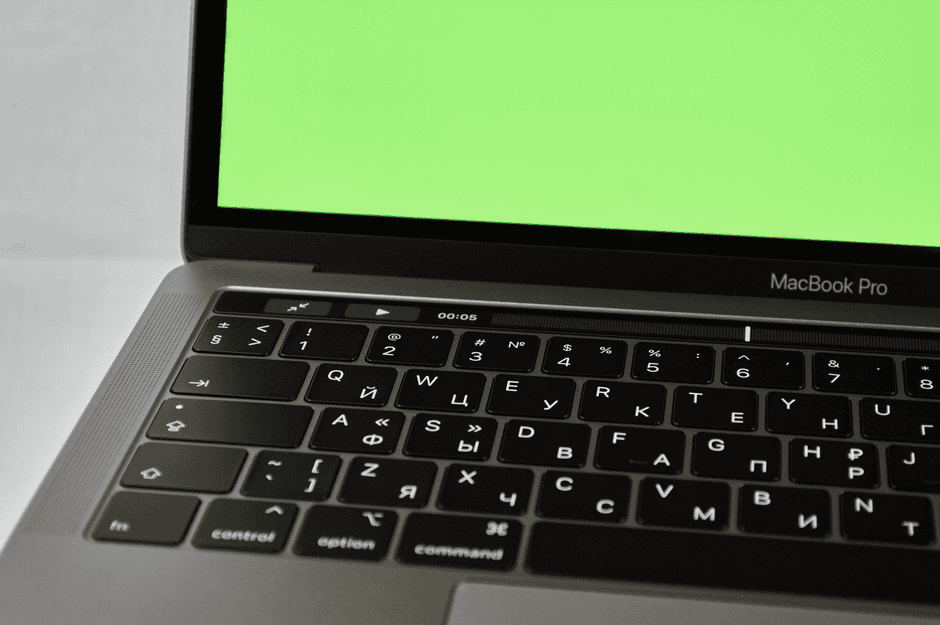
We compare Apple's $699 MacBook Neo with the $1,299 M5 MacBook Air. Find out which budget macOS laptop is right for you after the recent price hikes.
For several years, the most affordable gateway into Apple’s laptop ecosystem was an older-generation MacBook Air bought on clearance. That paradigm shifted in March 2026 when Apple introduced the MacBook Neo, an entirely new class of ultra-portable machine designed to capture the budget market. Positioned below the MacBook Air, the Neo targets students, families, and everyday users who want a genuine macOS experience without a premium price tag.
However, Apple’s laptop lineup underwent a massive disruption on June 25, 2026. Citing unsustainable component costs driven by the global shortage of memory and storage chips—colloquially dubbed “RAMageddon”—Apple enacted sharp price increases across almost its entire hardware line. The celebrated $599 MacBook Neo was hiked to a starting price of $699, while the newly updated M5 MacBook Air jumped from $1,099 to a starting price of $1,299.
This $600 price gap between the two models makes choosing the right budget-friendly Apple laptop a critical decision in 2026. If you are looking to purchase a new macOS device, should you save your cash and buy the colorful MacBook Neo, or is it worth stretching your budget to secure the performance-oriented M5 MacBook Air? This in-depth comparison will break down the designs, specifications, performance capabilities, and overall value of both machines to help you decide.
To give you an immediate overview of how these two entry-level Apple laptops stack up against each other, here is a detailed breakdown of their key technical specifications and current pricing as of late June 2026.
| Feature | Apple MacBook Neo (2026) | Apple MacBook Air 13-inch (M5, 2026) |
|---|---|---|
| Starting Price | $699 USD (MSRP) | $1,299 USD (MSRP) |
| Processor (Chip) | Apple A18 Pro (6-core CPU, 5-core GPU) | Apple M5 (10-core CPU, 8-core/10-core GPU) |
| Unified Memory (RAM) | 8GB Standard | 16GB Standard (Configurable up to 32GB) |
| Storage Capacity | 256GB or 512GB SSD | 512GB Standard (Configurable up to 4TB) |
| Display | 13-inch Liquid Retina, 500 nits brightness | 13.6-inch Liquid Retina (2560 x 1664), 500 nits |
| Design & Weight | Fanless aluminum unibody, 0.5 inches thick | Fanless ultra-thin aluminum unibody, 0.44 inches, 2.7 lbs |
| Biometrics | Touch ID *only* on the 512GB configuration | Touch ID Standard on Magic Keyboard |
| Ports & Charging | 2 x USB-C ports (non-Thunderbolt, 35W charging limit) | 2 x Thunderbolt 4/USB4, MagSafe 3 charging port |
| Connectivity | Wi-Fi 6E, Bluetooth 5.3 | Wi-Fi 7, Bluetooth 6.0 |
| Battery Life | Up to 16 hours (real-world ~13.5 hours) | Up to 18 hours (real-world ~18 hours) |
| Color Options | Blush, Indigo, Silver, Citrus | Midnight, Starlight, Sky Blue, Silver |
To fully understand which laptop warrants your hard-earned money, it is necessary to examine how Apple’s cost-cutting measures on the MacBook Neo stack up against the premium, future-proof feature set of the M5 MacBook Air. Below, we take an in-depth look at pricing, design, performance, displays, and ports.
Prior to June 25, 2026, the MacBook Neo was a spectacular deal at $599. Following the $100 price hike, the entry-level Neo with 256GB of storage and 8GB of RAM sits at $699. The higher-end Neo configuration, which upgrades storage to 512GB and adds a Touch ID button, now retails for a hefty $799. Interestingly, Apple recently launched the MacBook Neo on its official refurbished store, offering the entry model for $599 and the 512GB Touch ID model for $679. If you choose the Neo, buying refurbished is currently the most financially sensible route.
The 13-inch M5 MacBook Air is priced significantly higher at $1,299. While a $600 premium is nothing to sneeze at, you must consider what that extra cash buys you: double the base storage (512GB SSD), double the standard RAM (16GB), and the dramatically faster M5 system-on-a-chip. When you configure a MacBook Neo to 512GB of storage, you are looking at $799. At that point, the price gap shrinks to $500, making the Air’s premium features even more tempting.
Apple did something unusual with the MacBook Neo; rather than reusing an old chassis to cut costs, they engineered a brand-new body. The Neo is half an inch thick, which makes it slightly chunkier than the MacBook Air (0.44 inches) but still highly portable. Its rounded, bulbous edges and retro aluminum casing give it a distinct personality. Apple also targetted younger buyers with fun, saturated colors: a warm Citrus, a deep Indigo, an elegant Blush pink, and classic Silver.
The M5 MacBook Air, conversely, represents the pinnacle of Apple’s modern minimalist design. It is incredibly thin, flat, and light at just 2.7 pounds. It has a uniform, sleek aesthetic available in Midnight, Starlight, Sky Blue, and Silver. While both machines are completely fanless and silent in operation, the MacBook Air feels noticeably more premium in the hand, with tighter tolerances and thinner display bezels.
The MacBook Neo features a standard 13-inch Liquid Retina display with a maximum brightness of 500 nits and support for 1 billion colors. It lacks the controversial notch found on other modern MacBooks, opting instead for slightly thicker, symmetrical bezels. For audio, it relies on dual side-firing speakers that deliver crisp, clear sound, though they lack the deep low-end punch of more expensive laptops.
The M5 MacBook Air features a larger, more immersive 13.6-inch Liquid Retina display (2560 x 1664). It does utilize the camera notch, which allows Apple to push the screen further out to the edges. The extra vertical screen estate is highly beneficial for productivity, reading web articles, or editing documents. Audio on the Air is handled by a superior four-speaker sound system integrated into the hinge, offering a wider soundstage and excellent Spatial Audio performance.
This is where the two laptops diverge dramatically. The MacBook Neo is the first Mac to utilize an A-series iPhone processor—specifically, the A18 Pro chip (featuring a 6-core CPU and 5-core GPU). Because this chip was built with efficiency first, the Neo easily handles everyday tasks like writing documents, light photo editing, and streaming 4K video. However, it is paired with only 8GB of unified memory. While macOS is highly optimized, 8GB can become a bottleneck if you keep dozens of Chrome tabs open while multitasking.
The MacBook Air is equipped with the desktop-class Apple M5 chip, sporting a 10-core CPU and a standard 8-core or upgraded 10-core GPU. It also features standard 16GB of unified memory. In real-world performance and benchmarks, the M5 chip is a powerhouse. It handles complex tasks like multi-track audio production, heavy coding environments, and 4K video rendering without breaking a sweat. More importantly, the standard 16GB of RAM ensures that the Air will remain fast and responsive for many years to come. Both laptops support Apple Intelligence, but the M5 Air executes local AI workloads much faster thanks to its beefier chip architecture.
The MacBook Neo is heavily stripped down in the connectivity department. It features just two USB-C ports on the left side and a 3.5mm headphone jack on the right. There is no MagSafe 3 charging port, meaning charging the laptop occupies one of your precious USB-C ports. Additionally, the Neo does not support Thunderbolt speeds, and its charging rate is capped at 35 watts. Wireless connectivity is limited to older Wi-Fi 6E and Bluetooth 5.3 standards.
The MacBook Air is much more versatile. It includes a dedicated MagSafe 3 charging port, which frees up both of its high-speed Thunderbolt 4 / USB 4 ports for external SSDs, hubs, or displays. The Air also supports fast charging with a 70W power adapter. For future-proofing, the M5 Air comes with modern Wi-Fi 7 and Bluetooth 6.0 connectivity, ensuring faster wireless speeds and lower latency when paired with compatible routers.
With a $600 price difference between the base models, your choice depends entirely on your daily computing needs and budget flexibility.
The MacBook Neo is an exceptional device for those who want the prestige, build quality, and operating system of a Mac at the absolute lowest price. You should choose the Neo if:
The MacBook Air remains the definitive “everyday laptop” for professionals and power users who want a device that can do it all. You should stretch your budget for the Air if:
For basic tasks like word processing, checking emails, and video streaming, 8GB of unified memory is perfectly adequate. However, it is not highly future-proof. If you plan to keep the laptop for many years or do heavy multitasking, you may notice slowdowns sooner than you would on the 16GB MacBook Air.
Yes. Because it is powered by the A18 Pro chip—the same processor architecture used in premium iPhones—the MacBook Neo fully supports on-device Apple Intelligence features. However, complex local AI processing will run noticeably faster on the M5 MacBook Air’s more robust Neural Engine.
On June 25, 2026, Apple raised prices globally due to severe, unprecedented price increases in the memory and storage chip markets. Outgoing CEO Tim Cook cited a “hundred-year flood” in component shortages driven largely by the rapid expansion of AI data centers, making the price hikes unavoidable for Apple to maintain its profit margins.
No, the base $699 model of the MacBook Neo does not feature a Touch ID sensor on the keyboard. If you want the convenience of Touch ID on the Neo, you must upgrade to the 512GB configuration, which costs $799. Touch ID is standard on all configurations of the M5 MacBook Air.
If budget is your primary constraint, the MacBook Neo is the clear winner in terms of raw economic value. Despite the frustrating $100 price hike that bumped its retail price to $699, it remains the cheapest way to buy a brand-new, beautifully constructed Mac. To maximize your savings, we highly recommend looking at Apple’s refurbished store, where you can currently find certified pre-owned Neos for the original $599 price tag. For everyday students and casual web browsers, the Neo is an absolute joy to use.
However, if you can afford the extra investment, the M5 MacBook Air is the superior overall laptop. By spending $1,299, you are not just getting a faster processor; you are buying peace of mind with 16GB of standard memory, 512GB of base storage, Wi-Fi 7, MagSafe 3, and a stunning 13.6-inch notched display. The M5 Air is a true premium workhorse that will easily outlast the Neo, making it the smarter long-term financial investment for most buyers.
Prices and features mentioned are accurate as of the date of publication. Always check the official provider website for the most current pricing and availability.