Physical Address
304 North Cardinal St.
Dorchester Center, MA 02124
Physical Address
304 North Cardinal St.
Dorchester Center, MA 02124

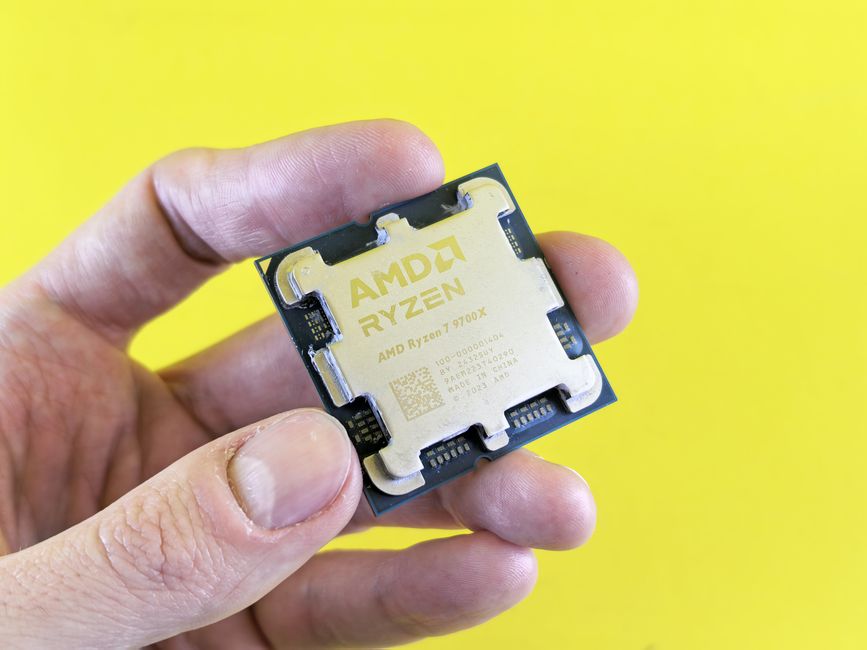
We compare AMD's Ryzen 7 9850X3D against Intel's Core Ultra 7 270K Plus to find the best gaming CPU in 2026. Read our in-depth performance analysis.
The landscape of desktop processors has undergone a massive transformation in 2026. For gamers and PC hardware enthusiasts, the battle for CPU dominance has reached a fever pitch. We are no longer looking at minor, single-digit performance iterations; instead, the current year has brought us highly refined architectures and aggressive pricing wars. Two processors stand at the very center of this storm: the AMD Ryzen 7 9850X3D and the Intel Core Ultra 7 270K Plus.
AMD has built a legacy of dominating the gaming space with its 3D V-Cache technology. The recently released Ryzen 7 9850X3D aims to solidify that reputation by refining the Zen 5 architecture and pushing clock speeds to 5.6 GHz. Conversely, Intel has staged an incredible comeback with its Arrow Lake-S refresh, spearheaded by the Core Ultra 7 270K Plus. Priced at just $299, this 24-core processor offers flagship-level productivity and highly competitive gaming.
This comparison is not just about raw frame rates; it represents two entirely different hardware philosophies. AMD is asking you to invest a premium for specialized gaming excellence, while Intel is offering a highly versatile, multi-core powerhouse at a price that seems almost too good to be true. Whether you are building a dedicated gaming rig, a high-end streaming setup, or a hybrid workstation, choosing between these two chips requires a close look at how they perform. This in-depth comparison will evaluate their performance across gaming, productivity, thermal management, and long-term value to help you make the right choice.
To help you understand the core differences between these two heavyweight processors, we have assembled a side-by-side spec comparison. Below, you will find the technical details, pricing, and key features of each CPU at a glance. This breakdown serves as a quick reference point before we dive into the deep testing metrics.
| Specification | AMD Ryzen 7 9850X3D | Intel Core Ultra 7 270K Plus |
|---|---|---|
| MSRP Launch Price | $499 | $299 |
| Architecture | Zen 5 (Granite Ridge) | Arrow Lake-S (Refresh) |
| Cores / Threads | 8 Cores / 16 Threads | 24 Cores (8 P-Cores + 16 E-Cores) / 24 Threads |
| Base Clock | 4.7 GHz | 3.3 GHz (P-Core) / 2.4 GHz (E-Core) |
| Max Boost Clock | Up to 5.6 GHz | Up to 5.5 GHz (P-Core) / 4.7 GHz (E-Core) |
| L2 Cache | 8 MB | 40 MB |
| L3 Cache | 96 MB (3D V-Cache) | 36 MB |
| TDP (Thermal Design Power) | 120W | 125W Base / ~250W Max Turbo |
| Motherboard Socket | AM5 | LGA 1851 |
| Pros | Absolute best gaming CPU; Highly efficient; Compatible with existing AM5 boards; Runs cooler under typical gaming loads. | Incredible $299 price tag; Unmatched multi-threaded productivity; Matches flagship multi-core chips; No hyperthreading latency. |
| Cons | Expensive $499 price point; Limited multi-core productivity; Only a minor bump over the older 9800X3D. | Higher peak power draw under heavy workloads; LGA 1851 platform longevity is uncertain; Marginally slower in CPU-bound gaming. |
In the tech world, performance is always relative to cost, and the 2026 CPU market has drawn a very clear line in the sand. AMD has positioned the Ryzen 7 9850X3D as an enthusiast-class gaming chip, launching it at an MSRP of $499. This premium price tag reflects the specialized nature of the 3D V-Cache technology, which remains a costly feature to manufacture. AMD knows it holds the crown for raw gaming speed, and the pricing structure reflects that market dominance.
On the other side of the aisle, Intel has launched an aggressive price war with the Core Ultra 7 270K Plus at a shocking $299 MSRP. This move represents a massive strategic shift, aiming to recapture market share by delivering unbelievable value. For the price of a mid-range CPU, Intel gives builders access to flagship-level multi-threaded power. This $200 price difference is the defining factor of this matchup, forcing buyers to weigh pure frame rates against financial efficiency.
The architectural differences between these two processors explain why they excel in such different areas. AMD’s Ryzen 7 9850X3D is built on Zen 5, utilizing a refined 4nm process from TSMC. The highlight of this chip is its 3D V-Cache, which stacks an additional 64 MB of L3 cache directly on top of the processor die. This brings the total L3 cache to a massive 96 MB, drastically reducing system latency.
AMD has also resolved previous clock-speed limitations, allowing the 9850X3D to boost up to a blistering 5.6 GHz. This represents a significant step forward over older X3D chips, which had to run at lower clock speeds to avoid thermal damage. By pairing high clock speeds with ultra-low latency cache, AMD has created the perfect storm for gaming instructions.
Intel’s Core Ultra 7 270K Plus takes a radically different route, using a fully-enabled Arrow Lake-S silicon die. It utilizes Intel’s innovative tile-based architecture, pairing 8 performance cores with 16 efficiency cores for a total of 24 physical cores. Intel has also completely removed hyperthreading from this generation, meaning each core processes exactly one thread. This design choice streamlines execution, prevents scheduling overhead, and keeps temperatures far more stable than in previous Core generations.
In 1080p gaming benchmarks, the AMD Ryzen 7 9850X3D showcases its absolute dominance. In CPU-bound titles like Cyberpunk 2077, Assassin’s Creed Mirage, and Spider-Man 2, the 9850X3D achieves a 10% to 15% advantage over the 270K Plus. The massive L3 cache allows the game engine to retrieve rendering data almost instantaneously, preventing minor micro-stutters.
However, the story changes when you shift to real-world gaming setups. Most enthusiasts buying CPUs of this tier do not play at 1080p; they target 1440p or 4K with high-end graphics cards. At 1440p, the performance gap between these two processors shrinks to a mere 3% to 5%. At 4K, the graphics card bottlenecks the system, making their in-game performance virtually identical.
While gaming is competitive, multi-threaded productivity is where Intel completely dominates. The Core Ultra 7 270K Plus, with 24 physical cores, is an absolute powerhouse for content creation and heavy workloads. In synthetic benchmarks like Cinebench 2026, the Intel chip scores up to 60% higher than the 8-core Ryzen 7 9850X3D. This turns a mid-range price into a flagship-level workflow.
In applications like Adobe Premiere Pro and DaVinci Resolve, the 270K Plus processes 4K video rendering with incredible speed. It is also a massive boon for software developers compiling large codebases or artists using Blender. The Ryzen 7 9850X3D, restricted by its 8-core limit, simply cannot keep up. It is fine for casual work, but it is not a professional workstation chip.
Power efficiency and thermal management are vital factors for modern PC builders. Under gaming workloads, the AMD Ryzen 7 9850X3D is incredibly efficient, drawing just 60W to 80W of power. This means you do not need a massive cooling setup to maintain peak frequencies. A high-quality air cooler can get the job done, though a 240mm AIO keeps things even quieter.
Intel’s Core Ultra 7 270K Plus is a massive improvement over older, power-hungry generations like Raptor Lake. Built on an advanced TSMC tile process, it manages its power footprint effectively. During gaming, the 270K Plus draws around 90W to 110W, which is surprisingly close to AMD’s footprint. This represents a huge leap forward, showing Intel has resolved its historical gaming power issues.
Choosing between these two incredible processors comes down to identifying your primary use case, budget, and long-term upgrade plans. Both chips offer stellar performance, but they target completely different audiences. Let us break down the exact scenarios where each chip makes the most sense. This will help you avoid overspending on features you do not need.
If you are a pure gamer playing at high-refresh rates, the AMD Ryzen 7 9850X3D is the ultimate option. It is perfect for esports enthusiasts who need every single frame or those who want to prevent any GPU bottlenecking. The added efficiency and lower power draw also make it incredibly easy to cool. If gaming is your main hobby, the 9850X3D is worth its $499 premium.
For creators and hybrid users, the Intel Core Ultra 7 270K Plus is the clear pick. The massive 24-core design handles background tasks, streaming, and heavy rendering with absolute ease. If you edit video, compile code, or run virtual machines, this chip will save you massive amounts of time. It bridges the gap between gaming and professional work better than any other 2026 processor.
Budget-conscious builders should also lean heavily toward Intel’s offering. The $200 price difference can be reallocated into a higher-tier graphics card or faster DDR5 memory. For instance, pairing a Core Ultra 7 270K Plus with an RTX 5080 will easily outperform a Ryzen 7 9850X3D with an RTX 5070. This makes the Intel chip the smarter financial choice for balanced systems.
Q: Do I need to buy a new motherboard if I upgrade to the AMD Ryzen 7 9850X3D?
A: No, the Ryzen 7 9850X3D is fully compatible with the existing AM5 socket. If you already own an AM5 motherboard, such as an X670E, B650, or X870E, you will only need to perform a simple BIOS update to support the new processor. This makes upgrading from older Ryzen CPUs incredibly straightforward and cost-effective.
Q: Why doesn’t the Intel Core Ultra 7 270K Plus support hyperthreading?
A: Starting with the Arrow Lake architecture, Intel completely removed hyperthreading to maximize physical core efficiency and eliminate security vulnerabilities. Real-world testing shows that having 24 pure physical cores improves performance stability and reduces micro-stuttering in modern games. This design shift has been highly praised by hardware reviewers for providing a smoother gaming experience.
Q: Which processor is better for 4K gaming?
A: At 4K resolution, the graphics card becomes the primary performance bottleneck, making the CPU’s influence negligible. Because both processors perform nearly identically at 4K, the cheaper Intel Core Ultra 7 270K Plus is the smarter financial choice. It allows you to save $200 on the CPU and spend that extra budget directly on a more powerful graphics card.
Q: Do these processors require a liquid cooler?
A: While the Ryzen 7 9850X3D can be cooled with a high-end dual-tower air cooler, a 240mm AIO is recommended for optimal performance. The Intel Core Ultra 7 270K Plus pulls substantial power under full multi-core load, making a 360mm AIO liquid cooler highly recommended to prevent thermal throttling. If you only plan to game, a high-quality air cooler can suffice for either processor.
Determining the absolute winner of this head-to-head matchup depends on what kind of PC user you are. However, from a market-wide perspective, one processor stands out as the superior overall release for 2026. Intel has pulled off an incredible feat by pricing a fully-enabled, high-performance 24-core processor at just $299. This aggressive strategy has completely disrupted the desktop CPU market, offering unprecedented value to builders.
Therefore, the overall winner of this comparison is the Intel Core Ultra 7 270K Plus. It destroys the Ryzen 7 9850X3D in multi-threaded productivity, matches it in high-resolution 1440p and 4K gaming, and saves you an immediate $200. For the vast majority of PC builders, the Intel Core Ultra 7 270K Plus represents the smarter, more versatile, and vastly superior value choice. It is the definitive price-to-performance champion of the year.
With that said, if you are a competitive gamer who demands nothing less than absolute gaming perfection, the AMD Ryzen 7 9850X3D remains the performance king. Its massive 3D V-Cache architecture delivers unmatched frame rates and 1% low stability in CPU-bound games. If you have the budget to spare and want a pure gaming rig without compromises, AMD’s flagship still deserves a spot in your setup. But for everyone else, Intel’s aggressive pricing has made the 270K Plus the definitive champion of 2026.
Prices and features mentioned are accurate as of the date of publication. Always check the official provider website for the most current pricing and availability.




