Physical Address
304 North Cardinal St.
Dorchester Center, MA 02124
Physical Address
304 North Cardinal St.
Dorchester Center, MA 02124

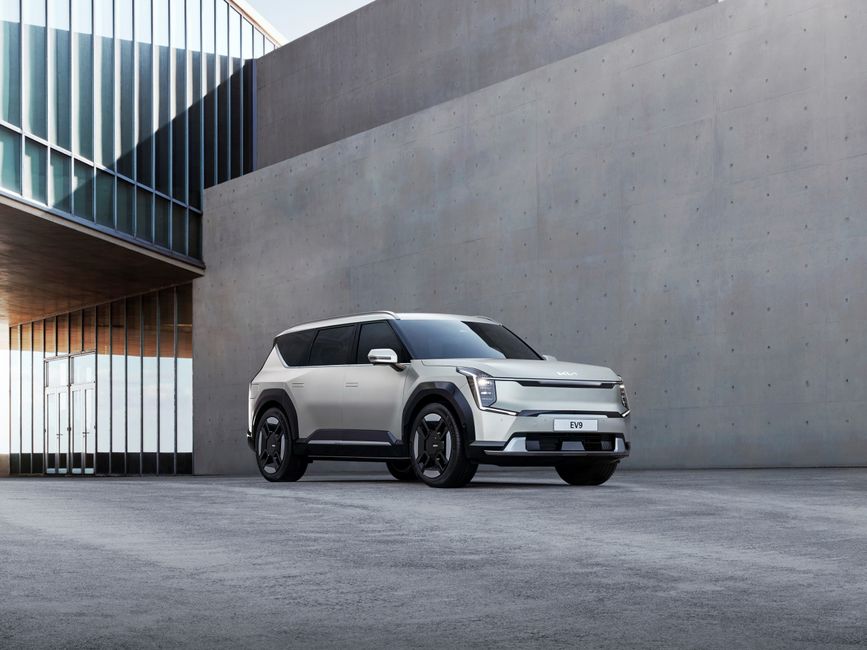
Hyundai Ioniq 9 vs Kia EV9! We compare the specs, range, pricing, and charging to find the best 3-row electric family SUV for 2026.
The market for family-sized electric vehicles has reached a critical tipping point. For years, families looking for a spacious three-row electric SUV had to choose between ultra-premium luxury models or cramped crossovers. That changed when the Kia EV9 arrived, establishing itself as a benchmark for practical, reasonably priced three-row electric transportation. Now, Hyundai has thrown down the gauntlet with its highly anticipated flagship, the brand-new 2026 Hyundai Ioniq 9.
Both of these massive family haulers are built by the Hyundai Motor Group, sharing the celebrated E-GMP (Electric-Global Modular Platform) architecture. Despite their shared genetic code, these two vehicles represent vastly different paths toward the same goal. The Kia EV9 relies on a boxy, muscular, and traditional SUV aesthetic that prioritizes road presence and rugged capability. In contrast, the Hyundai Ioniq 9 opts for a curvaceous, highly aerodynamic “aerosthetic” design optimized for maximum cabin space and highway efficiency.
For buyers trying to decide which of these heavyweights deserves a spot in their garage, the decision involves more than just styling. Subtle differences in wheelbase length, battery capacity, fast-charging profiles, and interior packaging set them apart. This head-to-head comparison breaks down every specification, real-world measurement, and pricing trim to help you choose the best three-row electric SUV for your family.
Before diving into the fine details, here is an at-a-glance comparison of the standard specifications and pricing for the 2026 Hyundai Ioniq 9 and the 2026 Kia EV9. These numbers represent the official manufacturer data for the 2026 model year.
| Feature / Spec | 2026 Hyundai Ioniq 9 | 2026 Kia EV9 |
|---|---|---|
| Starting Price (MSRP) | $58,955 | $56,395 |
| Top Trim Price (MSRP) | $76,490 (Calligraphy Design) | $75,395 (GT-Line AWD) |
| Wheelbase / Length | 123.2 inches / 199.2 inches | 122.0 inches / 197.4 inches |
| Battery Capacity | 110.3 kWh (Standard on all trims) | 76.1 kWh (Light) or 99.8 kWh (Long Range) |
| Max EPA Range | Up to 335 miles (RWD S Trim) | Up to 304 miles (Light Long Range RWD) |
| Top Horsepower | 422 hp (Performance AWD) | 379 hp (GT-Line AWD) |
| Max Cargo Volume | 86.9 cubic feet | 81.7 cubic feet |
| Charging Port Type | NACS compatible / 800V Architecture | Native NACS Port Standard |
As the table illustrates, the Hyundai Ioniq 9 is slightly larger, features a larger standard battery, and generates more top-end horsepower. However, the Kia EV9 enters the market with a slightly lower starting price and a more traditional SUV footprint.
The design contrast between these two sibling vehicles could not be more striking. The Kia EV9 embraces a boxy, geometric profile that looks like a futuristic interpretation of a classic rugged off-roader. It sits high with 7.8 inches of ground clearance and features sharp creases, prominent fender flares, and a distinctive digital pattern lighting grille. This upright structure gives it a commanding road presence, making it appeal to buyers who want a vehicle that looks tough, traditional, and robust.
On the opposite end of the spectrum, the Hyundai Ioniq 9 prioritizes aerodynamic efficiency above all else. Known for its “aerosthetic” styling, the Ioniq 9 features a smoothly sloping roofline, flush door handles, and a curvaceous front fascia that helps it achieve an incredibly low drag coefficient of just 0.269. The rear of the vehicle features a unique vertical wrap-around pixel light design that resembles high-end architecture. While its styling is certainly more polarizing than the universally praised EV9, the aerodynamic shape directly translates to improved highway range and reduced cabin wind noise.
Inside the cabin, both vehicles leverage their dedicated EV platform to provide completely flat floors and expansive passenger space. However, the Hyundai Ioniq 9 has been stretched further than its Kia sibling. The Ioniq 9 boasts a massive 123.2-inch wheelbase and a total length of 199.2 inches, which are 1.2 and 1.8 inches longer than the EV9, respectively. This structural enlargement pays immediate dividends in passenger comfort, particularly in the third row where passengers enjoy 32 inches of legroom compared to 30.8 inches in the Kia.
When it comes to cargo carrying capacity, the numbers on paper tell one story, while real-world usability tells another. The Hyundai Ioniq 9 offers a class-leading 21.9 cubic feet of space behind the third row and a maximum of 86.9 cubic feet with all rear seats folded down. The Kia EV9 counters with 20.2 cubic feet behind the third row and 81.7 cubic feet total. However, the heavily sloped rear hatch of the Ioniq 9 narrows the actual trunk opening. In practice, many families find the boxy, upright tailgate of the Kia EV9 easier for loading bulky, rectangular cargo, such as double strollers or large luggage boxes, without scraping against the glass.
In terms of cabin amenities, both brands have loaded their flagship SUVs with premium features. The Hyundai Ioniq 9 introduces the “Universal Island 2.0,” a central console that can slide rearward up to 7.5 inches, giving second-row passengers access to cupholders and USB ports. It also offers advanced Relaxation Seats in both the first and second rows, complete with a leg rest and a dynamic touch massage system. The Kia EV9 countered by standardizing ventilated front seats across a wider range of lower trims, making high-end climate comfort highly accessible without forcing buyers to step up to the most expensive AWD trims.
The powertrain strategies of these two models reveal the biggest functional divergence between them. Hyundai has chosen to equip every single Ioniq 9 trim with a gargantuan 110.3 kWh battery pack. This massive battery allows the base Ioniq 9 S (RWD) to achieve an exceptional EPA-estimated range of 335 miles. Stepping up to the dual-motor SE and SEL AWD trims yields a robust 303 horsepower and an estimated 320 miles of range. The top-tier Limited and Calligraphy performance packages boost output to 422 horsepower and 516 lb-ft of torque, while still maintaining an impressive 311 miles of range.
The Kia EV9 uses a split-battery approach to offer a lower entry price point. The base Light RWD trim features a modest 76.1 kWh battery pack, which limits its EPA-estimated range to just 230 miles. Furthermore, with only 215 horsepower tasked with pulling a heavy three-row SUV, the base EV9 is notably slow. Upgrading to the Light Long Range RWD unlocks a 99.8 kWh battery and a much healthier 304 miles of range, though horsepower is dialed down slightly to 201 hp. The dual-motor AWD trims (Wind, Land, and GT-Line) pump out 379 horsepower and up to 516 lb-ft of torque, but their EPA ranges sit lower at 283 miles for Wind and Land, and 270 miles for the performance-oriented GT-Line.
For drivers who frequently travel long distances or live in colder climates where battery efficiency drops, the Hyundai Ioniq 9 holds a distinct advantage. Its 10% larger battery pack consistently delivers superior real-world range across almost every comparable configuration.
Because both vehicles are built on the Hyundai Motor Group’s state-of-the-art 800V E-GMP platform, they are absolute champions of the fast-charging arena. Under optimal conditions, both SUVs can replenish their batteries from 10% to 80% in approximately 24 minutes when plugged into a 350 kW DC fast charger. This capability makes them vastly superior to many luxury competitors that still rely on slower 400V electrical architectures.
However, a critical charging differentiator exists in their charging port setups. The Kia EV9 comes natively equipped with a standard Tesla NACS (North American Charging Standard) port across all trims. This allows EV9 drivers to pull up to any compatible Tesla Supercharger and plug in natively without having to fiddle with adapters. The Hyundai Ioniq 9, built in Hyundai’s new Metaplant in Bryan County, Georgia, also boasts extensive NACS compatibility and supports high-speed charging. However, the Ioniq 9 features an exceptionally progressive charging curve. Real-world testing reveals that rather than peaking early and tapering off, the Ioniq 9’s charging speed actually climbs during the session, peaking at 235 kW even when the battery is at 60% capacity. This unique curve allows the Ioniq 9 to recover 200 miles of range in just over 20 minutes, setting a new benchmark for road-trip practicality.
Technology is a central pillar for both of these family-oriented cruisers. The Kia EV9 utilizes a triple-screen display panoramic interface, combining a 12.3-inch digital gauge cluster, a 5-inch climate control screen, and a 12.3-inch main infotainment display. While the aesthetic is ultra-modern, the small climate screen can sometimes be blocked from view by the driver’s hand on the steering wheel. To mitigate this, Kia has kept several physical shortcut keys directly below the screen for ease of use during driving.
The Hyundai Ioniq 9 counters with a beautifully curved single housing that seamlessly blends two 12.3-inch screens. What makes the Ioniq 9 highly appealing to tech enthusiasts is its integration of practical, physical controls alongside touch interfaces. Hyundai has thoughtfully kept physical climate knobs and buttons on the console, preventing drivers from having to dive through multiple screen menus just to adjust the fan speed. Additionally, the Ioniq 9 features a unique UV-C sterilization chamber located in the glovebox, allowing passengers to quickly sanitize cell phones, keys, and children’s toys on the go.
In terms of safety and driver assistance, both SUVs are class leaders. Each comes equipped with a comprehensive suite of active safety tech, including Highway Driving Assist 2, blind-spot monitoring, forward collision-avoidance, and remote smart parking capabilities. Hyundai’s system has been upgraded with more refined lane-centering algorithms, while Kia continues to offer exceptional surround-view camera clarity that makes navigating tight parking garages a breeze.
Deciding between these two exceptional three-row electric SUVs comes down to analyzing your family’s specific driving habits, aesthetic tastes, and budget parameters. Since they are built on the same underlying platform, you are guaranteed a quiet, smooth, and highly advanced electric vehicle regardless of your choice.
You should choose the 2026 Hyundai Ioniq 9 if:
You should choose the 2026 Kia EV9 if:
Q: Do both the Hyundai Ioniq 9 and Kia EV9 qualify for the federal EV tax credit?
Yes. Because both vehicles are assembled in the United States—the Hyundai Ioniq 9 in Bryan County, Georgia, and the Kia EV9 in West Point, Georgia—they both qualify for the full $7,500 federal electric vehicle tax credit, subject to household income limits and vehicle price caps.
Q: Which of these electric SUVs has a higher towing capacity?
Both vehicles offer identical towing capabilities when properly equipped. All-wheel-drive (AWD) models of both the Hyundai Ioniq 9 and the Kia EV9 can tow up to 5,000 pounds, while rear-wheel-drive (RWD) models are rated for a maximum towing capacity of 3,500 pounds.
Q: How long does it take to charge these SUVs at home?
Using a standard Level 2 home charger (producing 11 kW), the Kia EV9 with the 99.8 kWh battery takes approximately 8.5 to 9 hours to charge from 10% to 100%. The Hyundai Ioniq 9, because of its larger 110.3 kWh battery pack, will take slightly longer—approximately 9.5 to 10 hours for a full charge under the same home charging conditions.
Q: Which vehicle offers a better manufacturer warranty?
Both brands offer industry-leading warranties. Both the Hyundai Ioniq 9 and Kia EV9 come with a 10-year/100,000-mile powertrain and battery warranty, alongside a 5-year/60,000-mile bumper-to-bumper limited warranty. However, Hyundai slightly edges out Kia by offering an unlimited-mileage corrosion warranty for 7 years, compared to Kia’s 5-year/100,000-mile corrosion warranty.
Choosing a winner between these two outstanding siblings is incredibly difficult, as they both represent the absolute pinnacle of the non-luxury three-row electric SUV segment. However, after analyzing the specifications, charging capabilities, and interior usability, the 2026 Hyundai Ioniq 9 emerges as the narrow winner.
While the Kia EV9 is a magnificent vehicle that offers a lower starting price and a more traditional aesthetic, the Hyundai Ioniq 9 wins on the core metrics that define a superior electric vehicle. By standardizing the larger 110.3 kWh battery across all trims, Hyundai has eliminated the range anxiety often associated with entry-level specs. This larger battery, combined with the Ioniq 9’s superior aerodynamics, delivers exceptional range that outperforms the EV9 at almost every tier.
Additionally, the Ioniq 9’s slightly longer wheelbase provides vital extra legroom for third-row passengers, making it the more comfortable vehicle for growing families. Combined with its unique, progressive charging curve and highly thoughtful cabin innovations like the Universal Island 2.0 sliding console, the 2026 Hyundai Ioniq 9 takes the crown as the ultimate three-row electric family vehicle.
Prices and features mentioned are accurate as of the date of publication. Always check the official provider website for the most current pricing and availability.




