Physical Address
304 North Cardinal St.
Dorchester Center, MA 02124
Physical Address
304 North Cardinal St.
Dorchester Center, MA 02124

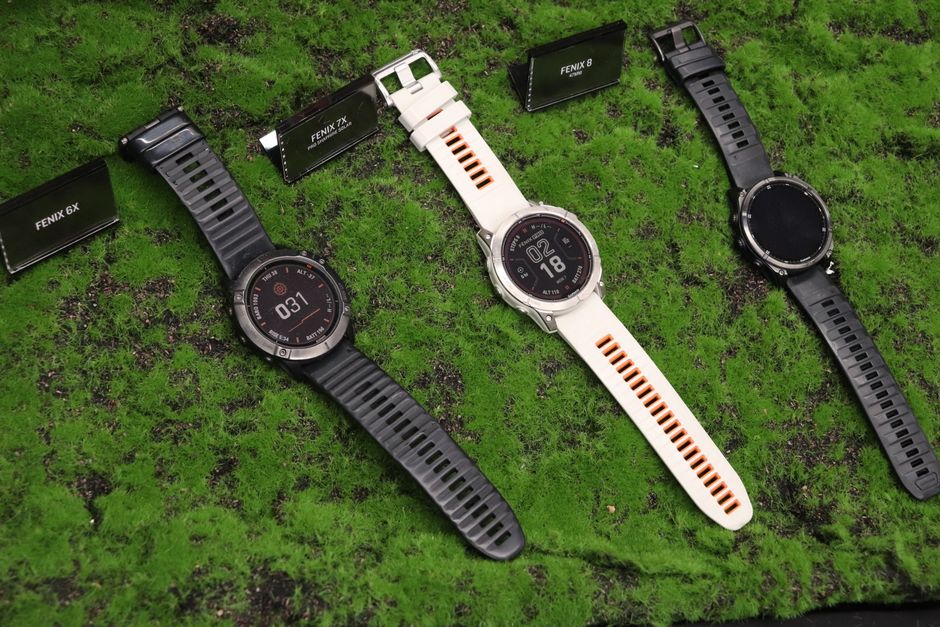
Our in-depth 2026 comparison of the Garmin Fenix 8 Pro and Samsung Galaxy Watch Ultra reveals the ultimate rugged smartwatch for extreme outdoor adventures.
The rugged smartwatch landscape in 2026 has reached a fascinating turning point. No longer are outdoor enthusiasts forced to choose between a fragile, feature-rich smartwatch and a clunky, monochrome sports watch. Today’s top-tier outdoor wearables offer brilliant displays, ultra-durable chassis, and safety features designed for the most punishing environments on Earth. If you are looking to invest in a premium, go-anywhere watch this year, two giants stand entirely above the rest.
Representing the peak of dedicated sports technology is the Garmin Fenix 8 Pro, which debuted in late 2025 and has dominated the 2026 adventure scene. Garmin has packed this flagship with groundbreaking off-grid communication tech, transforming it from a simple tracker into a standalone survival tool. Standing in the opposite corner is the Samsung Galaxy Watch Ultra, the crown jewel of the Android and Wear OS world. Samsung’s heavy-duty contender combines robust military-grade protection with cutting-edge artificial intelligence and highly integrated smart features.
Choosing between these two premium devices is a matter of ecosystem compatibility, budget, and where you plan to take your adventures. While one is a highly advanced smart assistant built for the rugged trail, the other is an unyielding, professional-grade navigation instrument. In this comprehensive 2026 head-to-head comparison, we break down their designs, displays, health metrics, battery performance, and pricing to help you decide which watch deserves a spot on your wrist.
Before diving into the complex features of each device, it is helpful to look at how they stack up side by side. Here is an at-a-glance look at the core specifications, current 2026 retail prices, and distinct pros and cons of the Garmin Fenix 8 Pro and the Samsung Galaxy Watch Ultra.
| Feature | Garmin Fenix 8 Pro | Samsung Galaxy Watch Ultra |
|---|---|---|
| Launch Price (MSRP) | $1,199.99 – $1,699.99 (depending on size & panel) | $649.99 (frequent 2026 sales down to $379-$450) |
| Display Options | 1.4-inch AMOLED (2,000 nits) or MicroLED (4,500 nits) | 1.5-inch Super AMOLED (3,000 nits) |
| Battery Life | Up to 27 days (51mm AMOLED) / 10 days (51mm MicroLED) | Up to 48-72 hours (up to 100 hours in battery saver) |
| Materials | Titanium bezel, fiber-reinforced polymer, sapphire crystal | Grade 4 Titanium cushion case, sapphire crystal |
| Water Resistance | 10 ATM (100m) + EN13319 40-meter dive rating | 10 ATM (100m) + IP68 dust/water rating |
| Connectivity | Bluetooth, Wi-Fi, LTE, Built-in inReach Satellite | Bluetooth, Wi-Fi, LTE, NFC |
| Ecosystem Compatibility | iOS & Android compatible (Garmin Connect) | Android only (Optimized for Samsung Galaxy) |
To fully appreciate the value each rugged smartwatch brings to the table, we must examine their hardware, software, and performance capabilities in detail. While both are designed to handle demanding outdoor activities, they approach adventure from entirely different structural philosophies.
The Garmin Fenix 8 Pro represents the absolute pinnacle of rugged sports engineering. It is available in two case sizes: 47mm and 51mm, both of which utilize a heavy-duty titanium bezel, a fiber-reinforced polymer chassis, and a scratch-resistant sapphire crystal lens. Garmin has also incorporated advanced inductive, leakproof buttons. Coupled with an EN13319 certification, this means the Fenix 8 Pro is officially rated as a fully functional recreational dive computer up to depths of 40 meters.
Samsung adopts a bolder, highly stylized aesthetic with the Galaxy Watch Ultra. It features a singular 47.4mm cushion-shaped case—frequently referred to as a ‘squircle’—crafted from ultra-durable Grade 4 Titanium. The Galaxy Watch Ultra is exceptionally tough, meeting military-grade MIL-STD-810H and IP68 dust-and-water standards. However, while it boasts a 10 ATM rating, it lacks the inductive physical buttons and specialized dive software of the Garmin, making it unsuitable for serious scuba diving.
Display technology is an area where Garmin has made massive strides recently. The Fenix 8 Pro has largely replaced older, dimmer screen types with a brilliant, 2,000-nit AMOLED display on its standard models. Furthermore, Garmin has introduced a premium 51mm MicroLED edition. Pushing a blistering 4,500 nits of peak brightness, this groundbreaking MicroLED screen offers incredible viewing angles and contrast in direct sunlight, though it comes with a physical thickness penalty and increased power draw.
The Samsung Galaxy Watch Ultra relies on a gorgeous, highly responsive 1.5-inch Super AMOLED screen. Reaching up to 3,000 nits of peak brightness, Samsung’s display is remarkably vibrant and incredibly smooth under the finger. In terms of fluid animations and touch responsiveness, Samsung’s display has a distinct advantage over Garmin’s platform, which is optimized first and foremost to preserve battery life.
Garmin’s Fenix 8 Pro features the Elevate Gen 5 heart rate sensor and multi-band GPS with SatIQ technology. It excels at providing targeted training intelligence. Athletes will find metrics like Training Readiness, real-time Stamina tracking, and full offline topographical map routing indispensable on long journeys. Garmin’s hardware also includes a built-in LED flashlight, which has proven to be an incredibly useful tool for late-night camp setups and early morning runs.
The Samsung Galaxy Watch Ultra is equipped with Samsung’s BioActive sensor, which utilizes Galaxy AI to offer a wide array of health metrics. It provides unique metrics like Bioelectrical Impedance Analysis (BIA) for body composition, FDA-approved sleep apnea detection, blood pressure monitoring, and a daily ‘Energy Score’. While its dual-frequency GPS tracking is highly accurate, its mapping features are heavily reliant on active data connections and lack the built-in, offline map depth of Garmin’s preloaded ecosystem.
Ecosystem compatibility is a critical differentiator. The Fenix 8 Pro operates flawlessly with both iOS and Android smartphones, managed via the Garmin Connect app. Additionally, the Fenix 8 Pro is the first of its line to build Garmin’s inReach satellite technology directly into the hardware. With an active subscription, this allows you to send two-way text messages, share your GPS location, and trigger emergency SOS responses directly over the global Iridium satellite network when completely off the grid. It also includes standalone LTE and a built-in microphone and speaker.
The Samsung Galaxy Watch Ultra, conversely, is strictly compatible with Android, offering its best features exclusively to Samsung Galaxy phone users. Running Wear OS, it has a massive library of downloadable third-party apps, such as WhatsApp, Google Maps, and Spotify. Its standard LTE and Bluetooth connectivity are outstanding for managing notifications, taking phone calls, and utilizing Google Assistant. However, it lacks any form of direct satellite connectivity, meaning it remains completely dependent on traditional cellular networks.
If battery life is your primary concern, Garmin is the undisputed champion. The 51mm Garmin Fenix 8 Pro AMOLED delivers up to 27 days of battery life in smartwatch mode, while the 47mm variant achieves around 15 days. Even the power-hungry 51mm MicroLED edition manages an impressive 10 days of battery life. This incredible endurance means you can confidently embark on multi-day backcountry expeditions without even packing a charging cable.
The Samsung Galaxy Watch Ultra is heavily limited by the smart capabilities of Wear OS. Under standard daily usage, the Galaxy Watch Ultra musters about 48 to 72 hours of battery life, which can be stretched to roughly 100 hours by utilizing strict battery saver modes. However, this means you will be recharging the device every two to three days. Furthermore, charging from zero to full takes nearly 1 hour and 40 minutes, requiring scheduled daily downtime.
The financial investment required for these watches highlights the distinct markets they target. The Fenix 8 Pro is positioned as an ultra-premium professional tool, starting at $1,199.99 for the 47mm AMOLED and rising to $1,299.99 for the 51mm AMOLED. The cutting-edge Fenix 8 Pro MicroLED sits at $1,699.99 following a $300 price adjustment in early 2026. However, during major 2026 retail events like Amazon Prime Day, the Fenix 8 Pro has been heavily discounted, dropping to record lows of around $850 to $940.
The Samsung Galaxy Watch Ultra offers a much more accessible entry point. Originally launching at $649.99, standard retail depreciation and seasonal 2026 promotions have driven its street price down significantly. In mid-2026, the Galaxy Watch Ultra can easily be found brand new for anywhere between $379 and $450. For Android users looking to maximize their hardware-per-dollar ratio, the Galaxy Watch Ultra represents an incredibly compelling premium value proposition.
Deciding which of these rugged smartwatches to buy in 2026 depends entirely on your smartphone choice, budget, and how far off the beaten path you intend to go.
You should choose the Garmin Fenix 8 Pro if:
You should choose the Samsung Galaxy Watch Ultra if:
Yes. While the physical inReach satellite transmitter is integrated directly into the watch hardware, utilizing the satellite network to send text messages, share your live GPS track, or contact emergency rescue services requires an active Garmin satellite subscription, with plans starting at $7.99 per month.
No, the Samsung Galaxy Watch Ultra does not support iOS. It is designed to work exclusively within the Android ecosystem, and some specific features (such as ECG and blood pressure monitoring) are restricted to users who pair the watch with a Samsung Galaxy smartphone.
The 51mm Fenix 8 Pro AMOLED offers up to 27 days of battery life in standard smartwatch mode. The 51mm MicroLED version, while offering a much brighter 4,500-nit panel with improved viewing angles, is far less energy-efficient and delivers about 10 days of battery life under similar use.
No. While the Galaxy Watch Ultra features a 10 ATM rating, it lacks the specialized inductive, leakproof physical buttons and official EN13319 certification required for scuba diving. The Garmin Fenix 8 Pro is a fully certified dive computer rated for depths up to 40 meters, making it the clear choice for divers.
In 2026, the ultimate crown for the best overall rugged smartwatch depends on what ‘rugged’ means to you. If we are defining it by survival in extreme, off-grid isolation, the Garmin Fenix 8 Pro is the definitive winner. With its pioneering inReach satellite communication, weeks of battery life, dive computer capabilities, and unparalleled training analytics, it is a professional-grade tool that stands unchallenged for outdoor safety and athletics.
However, if your adventures stay within range of a cellular signal, the Samsung Galaxy Watch Ultra is the undisputed king of smart utility and value. It provides exceptional titanium durability, a jaw-dropping 3,000-nit screen, and cutting-edge Wear OS intelligence at a fraction of the price of Garmin’s flagship. For the vast majority of weekend warriors using Android, the Galaxy Watch Ultra represents the smartest, most budget-friendly premium rugged watch on the market.
Prices and features mentioned are accurate as of the date of publication. Always check the official provider website for the most current pricing and availability.