Physical Address
304 North Cardinal St.
Dorchester Center, MA 02124
Physical Address
304 North Cardinal St.
Dorchester Center, MA 02124

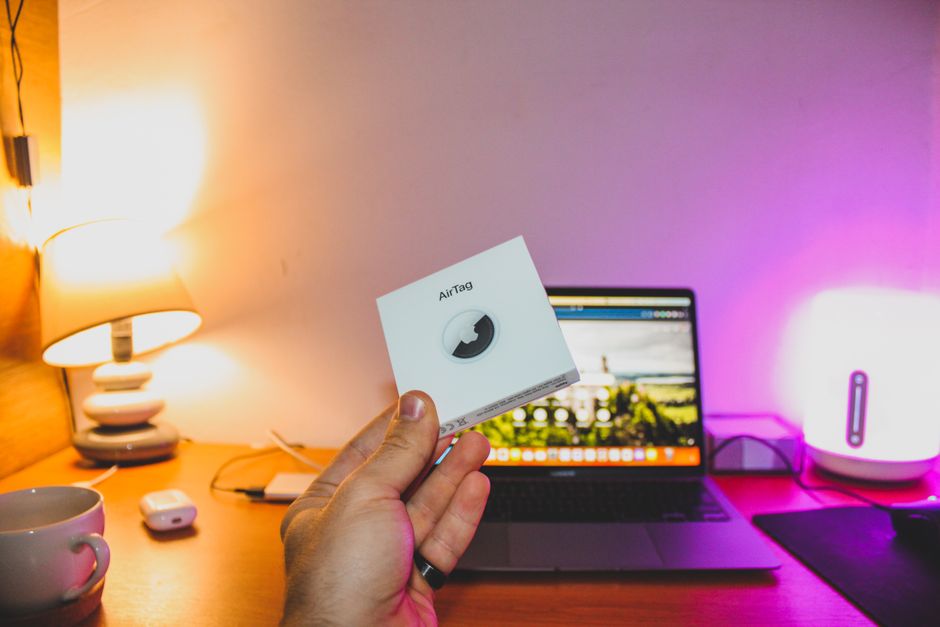
Compare the brand-new 2026 Google Pixel Tag, Apple AirTag 2, and Samsung Galaxy SmartTag2. Find the best Bluetooth tracker for your phone and budget.
Losing our daily essentials used to mean tearing the house apart, checking under every couch cushion, and hoping for the best. Today, Bluetooth trackers have completely transformed how we secure our most valuable belongings—from car keys and wallets to checked luggage and even family pets. In 2026, the smart tracker landscape has reached its most competitive point yet. No longer is this market dominated solely by a single tech giant; instead, we have a tight three-way race between Google, Apple, and Samsung, each pushing the boundaries of wireless technology and crowd-sourced tracking networks.
This comparison brings together the three heaviest hitters in the industry: the brand-new Google Pixel Tag, the recently upgraded second-generation Apple AirTag (AirTag 2), and the rugged, highly versatile Samsung Galaxy SmartTag2. Each represents its parent company’s vision of seamless hardware integration, using advanced radio technologies to pinpoint lost items with millimeter accuracy. However, choosing the best Bluetooth tracker in 2026 is no longer just about buying the cheapest or sleekest device. It is about understanding which operating system you are locked into, how dense their tracking networks are, and which hardware features actually make a difference in your day-to-day life.
Whether you are a die-hard Pixel enthusiast, a loyal iPhone user, or a Samsung Galaxy loyalist, this deep-dive guide will break down the precise specifications, real-world pricing, network capabilities, and unique advantages of each tracker to help you make an informed decision for 2026 and beyond.
To give you an immediate overview of how these three tracking titans stack up, we have compiled their key specifications, pricing, and compatibility details below. Each tracker targets a different sector of the smartphone market, and their built-in technologies reflect their respective ecosystems.
| Feature | Google Pixel Tag (2026) | Apple AirTag 2 (2026) | Samsung Galaxy SmartTag2 |
|---|---|---|---|
| Price (Single / 4-Pack) | $29.00 / $99.00 | $29.00 / $99.00 (Often on sale for $24 / $89) | $30.00 / $100.00 (Often discounted to ~$17 – $20) |
| Ecosystem Network | Google Find Hub (1B+ Android devices) | Apple Find My (Hundreds of millions of iOS/macOS devices) | Samsung SmartThings Find (Galaxy network) |
| Wireless Technologies | Bluetooth 6.0, Channel Sounding, Ultra-Wideband (UWB) | Bluetooth, Ultra-Wideband (UWB) | Bluetooth 5.3, Ultra-Wideband (UWB) |
| Water Resistance | IP67 (Dust-proof, water-resistant up to 1m for 30 min) | IP67 (Dust-proof, water-resistant up to 1m for 30 min) | IP67 (Dust-proof, water-resistant up to 1m for 30 min) |
| Battery Life & Type | ~1 year (Replaceable CR2032) | ~1 year (Replaceable CR2032) | 500 – 700 days (Replaceable CR2032) |
| Physical Design | Pebble-shaped oval, stainless steel, needs accessory holder | Circular coin, plastic/stainless steel, needs accessory holder | Elongated pill with built-in metal ring loop |
| On-Device Button | Yes (Can ring connected phone) | No | Yes (Programmable for phone ring or smart home routines) |
| OS Compatibility | Android 9 or later (Full precision with Android 16+) | iOS / iPadOS 14.5 or later (UWB requires iPhone 11+) | Samsung Galaxy phones with Android 9 or later |
To truly understand how these finders perform in the real world, we must look beyond basic dimensions and dive into their specific network capabilities, software integrations, and physical designs. Here is how each of the three devices performs in 2026.
Announced alongside the Pixel 11 series in August 2026, the Google Pixel Tag represents Google’s highly anticipated first-party entry into the Bluetooth tracker market. Priced competitively at $29 for a single unit and $99 for a four-pack, the Pixel Tag is slated for a full retail release on November 11, 2026. Made from rugged stainless steel in a clean “Light Fog” colorway, it features an elongated, pebble-like oval design. While it is beautifully built, it lacks a built-in keychain loop, meaning users will need to buy an add-on accessory holder to clip it onto keys or bags.
What truly sets the Pixel Tag apart in 2026 is its incorporation of next-generation wireless communication. Google has equipped the Pixel Tag with both Ultra-Wideband (UWB) and Bluetooth 6.0 with Channel Sounding. Bluetooth Channel Sounding is a major leap forward, allowing highly precise distance and direction measurements between the tag and any Android phone running Android 16 or later—even if that phone does not have an expensive, dedicated UWB chip. If you do own a premium phone with UWB, such as a Pixel Pro or a Samsung Galaxy S-series model, you get full visual precision finding, pointing you exactly where to walk.
The Pixel Tag operates on Google’s newly refined Find Hub network, which harnesses the location-finding power of more than one billion Android devices worldwide. Additionally, the Pixel Tag features a built-in speaker and a highly convenient physical button. Pressing this button rings your connected phone, making it a two-way finder—a feature sorely missing from Apple’s ecosystem. It is powered by a standard, user-replaceable CR2032 battery that is rated to last up to one year, and features an IP67 rating to withstand rain, splashes, and minor submersions.
Released in January 2026, the second-generation Apple AirTag (AirTag 2) replaces the aging 2021 model with key usability refinements while keeping the exact same introductory price of $29 for a single unit and $99 for a pack of four. Apple’s latest tracker remains the undisputed gold standard for iPhone users, and retailers like Amazon frequently run promotions in 2026 that bring the four-pack price down to an attractive $89 ($22 per tag), making it a highly accessible security accessory.
Apple did not radically redesign the physical look of the AirTag 2. It retains the iconic, ultra-compact circular coin design with a polished stainless steel backplate and white plastic front. Just like the original, it lacks a built-in loop, requiring third-party or official Apple key rings and cases to attach to anything. However, beneath the hood, the AirTag 2 boasts a brand-new wireless chip that vastly expands its finding range and incorporates a significantly louder speaker, addressing the primary complaints of the original generation where the ring sound was too quiet when buried under luggage or furniture.
The true strength of the AirTag 2 lies in Apple’s mature, robust Find My network. Leveraging hundreds of millions of iPhones, iPads, and Macs worldwide, the crowd-sourced tracking is incredibly rapid and highly secure. If your tagged luggage goes missing at an international airport, any nearby iOS device will silently register its location almost instantly. Using an iPhone 11 or newer, the precision finding interface guides you with step-by-step arrows and haptic feedback. Powered by a replaceable CR2032 battery that lasts about a year, the AirTag 2 also carries an IP67 water and dust resistance rating.
While the Google Pixel Tag and Apple AirTag 2 are the shiny new entries of 2026, the Samsung Galaxy SmartTag2 remains an absolute powerhouse in the Bluetooth tracker market. Originally released in late 2023, Samsung has kept the SmartTag2 highly relevant through continuous software updates, making it a beloved choice for Samsung Galaxy owners. It lists for $30 for a single unit or $100 for a four-pack, but is frequently found heavily discounted in 2026 down to $17 to $20 on major online stores.
Design-wise, the SmartTag2 is easily the most practical tracker out of the box. It features an elongated, pill-shaped body with a massive, metal-reinforced loop hole built directly into the top. This means you do not need to spend extra money on a separate silicone case or keychain holder; you can simply slide it directly onto a key ring or luggage strap. Furthermore, it boasts the absolute best battery life in the segment. Thanks to efficient Bluetooth 5.3 and energy-saving modes, a single CR2032 coin battery can last up to 500 days in normal mode, or an astonishing 700 days in power-saving mode.
The SmartTag2 is locked exclusively to Samsung’s SmartThings Find (recently re-branded under Samsung Find) ecosystem. This means it only works with Samsung Galaxy smartphones. It features dual Bluetooth and UWB tracking, offering “Compass View” on UWB-enabled Samsung phones to guide you visually. Its integrated physical button is also highly programmable: a double-press can ring your lost Galaxy phone, while a single press can run smart home automations, like turning on your porch lights or opening your garage door. While leaks suggest a squircle-shaped SmartTag 3 is arriving in late 2026, the SmartTag2 remains a robust and reliable tracker today.
With three incredibly capable trackers on the market in 2026, deciding which one to purchase comes down to analyzing your specific daily hardware usage, budget constraints, and aesthetic preferences. To help you navigate this decision, we have broken down the critical criteria you should consider before making a purchase.
The absolute most important factor when choosing a Bluetooth tracker is the smartphone currently in your pocket. These trackers are heavily locked into their respective operating systems to protect user privacy and maximize background processing efficiency. If you are an iPhone user, the decision is incredibly straightforward: buy the Apple AirTag 2. The AirTag 2 will not work with Android devices, and you will miss out on the entire visual tracking experience and step-by-step guidance without iOS.
If you own a Samsung Galaxy device, the Samsung Galaxy SmartTag2 is your native champion. It integrates seamlessly into the Samsung Find app and allows you to program its physical button to run SmartThings smart home automations. Finally, if you own a Google Pixel, a Motorola, a OnePlus, or any other non-Samsung Android device, the new Google Pixel Tag is the hands-down winner. Running on the Google Find Hub network, it offers cross-device support for all modern Android devices running Android 9 and newer, making it the most versatile Android tracker on the market.
A tracker is only as good as the network of devices surrounding it. If you lose your keys in a remote park, your tracker relies on a passing stranger’s phone to pick up its Bluetooth signal and securely relay the location back to the cloud. In this regard, Apple’s Find My network remains incredibly dense worldwide, especially in urban environments. However, Google’s Find Hub network is rapidly closing the gap in 2026, tapping into more than a billion active Android devices. Samsung’s SmartThings Find network is massive but limited only to other Samsung users, meaning it performs exceptionally well in regions with high Samsung market share, but can be less consistent in iOS-heavy suburbs.
If you want a tracker that you can throw onto your keychain immediately without spending another dime, the Samsung Galaxy SmartTag2 is the clear winner. Its built-in metal-reinforced ring loop is highly durable and practical. Both the Apple AirTag 2 and Google Pixel Tag require you to purchase third-party cases or loops if you want to attach them to keys, luggage, or pet collars. While this allows for more personalization with fashionable leather and silicone sleeves, it does add an extra $5 to $20 to the true cost of ownership. All three devices feature IP67 dust and water resistance, meaning they can survive a heavy downpour or an accidental drop in a puddle, but the Pixel Tag’s stainless steel backplate gives it a slightly more premium, rugged feel in the hand.
If you dislike changing batteries frequently, the Samsung Galaxy SmartTag2 reigns supreme, offering up to 700 days of tracking on a single, cheap CR2032 coin cell. The Pixel Tag and AirTag 2 will require battery replacements roughly once a year. Additionally, consider the convenience of a physical button. Both Samsung and Google allow you to use their trackers to “reverse find” your phone by ringing it. Apple’s AirTag 2 does not feature any physical buttons, meaning you cannot use it to find your iPhone if you lose your phone while holding your keys.
No. Due to privacy frameworks and proprietary operating system limitations, you cannot track a Google Pixel Tag using an iPhone, nor can you set up or track an Apple AirTag 2 using an Android device. However, Apple and Google have collaborated on cross-platform anti-stalking safety alerts. In 2026, if an unknown Pixel Tag is moving with an iPhone user, or an unknown AirTag 2 is traveling with an Android user, both operating systems will display an automatic alert to warn the user of potential unwanted tracking.
Bluetooth Channel Sounding is an advanced wireless standard introduced in Bluetooth 6.0. It allows compatible devices to calculate highly precise distances and directions between each other by analyzing radio frequencies rather than just measuring signal strength. Google integrates this into the Pixel Tag alongside Ultra-Wideband (UWB). This means that even if your Android phone lacks an expensive UWB chip, you can still get highly accurate distance measurements to your lost keys, making precision tracking accessible to mid-range and budget smartphones running Android 16 and later.
In real-world testing, all three trackers have a direct Bluetooth range of roughly 100 to 120 feet when trying to connect directly to your smartphone. However, if your item is lost outside of this range, the “effective range” becomes practically infinite by using their respective crowd-sourced networks. Apple’s Find My network and Google’s Find Hub network can locate your tracker thousands of miles away as long as another compatible device passes within Bluetooth range of your lost item.
None of these three trackers feature rechargeable batteries. Instead, they are powered by a standard, user-replaceable CR2032 coin cell battery. While some third-party trackers offer rechargeable options, using replaceable coin cells allows Google, Apple, and Samsung to keep these trackers incredibly slim and water-resistant. Replacing the battery is inexpensive, fast, and ensures that you do not have to discard the entire device when the battery eventually dies.
In 2026, the question of the “best” Bluetooth tracker is deeply tied to your choice of smartphone. There is no longer a single tracker that rules them all. Instead, each device excels brilliantly within its native garden. If you use an iPhone, the Apple AirTag 2 remains the undisputed champion. Its massive Find My network, upgraded louder speaker, and seamless integration make it an essential purchase for Apple users.
For Android users without a Samsung device, the newly launched Google Pixel Tag is the best choice. With its cutting-edge Bluetooth 6.0 Channel Sounding, UWB precision finding, and integration into the massive Find Hub network, Google has built a stellar, direct competitor to Apple’s tracker. Meanwhile, if you are firmly in the Samsung Galaxy ecosystem, the Samsung Galaxy SmartTag2 remains the most practical and feature-rich option on the market. Its built-in metal loop design, outstanding 700-day battery life, and programmable smart button make it an incredibly cost-effective and highly reliable daily finder.
Prices and features mentioned are accurate as of the date of publication. Always check the official provider website for the most current pricing and availability.




