Physical Address
304 North Cardinal St.
Dorchester Center, MA 02124
Physical Address
304 North Cardinal St.
Dorchester Center, MA 02124

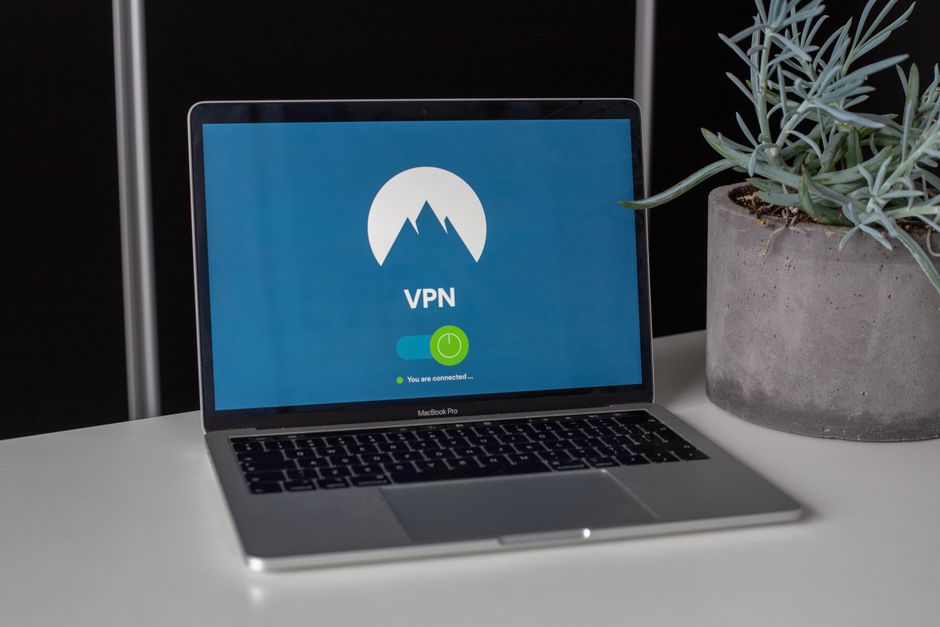
Protect your data from 'harvest now, decrypt later' attacks. Our 2026 comparison reviews ExpressVPN, NordVPN, and Mullvad for post-quantum security.
The landscape of digital privacy has shifted dramatically. For years, the threat of quantum computing was treated as a far-off, theoretical problem. However, in 2026, the cybersecurity community has reached a critical inflection point. Traditional asymmetric encryption methods like RSA and Elliptic Curve Cryptography (ECC)—the very mathematical formulas that currently secure our banking transactions, private emails, and standard VPN handshakes—are highly vulnerable to future quantum computers running Shor’s algorithm.
This is not a danger reserved for the next decade. Sophisticated adversaries, including nation-state intelligence agencies, are actively conducting ‘Harvest Now, Decrypt Later’ (HNDL) campaigns. They are intercepting and archiving massive volumes of classically encrypted internet traffic today, banking on the fact that they will easily decrypt it retroactively once quantum computers reach sufficient maturity. If your online activities today are secured only by classical ciphers, your private data is already sitting in a storage array, awaiting future exposure.
To future-proof your digital footprint, implementing post-quantum cryptography (PQC) is no longer optional—it is a modern baseline. Following the finalization of the first three post-quantum standards by the National Institute of Standards and Technology (NIST), the VPN market has rapidly adjusted. Today, we are taking an in-depth, hands-on look at the three industry frontrunners leading the post-quantum charge in 2026: ExpressVPN, NordVPN, and Mullvad VPN. Each has taken a unique architectural approach to implementing next-generation security, offering vastly different balances of speed, price, and overall user anonymity.
Before diving into the complex technical differences and pricing structures of each provider, let us look at how they stack up side-by-side in terms of post-quantum capabilities, server coverage, and subscription models in 2026.
| Feature | ExpressVPN | NordVPN | Mullvad VPN |
|---|---|---|---|
| Post-Quantum Protocol | Lightway & WireGuard | NordLynx | WireGuard Only |
| PQC Algorithm | ML-KEM (NIST Level 5) | ML-KEM (FIPS 203) | ML-KEM |
| Active by Default? | Yes (on Lightway/WireGuard) | No (Requires toggle in app) | Yes (Always active) |
| Server Network (2026) | Servers in 105 Countries | 9,300+ Servers in 137 Countries | ~700 Servers in 40+ Countries |
| Device Limits | 10 to 14 Simultaneous Connections | 10 Simultaneous Connections | 5 Simultaneous Connections |
| Starting Price (2026) | $2.49/mo (2-year Basic) | $3.49/mo (2-year Basic) | Flat €5/mo (~$5.40-$5.90) |
| Best For | Seamless premium use & streaming | Feature-rich protection & speed | Extreme anonymity & transparency |
ExpressVPN has long been considered a premium leader in the VPN space, and its transition to the post-quantum era has been remarkably seamless. The company took its first major step in January 2025 by integrating post-quantum protections into its in-house, open-source Lightway protocol across all major platforms. Recognizing the need for cryptographic agility, ExpressVPN followed this up in August 2025 by deploying post-quantum protections onto its standard WireGuard implementation for iOS, Android, and Windows, followed quickly by macOS.
ExpressVPN’s post-quantum framework is built on the standardized ML-KEM algorithm (FIPS 203), formerly known as CRYSTALS-Kyber. By incorporating NIST Security Level 5 key sizes, the provider ensures its users are shielded by the most robust theoretical defenses currently available, all while keeping handshakes fast. ExpressVPN relies on a hybrid key-exchange model. This layers the new post-quantum algorithm directly on top of classical ECDH key exchanges. In practice, this means that even if a flaw is discovered in the mathematical model of ML-KEM, the connection remains completely protected by standard classical encryption. This defense-in-depth approach is paired with WolfSSL-vetted cryptography, which has undergone independent third-party audits by firms like KPMG.
In 2026, ExpressVPN has updated its subscription plans into three distinct tiers: Basic, Advanced, and Pro. The Basic plan is now more affordable than in previous years, starting at $2.49 per month on a 2-year term (billed as $97.72 for 28 months, including 4 free months). This tier includes full VPN access with post-quantum security active by default, alongside basic ad and malicious-site blockers, allowing up to 10 simultaneous device connections. The Advanced plan starts at $3.59 per month on a 2-year term, adding a personal password manager, tracker blocking, and identity theft protection tools across 12 devices. The Pro plan is priced at $5.49 per month, supporting up to 14 devices and bundling a dedicated IP address directly into the subscription. ExpressVPN remains a stellar choice for general consumers, combining effortless, default-on post-quantum encryption with top-tier speeds and robust streaming unblocking across 105 countries.
NordVPN is globally renowned for its feature-rich client, blistering server speeds, and extensive infrastructure. It entered the post-quantum space in late 2024 with a Linux-focused roll-out, eventually extending post-quantum encryption (PQE) across Windows, macOS, iOS, Android, and Android TV/tvOS by May 2025.
NordVPN’s post-quantum mechanism layers the ML-KEM algorithm onto its proprietary NordLynx protocol, which is a highly optimized fork of the WireGuard architecture. To maximize long-term resilience, NordVPN rotates cryptographic keys every 90 seconds, limiting the volume of traffic that would ever be exposed in the highly improbable event of a key compromise. The computational efficiency of NordLynx shines here, with testing showing almost negligible performance degradation despite the added cryptographic payload. However, NordVPN’s post-quantum implementation has a couple of structural catches. First, unlike its competitors, the feature is not active out of the box; users must open the Settings menu, navigate to Connections, and manually turn on the ‘Post-quantum encryption’ toggle. Second, the PQE setting does not currently function when using NordVPN’s dedicated IP feature, Meshnet, or standard OpenVPN protocols.
For pricing in 2026, NordVPN maintains its tiered system: Basic, Plus, Complete, and Prime. The Basic 2-year plan starts at a highly competitive $3.49 per month, providing full access to their massive, upgraded network of 9,300+ servers in 137 countries and allowing up to 10 device connections. The Plus plan, starting at approximately $4.49 per month, adds NordPass (their native password manager) and the highly regarded Threat Protection Pro suite, which blocks ads, malicious downloads, and web trackers at the network level. The Complete plan, at $5.49 per month, adds encrypted cloud storage. NordVPN’s 2-year contracts represent remarkable value, combining cutting-edge speed with an incredibly diverse set of security features.
Mullvad VPN is the darling of privacy purists, open-source advocates, and security professionals who prioritize technical transparency above all else. While mainstream VPNs began adopting PQC after the 2024 NIST announcements, Mullvad had been engineering quantum-resistant tunnels since 2017. In early 2025, Mullvad finalized its rollout, enabling post-quantum WireGuard by default across all desktop and mobile operating systems with its 2025.2 release.
Mullvad took a massive, polarizing step on January 15, 2026, by completely removing OpenVPN support from its servers. By focusing exclusively on WireGuard, Mullvad freed up valuable engineering bandwidth to optimize advanced security tools. This singular focus paved the way for DAITA (Defense Against AI-Guided Traffic Analysis), a groundbreaking feature integrated directly into Mullvad’s quantum-safe WireGuard tunnels. DAITA is designed to combat machine-learning-based traffic analysis, which allows state actors and ISPs to identify what websites you visit simply by analyzing packet sizes and timing. DAITA pads data packets and injects dummy packets to create a uniform, unreadable stream of metadata, working hand-in-hand with ML-KEM encryption to provide unprecedented total network camouflage.
Mullvad’s pricing model is completely unique. Defying the industry standard of multi-year contracts and aggressive renewal hikes, Mullvad has charged a flat rate of €5 per month (roughly $5.40 to $5.90 USD depending on exchange rates) since its inception in 2009. There are no plans to alter this. There are no automated subscriptions, no email signups (you are assigned a random 16-digit account number), and no upsells. Users can pay on a monthly pay-as-you-go basis using credit cards or PayPal, or opt for absolute anonymity by paying with cash in an envelope or using privacy-centric cryptocurrencies like Monero, which nets a 10% discount. While Mullvad is limited to 5 simultaneous device connections and frequently struggles to unblock major streaming platforms, its dedication to hardcore, open-source anonymity makes it a masterpiece of defensive engineering.
Choosing the right post-quantum VPN in 2026 depends on your specific threat model, budget, and daily usage habits. To find the best fit, consider the following parameters:
What is ‘Harvest Now, Decrypt Later’ (HNDL)?
HNDL is an offensive cybersecurity strategy where adversaries, typically state-sponsored intelligence agencies or heavily funded criminal organizations, intercept and store encrypted internet traffic today. Even though classical encryption (like RSA) cannot be cracked right now, they hold onto this stored data until cryptographically relevant quantum computers are built. Once quantum computers are viable, this stored traffic will be decrypted retrospectively, exposing all transmitted files, passwords, and private correspondence.
Does post-quantum encryption slow down my internet connection?
In the early experimental days, post-quantum cryptography suffered from significant packet fragmentation and latency issues. However, in 2026, the implementations by ExpressVPN (on Lightway and WireGuard) and NordVPN (on NordLynx) have been highly optimized. Real-world speed tests reveal a minor performance overhead of only 3% to 6% compared to classical protocols, which is virtually unnoticeable on any modern broadband or 5G connection.
Why did Mullvad completely remove OpenVPN support in 2026?
Mullvad retired OpenVPN to maximize development resources and server efficiency. OpenVPN is a legacy protocol with a bulky codebase that is difficult to optimize for cutting-edge technologies like post-quantum key exchanges and Mullvad’s proprietary DAITA (Defense Against AI-Guided Traffic Analysis) packet-obfuscation tool. Transitioning exclusively to WireGuard has allowed Mullvad to deploy an ultra-secure, standardized, and highly efficient network architecture.
Do I need a special ‘quantum computer’ or hardware to run a post-quantum VPN?
No. Post-quantum cryptography refers to algorithms that are designed to run on standard classical computers (like your current smartphone, laptop, or tablet) but use complex mathematical structures that quantum computers cannot easily solve. Standard modern consumer hardware can easily perform the hybrid ML-KEM handshakes required to secure your connection.
In 2026, the transition to post-quantum cryptography has separated the VPN market’s true security pioneers from passive participants. All three of our compared services offer incredible protection against tomorrow’s quantum computing threats, but they cater to very different types of users.
For the privacy-first purist, Mullvad VPN is the undisputed champion. Its default-on post-quantum WireGuard, combined with the revolutionary DAITA anti-AI traffic analysis engine and unmatched cash-payment options, makes it the ultimate defense against advanced global surveillance.
For the budget-conscious user looking for a robust, multi-hop-capable, and feature-rich VPN, NordVPN is an exceptional choice. Once you manually activate the post-quantum toggle under Connections, NordLynx delivers blazing-fast speeds and top-tier ad-blocking for a highly reasonable $3.49 per month.
However, the overall winner of the best post-quantum VPN in 2026 is ExpressVPN. By integrating FIPS-compliant ML-KEM post-quantum protections by default across both its proprietary Lightway and standard WireGuard protocols, ExpressVPN ensures that users do not have to compromise on performance, convenience, or protocol selection to remain safe. Backed by a competitive 2-year entry price of $2.49 per month and a generous 10-device limit, ExpressVPN has democratized post-quantum protection, making it our top recommendation for the general consumer.
Prices and features mentioned are accurate as of the date of publication. Always check the official provider website for the most current pricing and availability.