Physical Address
304 North Cardinal St.
Dorchester Center, MA 02124
Physical Address
304 North Cardinal St.
Dorchester Center, MA 02124

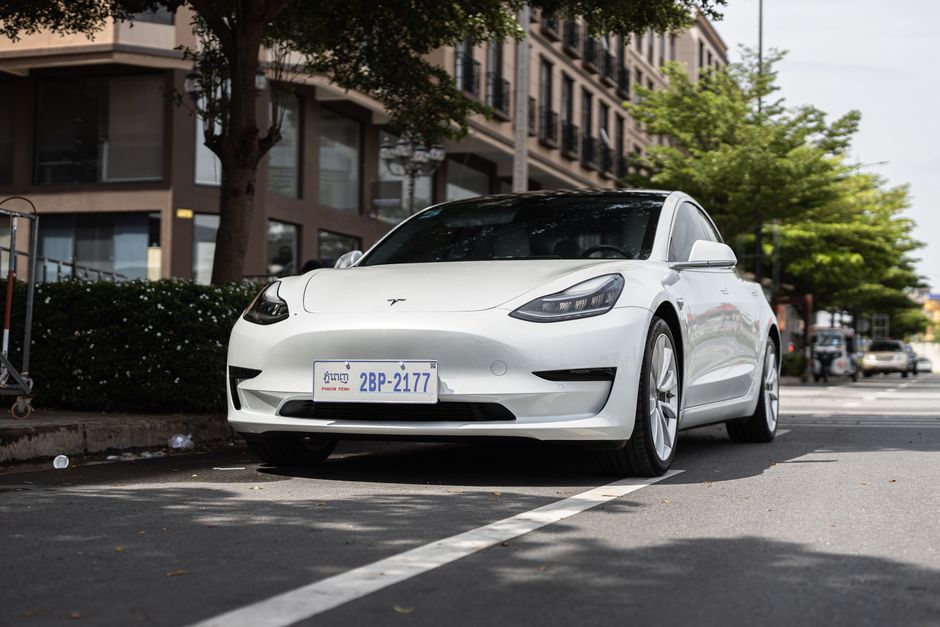
In-depth comparison of the 2026 Mercedes-Benz CLA Electric and Tesla Model 3. Discover specs, 800V charging, range, and cabin tech details.
The electric vehicle market has officially evolved past its early adopter phase, transitioning into an era of fierce, direct competition between legacy luxury giants and the modern tech pioneers. For years, the Tesla Model 3 has reigned supreme as the gold standard for compact electric sedans, combining unparalleled efficiency, robust charging infrastructure, and a highly competitive price point. However, the 2026 model year marks a historic turning point. Mercedes-Benz has entered the arena with its highly anticipated, ground-up challenger: the 2026 Mercedes-Benz CLA Electric, officially designated as the CLA with EQ Technology.
This head-to-head match-up represents more than just a battle of two brand names; it is a clash of automotive philosophies. On one hand, Tesla represents radical minimalism, proprietary software, and a continuous push to cut production costs while maximizing straight-line speed. On the other, Mercedes-Benz leverages its century of luxury engineering heritage, introducing a cutting-edge 800-volt platform, premium cabin craftsmanship, and advanced artificial intelligence integrated into a traditional luxury design. This comprehensive comparison explores how the newcomer CLA Electric stacks up against the refreshed, battle-tested Tesla Model 3 to determine which vehicle deserves a spot in your garage in 2026.
To help you get an immediate overview of how these two cutting-edge electric sedans match up, we have compiled a head-to-head comparison of their baseline models and top-tier specifications.
| Feature Specification | 2026 Mercedes-Benz CLA Electric | 2026 Tesla Model 3 |
|---|---|---|
| Starting Price (MSRP) | $47,250 (CLA 250+) $49,800 (CLA 350 4MATIC) |
$38,630 (Standard RWD) $46,630 (Long Range AWD) $52,630 (Performance AWD) |
| EPA-Estimated Range | Up to 374 miles (CLA 250+) Up to 312 miles (CLA 350 4MATIC) |
272 miles (Standard RWD) 341 miles (Long Range AWD) 305 miles (Performance AWD) |
| Battery Capacity (Usable) | 85.0 kWh (Lithium-Ion) | ~57.5 kWh (Standard RWD) ~82.0 kWh (Long Range & Performance) |
| Max Fast Charging Speed | 320 kW (800-Volt Architecture) | 170 kW (Standard RWD) 250 kW (Long Range & Performance) |
| Charging Port Style | Native NACS (Tesla Supercharger compatible) | Native NACS |
| Base Horsepower & RWD | 268 hp / 247 lb-ft of torque | 271 hp / 266 lb-ft of torque |
| Top-Tier Horsepower & AWD | 349 hp / 380 lb-ft of torque | 510 hp / 547 lb-ft of torque |
| 0 to 60 mph Acceleration | 6.6 seconds (CLA 250+) 4.8 seconds (CLA 350 4MATIC) |
5.8 seconds (Standard RWD) 4.2 seconds (Long Range) 2.9 seconds (Performance) |
| Smartphone Integration | Wireless Apple CarPlay & Android Auto | None (Native Tesla apps only) |
To accurately evaluate these two premium sedans, we have analyzed their powertrain technologies, real-world range capabilities, charging performance, cabin comfort, and software environments in detail.
The 2026 Mercedes-Benz CLA Electric is built upon the brand-new Mercedes-Benz Modular Architecture (MMA). This is a highly efficient platform designed to place the electric powertrain at the core of the vehicle’s dynamics. Unlike previous adapted combustion platforms from Mercedes, the MMA introduces a cutting-edge 800-volt electrical architecture. This change translates directly to lightning-fast charging speeds, drastically reducing highway downtime for long-distance drivers.
At launch, the CLA is offered in two distinct powertrain variants. The base CLA 250+ with EQ Technology features a rear-mounted motor generating 268 horsepower and 247 pound-feet of torque, delivering a highly polished, smooth, and linear driving experience. For those demanding all-weather traction and enhanced performance, the CLA 350 4MATIC with EQ Technology adds a front-mounted motor, raising cumulative output to 349 horsepower and 380 pound-feet of torque. On the road, the CLA excels in ride quality, offering the traditional composed and quiet damping characteristics expected of a Mercedes-Benz.
The star of the CLA’s mechanical package is its highly optimized 85.0 kWh lithium-ion battery pack. Utilizing advanced silicon-oxide anodes to boost energy density, this battery enables an exceptional EPA-estimated range of up to 374 miles on a single charge in the RWD model. When plugged into a compatible high-speed DC fast charger, the CLA’s 800V architecture can accept up to 320 kW of power. This allows drivers to add 100 miles of highway range in just 5 minutes, or recoup from 10% to 80% charge in a mere 22 minutes. Crucially for the North American market, Mercedes-Benz equips the 2026 CLA with a native NACS charge port, unlocking seamless access to Tesla’s massive Supercharger network without requiring cumbersome adapters.
Step inside, and you are greeted by an interior that feels lightyears ahead of previous compact luxury offerings. The CLA can be optioned with the spectacular MBUX Hyperscreen, which stretches across the entire dash under a single sheet of glass. The vehicle utilizes the new Mercedes-Benz Operating System (MB.OS), which incorporates advanced artificial intelligence from Google and Microsoft for highly intuitive natural voice control. Unlike Tesla, Mercedes-Benz retains physical turn signal stalks and a standard steering column, ensuring a natural transition for drivers coming from internal combustion vehicles. Furthermore, full wireless Apple CarPlay and Android Auto integration comes standard.
Now celebrating its post-facelift maturity (popularly referred to as the “Highland” update), the 2026 Tesla Model 3 remains an incredibly compelling force in the compact EV space. Rather than focusing on complex mechanical luxury features, Tesla’s strategy continues to emphasize software refinement, structural efficiency, and delivering the absolute highest price-to-performance ratio in the industry.
The Model 3’s pricing is its single biggest advantage. Starting at an MSRP of $38,630 for the Standard Rear-Wheel Drive version, it is nearly $9,000 cheaper than the entry-level Mercedes CLA Electric. Despite the lower price, even the base Model 3 is highly capable, utilizing a single-motor setup delivering 271 horsepower and a 0-60 mph time of 5.8 seconds. Moving up to the Long Range AWD model at $46,630 grants dual-motor security, a larger battery pack, and a 0-60 mph sprint of 4.2 seconds. For true performance enthusiasts, the Model 3 Performance AWD at $52,630 is an absolute rocket. It yields 510 horsepower, custom adaptive suspension dampers, track-tuned braking, and a face-melting 0-60 mph time of 2.9 seconds.
However, the Model 3 operates on a more traditional 400-volt architecture. The base RWD model is limited to a peak charging rate of 170 kW, while the Long Range and Performance models can accept up to 250 kW at V3 and V4 Superchargers. While still fast, charging on a 400-volt system simply cannot compete with the ultra-flat charging curve of the 800-volt Mercedes CLA, which sustains high speeds much deeper into the charging session. The base Model 3 has an EPA-estimated range of 272 miles, which is sufficient for daily commuting but significantly trails the Mercedes CLA 250+’s 374-mile range. To get comparable range in a Tesla, you must purchase the Long Range AWD, which is rated at 341 miles.
Tesla’s interior is a monument to modern minimalism, dominated by a single 15.4-inch central touchscreen that controls nearly every vehicle function. While the materials have been upgraded to include soft-touch fabrics and sophisticated ambient lighting, Tesla has made some polarizing ergonomic updates. The physical stalks on the steering column have been completely removed. To indicate a turn, you must use capacitive buttons on the left spoke of the steering wheel, which can be incredibly awkward when turning through roundabouts. To shift gears, you must swipe on the screen. Additionally, there is no driver-side instrument cluster or physical Head-Up Display, requiring you to look to the central screen to monitor your speed. Tesla also continues to block Apple CarPlay and Android Auto, forcing owners to rely entirely on Tesla’s integrated navigation and entertainment apps.
Deciding between the 2026 Mercedes-Benz CLA Electric and the 2026 Tesla Model 3 comes down to your budget, your driving habits, and your personal relationship with interior technology.
Yes. The 2026 Mercedes-Benz CLA Electric is equipped with a native NACS (North American Charging Standard) port right from the factory. This means you do not need an adapter to plug into Tesla’s V3 and V4 Supercharger networks, allowing you to pay and charge natively using the Mercedes me Charge app or plug-and-charge technology.
The Mercedes-Benz CLA Electric charges significantly faster than the Tesla Model 3. Because of its advanced 800-volt architecture, the Mercedes CLA can accept up to 320 kW of DC fast charging power, allowing it to recover 10% to 80% battery capacity in just 22 minutes. By comparison, the standard Tesla Model 3 is capped at 170 kW, and its higher-tier models peak at 250 kW on a 400-volt system.
Eligibility for the $7,500 federal EV tax credit in 2026 depends on battery material sourcing and assembly locations, as well as buyer income limitations. Generally, standard purchase of imported models may not qualify directly, but leasing these vehicles often allows the dealership to pass on the full $7,500 clean vehicle credit as a capitalized cost reduction, regardless of where the vehicle was built.
No. Tesla does not support Apple CarPlay or Android Auto on any of its vehicles, including the 2026 Model 3. Instead, Tesla requires users to use its built-in infotainment system, which features native apps for navigation, Spotify, Apple Music, and YouTube. The Mercedes-Benz CLA, on the other hand, fully supports wireless Apple CarPlay and Android Auto as standard features.
Both of these premium sedans are absolute triumphs of modern automotive engineering, but they serve two distinct kinds of drivers. The Tesla Model 3 remains the absolute value champion. For under $40,000, it offers unmatched software integration, a highly mature electric drivetrain, access to the superb Supercharger network, and outstanding efficiency. If your primary goals are minimizing your monthly payment or obtaining maximum performance-per-dollar, the Model 3 is still the smartest buy on the market.
However, the 2026 Mercedes-Benz CLA Electric is our overall winner and the best electric sedan of 2026. Mercedes has solved the primary pain points of legacy EVs by pairing a gorgeous, traditional luxury interior with a class-leading 800-volt platform. With a base EPA-estimated range of 374 miles, native NACS charging, a phenomenal 320 kW charging speed, and a highly practical cabin that doesn’t sacrifice physical controls for the sake of minimalism, the CLA Electric represents the true future of luxury electric motoring. It is well worth the premium price tag.
Prices and features mentioned are accurate as of the date of publication. Always check the official provider website for the most current pricing and availability.




