Physical Address
304 North Cardinal St.
Dorchester Center, MA 02124
Physical Address
304 North Cardinal St.
Dorchester Center, MA 02124

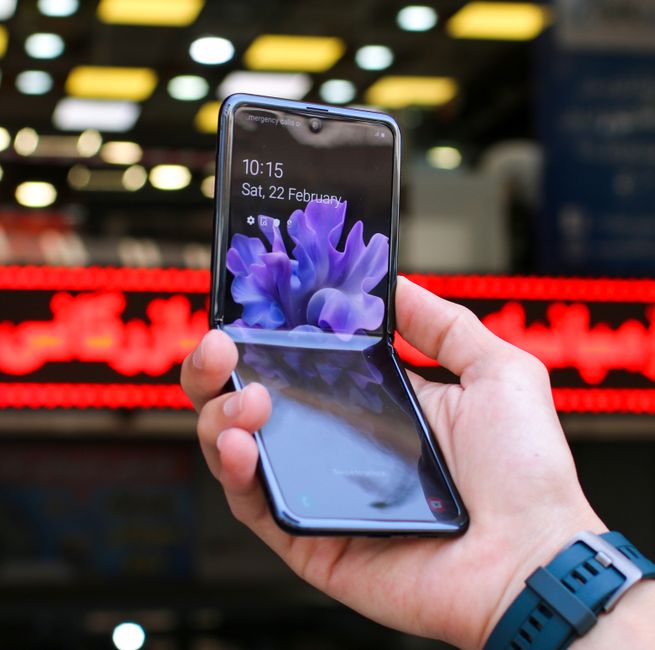
Compare Google Pixel 10 Pro Fold vs Samsung Galaxy Z Fold 7. Explore specs, cameras, battery, prices, and decide which is the ultimate 2026 foldable.
Foldable smartphones have officially crossed the threshold from high-tech novelty to mainstream dominance in 2026. No longer hampered by fragile hinges, narrow screens, or bulky designs, today’s foldables rival standard flagship devices in every major metric. The battle for supremacy in 2026 has narrowed down to a legendary clash: the Google Pixel 10 Pro Fold and the Samsung Galaxy Z Fold 7. Both manufacturers have pursued wildly different design philosophies, giving buyers two distinct premium pathways to choose from.
Google has prioritized rugged durability, superior battery capacity, and deep artificial intelligence integration. Conversely, Samsung has engineered a marvel focused on minimizing weight, shaving down thickness, and packing desktop-class processing power. This comparison will dissect every facet of these dual book-style devices to help you determine which of these ultra-premium phones deserves a spot in your pocket as the best foldable of 2026.
Let’s look at how these two heavyweights stack up on paper. While specifications never tell the entire story, they highlight the technical priorities of Google and Samsung as of 2026.
| Feature | Google Pixel 10 Pro Fold | Samsung Galaxy Z Fold 7 |
|---|---|---|
| Release Date | October 9, 2025 | July 25, 2025 |
| Base Price (2026) | $1,799 USD | $1,999 USD |
| Weight | 258 g | 215 g |
| Folded Thickness | 10.8 mm | 8.9 mm |
| Unfolded Thickness | 5.2 mm | 4.2 mm |
| Inner Display | 8.0″ OLED (3000 nits peak) | 8.0″ AMOLED 2X (2600 nits peak) |
| Cover Display | 6.4″ LTPS OLED | 6.5″ LTPO AMOLED 2X |
| Processor | Tensor G5 (3nm TSMC) | Snapdragon 8 Elite (3nm) |
| Base RAM & Storage | 16 GB / 256 GB | 12 GB / 256 GB |
| Primary Camera | 48 MP Wide | 200 MP Wide |
| Telephoto Camera | 10.8 MP (5x Optical Zoom) | 10 MP (3x Optical Zoom) |
| Battery Capacity | 5,015 mAh | 4,400 mAh |
| Charging Speed | 30W Wired / 15W Qi2 Wireless | 25W Wired / 15W Wireless |
| Water/Dust Protection | IP68 | IP48 |
Google Pixel 10 Pro Fold Pros: Complete IP68 dust and water resistance; larger 5,015 mAh battery; superb 5x optical telephoto lens; lower starting price ($1,799); standard 16GB of RAM.
Google Pixel 10 Pro Fold Cons: Heavier (258g) and thicker (10.8mm folded); Tensor G5 graphics performance lags behind Snapdragon; wired charging is relatively slow at 30W.
Samsung Galaxy Z Fold 7 Pros: Incredible thinness (8.9mm folded) and weight (215g); top-tier Snapdragon 8 Elite performance; massively upgraded 200MP main camera; dynamic One UI 8 multitasking.
Samsung Galaxy Z Fold 7 Cons: Starts at a higher price ($1,999); ditch of S Pen support entirely; smaller 4,400 mAh battery; only IP48 resistance (not fully dustproof).
Design, Build Quality, and Portability
In 2026, foldable design has reached peak maturity, but Google and Samsung have chosen opposite directions. Samsung has pulled off a breathtaking engineering feat with the Galaxy Z Fold 7. By utilizing the new Armor FlexHinge and a restructured titanium lattice display support, Samsung reduced the folded thickness to just 8.9 mm and the unfolded thickness to a razor-thin 4.2 mm. At 215 grams, the Z Fold 7 weighs about the same as a standard non-folding flagship. This makes it incredibly comfortable to hold and pocket, eliminating the bulky feeling of older foldables. However, to achieve this ultra-slim profile, Samsung had to completely eliminate S Pen support, a decision that has disappointed some note-taking purists.
Google’s Pixel 10 Pro Fold takes a robust, utilitarian approach. Measuring 10.8 mm when folded and weighing 258 grams, the Pixel is noticeably chunkier than its Samsung counterpart. What it lacks in slimness, however, it makes up for in rugged reliability. Google has secured a full IP68 rating for the Pixel 10 Pro Fold, marking a milestone as the first mainstream foldable to be certified fully dust-tight and water-resistant. If you work in sandy, dusty, or outdoor environments, the peace of mind offered by Google’s sealed construction is a massive advantage over Samsung’s IP48-rated chassis, which only blocks solid objects larger than 1.0 mm.
Display Technology and the Crease
Both of these foldables pack beautiful, expansive screens that make multitasking a breeze. The Google Pixel 10 Pro Fold sports an 8.0-inch internal Foldable LTPO OLED display with a near-perfect 1:1 aspect ratio. Google has pushed the peak brightness of both the inner and 6.4-inch outer displays to an impressive 3,000 nits, ensuring flawless legibility even under direct sunlight. The outer display utilizes a standard smartphone aspect ratio, so typing on the closed device feels perfectly natural.
The Samsung Galaxy Z Fold 7 also features an 8.0-inch internal panel, but with a slightly wider aspect ratio. What truly sets the Z Fold 7 apart is its cover display. Upgraded to 6.5 inches with a standard 21:9 aspect ratio, the cover screen feels exactly like a normal smartphone screen. Samsung has also improved the inner folding experience by implementing a 50% thicker Ultra-thin Glass layer, which helps distribute tension and significantly minimizes the physical and visual crease in the center. While the crease is still faintly visible under harsh angles, running your finger over the Z Fold 7’s panel feels remarkably flat.
Processing Power, Performance, and Memory
Under the hood, these devices feature the absolute best mobile silicon available in 2026. The Samsung Galaxy Z Fold 7 is powered by the Qualcomm Snapdragon 8 Elite for Galaxy. Built on a cutting-edge 3nm architecture, this processor is a graphical and computational powerhouse. It handles intensive mobile gaming, massive multi-window multitasking, and 8K video rendering without breaking a sweat. It is paired with either 12GB of RAM (standard) or up to 16GB of RAM on the high-end 1TB variant, meaning you can keep dozens of apps active in the background indefinitely.
Google has countered with its first-ever custom-designed system-on-chip: the Google Tensor G5. Unlike previous Tensor chips that relied on Samsung’s manufacturing process, the G5 is built by TSMC on a 3nm node. This transition has dramatically improved the Pixel’s thermal efficiency and battery life, addressing long-standing complaints of overheating. The Pixel 10 Pro Fold comes standard with a generous 16GB of LPDDR5X RAM, which is ideal for running complex on-device AI operations. While the Tensor G5 cannot match the Snapdragon 8 Elite in raw gaming frame rates, its custom TPU (Tensor Processing Unit) is uniquely optimized for near-instantaneous on-device AI tasks, making it incredibly snappy in daily use.
Camera Quality and Optical Zoom
For mobile photographers, both companies have made massive hardware strides. Samsung has finally addressed years of complaints by bringing its flagship 200MP ISOCELL HP2 sensor—previously exclusive to the Ultra line—to the Galaxy Z Fold 7. This allows for breathtaking, ultra-high-resolution landscape shots and superb low-light performance. This main shooter is accompanied by a 12MP ultrawide and a 10MP telephoto with 3x optical zoom. On the front, Samsung features a 10MP cover camera and an improved 10MP under-display camera on the main screen, which blends in much better than previous 4MP versions.
Google takes a different approach, prioritizing telephoto reach and computational photography over raw megapixel counts. The Pixel 10 Pro Fold utilizes a 48MP primary sensor, a 10.5MP ultrawide lens, and a superior 10.8MP telephoto camera that delivers a true 5x optical zoom (and up to 30x Super Res Zoom). In real-world testing, Google’s 5x optical zoom completely outperforms Samsung’s 3x zoom for distance shots. Additionally, Google’s advanced HDR algorithms and legendary camera suite—featuring Magic Editor, Best Take, and Add Me—make it the superior point-and-shoot camera for capturing people, moving subjects, and family photos.
Battery Life and Charging Speeds
Battery endurance has historically been the Achilles’ heel of foldable phones, but 2026 has brought massive improvements. Google has taken full advantage of the Pixel 10 Pro Fold’s thicker chassis to cram in a massive 5,015 mAh dual-cell battery. Combined with the energy-efficient TSMC-built Tensor G5 chip, the Pixel 10 Pro Fold easily lasts a full day of heavy use, sometimes pushing into a second day of light use. Charging is supported at 30W wired and 15W wireless via the modern magnetic Qi2 standard.
Samsung, on the other hand, prioritizes slimness over battery size. The Galaxy Z Fold 7 is equipped with a smaller 4,400 mAh battery. While the Snapdragon 8 Elite is highly optimized, the smaller cell simply cannot compete with Google’s massive pack. If you are a power user who spends hours on the internal screen, you may find yourself reaching for a charger by early evening. Samsung also keeps charging speeds locked at a modest 25W wired and 15W wireless, meaning both foldables require close to 80-90 minutes for a full charge.
Software, Multitasking, and AI Integration
Both phones launch with Android 16 and offer an industry-leading seven years of major OS upgrades, security patches, and software feature drops, guaranteeing support well into the 2030s. Samsung’s One UI 8 remains the gold standard for foldable multitasking. It lets you run three apps simultaneously in split-screen, keep floating windows open, and easily drag and drop content between applications. Samsung has also introduced “Galaxy AI for Business,” allowing teams to seamlessly share screen elements, translate conversations in real-time, and auto-summarize dense documents.
Google’s Pixel 10 Pro Fold features a cleaner, more streamlined interface with the Material 3 Expressive UI. Google’s approach to AI is deeply integrated through Gemini. With Gemini Nano running locally on the TSMC-built Tensor G5, users can access advanced on-screen context awareness. For example, you can ask Gemini to summarize a YouTube video you are actively watching, or draft emails based on complex on-screen documents. Google’s AI feels more conversational and naturally woven into the daily user experience, offering a distraction-free software environment.
When deciding between these two elite devices, your choice comes down to which design philosophy fits your lifestyle:
Is the Samsung Galaxy Z Fold 7 dustproof?
No, the Galaxy Z Fold 7 is rated IP48. This means it has basic protection against solid objects larger than 1.0 mm (like small pebbles or wires) and is fully water-resistant, but it is not completely sealed against fine sand or dust. Google’s Pixel 10 Pro Fold, on the other hand, is fully dust-tight with an IP68 rating.
Does the Galaxy Z Fold 7 support the S Pen stylus?
No. To achieve its ultra-thin 8.9mm profile and expand both screen sizes, Samsung completely removed S Pen support on the Galaxy Z Fold 7. If you require a stylus for your daily workflow, you may need to look at older generations or alternative brands.
Does the Pixel 10 Pro Fold support wireless charging?
Yes, the Google Pixel 10 Pro Fold supports up to 15W wireless charging. Crucially, it includes the modern Qi2 wireless charging standard, which features magnetic alignment to ensure efficient power transfer and compatibility with magnetic accessories.
Which of these foldable phones has better battery life?
The Google Pixel 10 Pro Fold has significantly better battery life. It packs a massive 5,015 mAh battery, compared to the 4,400 mAh battery on the Samsung Galaxy Z Fold 7. Combined with the efficient Tensor G5 processor, the Pixel easily outlasts the Samsung under heavy daily usage.
The battle for the title of Best Foldable 2026 is incredibly close, but a clear recommendation can be made based on your priorities. The Samsung Galaxy Z Fold 7 is a triumph of hardware engineering. By delivering an 8.9 mm thickness and a weight of just 215 grams, Samsung has solved the biggest physical complaint of the foldable era. It is an incredibly fast, highly polished multitasking machine that feels like a normal phone when closed.
However, the Google Pixel 10 Pro Fold wins on practical daily utility. It is $200 cheaper at $1,799, features a vastly larger battery (5,015 mAh vs 4,400 mAh), offers superior 5x optical zoom, and has full IP68 dust-tight certification. While Samsung wins on physical elegance, Google’s Pixel 10 Pro Fold is the more durable, longer-lasting, and better-valued option, making it our pick for the best overall foldable of 2026.
Prices and features mentioned are accurate as of the date of publication. Always check the official provider website for the most current pricing and availability.