Physical Address
304 North Cardinal St.
Dorchester Center, MA 02124
Physical Address
304 North Cardinal St.
Dorchester Center, MA 02124
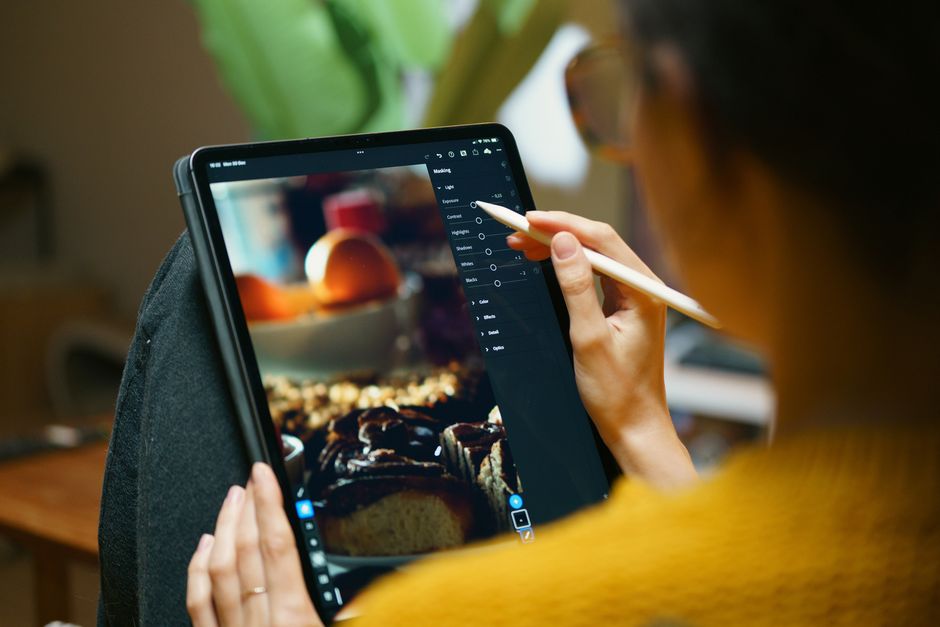
Compare Affinity Photo for iPad vs. Darkroom for professional photo editing in 2026. Discover features, pricing, and find the best app for your workflow.
In the rapidly evolving landscape of digital photography, the iPad has solidified its position as a formidable tool for professional image creators and enthusiasts alike. As of November 2026, the power of Apple’s M3 and M4 series chips in devices like the iPad Pro allows for desktop-class editing capabilities right from your tablet. This shift has fueled intense competition among app developers, pushing the boundaries of what’s possible on a mobile platform.
Today, we pit two titans against each other: Affinity Photo for iPad and Darkroom. Both are acclaimed for their robust feature sets and commitment to high-quality image manipulation, but they cater to distinct workflows and user preferences. Choosing the right one can significantly impact your productivity and creative output, making this comparison crucial for anyone serious about their mobile photography in 2026.
Whether you’re a seasoned professional looking to streamline your on-the-go workflow or an advanced hobbyist seeking desktop-level power without the tether of a computer, understanding the nuances of these two applications is key. We’ll delve into their latest features, pricing structures, performance, and user experience to help you decide which ‘best pro photo editor’ truly stands out in 2026.
| Feature | Affinity Photo for iPad (2026) | Darkroom (2026) |
|---|---|---|
| Primary Focus | Desktop-class raster editing, graphic design | Mobile-first RAW editing, color grading, asset management |
| Workflow | Layer-based, non-destructive, complex selections | Album-based, non-destructive, intuitive adjustments |
| RAW Support | Full, comprehensive, pro-grade demosaicing | Excellent, fast, supports latest camera models |
| AI Tools (2026) | Advanced object selection, content-aware fill, upscaling (integrated with Serif AI Engine v2.0) | Smart Portrait edits, Sky Replacement, Intelligent Masking, AI-powered denoising (leveraging Apple Neural Engine) |
| Layers | Unlimited, full blending modes, masks, adjustment layers | Limited (primarily for local adjustments, not traditional layer stacking) |
| Vector Tools | Yes (basic shape tools, text on path integration) | No |
| Interface | Desktop-like, customizable, steep learning curve | Clean, intuitive, gesture-driven, mobile-optimized |
| Performance (M3/M4 iPad Pro) | Exceptional, handles huge files with ease | Lightning-fast, smooth, optimized for iOS/iPadOS |
| Pricing Model (2026) | One-time purchase (approx. $29.99 USD) | Subscription (Darkroom+ Pro: approx. $4.99/month or $39.99/year) |
| Target User | Professional photographers, graphic designers, illustrators, advanced hobbyists | Enthusiasts, social media creators, mobile-first professionals, casual pros |
| Updates (2026) | Consistent major updates (Affinity v3 anticipated late 2026/early 2027) | Frequent feature additions, performance optimizations |
Affinity Photo for iPad, as of November 2026, continues to stand as a benchmark for what a professional image editor on a tablet can achieve. Developed by Serif, it mirrors much of the functionality of its desktop counterpart, providing a true studio experience on the go. Its core strength lies in its comprehensive feature set, making it an ideal choice for tasks that traditionally required a desktop computer.
At its heart, Affinity Photo is a layer-based raster editor. Users can work with an unlimited number of layers, apply sophisticated blending modes, and create intricate masks. The app’s selection tools are remarkably precise, offering everything from intelligent brush-based selections to advanced pen tools, allowing for highly accurate subject isolation. Non-destructive editing is a fundamental principle, with all adjustments, filters, and effects applied as separate layers that can be modified or removed at any time.
RAW file support in Affinity Photo for iPad is exceptional, accommodating the latest camera models and offering a robust develop persona for initial adjustments. The app boasts a full suite of photo retouching tools, including frequency separation, cloning, healing, and liquify, all optimized for touch and Apple Pencil input. Graphic designers will appreciate the inclusion of basic vector shape tools and advanced text editing capabilities, even allowing text to follow a path, which broadens its utility beyond mere photo editing.
Serif has significantly invested in AI integration, with the latest Serif AI Engine v2.0 powering features like advanced object removal, intelligent content-aware filling that rivals desktop solutions, and sophisticated image upscaling. Performance on the latest iPad Pro models (M3 and M4 chips) is fluid, handling large multi-layered PSD and Affinity Photo files with remarkable speed and responsiveness. A one-time purchase, typically around $29.99 USD, makes it an attractive proposition for those seeking a powerful, perpetual license without recurring subscription fees.
Darkroom has carved out a unique niche by focusing on an incredibly intuitive, mobile-first professional editing experience. By November 2026, it has solidified its position as a go-to app for photographers who prioritize speed, efficiency, and a streamlined workflow directly on their iPad or iPhone. Unlike Affinity Photo’s desktop-inspired interface, Darkroom is built from the ground up for touch and gesture control.
The app excels in RAW photo and video editing, offering a powerful suite of non-destructive adjustment tools. Its color grading capabilities are particularly noteworthy, providing precise control over tone curves, HSL (Hue, Saturation, Luminance) adjustments, and split toning. Darkroom’s selective adjustments have also seen significant enhancements, allowing users to apply precise edits to specific areas of an image with ease, utilizing intelligent masking tools powered by the Apple Neural Engine.
AI features are a major highlight in Darkroom’s 2026 iteration. Leveraging the iPad’s powerful neural processing, Darkroom offers intelligent portrait mode editing, automatic sky replacement with realistic blending, and advanced AI-powered denoising that cleans up images without sacrificing detail. Its asset management system is seamlessly integrated with the Apple Photos library, providing a familiar and efficient way to organize and access your images and videos.
Darkroom’s interface is celebrated for its clarity and user-friendliness. New users can jump in and achieve impressive results quickly, while seasoned pros appreciate the depth available beneath the clean surface. Performance on M3/M4 iPads is exceptionally fast, allowing for real-time adjustments and smooth scrubbing through large RAW files. Darkroom operates on a subscription model, with its premium ‘Darkroom+ Pro’ tier typically costing around $4.99 per month or $39.99 annually, offering access to all advanced features and future updates.
Deciding between Affinity Photo for iPad and Darkroom in 2026 largely depends on your specific workflow, the complexity of your editing tasks, and your preferred payment model.
If your primary need is a comprehensive, desktop-grade photo editor that offers full layer support, advanced selection tools, intricate masking, and potentially some graphic design capabilities, then Affinity Photo for iPad is likely your superior choice. It caters to professionals who require pixel-perfect control, often moving between raster and vector elements, and who appreciate a perpetual license. Its learning curve is steeper, but the power it unlocks is immense, making it suitable for complex composites, detailed retouching, and deep image manipulation.
Conversely, if your workflow is primarily focused on fast, efficient, and intuitive RAW photo and video editing, with a strong emphasis on color grading, quick adjustments, and AI-powered enhancements, Darkroom will serve you exceptionally well. It’s perfect for photographers who value a streamlined mobile-first experience, seamless integration with their photo library, and achieving professional results without getting bogged down in intricate layer management. Social media creators and event photographers will find its speed and ease of use invaluable. The subscription model also ensures continuous updates and access to the latest AI features.
Consider your budget: Affinity Photo offers a single, upfront purchase, which can be more cost-effective in the long run if you prefer not to have recurring fees. Darkroom’s subscription, while providing consistent updates, requires an ongoing commitment. Evaluate the types of projects you undertake most frequently. Do you need a digital canvas for creative composites, or a powerful yet elegant darkroom for perfecting your captures? The answer to these questions will guide your decision towards the best professional photo editor for your needs in 2026.
Q1: Is Darkroom good for professional use in 2026?
A1: Absolutely. By 2026, Darkroom has evolved significantly, offering robust RAW support, advanced color grading, precise selective adjustments, and powerful AI tools like intelligent masking and denoise. Its streamlined workflow makes it highly efficient for professionals who prioritize speed and a mobile-first approach, especially for photographers and content creators on the go.
Q2: Does Affinity Photo for iPad support M3 and M4 iPad Pro features?
A2: Yes, Affinity Photo for iPad is fully optimized to leverage the power of the M3 and M4 iPad Pro chips as of 2026. This optimization ensures exceptional performance, fast rendering of complex edits, smooth handling of large files, and responsiveness when using the Apple Pencil for intricate tasks. It makes full use of the iPad’s hardware capabilities for a desktop-class experience.
Q3: Can I use both apps effectively in my workflow?
A3: Many professionals find value in using both apps for different stages of their workflow. You might use Darkroom for initial RAW processing, quick adjustments, and asset management due to its speed and intuitive interface. Then, for more complex tasks like intricate retouching, compositing with layers, or detailed graphic design elements, you could export your image to Affinity Photo for iPad for its advanced capabilities.
Q4: Which app offers better AI tools in 2026?
A4: Both apps integrate powerful AI, but with different focuses. Darkroom’s AI, leveraging Apple’s Neural Engine, excels in automatic enhancements like smart portrait edits, sky replacement, and intelligent subject masking for rapid adjustments. Affinity Photo’s AI (Serif AI Engine v2.0) is geared more towards advanced object selection, content-aware healing, and image upscaling, supporting its desktop-class feature set for more deliberate, complex manipulations.
Q5: Are there any alternatives to consider in 2026?
A5: While Affinity Photo and Darkroom are top contenders, other excellent iPad photo editors in 2026 include Adobe Lightroom Mobile for cloud-centric workflows, Photomator (formerly Pixelmator Photo) with its focus on machine learning enhancements, and a more robust Adobe Photoshop for iPad for those deeply integrated into the Adobe ecosystem.
In the contest for the best professional photo editor on iPad in 2026, both Affinity Photo for iPad and Darkroom present compelling arguments, but they cater to distinct professional needs. There isn’t a single ‘best’ for every user, rather a ‘best fit’ depending on your specific requirements.
For the professional photographer, graphic designer, or advanced hobbyist who demands uncompromising power, intricate layer management, desktop-class selection tools, and the ability to handle complex composites, Affinity Photo for iPad is the clear winner. Its one-time purchase model and feature parity with its desktop counterpart make it an incredible value proposition for deep, transformative image editing. It’s the ideal choice when you need a full digital studio in your hands.
However, for the professional or serious enthusiast whose workflow prioritizes speed, intuitive controls, exceptional RAW processing, and powerful AI-driven adjustments in a mobile-first environment, Darkroom stands out as the champion for efficiency and streamlined creativity. Its subscription model ensures a continuously updated, highly optimized experience for rapid photo and video refinement. If your goal is to enhance, correct, and manage a high volume of images directly on your iPad with unparalleled ease, Darkroom is your go-to application.
Ultimately, your choice hinges on your primary editing tasks. Affinity Photo provides the most comprehensive toolkit for intricate, layered work, while Darkroom offers the most refined, efficient experience for fundamental and AI-powered enhancements. Both are exceptional applications that demonstrate the formidable capabilities of the iPad as a professional photo editing platform in 2026.
Prices and features mentioned are accurate as of the date of publication. Always check the official provider website for the most current pricing and availability.