Physical Address
304 North Cardinal St.
Dorchester Center, MA 02124
Physical Address
304 North Cardinal St.
Dorchester Center, MA 02124

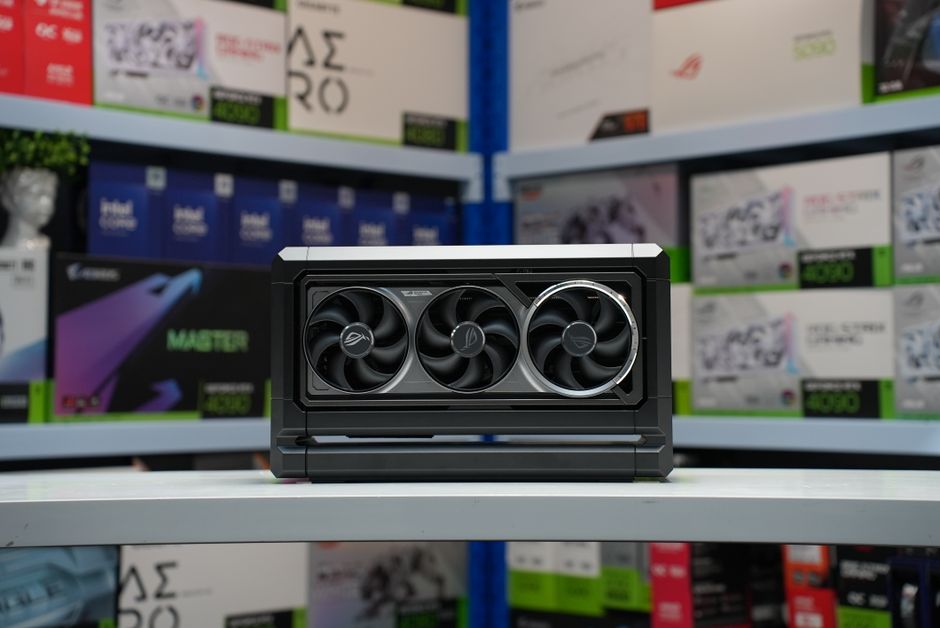
An in-depth 2026 comparison of the Asus ROG Xbox Ally X and Steam Deck OLED. See how recent price shifts and specs affect the best handheld gaming PC.
The handheld gaming PC landscape has undergone a massive transformation as we move through 2026. What was once a niche market dominated by experimental devices is now a mature industry where major tech giants compete for a spot in your backpack. In previous years, choosing between Valve’s ecosystem and Asus’s raw power was a straightforward decision largely dictated by price, but recent macroeconomic shifts have rewritten the rules of the game.
In May 2026, Valve sent shockwaves through the gaming community by raising the retail prices of the Steam Deck OLED due to global memory shortages and logistical bottlenecks. Suddenly, the undisputed king of value became a premium luxury, with the 1TB Steam Deck OLED climbing to an astonishing $949. This price hike has placed it in direct competition with the high-end Asus ROG Xbox Ally X, which commands a $999 price tag but brings significantly more advanced silicon to the table.
If you are looking to purchase a top-tier handheld gaming PC in 2026, you can no longer rely on outdated advice from two years ago. This comprehensive, head-to-head comparison will break down the hardware, displays, software, and real-world value of both devices. By examining how these machines perform under modern gaming workloads today, we will help you decide which one deserves your hard-earned money.
To help you get an immediate sense of how these two handhelds match up, we have compiled their key specifications, current 2026 pricing, and primary design differences in the table below.
| Feature | Asus ROG Xbox Ally X (2026) | Steam Deck OLED (2026) |
|---|---|---|
| Starting Price (2026) | $999.99 (1TB Model) | $789.00 (512GB) / $949.00 (1TB) |
| Processor (APU) | AMD Ryzen AI Z2 Extreme (RDNA 3.5) | Custom AMD APU (Zen 2, RDNA 2) |
| System Memory | 24GB LPDDR5X-8000 | 16GB LPDDR5-6400 |
| Display | 7-inch IPS, 1080p, 120Hz, VRR (FreeSync Premium) | 7.4-inch HDR OLED, 800p, 90Hz |
| Battery Capacity | 80 Wh | 50 Wh |
| Operating System | Windows 11 (Xbox Full Screen Experience) | SteamOS (Linux-based) |
| Weight | 715 grams | 640 grams |
As the specs indicate, the Asus ROG Xbox Ally X leans heavily into raw horsepower, offering 50% more RAM, a next-generation APU, and a higher-resolution 120Hz refresh rate display. Meanwhile, the Steam Deck OLED counters with its gorgeous self-emissive display, lighter chassis, and highly optimized SteamOS software ecosystem, though the narrow price gap in 2026 changes how we evaluate these advantages.
To truly understand how these systems compare in daily use, we must look beyond the spec sheets. Both Asus and Valve have taken vastly different approaches to design, performance, and software integration.
The Asus ROG Xbox Ally X, launched as a major collaboration with Microsoft, represents the pinnacle of portable Windows gaming in 2026. Equipped with the cutting-edge AMD Ryzen AI Z2 Extreme processor and a whopping 24GB of LPDDR5X RAM, this machine is built to handle the most demanding AAA releases. Unlike the original ROG Ally, which was plagued by terrible battery life, the Ally X features a massive 80 Wh battery that effectively doubles its runtime, allowing for hours of high-performance gaming on the go.
The standout feature of the ROG Ally X in 2026 is its software integration. Asus and Microsoft developed the “Xbox Full Screen Experience” to combat the clunky Windows 11 interface. Upon booting, the device enters a seamless, console-like dashboard that lets you navigate your Xbox Game Pass, Steam, and Epic Games libraries entirely with controller inputs. Combined with its stellar 1080p, 120Hz IPS display supporting Variable Refresh Rate (VRR), the gaming experience is butter-smooth even when frame rates fluctuate during intense action sequences.
The Steam Deck OLED remains Valve’s flagship portable console, offering an experience that is deeply integrated with the Steam library. Featuring a brilliant 7.4-inch HDR OLED panel, games look absolutely breathtaking with infinite contrast ratios and rich, vibrant colors. The display’s 90Hz refresh rate and peak brightness of 1,000 nits make it an exceptional screen for both indie titles and cinematic, slow-paced adventure games. At 640 grams, it is noticeably lighter and more ergonomically friendly than its bulkier Windows-based competitors.
However, the narrative surrounding the Steam Deck OLED has changed drastically due to Valve’s May 2026 price adjustment. With the 512GB model priced at $789 and the 1TB model sitting at $949, the hardware is getting harder to justify on a pure price-to-performance basis. Its custom AMD APU relies on aging Zen 2 and RDNA 2 architectures, which struggle significantly with modern 2026 AAA releases. While SteamOS is incredibly polished, easy to use, and features unmatched sleep-and-resume capabilities, the aging internals are starting to show their limits against newer platforms.
When it comes to pure computing power, the comparison is decidedly one-sided. The Asus ROG Xbox Ally X utilizes the Ryzen AI Z2 Extreme APU built on modern architecture with RDNA 3.5 graphics. This chip absolutely monsters the Steam Deck’s aging custom APU in every benchmark. For instance, in demanding titles like Cyberpunk 2077 or the latest 2026 releases, the Ally X can easily maintain a steady 50-60 frames per second at 1080p medium settings, whereas the Steam Deck OLED struggles to maintain 30 frames per second even with heavy FSR upscaling at its lower 800p resolution.
Memory configuration is another critical area of divergence. The Steam Deck OLED’s 16GB of LPDDR5 RAM is increasingly becoming a bottleneck for modern games. The ROG Ally X, by contrast, packs 24GB of ultra-fast LPDDR5X-8000 memory. This extra headroom allows the operating system to allocate a full 8GB of VRAM to the graphics processor while still leaving 16GB of system memory for the OS, completely eliminating the stuttering and memory-related crashes that frequently affect the Steam Deck in newer titles.
The display matchup is a battle of contrast versus fluid motion. The Steam Deck’s HDR OLED screen is the undisputed champion of image quality. If you play highly stylized indie games, pixel art, or titles with dark, atmospheric settings, the OLED’s perfect black levels are unmatched. It creates an immersive, vivid image that no standard LCD panel can replicate, and its larger 7.4-inch size with thin bezels feels incredibly modern.
On the other hand, the ROG Ally X features a 7-inch 1080p IPS display. While it cannot match the deep blacks of OLED, it excels in fluidity and resolution. Its 120Hz refresh rate combined with Variable Refresh Rate (VRR) support is a literal game-changer for handheld PCs. Even if a demanding game drops from 60 frames per second down to 43, VRR prevents screen tearing and judder, making the gameplay feel consistently smooth. The higher 1080p resolution also ensures that small text and distant details in games are significantly sharper than they are on the Steam Deck’s 800p display.
Historically, the Steam Deck was the battery life king, but the ROG Ally X has changed the hierarchy. By packing a massive 80 Wh battery into the Ally X, Asus has completely neutralized Valve’s battery advantage. In real-world testing, both devices perform similarly at lower power draws, but at maximum performance, the ROG Ally X actually pulls ahead. You can expect roughly 1.5 to 2.5 hours of AAA gaming on the Ally X at its higher performance modes, while the Steam Deck OLED offers comparable runtimes but at much lower framerates and visual settings.
Thermally, both devices have excellent cooling designs. Asus redesigned the internal fans of the Ally X to move more air silently, keeping the hand grips cool even during extended gaming sessions. The Steam Deck OLED is also incredibly quiet and efficient, drawing only 4 to 15 watts of APU power compared to the Ally X’s power range of up to 25 or 30 watts. If you prefer a whisper-quiet device that doesn’t put off much heat, Valve’s hardware remains incredibly well-tuned, but Asus has proven that massive battery capacity can overcome a power-hungry processor.
The software debate comes down to convenience versus freedom. The Steam Deck runs SteamOS, a Linux-based operating system designed specifically for this hardware. The user interface is clean, incredibly console-like, and features a near-instant sleep-and-resume button. If you buy your games exclusively on Steam, the experience is flawless. However, if you want to play games from PC Game Pass, Epic Games Store, or Battle.net, you must navigate complex Linux workarounds, command prompts, and third-party compatibility layers.
The ROG Ally X runs Windows 11, giving you complete, unrestricted access to every PC game launcher, anti-cheat software, and emulation tool. Thanks to the “Xbox Full Screen Experience” and Armoury Crate updates in 2026, Windows is no longer the frustrating, touch-unfriendly headache it once was. You can boot straight into a game-centric interface, navigate effortlessly with thumbsticks, and enjoy native compatibility with Xbox Play Anywhere titles. Windows also allows the Ally X to function as a full-fledged portable desktop computer when connected to a keyboard and monitor, adding immense utility to the device.
Choosing between these two premium handhelds in 2026 requires assessing your budget, your game library, and your tolerance for software tweaking. Because the price gap has shrunk to just $50 when comparing 1TB models, the decision is more nuanced than ever before.
Choose the Asus ROG Xbox Ally X if:
Choose the Steam Deck OLED if:
In May 2026, Valve adjusted its pricing structure due to massive increases in global component costs, particularly RAM and NAND flash storage (frequently called “RAMageddon”). Because AI data centers have monopolized the world’s semiconductor supply, manufacturing costs rose significantly, forcing Valve to raise the 512GB OLED model to $789 and the 1TB OLED model to $949.
Yes, but with limitations. Since SteamOS is Linux-based, you cannot download and play native Xbox Game Pass games. You are limited to streaming games via Xbox Cloud Gaming, which requires a constant, high-speed internet connection. To play Game Pass games natively, you would need to manually install Windows on the Steam Deck, which disables many of SteamOS’s best features.
Yes. The ROG Ally X features the newer AMD Ryzen AI Z2 Extreme APU and 24GB of faster LPDDR5X memory, compared to the Steam Deck’s Custom APU (Zen 2 architecture) and 16GB of memory. In heavy 3D titles, the Ally X can easily deliver double the frame rate of the Steam Deck, making it far more future-proof for upcoming games.
No. Asus completely redesigned the internal motherboard layout and moved the microSD card slot away from the hot exhaust vents in the Ally X. The overheating issues that destroyed SD cards in the original ROG Ally have been fully resolved in this model.
For several years, recommending a handheld gaming PC was incredibly easy: you simply bought a Steam Deck. It offered unmatched value, incredible software, and an unbeatable entry price. However, the macroeconomic shifts of 2026 have completely flipped the script. With the 1TB Steam Deck OLED now costing $949 and the top-tier Asus ROG Xbox Ally X priced at $999.99, the value proposition has shifted dramatically in favor of Asus.
For a mere $50 difference, the Asus ROG Xbox Ally X offers a generational leap in performance, 50% more system memory, a massive 80 Wh battery, VRR support, and complete compatibility with every major PC storefront including native Xbox Game Pass. While Valve’s OLED display remains a gorgeous marvel of hardware engineering, the aging Zen 2 internal components are simply too slow to justify a near-$1,000 price tag in 2026.
If you want a highly optimized, easy-to-use device strictly for indie gaming and your existing Steam library, the Steam Deck OLED is still an enjoyable luxury, and looking for refurbished models remains a smart way to save. But for anyone buying a brand-new, high-end handheld gaming PC today, the Asus ROG Xbox Ally X is our definitive winner for 2026. It provides far more raw performance, future-proofing, and value for your money.
Prices and features mentioned are accurate as of the date of publication. Always check the official provider website for the most current pricing and availability.