Physical Address
304 North Cardinal St.
Dorchester Center, MA 02124
Physical Address
304 North Cardinal St.
Dorchester Center, MA 02124

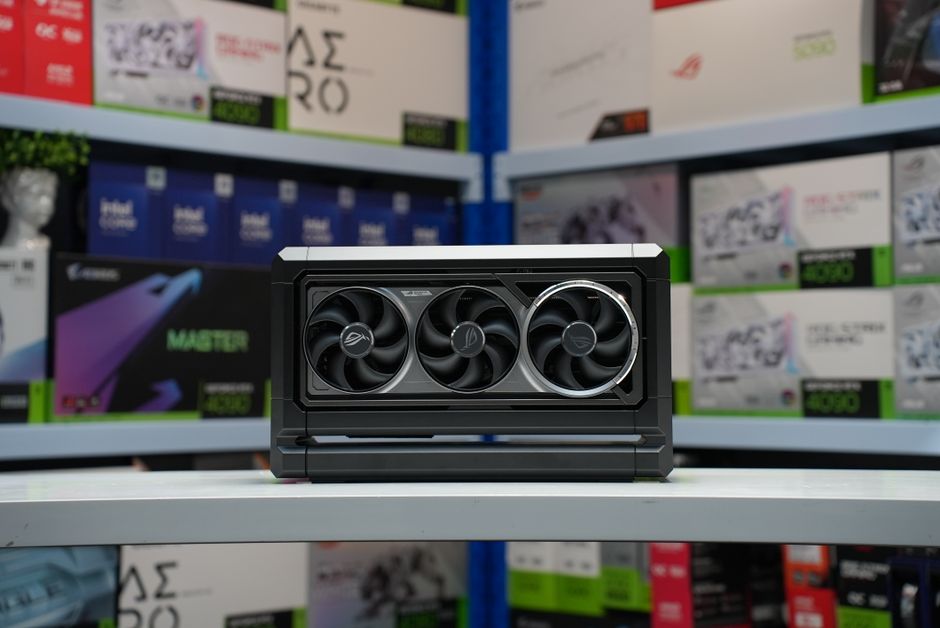
A head-to-head 2026 comparison of the ASUS ROG Zephyrus G14 and Razer Blade 14. Discover specs, prices, gaming performance, and our clear winner.
The quest for the ultimate 14-inch gaming laptop has always been a balancing act of structural physics, engineering ingenuity, and severe thermal constraints. Buyers in this segment refuse to compromise. They want a laptop thin enough to slide into a commuter backpack, light enough to carry all day, yet powerful enough to crush heavy ray-traced gaming workloads and high-end video editing. In 2026, that competitive space has reached an absolute fever pitch with the arrival of two newly refreshed powerhouses: the ASUS ROG Zephyrus G14 (2026) and the Razer Blade 14 (2026).
This year, both manufacturers have taken vastly different structural approaches to unlock the next level of mobile computing. ASUS has fundamentally disrupted its traditional product lineup by shifting its high-end flagship Zephyrus G14 (the GU405 configuration) to Intel’s highly anticipated “Panther Lake” Core Ultra 9 architecture. Razer, conversely, has leaned heavily into AMD’s elite Ryzen AI 9 silicon while focusing on making its chassis the absolute thinnest unibody frame on the market.
Crucially, both laptops are now powered by NVIDIA’s revolutionary Blackwell-generation GeForce RTX 50-series mobile graphics cards. These GPUs introduce upgraded memory architectures and advanced DLSS 4 multi-frame generation to deliver breathtaking visual fidelity. This deep comparison will break down their specs, actual pricing, cooling performance, screen quality, and battery metrics to crown the definitive 14-inch champion of 2026.
Before diving into the intricate nuances of these two machines, here is an at-a-glance breakdown of their key technical specifications and starting price floors for the 2026 generation.
| Feature / Specification | ASUS ROG Zephyrus G14 (2026) GU405 | Razer Blade 14 (2026) |
|---|---|---|
| Processor | Intel Core Ultra 9 386H (Panther Lake) | AMD Ryzen AI 9 365 (10-Core / 20-Thread) |
| Graphics (GPU) | Up to NVIDIA GeForce RTX 5080 (130W TGP) | Up to NVIDIA GeForce RTX 5070 (115W TGP) |
| NPU Performance | Up to 50+ TOPS (Intel AI Boost) | Up to 50 TOPS (AMD Ryzen AI) |
| Memory (RAM) | Up to 64GB LPDDR5X (8533 MT/s) [Soldered] | Up to 64GB LPDDR5X (8000 MHz) [Soldered] |
| Display | 14″ 3K (2880 x 1800) 120Hz OLED Nebula HDR | 14″ 3K (2880 x 1800) 120Hz OLED |
| Battery Capacity | 73 Wh | 72 Wh |
| Weight | 3.60 lbs (1.63 kg) | 3.59 lbs (1.63 kg) |
| Thickness | 0.64 inches (16.2 mm) | 0.62 inches (15.7 mm) |
| Starting Price | $1,599 (GA403 Base) / $3,599 (Flagship GU405) | $2,299 (RTX 5060) / $2,699 (RTX 5070 Base) |
ASUS has executed a daring strategic shift with the 2026 iteration of the Zephyrus G14. While prior generations relied almost entirely on AMD hardware, the premium 2026 GU405 configuration makes a bold transition to Intel’s newly released Panther Lake mobile architecture, specifically utilizing the high-end Intel Core Ultra 9 386H processor. This processor offers outstanding single-threaded execution and multi-core efficiency, paired with an integrated NPU capable of over 50 TOPS to easily clear the hardware threshold for Windows Copilot+ AI features. For performance-first enthusiasts, this silicon delivers a 10% to 15% raw processing lead over prior models in complex rendering tests.
Where the Zephyrus G14 truly claims its dominance is in graphical rendering. While most 14-inch laptops cap their graphics cards at mid-tier wattages to prevent overheating, ASUS has engineered their 2026 chassis to deliver up to an NVIDIA GeForce RTX 5080 or RTX 5070 Ti at a whopping 130W Total Graphics Power (TGP). Supporting this extra thermal headroom required ASUS to redesign the laptop’s bottom panel, integrating wider, optimized ventilation lanes and an updated tri-fan ROG Intelligent Cooling system. While this makes the laptop slightly thicker than its predecessor at 0.64 inches, the performance scaling in modern AAA titles like Cyberpunk 2077 is staggeringly high, yielding desktop-class frame rates on a ultra-portable machine.
Visually, the G14 continues to boast one of the finest displays ever mounted to a laptop. The 14-inch 3K (2880 x 1800) OLED display operates at 120Hz and features ROG’s elite Nebula HDR certification. It covers 100% of the DCI-P3 color gamut, possesses infinite contrast ratios, and is bright enough to make HDR content look extraordinarily punchy, even when gaming in a moderately lit office. To complement the visuals, ASUS has refined its class-leading six-speaker system, which continues to provide the deepest bass and cleanest audio projection in the Windows space. However, this sheer engineering luxury demands a premium: the flagship GU405 model with an RTX 5070 Ti is priced at a staggering $3,599.99.
Razer’s philosophy for the 2026 Blade 14 centers on absolute precision, structural rigidity, and clean industrial design. Built using an anodized CNC-milled aluminum unibody, the Blade 14 feels like the literal “MacBook of Windows gaming laptops”. This year, Razer has successfully shaved the chassis down to just 0.62 inches thick, making it the slimmest high-performance 14-inch gaming laptop available. It weighs a highly manageable 3.59 lbs (1.63 kg), allowing it to travel effortlessly.
Under the hood, Razer has opted for AMD’s highly efficient Ryzen AI 9 365 processor. This 10-core CPU features an advanced architectural design that focuses on minimizing power consumption during idle and everyday productivity tasks. Like the G14, the Ryzen AI 9 365 is equipped with a high-performance NPU pushing 50 TOPS, allowing users to leverage localized AI tasks, code compilation, and advanced productivity suites on the go. For graphics, Razer caps the Blade 14 at up to an NVIDIA GeForce RTX 5070 running at 115W TGP. While this is a lower power threshold than the G14, Razer compensates by using a sophisticated Vapor Chamber cooling solution and a newly integrated thermal hood, which does an outstanding job of venting heat while keeping acoustic fan noise significantly lower than its ASUS counterpart.
Razer has also finally addressed its display limitations by integrating a stunning 14-inch 3K (2880 x 1800) 120Hz OLED screen as standard across the 2026 lineup. This panel matches the G14 in color range and pixel density, though it lacks the sheer peak brightness level of ASUS’s Nebula HDR certification. Crucially, the 2026 Blade 14 transitions to soldered LPDDR5X RAM clocked at 8000 MHz. While prior Razer models were praised for featuring upgradeable SODIMM slots, the extreme structural thinning of the 0.62-inch chassis required Razer to permanently solder the memory. Pricing starts at $2,299.99 for the RTX 5060 model, while configuring it with an RTX 5070 and 32GB of RAM raises the price closer to $2,699 to $3,049.
If your primary metric is absolute gaming performance and squeezing out the highest possible frame rates, the ASUS ROG Zephyrus G14 is the undisputed heavyweight champion. By running its graphics card at a beefy 130W TGP, the G14 naturally achieves a 10% to 15% frame rate advantage over the Razer Blade 14 when configured with identical GPUs. Furthermore, the flagship G14 can be configured with an NVIDIA GeForce RTX 5080, a high-tier graphical option that Razer does not offer on the Blade 14. For demanding modern titles running with ray tracing and DLSS 4, the higher power limit of the G14 delivers a visibly smoother visual experience.
For buyers who prioritize clean hardware design, outstanding rigidity, and a professional workspace aesthetic, the Razer Blade 14 remains the gold standard. The Blade 14’s CNC aluminum frame exhibits virtually zero flex, and its stealthy design (available in traditional Matte Black or a clean Mercury White) transitions seamlessly from a corporate boardroom to a high-refresh-rate gaming session. ASUS’s G14 is still incredibly premium, but its curved chassis, plastic interior accents, and prominent “Slash Lighting” LED strip on the lid give it a decidedly more “gamer-centric” profile.
Both laptops have beautifully embraced 3K 120Hz OLED screen technology for the 2026 generation, marking a massive visual upgrade over legacy IPS and LCD panels. However, the ASUS ROG Zephyrus G14 takes a minor lead due to its ROG Nebula HDR certification. The G14 is capable of higher sustained full-screen brightness, making HDR-enabled games and movies pop with incredible brilliance. Both panels are highly glossy, which means ambient light reflection can be an issue if you frequently work near windows or under bright overhead lights.
The extra 20W of GPU power that ASUS pumps into the Zephyrus G14 comes with an acoustic cost. Under heavy gaming loads, the G14’s tri-fan Intelligent Cooling system is notably louder than previous generations, resulting in a prominent high-frequency fan hum. If you prefer gaming without headphones or want a quiet, distraction-free room, the Razer Blade 14 is the better choice. Razer’s vapor chamber cooling and conservative 115W TGP ceiling do an admirable job of keeping the fans relatively quiet, even during prolonged gaming marathons.
In terms of battery efficiency, the AMD Ryzen AI 9 365 inside the Razer Blade 14 holds a small but noticeable advantage over the Intel Panther Lake Core Ultra 9 in the G14. During low-power productivity tasks like word processing or web browsing, the Blade 14 easily manages between 7.5 to 8.5 hours of real-world use. The Intel-powered G14 GU405 trails slightly behind, averaging roughly 6 to 7 hours of standard office workloads. Both laptops feature rapid-charging technologies via their included power adapters and both support USB-C Power Delivery for charging on the go.
No, both the 2026 ASUS ROG Zephyrus G14 and the Razer Blade 14 feature fully soldered LPDDR5X memory to maximize performance speeds and maintain ultra-thin chassis profiles. The G14 runs at 8533 MT/s while the Blade 14 clocks in at 8000 MHz. Because you cannot upgrade the memory after purchase, you must carefully select your configuration—such as 32GB or 64GB—at the point of sale. Fortunately, the M.2 PCIe 4.0 SSD slots remain fully upgradeable on both machines.
Absolutely. With 100% DCI-P3 color-accurate 3K OLED displays, highly efficient multi-core processors, and dedicated NVIDIA RTX 50-series GPUs, both laptops are absolute dreams for photo editors, 3D modelers, and video production professionals. However, if you are editing complex 4K and 8K timelines, the Zephyrus G14’s faster LPDDR5X memory speeds (8533 MT/s) and higher GPU wattages will process and render export tasks slightly faster.
Keyboard preference is largely subjective, but the ASUS ROG Zephyrus G14 features slightly deeper key travel and a more tactile, bouncy feel that is highly comfortable for long typing sessions. Razer’s keyboard is shallower but offers incredibly crisp, uniform key actuation. However, Razer holds a definitive lead with its trackpad: the Blade 14 features a massive, silky-smooth glass haptic trackpad that is significantly larger and more precise than the mechanical trackpad on the G14.
Yes, both laptops are fully verified Copilot+ PCs. The Intel Core Ultra 9 (Panther Lake) in the G14 and the AMD Ryzen AI 9 365 in the Blade 14 contain advanced dedicated NPUs (Neural Processing Units) that exceed the 40 TOPS Microsoft hardware requirement. They fully support on-device AI features, real-time live captions, and advanced webcam studio effects.
Choosing between the ASUS ROG Zephyrus G14 (2026) and the Razer Blade 14 (2026) ultimately comes down to whether you prioritize raw performance ceiling or premium build elegance.
The ASUS ROG Zephyrus G14 (2026) is our pick for the best overall gaming experience and raw power. By running its RTX 50-series graphics cards up to a high 130W TGP, it pushes significantly higher frame rates than the Blade 14, and the inclusion of up to an RTX 5080 GPU option is something Razer cannot match in this form factor. Furthermore, its Nebula HDR OLED screen is the brightest in the class, and its outstanding speaker array delivers stellar audio fidelity. If you want the most powerful 14-inch laptop on the market and can afford the premium $3,599 price tag, the G14 is an absolute beast.
However, if you want an elegant, incredibly rigid CNC-milled aluminum machine that runs quieter under load, is noticeably thinner (0.62 inches), and boasts superior everyday battery endurance, the Razer Blade 14 (2026) is a phenomenal masterpiece of hardware design. While it slightly compromises on raw graphic wattage (115W), its gorgeous 3K OLED screen, lower acoustics, and significantly lower price floor for top configurations make it the ultimate choice for stylish, on-the-go professionals who game.
Prices and features mentioned are accurate as of the date of publication. Always check the official provider website for the most current pricing and availability.




