Physical Address
304 North Cardinal St.
Dorchester Center, MA 02124
Physical Address
304 North Cardinal St.
Dorchester Center, MA 02124

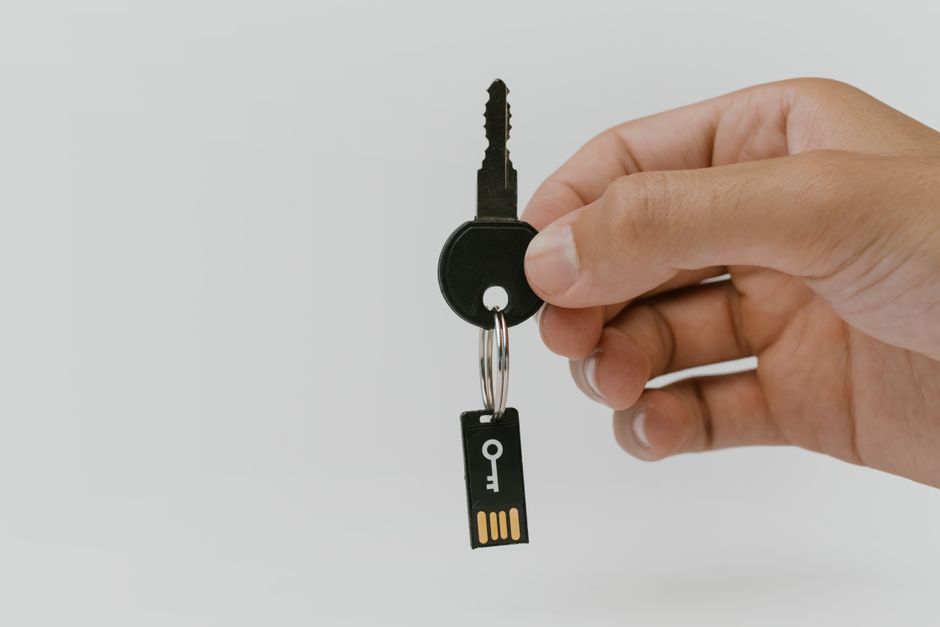
Compare YubiKey 5C NFC, Google Titan, and Nitrokey 3 in 2026. Discover current specs, prices, and the best hardware security key for your needs.
In 2026, protecting your online identity against sophisticated phishing and AI-driven credential-stuffing attacks is more critical than ever. Standard passwords and SMS-based two-factor authentication (2FA) are no longer enough to secure your sensitive data. Hardware security keys have evolved from niche enterprise tools to essential consumer assets. These physical tokens use cryptography to ensure that even if a hacker steals your password, they cannot access your accounts without physically possessing the key.
Among the top-tier hardware keys dominating the security landscape in 2026 are the YubiKey 5C NFC, the Google Titan Security Key, and the Nitrokey 3 (specifically the Nitrokey 3C NFC). Each key represents a unique approach to digital protection. Yubico delivers a proprietary, battle-tested, multi-protocol flagship device. Google offers an incredibly affordable, passkey-centric key tailored for mainstream web users. Nitrokey champions open-source transparency and digital sovereignty with a field-upgradable device made entirely in Germany.
Choosing the best device depends on your budget, technical workflows, and security philosophy. This comprehensive 2026 comparison will analyze these three industry leaders across key metrics including specs, pricing, real-world usability, and storage limits. Whether you are a developer managing remote servers, a privacy enthusiast auditing open-source code, or an everyday user securing email and banking accounts, this guide will help you find the perfect hardware security key.
To help you make a quick decision, the table below highlights the key differences between the YubiKey 5C NFC, Google Titan, and Nitrokey 3C NFC in 2026.
| Feature | YubiKey 5C NFC | Google Titan (USB-C/NFC) | Nitrokey 3C NFC |
|---|---|---|---|
| Price (2026) | $58.00 USD | $35.00 USD | €65.00 (~$72.00 USD) |
| Connector Type | USB-C + NFC | USB-C + NFC | USB-C + NFC |
| FIDO2 / Passkey Storage | Up to 100 credentials (v5.7+ firmware) | Up to 250 credentials | Up to 25 credentials (dynamic memory) |
| Protocol Support | FIDO2/WebAuthn, FIDO U2F, Smart Card (PIV), OpenPGP, OATH-TOTP, Yubico OTP, Challenge-Response | FIDO2/WebAuthn, FIDO U2F | FIDO2/WebAuthn, FIDO U2F, OpenPGP, Smart Card (PIV), HOTP/TOTP, Password Manager |
| Firmware Upgradable | No (locked for security) | No (locked for security) | Yes (field-upgradable) |
| Open Source | No (Proprietary) | No (Proprietary firmware) | Yes (Fully Open Source, written in Rust) |
| Manufacturing Origin | Sweden & USA | Designed in USA, Made in Taiwan | Germany |
To find the right key, we must look deeper at how these devices perform, their unique capabilities, and how much they cost in 2026.
The YubiKey 5C NFC by Yubico remains the benchmark for physical security keys in 2026. Priced at $58.00 USD, it is a premium investment that delivers unmatched protocol versatility. Running Yubico’s latest firmware (v5.7+), it supports up to 100 discoverable FIDO2 credentials (passkeys)—a significant upgrade from older models. Additionally, it stores 64 OATH-TOTP authenticator seeds, 24 PIV smart card certificates, and two traditional OTP seeds simultaneously, making it highly versatile.
The key’s physical build is nearly indestructible. It features a solid, injection-molded plastic body reinforced with fiberglass, making it waterproof and crush-proof without any batteries or moving parts. Software usability is flawless, supported by the polished Yubico Authenticator app across macOS, Windows, Linux, iOS, and Android.
However, Yubico’s firmware is read-only and cannot be updated in the field. Yubico does this to eliminate supply-chain tampering, but it means you must purchase a new key to access future protocol upgrades. Despite this, for enterprise environments and power users needing absolute reliability, the YubiKey 5C NFC is the most trusted choice available.
The Google Titan Security Key (USB-C/NFC edition) retails for an affordable $35.00 USD, while the USB-A/NFC model is priced at $30.00 USD. Google has optimized this key strictly for modern WebAuthn and FIDO2 standards. Despite its lower price, the Titan features an impressive storage capacity, holding up to 250 resident passkeys. This is the highest passkey capacity among the three devices compared.
The Titan is built around a secure element chip running Google-engineered firmware designed to verify the physical integrity of the key upon boot. Its plastic casing is lightweight but durable, and physical verification requires a quick tap on the gold sensor or against an NFC-compatible smartphone.
The primary trade-off is its lack of advanced enterprise protocols. It does not support OTP generation, OpenPGP email encryption, or SSH smart card logins. If your goal is to protect your Google Workspace, social media, banking, and standard web accounts via modern passkeys, the Titan’s massive storage and low cost make it an exceptional choice.
Germany-based Nitrokey caters to users who value complete transparency and open-source software. Following a 2026 price adjustment, the Nitrokey 3C NFC is priced at €65.00 (approximately $72.00 USD). This is the most expensive key in our lineup, but it justifies this price with complete hardware and software openness. It features fully open-source firmware written in memory-safe Rust, running on a Common Criteria EAL 6+ certified secure element (NXP SE050).
Unlike its competitors, the Nitrokey 3 is fully field-upgradable. Using the `nitropy` command-line tool or Nitrokey App 2, you can flash firmware updates directly to the device. This ensures you can access new cryptographic standards, such as the Bitcoin curve (secp256k1) added in late 2025, without buying new hardware. It supports FIDO2, FIDO U2F, OpenPGP, PIV smart cards, and a built-in password manager storing up to 50 entries.
The main drawbacks of the Nitrokey 3 are its limited passkey storage and slightly unpolished software ecosystem. The NFC model holds up to 25 resident passkeys due to dynamic memory sharing with other cryptographic protocols. Furthermore, mobile NFC performance can sometimes be less seamless than Yubico’s, and configuration can require command-line knowledge. For privacy-conscious tech enthusiasts and developers who demand auditable security, however, the Nitrokey 3 remains unrivaled.
Selecting the best hardware security key in 2026 comes down to matching your daily workflows and technical requirements to the strengths of each device.
You should buy the YubiKey 5C NFC if you require a rugged, reliable device that supports both modern passkeys and legacy cryptographic workflows. If you manage servers via SSH, utilize smart cards for corporate logins, or need a physical token for TOTP codes, the YubiKey’s robust multi-protocol engine is worth the premium price. It is the gold standard for enterprise users and technical professionals who need seamless compatibility across all platforms.
You should buy the Google Titan if you want premium protection on a budget. If your security threat model focuses on consumer phishing and you do not require advanced smart card or OTP features, the Titan’s 250-passkey capacity ensures you will never run out of storage space. It is the perfect entry-level key for securing personal Google accounts, social media platforms, and online banking.
You should buy the Nitrokey 3C NFC if you prioritize open-source security, digital sovereignty, and field-upgradable hardware. If you prefer to audit the code running on your security devices, Nitrokey’s memory-safe Rust firmware and public hardware schematics offer total peace of mind. It is the ultimate choice for developers, privacy advocates, and Linux-based power users.
Let us look at some of the most common questions regarding the use of hardware security keys in 2026.
Q: Why are physical security keys better than standard authenticator apps?
A: Authenticator apps generate six-digit codes that are still vulnerable to interceptive attacks, such as proxy-based phishing sites where a hacker intercepts both your password and your TOTP code in real time. A hardware security key uses cryptographic handshakes (FIDO2/WebAuthn). It verifies that the domain you are logging into matches the registered domain of the key. If the website is a sophisticated fake, the key will detect the mismatch and refuse to authenticate, completely stopping the attack.
Q: Can I upgrade the firmware on my YubiKey or Google Titan?
A: No. Both Yubico and Google purposefully design their hardware keys with read-only, non-upgradable firmware. This is a deliberate security decision to prevent supply-chain attacks, physical tampering, or remote malware from flashing malicious firmware onto the device. If you want a key that can be upgraded in the field, you should choose the open-source Nitrokey 3.
Q: What happens if I lose my primary hardware security key?
A: If you lose your only security key, you run a very high risk of being locked out of your accounts. For this reason, it is strongly recommended that you buy at least two keys. Register both keys to all your critical accounts, then carry one with you daily as your primary key, and store the second key (your backup) in a secure physical location like a home safe.
Q: How many accounts can I protect with a single hardware key?
A: For standard 2FA logins that use non-discoverable credentials (like classic FIDO U2F), you can protect an unlimited number of accounts because no data is stored on the key itself. However, for passwordless “passkey” logins (discoverable credentials), the keys store a physical cryptographic credential on-board. The Google Titan can store up to 250 passkeys, the YubiKey 5C NFC can store up to 100, and the Nitrokey 3C NFC can dynamically store up to 25 passkeys.
In 2026, the hardware security key market is highly specialized, meaning there is no single “correct” choice for every user. However, when evaluating protocol compatibility, passkey storage capacity, security, and long-term reliability, the YubiKey 5C NFC remains the undisputed overall winner. It represents the perfect sweet spot between high-level enterprise security features and user-friendly software polish. For the vast majority of professionals and everyday users, the $58.00 investment provides a lifetime of worry-free, multi-protocol protection.
That said, 2026 has brought incredible alternatives. If you are shopping on a budget or simply want to secure standard consumer web accounts, the Google Titan Security Key is the best value choice, offering unrivaled 250-passkey storage for only $35.00. On the other hand, if your digital identity is built on open-source principles and digital sovereignty, the Nitrokey 3C NFC is the premier privacy pick. Whichever key you choose, securing your identity with a physical hardware token is the single best security decision you can make in 2026.
Prices and features mentioned are accurate as of the date of publication. Always check the official provider website for the most current pricing and availability.