Physical Address
304 North Cardinal St.
Dorchester Center, MA 02124
Physical Address
304 North Cardinal St.
Dorchester Center, MA 02124

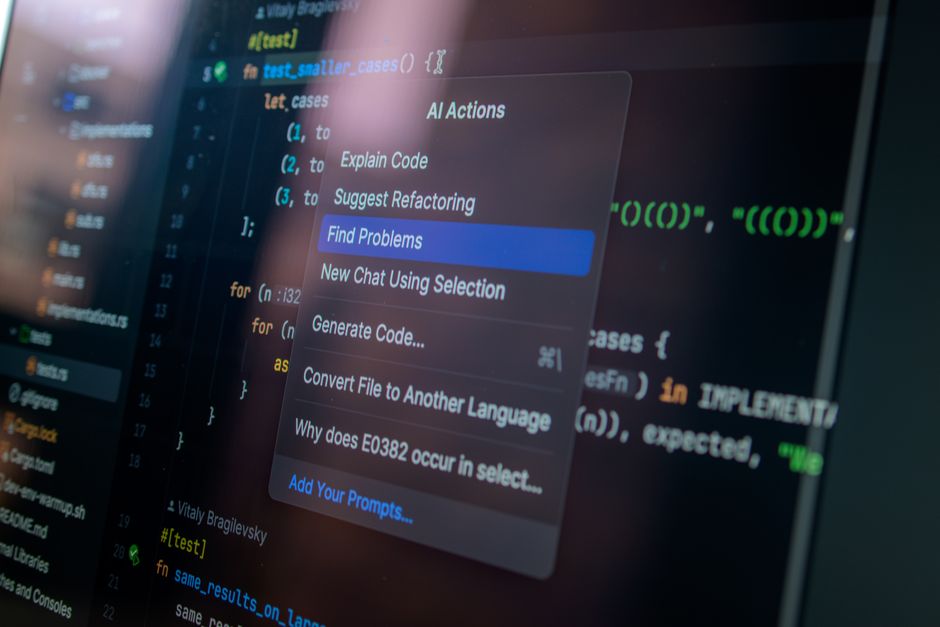
A comprehensive 2026 comparison of Claude Code vs OpenAI Codex. Discover pricing, features, autonomy limits, and find the best AI coding agent for your stack.
The developer landscape has undergone a monumental shift. In 2026, we are no longer talking about simple code autocompletion or basic chat sidebars that copy-paste snippets. We have entered the era of fully autonomous AI Coding Agents—virtual teammates capable of parsing entire codebases, running tests, resolving multi-file tickets, and executing background tasks completely unsupervised. Software engineers are shifting from hands-on typing to high-level architecture and supervision.
At the forefront of this agentic revolution are two highly advanced tools: Anthropic’s Claude Code and OpenAI’s newly reinvented OpenAI Codex. While many developers may remember Codex as the legacy code-completion API deprecated in 2023, OpenAI completely reimagined and relaunched Codex as a cloud-based autonomous agent. Today, running on the GPT-5 model family, it is a formidable engineering powerhouse. On the other side, Anthropic’s Claude Code has taken the command line by storm, achieving a massive user base and hitting over $2.5 billion in annualized revenue within a short period by utilizing the unmatched reasoning of Claude Sonnet 4.6 and Claude Opus 4.7.
This comparison matters because choosing between these two agents isn’t just about selecting a subscription. It is about committing to a fundamental workflow philosophy. One acts as a highly interactive local companion that works side-by-side with you in your terminal, while the other is an asynchronous, sandboxed, cloud-native junior engineer designed to take tasks end-to-end. We will break down their specs, pricing, architectures, and real-world performance to help you make the right choice in 2026.
Before diving into the detailed specs, here is an at-a-glance comparison of how Claude Code and OpenAI Codex match up against each other across core parameters:
| Feature / Spec | Claude Code (Anthropic) | OpenAI Codex (OpenAI) |
|---|---|---|
| Primary Model Engine | Claude 3.5 Sonnet (v4.6), Claude 3.5 Opus (v4.7) | GPT-5.5, GPT-5.6 (latest frontier coding models) |
| Execution Environment | Local terminal, local IDE (VS Code, JetBrains), local desktop app | Isolated cloud sandbox, Codex Desktop App (macOS/Windows) |
| Autonomy Style | Highly interactive, collaborative, prompts for permissions | Asynchronous, long-horizon (7+ hours of unsupervised runs) |
| Pricing Model | Bundled with Claude Pro ($20/mo) or Max plans ($100-$200/mo) | Bundled with ChatGPT Plus ($20/mo) or Pro plans ($100-$200/mo) |
| Integration Ecosystem | Model Context Protocol (MCP), Git hooks, custom remote APIs | GitHub/GitLab PR integration, Linear, Figma, Slack, customized plugins |
| Best Suited For | Interactive pairing, pixel-perfect frontend/UI, fast local debugging | Set-and-forget backend refactoring, automated PR generation, CI/CD |
Claude Code is Anthropic’s flagship agentic coding tool. It functions as an advanced command-line interface (CLI) that lives in your terminal, inside VS Code and JetBrains via official plugins, or inside its dedicated standalone desktop app. It reads your local codebase files, compiles and runs shell commands, handles Git workflows, and builds complex directories autonomously—all from standard natural language prompts. Claude Code reached an estimated $2.5 billion in annualized revenue, reflecting its massive popularity among professional developers.
Architecturally, Claude Code leverages a unique system-level configuration. It uses a specialized CLAUDE.md file located in your project root to maintain persistent memory of your standards, system constraints, and architecture. Furthermore, Claude Code features a concept called Agent Teams, which are coordinated sub-agents that communicate with each other in parallel to divide and conquer large software tasks. Its deep ecosystem support includes 29 programmable hook events that trigger during file changes, tool runs, or agent coordinations.
Claude Code excels at localized developer experience. Because it operates directly inside your local environment, it reads your actual files and executes tests locally. It prioritizes safety by asking for your explicit permission before executing shell commands or making major file modifications. When running on Claude 3.5 Sonnet (v4.6), it is incredibly fast and has built a reputation for having the best frontend design taste of any AI on the market. It can render designs, build component libraries, and debug UI issues with astonishing accuracy.
Claude Code Pricing & Limits (2026):
OpenAI Codex in 2026 is a completely different beast than its 2021 ancestor. Relaunched in May 2025, it is no longer just a model that powers autocomplete; it is a cloud-native, fully autonomous software engineering agent. Powered by GPT-5.5 and GPT-5.6, Codex currently boasts over 8 million active weekly users. It works across your real GitHub and GitLab repositories, fixes bugs, writes test suites, and ships end-to-end features through isolated, secure cloud sandboxes.
The defining feature of OpenAI Codex is its Long Horizon Autonomy. Instead of typing back and forth with an agent, you describe a task and Codex handles the rest. It spins up a remote, containerized cloud worktree, checks out your code, writes the required changes, runs a continuous integration test suite inside its sandbox, and automatically debugs itself when a test fails. Codex can run completely unsupervised in the background for over 7 hours, and it will notify you on Slack or Linear once a complete, verified Pull Request (PR) is ready for review.
Additionally, Codex has introduced incredibly user-friendly features to make it accessible to non-technical professionals (who now make up nearly 20% of its user base). This includes voice integration, which allows developers to dictate complex multi-step instructions at 170+ WPM to instantly fire off tasks. Codex also offers Sites, which allow teams to preview interactive web apps directly in the browser via a temporary URL, and role-specific plugins that tie coding tasks to tools like Figma and Slack.
OpenAI Codex Pricing & Limits (2026):
gpt-5.3-codex models, billed at $1.75 per million input tokens and $14.00 per million output tokens.Choosing the right AI coding agent in 2026 depends on your specific dev stack, budget, and desired workflow. Here is a practical guide to help you decide which tool deserves your monthly subscription:
Yes. The original 2021 OpenAI Codex was a raw completion model based on GPT-3 that powered early versions of GitHub Copilot. That model was deprecated in March 2023. The modern OpenAI Codex, launched in mid-2025 and updated throughout 2026, is a cloud-based autonomous agent system powered by GPT-5.5 and GPT-5.6. It is designed to autonomously plan, code, test, and deploy software end-to-end.
Claude Code reads your local codebase to build context, but it only sends the relevant snippets and file structures necessary to answer your prompts and execute actions. Your files are not used to train Anthropic’s public models. For extra privacy, team and enterprise plans include strict zero-data retention (ZDR) guarantees.
Yes. Claude Code is a CLI tool that can be easily installed and run inside a persistent Linux VPS or remote development machine. This is a highly popular option for developers who want to prevent their local laptop from falling asleep during deep agent runs. OpenAI Codex operates directly in the cloud by default, linking directly to your GitHub, GitLab, or cloud worktree.
OpenAI Codex is generally friendlier for non-technical users. It features role-specific plugins, automatic sandboxed cloud building, a clean visual desktop app, and “Sites” that generate preview links. These tools allow designers and project managers to build fully functioning apps without configuring local developer environments. Claude Code is more developer-centric and requires terminal, Git, and IDE familiarity to use effectively.
Both Claude Code and OpenAI Codex represent the absolute pinnacle of artificial intelligence in 2026, but they serve entirely different styles of development.
If your priority is unsupervised autonomy, background execution, and safety through containerized cloud sandboxes, then OpenAI Codex is the winner. Its ability to handle long-running, multi-hour engineering tasks and output clean, tested Pull Requests makes it a highly valuable asynchronous team member.
However, for the vast majority of active software engineers and hands-on builders, Claude Code is the best AI coding agent of 2026. Anthropic’s tool offers a more natural, fast, and satisfying pair-programming experience. Its local terminal speed, highly extensible Model Context Protocol (MCP), and the unmatched aesthetic taste of the Claude 3.5 model family make it an essential developer tool. It keeps you in the driver’s seat while drastically accelerating your execution, making it the ultimate tool for shipping modern software.
Prices and features mentioned are accurate as of the date of publication. Always check the official provider website for the most current pricing and availability.




