Physical Address
304 North Cardinal St.
Dorchester Center, MA 02124
Physical Address
304 North Cardinal St.
Dorchester Center, MA 02124

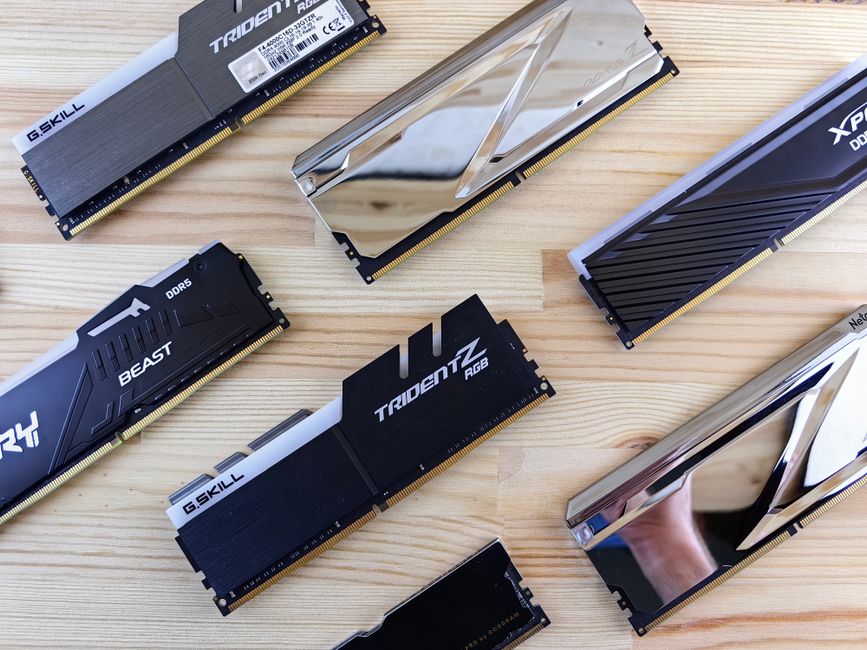
Deciding between DDR4 and DDR5 RAM in 2026? Our in-depth guide compares performance, pricing, and compatibility to help you build the best PC for your budget.
Building or upgrading a PC in 2026 presents a fascinating dilemma, particularly when it comes to memory: DDR4 versus DDR5 RAM. While DDR5 has been on the market for several years now, its initial high price and niche compatibility made DDR4 a steadfast champion for budget-conscious builders. However, as technology evolves, so does market dynamics. Today, August 31, 2026, the landscape has shifted considerably, making the choice between these two memory standards more nuanced than ever before.
This comparison isn’t just about raw speed; it’s about finding the best value for your hard-earned money. We’ll dive deep into current pricing, real-world performance differences, and crucial platform compatibility to help you determine which RAM standard makes the most sense for your next PC build. Whether you’re a hardcore gamer, a content creator, or simply building a reliable workstation, understanding the pros and cons of DDR4 and DDR5 in 2026 is essential for an optimal and future-proof investment.
| Feature | DDR4 RAM (2026) | DDR5 RAM (2026) |
|---|---|---|
| Typical Speeds | 2400MHz – 4000MHz | 4800MHz – 8400MHz |
| Bandwidth | Lower (e.g., 25.6 GB/s @ 3200MHz) | Significantly Higher (e.g., 51.2 GB/s @ 6400MHz) |
| Latency (CL) | Generally lower (CL14-CL19) | Initially higher, now competitive (CL28-CL40) |
| Voltage | 1.2V – 1.45V | 1.1V – 1.4V (lower base) |
| Platform Comp. | Older Intel (10th-12th Gen), AMD (Ryzen 3000-5000) | Newer Intel (12th-15th Gen), AMD (Ryzen 7000-8000) |
| Cost (32GB Kit) | $80 – $120 (Very Affordable) | $130 – $250+ (Mainstream to Premium) |
| Performance Value | Excellent for budget builds/upgrades | Best for new high-performance builds |
| Future-proofing | Limited | Excellent |
Despite the rise of DDR5, DDR4 RAM remains a highly relevant and attractive option for a significant segment of the PC building market in 2026. Its primary appeal lies in its mature technology, widespread availability, and, most importantly, its exceptional value proposition. For builders on a tight budget or those looking to upgrade an existing system, DDR4 is often the sensible choice.
In August 2026, DDR4 modules typically range in speeds from 2400MHz up to 4000MHz, with the sweet spot for performance and price generally falling between 3200MHz and 3600MHz with tight CL16 or CL18 timings. Popular examples include the Corsair Vengeance LPX 3200MHz CL16 32GB kit, which can be found for around $85-$95, or a G.Skill Ripjaws V 3600MHz CL16 32GB kit, often priced between $95-$110. These prices are incredibly competitive, especially when considering the performance they offer.
DDR4’s compatibility is centered around older, but still powerful, CPU platforms. This includes Intel’s 10th Gen (Comet Lake), 11th Gen (Rocket Lake), and some 12th Gen (Alder Lake) motherboards, as well as AMD’s Ryzen 3000 (Matisse), 4000 (Renoir), and 5000 (Vermeer) series. These platforms, particularly the Ryzen 5000 series and Intel’s 12th Gen, still deliver excellent gaming and productivity performance, making DDR4 a viable choice for many gamers and users who aren’t chasing the absolute bleeding edge.
While DDR4’s raw bandwidth is lower than DDR5, its lower latency can sometimes offset this in specific applications and games. For instance, in many popular esports titles or general web browsing and office tasks, the real-world performance difference between a well-tuned DDR4 system and a mainstream DDR5 system might be negligible. The affordability also extends to the motherboards compatible with DDR4, further reducing overall build costs, which aligns perfectly with the strategy behind many \”cheap gaming PC build guides\” still circulating in 2026, often targeting the $600-$800 price point.
DDR5 RAM has fully matured by August 2026, shedding its initial early adopter premium and establishing itself as the standard for all new, high-performance PC builds. It offers significant advancements in bandwidth, efficiency, and future-proofing, making it the preferred choice for enthusiasts, content creators, and anyone investing in a cutting-edge system.
Current DDR5 modules typically start at 4800MHz and scale up dramatically, with mainstream kits hovering around 6000MHz to 6400MHz and high-performance kits pushing well beyond 8000MHz. The most popular kits for gaming and general use, like the Kingston Fury Renegade 6000MHz CL32 32GB kit or the G.Skill Trident Z5 RGB 6400MHz CL34 32GB kit, are widely available. Pricing for a 32GB (2x16GB) kit of 6000MHz CL30-CL32 RAM typically ranges from $140-$180, while faster kits, such as a 7200MHz CL34 32GB set from Corsair, might cost $220-$280. While still more expensive than DDR4, these prices represent a substantial drop from 2022-2023.
DDR5 is mandatory for all modern high-performance CPU platforms, including Intel’s 13th (Raptor Lake), 14th (Raptor Lake Refresh), and the latest 15th Gen (Arrow Lake/Lunar Lake) processors. Similarly, AMD’s Ryzen 7000 (Zen 4) and the newer Ryzen 8000 (Zen 5) series exclusively support DDR5. This means that if you’re building with any of the latest CPUs, DDR5 is your only option, making it an unavoidable part of a future-proof setup.
The performance benefits of DDR5 are most pronounced in applications that demand high memory bandwidth, such as video editing, 3D rendering, scientific simulations, and certain modern games that are optimized to leverage faster memory. The increased bandwidth, coupled with improved on-die ECC (Error Correcting Code) for enhanced stability and lower operating voltage (1.1V base), makes DDR5 a powerhouse for demanding tasks. While latency figures on DDR5 initially appeared higher, architectural improvements and tighter timings on modern modules have significantly closed the real-world latency gap with DDR4.
Selecting between DDR4 and DDR5 RAM in 2026 boils down to a few critical factors, primarily revolving around your budget, your intended use case, and the platform you are building upon. This decision isn’t one-size-fits-all, so consider these points carefully.
Platform Compatibility is Paramount: Before anything else, check which RAM standard your chosen CPU and motherboard support. If you are buying a brand-new Intel 13th Gen (or newer) or AMD Ryzen 7000 series (or newer) CPU, you *must* use DDR5 RAM. There are no exceptions. If you are building with or upgrading an older system featuring an Intel 10th, 11th, or certain 12th Gen CPUs, or an AMD Ryzen 3000, 4000, or 5000 series CPU, then DDR4 is your standard. Attempting to use the wrong type of RAM will simply not work, as the physical DIMM slots are keyed differently.
Budget Considerations: For absolute budget builds, particularly those aiming for a sub-$800 price point, DDR4 still offers unparalleled value. The cost savings extend beyond just the RAM modules; DDR4-compatible motherboards are generally more affordable than their DDR5 counterparts. This allows you to allocate more of your budget to components like the CPU or GPU, which often have a greater impact on overall performance in budget-oriented systems. If your budget is flexible, or you’re aiming for a high-end build above $1200-$1500, DDR5 is the clear choice.
Intended Use and Performance Needs: For casual gaming, everyday productivity, and general computing tasks, a 32GB DDR4 3600MHz CL16 kit provides ample performance and a smooth experience. You likely won’t notice a significant difference for these tasks compared to mainstream DDR5. However, for competitive gaming, professional content creation (video editing, 3D rendering), complex simulations, or heavy multitasking, DDR5’s superior bandwidth and efficiency will yield noticeable performance gains. If your workload involves frequent large file transfers or memory-intensive applications, DDR5 is the superior investment.
Future-Proofing Your Investment: If you plan to keep your PC for several years and want to be ready for future software and game optimizations, DDR5 is the way to go. It’s the current and future standard, meaning new CPUs and motherboards will exclusively support it. Investing in DDR5 now ensures a longer upgrade path for your platform and better compatibility with upcoming technologies. DDR4, while still viable, has reached its performance ceiling and will gradually become obsolete for new system builds.
Capacity and Speed Sweet Spots: For most users, 16GB of RAM is the minimum for modern gaming, but 32GB is highly recommended for new builds, especially with the increasing memory demands of applications and operating systems. For DDR4, 3200MHz CL16 or 3600MHz CL16/CL18 represents the best balance of speed, latency, and price. For DDR5, a 32GB kit running at 6000MHz CL30 or 6400MHz CL32 is generally considered the sweet spot, offering excellent performance without the significant price premium of ultra-high-speed kits.
Q1: Can I use DDR5 RAM on a motherboard designed for DDR4?
Absolutely not. DDR4 and DDR5 RAM modules have different physical pin layouts (288 pins for DDR4, 288 pins for DDR5 but with different keying), different electrical requirements, and operate on entirely different architectural principles. A DDR4 motherboard cannot physically accept a DDR5 module, and vice-versa. You must use the RAM type that your motherboard and CPU explicitly support.
Q2: Is 32GB of RAM necessary for gaming in 2026?
For new PC builds in 2026, 32GB of RAM (especially DDR5) is highly recommended for gaming. While many games still run perfectly fine on 16GB, modern titles, multitasking with applications open in the background, and future games are increasingly benefiting from 32GB. It offers a smoother experience, prevents stuttering in demanding scenarios, and provides ample headroom for years to come. For budget builds, 16GB is still a viable starting point, but 32GB provides better longevity.
Q3: Will DDR4 prices drop even further in the coming years?
DDR4 prices have largely stabilized and are unlikely to see significant further reductions. As DDR5 production ramps up and becomes even more dominant, DDR4 will transition into a legacy product. There might be occasional sales or bundle deals, but the consistent downward trend seen in previous years has mostly plateaued. Its current affordability makes it a compelling option for its niche, but massive price drops are not anticipated.
Q4: What’s the best DDR5 speed and latency for gaming in 2026?
For optimal gaming performance with DDR5 in 2026, the sweet spot typically lies with kits around 6000MHz to 6400MHz with tight latencies, specifically CL30 to CL32. Kits like a 6000MHz CL30 or 6400MHz CL32 offer an excellent balance of speed, low latency, and affordability. While higher speeds exist (7000MHz+), the performance gains in gaming often diminish rapidly beyond this sweet spot, and the price premium becomes substantial. Always prioritize a balance of speed and low CAS Latency (CL).
As of August 2026, the decision between DDR4 and DDR5 RAM for a PC build is clear-cut, largely dictated by your budget and the CPU platform you choose. There isn’t a single “winner” for everyone; instead, the best value depends entirely on your specific circumstances.
For new PC builds targeting mainstream to high-end performance, especially with current-generation CPUs (Intel 13th/14th/15th Gen or AMD Ryzen 7000/8000 series), DDR5 RAM is the undisputed champion and often the only compatible option. Its increased bandwidth, improved efficiency, and superior future-proofing capabilities make it the intelligent long-term investment. While slightly more expensive than DDR4, the price gap has narrowed significantly, making mainstream 32GB DDR5 kits (e.g., 6000MHz CL30 for around $150) an excellent value for the performance and longevity they offer. You’ll unlock the full potential of modern CPUs and GPUs, ensuring your system remains capable for years to come.
Conversely, for budget-focused builds or upgrading an existing, older system (Intel 10th/11th/some 12th Gen, AMD Ryzen 3000/5000 series), DDR4 RAM still represents phenomenal value. A 32GB kit of DDR4 3600MHz CL16 for under $100 provides more than enough performance for general use, many popular games, and even moderate content creation tasks. The lower cost of DDR4 RAM and its compatible motherboards allows builders to allocate more funds to a better GPU or CPU, often resulting in a more balanced and powerful budget gaming PC overall. If you’re building a “cheap bastard’s gaming PC” for $600-$800, DDR4 is undoubtedly the smarter choice to maximize your bang-for-buck.
In summary, if you’re building a new PC with the latest CPUs, embrace DDR5. If you’re on a strict budget or extending the life of a slightly older but still capable platform, DDR4 offers incredible value without significant compromises for its target use case. Both standards have their place in the diverse PC market of 2026, but the transition to DDR5 as the performance and future-proof standard is complete.
Prices and features mentioned are accurate as of the date of publication. Always check the official provider website for the most current pricing and availability.