Physical Address
304 North Cardinal St.
Dorchester Center, MA 02124
Physical Address
304 North Cardinal St.
Dorchester Center, MA 02124

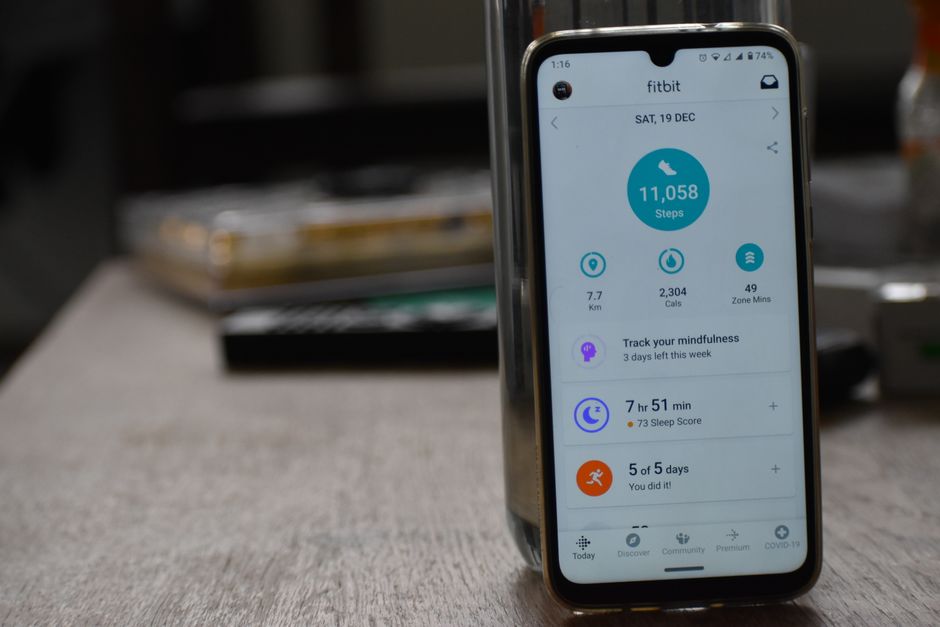
Choosing between the $99 Google Fitbit Air and the Whoop 5.0? Read our 2026 in-depth comparison of specs, prices, and features to find your winner.
Over the last few years, a fascinating shift has taken place in the wearable tech landscape. While smartwatches continue to pack in larger screens, brighter displays, and more intrusive notifications, a growing counter-movement of health-conscious users is opting for digital minimalism. Screenless fitness trackers have emerged as the premier choice for individuals who want to monitor their biometrics, maximize their sleep quality, and train effectively without the constant digital noise of a miniature smartphone strapped to their wrists. In 2026, this category has reached its absolute peak, driven by advanced multi-spectral sensors, incredible battery efficiencies, and deeply integrated generative AI models.
Google’s recent launch of the Fitbit Air in May 2026 sent shockwaves through the health-tech industry. Ditching the screens that defined predecessors like the Charge 6, the Fitbit Air targets the screen-free market at an incredibly aggressive $99 price point. Meanwhile, Whoop has doubled down on its subscription-first model with the Whoop 5.0, a highly refined, 7% smaller powerhouse designed for elite performance metrics. With both devices battling for wrist space, choosing the right one requires a deep understanding of their radically different pricing structures, data philosophies, and hardware strengths. This comprehensive comparison will break down exactly how the Fitbit Air and Whoop 5.0 match up to help you make an informed decision for your health journey in 2026.
To help you see how these two screenless giants compare at a glance, we have compiled their key hardware, software, and financial specifications below:
| Feature/Specification | Google Fitbit Air (2026) | WHOOP 5.0 (2026) |
|---|---|---|
| Base Hardware Cost | $99.00 / $99.99 (one-time purchase) | Included with membership ($0 upfront) |
| Annual Subscription Cost | Optional ($99.99/yr or $9.99/mo for Premium) | Required (WHOOP One: $199/yr; Peak: $239/yr; Life: $359/yr) |
| Sensor Weight | 5.2g (sensor puck only); ~12g with standard band | ~26.5g (including sensor and band) |
| Battery Life | Up to 7 to 8.5 days | Up to 14 days |
| Charging Method | Proprietary magnetic charging puck (Fast-charge enabled) | Slide-on waterproof portable PowerPack |
| Key Sensors | Optical HR, SpO2 (blood oxygen), Skin Temp, Gyroscope, Accelerometer | Continuous HR, SpO2, Skin Temp, Stress Monitor, VO2 Max (Life model adds ECG/BP) |
| Haptics & Alarms | Built-in vibration motor for silent haptic alarms | No vibration motor (dependent on smartphone notifications) |
| Strength/Gym Tracking | Basic cardio load and movement tracking | Advanced “Strength Trainer” (muscular vs. cardiovascular strain) |
| AI Assistant | Google Health Coach (powered by Gemini AI) | WHOOP Coach (powered by custom AI integration) |
To truly understand how these two devices fit into your daily routine, we need to dive deep into what makes each tracker tick, looking closely at their hardware design, sensor packages, app ecosystems, and overall cost of ownership in 2026.
The Google Fitbit Air represents a major shift in Google’s wearable strategy. It is built purely around comfort and digital peace of mind. Weighing a mere 5.2 grams for the central plastic “puck” and roughly 12 grams overall with the standard strap, the Fitbit Air is practically unnoticeable on the wrist. Google designed it specifically for 24/7 wear, allowing users to track their sleep, heart rate, and steps without the bulk of a typical smartwatch. Users can easily swap the central puck between various premium bands, including the breathable fabric Performance Loop, the sweat-proof silicone Active Loop, and the more stylish Elevated Modern Band.
Under the hood, the Fitbit Air utilizes a highly optimized sensor array. It tracks continuous heart rate, heart rate variability (HRV), skin temperature variation, and blood oxygen levels (SpO2). It also features AFib tracking with irregular heart rhythm notifications. Crucially, the Fitbit Air includes a built-in vibration motor. This small addition makes a massive difference for daily usability, enabling users to set silent, vibrating wake-up alarms directly on their wrist—a feature strangely absent from competitors like the Whoop 5.0. On a single charge, the Fitbit Air comfortably lasts between 7 and 8.5 days. Furthermore, its fast-charging capability provides a full day of battery life in just a five-minute charge, making it exceptionally easy to keep on your wrist around the clock.
Where the Fitbit Air truly shines is its flexible software model. Unlike Whoop, you do not need to pay a subscription to access your core health metrics. Out of the box, the free tier of the Google Health app (the unified home for Fitbit devices) provides robust tracking for your sleep stages, steps, active zone minutes, heart rate, and training readiness scores. For those who want more, Google offers Google Health Premium for $9.99 per month or $99.99 per year. This subscription unlocks deep sleep analysis and the Google Health Coach—a highly advanced AI companion powered by Google’s Gemini. The Google Health Coach can analyze months of your background health data to provide highly personalized advice, answering complex questions like “How did my late-night running session affect my sleep quality over the last month?” with unprecedented precision.
While the Fitbit Air is aimed at the general consumer looking for a lightweight health companion, the Whoop 5.0 is unapologetically geared toward athletes, fitness enthusiasts, and data nerds. Whoop’s ecosystem relies heavily on its subscription model: you pay an annual fee, and the hardware is included. The 5.0 model features a 7% smaller form factor than its predecessor, driven by a redesigned processor that is ten times more power-efficient. This enables the Whoop 5.0 to achieve an astounding battery life of up to 14 days. Charging the device is incredibly seamless, utilizing a waterproof slide-on PowerPack that allows you to charge the tracker while it remains on your wrist.
Whoop’s ecosystem relies heavily on three core pillars: Strain, Sleep, and Recovery. The sensor captures your biometrics 26 times per second, ensuring highly accurate heart rate and physiological tracking. Unlike the Fitbit Air, which focuses primarily on cardiovascular load, the Whoop 5.0 features a dedicated “Strength Trainer”. This tool allows users to log their weightlifting routines and calculates muscular strain alongside cardiovascular strain, providing a far more accurate representation of total physical stress. In the companion app, these metrics are synthesized into a daily Strain score (ranging from 0 to 21) and a color-coded Recovery score (Red, Yellow, or Green) that tells you exactly how prepared your body is to handle stress each day.
For 2026, Whoop has structured its membership into three distinct tiers. The entry-level WHOOP One ($199/year) provides the standard 5.0 sensor, an Obsidian SuperKnit band, and basic Strain and Sleep tracking. The mid-tier WHOOP Peak ($239/year) adds advanced features like the Stress Monitor and “Healthspan” tracking, which estimates your biological age. Finally, the premium WHOOP Life ($359/year) utilizes Whoop’s medical-grade sensor technology (the Whoop MG), providing clinical-grade ECG heart screening, blood pressure insights, and irregular heart rhythm notifications. While the Whoop app provides an incredibly deep, data-rich dashboard, users should note that it can occasionally suffer from slow data-loading times when first opened in the morning, and the device lacks a built-in haptic vibration motor, relying instead on your phone for alarms.
Selecting the ideal screenless fitness tracker between the Fitbit Air and the Whoop 5.0 comes down to your financial preferences, your training style, and how much data you actually want to digest on a daily basis. Here is a buying guide to help you choose the tracker that matches your lifestyle:
No, the Fitbit Air does not require a subscription. Unlike Whoop, which is completely non-functional without an active membership, the Fitbit Air can be used entirely for free. The free tier of the Google Health app provides access to core tracking metrics, including your daily steps, heart rate, basic sleep duration, and active minutes. You only need to pay the $9.99/month Google Health Premium subscription if you want advanced Gemini-powered AI coaching and deeper sleep phase breakdowns.
The Whoop 5.0 is the clear winner when it comes to battery longevity, offering up to 14 days of continuous tracking on a single charge. It also features a unique slide-on PowerPack, allowing you to charge the device while wearing it. In contrast, the Fitbit Air offers up to 7 to 8.5 days of battery life and must be removed to charge. However, the Fitbit Air features an incredibly fast charging speed, providing a full day of battery life in just a five-minute charge.
Yes, wearing a screenless fitness tracker alongside a smartwatch (often referred to as “double-wristing”) is highly popular in 2026. Because both the Fitbit Air and Whoop 5.0 lack a distracting screen, they look like simple woven or silicone bands. Many users choose to wear an Apple Watch or Pixel Watch during the day for notifications and productivity, while keeping their screenless tracker on the other wrist for uninterrupted, highly accurate health baseline tracking.
No, neither the Fitbit Air nor the Whoop 5.0 has built-in GPS. To maintain their ultra-lightweight designs and maximize battery life, both devices rely on “Connected GPS”. This means that if you want to map your outdoor runs, walks, or bike rides, you must bring your smartphone with you so the fitness tracker can leverage your phone’s GPS connection.
The screenless wearable market in 2026 has delivered two exceptional, yet fundamentally different, health tools. There is no one-size-fits-all answer, as the “best” device depends heavily on your budget and training goals.
For the vast majority of consumers, the Google Fitbit Air is the winner. At just $99, Google has successfully democratized screenless fitness tracking. It delivers outstanding physical comfort, accurate daily tracking, and a built-in vibration motor for silent alarms, all without forcing users into a costly subscription loop. The integration of Gemini AI via the Google Health Coach makes the optional subscription highly compelling, but the ability to use the device completely free of charge makes it an unmatched value proposition in 2026.
However, if you are a competitive athlete, a serious weightlifter, or someone whose entire routine revolves around managing training strain and biological recovery, the WHOOP 5.0 remains the premium choice. Its Strength Trainer, comprehensive Strain metrics, and robust 14-day battery life are top-tier. But for everyday fitness enthusiasts, paying $199 to $359 year-after-year is a heavy premium when the Fitbit Air offers a beautifully simple, distraction-free health journey for a fraction of the cost.
Prices and features mentioned are accurate as of the date of publication. Always check the official provider website for the most current pricing and availability.