Physical Address
304 North Cardinal St.
Dorchester Center, MA 02124
Physical Address
304 North Cardinal St.
Dorchester Center, MA 02124

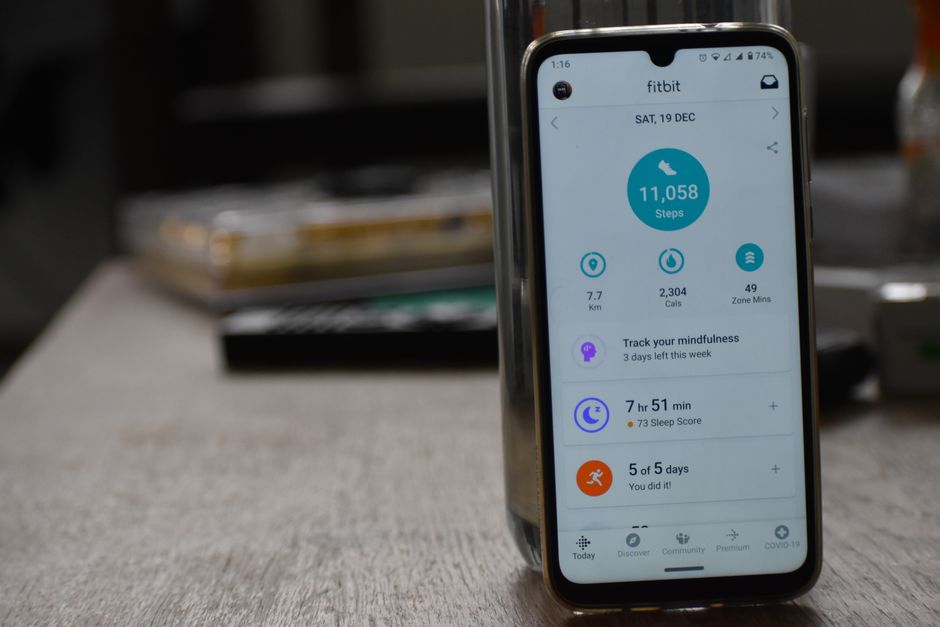
Comparing the new Google Fitbit Air vs Whoop 5.0. Discover which screenless fitness tracker offers the best features, specs, and price in 2026.
The year 2026 has marked a fascinating turning point in wearable technology. For years, smartwatches grew larger, brighter, and increasingly intrusive. Our wrists became second smartphones, constantly buzzing with notifications, emails, and alerts that pulled us away from the present moment. In response, a powerful counter-movement has taken hold: the rise of the screenless fitness tracker. Stripped of distracting displays, these screenless devices are designed to disappear into the background of your life, passively collecting high-fidelity physiological data without constantly begging for your attention.
In this minimalist arena, two heavyweights are battling for supremacy in 2026. On one side is Google’s highly anticipated debut into the faceless wearable category, the Google Fitbit Air. Released in May 2026, the Fitbit Air is a featherweight, $99.99 tracker designed to make professional-grade health tracking affordable and accessible to the masses. On the other side stands the Whoop 5.0, the latest iteration of the undisputed king of athletic recovery tracking. Fully established in 2026, the Whoop 5.0 is a premium, data-dense powerhouse built for serious athletes and biohackers willing to pay an annual subscription.
Choosing between these two devices is not just about comparing specs; it is about choosing a philosophy. Are you looking for a budget-friendly, set-it-and-forget-it wellness partner powered by cutting-edge Google AI? Or do you need an uncompromising, medical-grade athletic coach that monitors your body’s strain and recovery 26 times per second? In this comprehensive comparison, we break down the specs, prices, features, and user experiences to help you decide which screenless tracker deserves a spot on your wrist in 2026.
Before diving into the granular details of sensors and subscription models, let us take a high-level look at how the Google Fitbit Air and Whoop 5.0 stack up against each other across key categories in 2026.
| Feature | Google Fitbit Air | Whoop 5.0 |
|---|---|---|
| Base Price | $99.99 (one-time purchase) | $239.00 / year (Whoop One subscription) |
| Subscription Model | Optional ($9.99/mo or $99.99/yr for Premium AI features) | Mandatory (Included in annual fee; device does not function without it) |
| Battery Life | Up to 7 days | Up to 14 to 16.5 days |
| App Ecosystem | Google Health App (Replaces legacy Fitbit app) | Whoop App (Focus on Strain, Recovery, Sleep) |
| Core Sensors | Heart Rate, SpO2, Skin Temp, HRV, Sleep, AFib alerts | High-efficiency Heart Rate, SpO2, Skin Temp, HRV, Sleep, Stress, VO2 Max |
| Charging Style | Pill-shaped magnetic USB-C fast charger | Slide-on wireless portable power pack |
| Target Audience | Casual health enthusiasts, passive sleep trackers, budget shoppers | Elite athletes, high-performance training purists, biohackers |
As this table illustrates, Google focuses on lowering the financial barriers to passive tracking, while Whoop targets a premium tier of users who demand constant data streaming and advanced athletic insights.
Google’s release of the Fitbit Air in May 2026 was a bold declaration that comprehensive wellness tracking does not require a bulky watch or a recurring monthly payment. Coming in at a highly disruptive $99.99, the Fitbit Air is designed to be a passive wellness partner. Google has stripped away the complex, glowing displays of the past, shrinking the tracker down to a tiny, ultra-lightweight pebble that slips into a variety of comfortable, interchangeable bands. It weighs next to nothing, and with zero screen, it frees you from the endless distractions of wrist-bound notifications.
All your health metrics automatically sync to the newly redesigned Google Health app, which officially replaces the legacy Fitbit and Google Fit applications. Despite its small footprint, the Fitbit Air does not skimp on sensor quality. It tracks 24/7 heart rate, skin temperature variations, SpO2 (blood oxygen) levels, heart rate variability (HRV), and resting heart rate. It also offers FDA-cleared heart rhythm monitoring with AFib alerts. The battery life lasts up to 7 days on a single charge, and if you do run low, Google’s new fast-charging system delivers a full day of power in just five minutes.
Where the Fitbit Air truly shines is its software. While core features are completely free, an optional $9.99/month (or $99.99/year) subscription to Google Health Premium unlocks the Gemini-powered Google Health Coach. This highly personalized AI analyzes your sleep, activity, and recovery trends to provide natural, conversational guidance—such as noticing your elevated resting heart rate and suggesting a lighter workout, or analyzing your sleep stages to recommend a better bedtime routine. Google has also leaned heavily into lifestyle customization, offering a wide array of bands, including the Stephen Curry Special Edition at $129.99 and stylish Elevated Modern bands for $49.99.
If the Google Fitbit Air is built for the everyday wellness enthusiast, the Whoop 5.0 is a highly tuned instrument built for the performance-obsessed. Launched in May 2025 and reigning supreme through 2026, Whoop 5.0 represents a massive engineering leap forward. Whoop’s philosophy has always been clear: no screen, no notifications, and absolute focus on physical recovery and strain data. The Whoop 5.0 is 7% smaller than its predecessor, but packs a redesigned processor that is 10 times more power-efficient. This enables the sensor suite to capture data points an astonishing 26 times per second, allowing Whoop to measure strain, recovery, sleep, and cardiovascular stress with unparalleled precision.
Perhaps the most impressive upgrade on the Whoop 5.0 is its battery life. While most trackers struggle to hit a week, the Whoop 5.0 boasts up to 14 to 16.5 days of battery life on a single charge. Furthermore, you never have to take the device off to charge it; Whoop utilizes a slide-on, wireless portable power pack that charges the device while it sits on your wrist. The Whoop ecosystem is entirely built around its mobile app, which categorizes your day into three pillars: Sleep, Recovery, and Strain. The app doesn’t just count steps—in fact, Whoop famously doesn’t emphasize step counts at all. Instead, it calculates your cardiovascular and muscular load on a scale of 0 to 21 and compares it to your physical Recovery (based on HRV, resting heart rate, and sleep quality) to tell you exactly how hard you should push your body each day. For 2026, Whoop has introduced Healthspan with WHOOP Age in partnership with the Buck Institute for Research on Aging, which uses nine distinct biological markers to calculate your physiological age and track your pace of aging.
Deciding between the Google Fitbit Air and the Whoop 5.0 in 2026 comes down to your budget, your training goals, and your relationship with data. Both trackers do an incredible job of eliminating screen distractions, but they serve completely different philosophies of health monitoring.
You should choose the Google Fitbit Air if you want a high-quality screenless tracker without a mandatory monthly subscription fee. For a one-time payment of $99.99, the Fitbit Air is yours forever, offering comprehensive heart rate, sleep, and activity tracking without requiring you to pay another dime. It is also the ideal choice if you prefer AI-driven, actionable advice over raw numbers. The Gemini-powered Google Health Coach is incredibly user-friendly, translating your metrics into clear, conversational advice rather than making you decipher complex charts. Finally, if you are looking for a lightweight, comfortable sleep tracker that you can wear to bed without noticing it, or if you are already deeply integrated into the Google/Android ecosystem, the Fitbit Air is the perfect fit.
On the other hand, you should choose the Whoop 5.0 if you are a serious athlete or fitness professional who trains multiple times a week. If you run marathons, lift heavy weights, or participate in competitive sports, Whoop’s detailed Strain and Recovery metrics are unmatched. It is also the correct choice if you want the absolute best battery life on the market. With up to 16.5 days of battery life and a unique on-the-go wireless charging system, you never have to worry about a dead battery. Additionally, if you are obsessed with granular data, Whoop’s 26-times-per-second sampling rate captures biometric data with unmatched fidelity. If you want to track long-term trends, physiological age, VO2 max, and detailed heart rate variability metrics, Whoop is the gold standard.
Q: Can I use the Google Fitbit Air without paying for the Google Health Premium subscription?
A: Absolutely. Unlike Whoop, the Google Fitbit Air does not require a subscription to function. All the core tracking capabilities—including 24/7 heart rate monitoring, step tracking, sleep tracking, SpO2 levels, skin temperature, and AFib alerts—are available for free on the standard Google Health app. The optional Google Health Premium subscription ($9.99/month) is only required if you want to access advanced deep-dive reports and the Gemini-powered Google Health Coach.
Q: How does the charging experience differ between the two devices?
A: The Google Fitbit Air uses a traditional USB-C magnetic charging cable. It features excellent fast-charging capabilities, providing a full day of battery life in just 5 minutes of charging. The Whoop 5.0 uses a unique, slide-on wireless battery pack. You charge the battery pack separately, slide it onto the Whoop band while you are wearing it, and charge the device passively. This means you never have to take the Whoop 5.0 off your wrist, ensuring true 24/7 continuous data tracking.
Q: Are these screenless trackers waterproof?
A: Yes, both devices are built to handle intensive sweat and water. The Whoop 5.0 is water-resistant and is highly popular among swimmers and triathletes. The Google Fitbit Air is water-resistant up to 50 meters, meaning you can safely wear it while swimming laps, showering, or running in heavy rain.
Q: What is the difference between the standard Whoop 5.0 and the Whoop MG?
A: The Whoop 5.0 and Whoop MG were launched together as part of Whoop’s latest generation of wearables. The standard Whoop 5.0 is included with the Whoop One membership ($239/year) and focuses on elite athletic performance, strain, and sleep tracking. The Whoop MG is a premium, medical-grade hardware tier paired with the Whoop Life membership ($359/year). The Whoop MG includes FDA-cleared on-demand ECG readings, blood pressure insights, and advanced cardiovascular screening features.
In 2026, the screenless tracker market has matured beautifully, offering two world-class devices that cater to completely different audiences. The Google Fitbit Air is our pick as the Best Screenless Fitness Tracker for Most People. Google has executed a masterclass in product design and pricing. At $99.99 with no mandatory monthly fee, it breaks down the financial barriers of high-quality health tracking. It is lightweight, stylish, and highly comfortable, and the integration of the Google Health app and Gemini AI Coach makes health insights accessible to everyday users. It is the perfect passive tracker for anyone who wants to monitor their sleep, steps, and heart health without the distraction of a screen.
However, for the elite athlete, data purist, or competitive fitness enthusiast, the Whoop 5.0 remains the undisputed king. Its 14+ days of battery life, continuous 26-times-per-second sampling rate, and unparalleled Strain vs. Recovery algorithm justify its premium $239 annual membership for those who rely on high-fidelity data to optimize their daily performance.
For the average consumer looking to live a healthier, less distracted life, save your money and buy the Google Fitbit Air. For the dedicated athlete looking to break personal records, invest in the Whoop 5.0.
Prices and features mentioned are accurate as of the date of publication. Always check the official provider website for the most current pricing and availability.