Physical Address
304 North Cardinal St.
Dorchester Center, MA 02124
Physical Address
304 North Cardinal St.
Dorchester Center, MA 02124

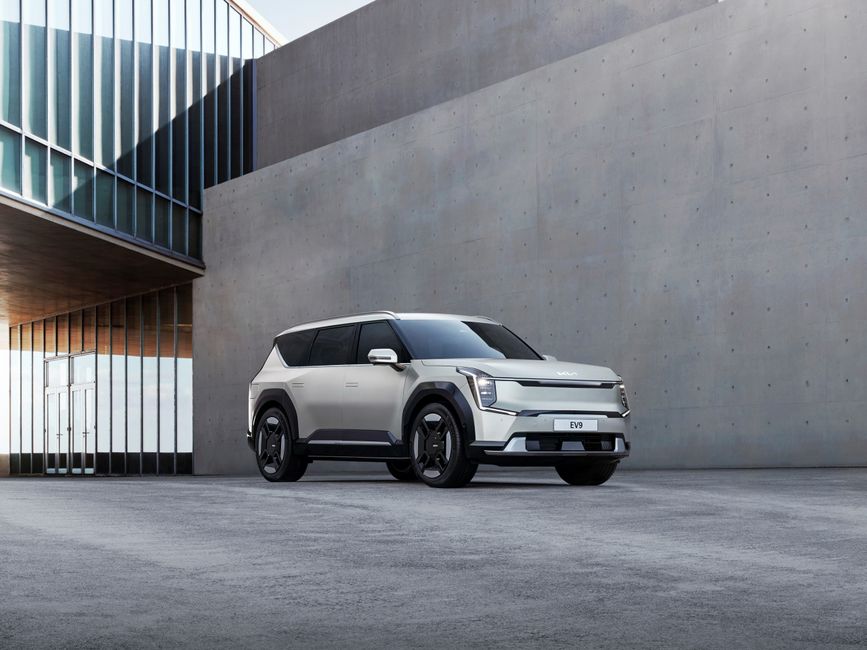
Compare the 2026 Hyundai Ioniq 9 and Kia EV9. Discover pricing, range, battery capacity, fast charging, and see which 3-row electric SUV is best.
The family SUV landscape is undergoing a massive electric shift. For years, family road trips meant choosing between massive, gas-guzzling haulers or settling for cramped three-row crossovers that forced passengers in the back into awkward, knee-to-chest seating positions. Thankfully, that paradigm has shifted. With the emergence of dedicated, ground-up electric vehicle (EV) platforms, automakers are now delivering full-sized, three-row electric SUVs that combine zero-emission driving with unmatched interior space, instant torque, and high-tech luxury.
At the absolute forefront of this movement are two sibling brands: Hyundai and Kia. For 2026, the battle for three-row EV supremacy comes down to two corporate cousins sharing the same basic Electric-Global Modular Platform (E-GMP): the brand-new 2026 Hyundai Ioniq 9 and the updated 2026 Kia EV9. Although both vehicles emerge from the Hyundai Motor Group umbrella and share standard 800V ultra-fast architecture, they target completely different aesthetics, cargo needs, and family budgets.
The Ioniq 9 is Hyundai’s newest, largest flagship, arriving with a massive standard battery and a focus on serene, lounge-like luxury. The Kia EV9 enters 2026 with refreshed updates, a strategic price drop on multiple trims, and rugged, athletic styling. If you are a family buyer searching for the ultimate 3-row electric SUV, choosing between these two giants can be challenging. In this detailed comparison, we will dissect their design philosophies, pricing, real-world ranges, performance metrics, charging capabilities, and interior features to help you decide which one deserves a spot in your driveway.
To give you an immediate overview, here is a side-by-side comparison of the core specifications, prices, pros, and cons for the 2026 Hyundai Ioniq 9 and the 2026 Kia EV9:
| Feature / Metric | 2026 Hyundai Ioniq 9 | 2026 Kia EV9 |
|---|---|---|
| Starting Price (MSRP) | $58,955 (S RWD) | $56,395 (Light Standard Range) |
| Battery Capacity | 110.3 kWh (Standard on all trims) | 76.1 kWh (Base), 99.8 kWh (Long Range) |
| EPA-Estimated Range | 300 to 335 miles | 230 to 304 miles |
| Power Output Range | 215 hp (RWD) to 422 hp (AWD) | 201 hp (LLR RWD) to 501 hp (GT AWD) |
| Charging (10% to 80%) | ~24 minutes on 350-kW DC fast charger | ~20 to 24 minutes on 350-kW DC fast charger |
| Standard Charge Port | NACS (Tesla Supercharger standard) | NACS (Tesla Supercharger standard) |
| Max Cargo Space | 86.9 cubic feet | 81.7 cubic feet |
| Federal Tax Credit | Eligible for full $7,500 | Eligible for full $7,500 |
| Key Pros |
– Massive 110.3 kWh battery is standard – Guaranteed 300+ miles of range across all trims – Superior cargo capacity (86.9 cu. ft.) – High-end lounge-like interior design |
– Lower starting entry barrier – Bold, aggressive boxy aesthetic – Recent 2026 price cuts (up to $2,000 off) – Standard AWD Terrain Modes |
| Key Cons |
– Higher base starting price than Kia – No smaller, budget-oriented battery option – Ride handling is tuned heavily for comfort over sport |
– Base Standard Range limited to 230 miles – Slightly less maximum cargo space than Ioniq 9 – Upper trims can get expensive quickly |
The 2026 Hyundai Ioniq 9 is Hyundai’s newest flagship EV, representing the absolute pinnacle of the brand’s electric design and space optimization. Built at the brand-new Hyundai Motor Group Metaplant America (HMGMA) in Bryan County, Georgia, the Ioniq 9 is fully eligible for the full $7,500 federal tax credit. This American-assembled powerhouse is visually distinguished by its “aerosthetic” silhouette—featuring a sleek, curved roofline, parametric pixel lighting, and a remarkably low drag coefficient that helps maximize real-world highway range.
Hyundai has priced the Ioniq 9 competitively, ensuring that every trim level comes packed with premium features. Note that the MSRPs below do not include destination/freight charges, which typically add about $1,600:
Unlike many of its competitors, Hyundai does not force buyers to pay extra for a decent battery. Every single 2026 Hyundai Ioniq 9 is equipped with a gargantuan 110.3 kWh lithium-ion battery pack. This massive power reserve translates to incredible real-world utility. Rear-Wheel Drive (RWD) models utilize a single rear motor producing 215 horsepower and 258 lb-ft of torque, resulting in an impressive EPA-estimated 335 miles of range. All-Wheel Drive (AWD) models employ dual motors, producing 308 to 313 horsepower and 446 lb-ft of torque. AWD Performance models (available in top trims) boast up to 422 horsepower and 516 lb-ft of torque, propelling this massive vehicle from 0-60 mph in a sports-car-rivaling 4.9 seconds while still delivering up to 311 miles of range.
Step inside the Ioniq 9, and you are greeted by an interior designed to mimic a high-end mobile lounge. The vehicle boasts a fully flat floor and features Hyundai’s “Universal Island 2.0” central console, which can slide forward or backward to give middle-row passengers easier access. Top-tier trims feature “Relaxation Seats” with leg rests, a UV-C sterilization compartment built into the glovebox, and Dynamic Touch Massage seating. Technology is dominated by a sweeping panoramic curved display that merges a 12.3-inch digital instrument cluster with a 12.3-inch infotainment screen. For utility, the Ioniq 9 leads the pack with a class-leading 86.9 cubic feet of maximum cargo capacity when the second and third rows are folded flat.
The Kia EV9 is already a highly decorated vehicle, having secured both World Car of the Year and North American Utility Vehicle of the Year awards in previous cycles. For 2026, Kia has refined its flagship three-row SUV to be even more competitive. Not only does it now feature a standard Tesla-style NACS charging port, but Kia has also introduced a rugged “Nightfall Edition” blackout package, standard Terrain Modes (for navigating snow, sand, and mud), and up to 10 miles of extra efficiency. To top it off, Kia has slashed prices for 2026 by up to $2,000 on popular trims like the Light Long Range, Land, and GT-Line. Like the Ioniq 9, the EV9 is assembled in the United States (West Point, Georgia) and is fully eligible for the $7,500 federal EV tax credit.
With the latest pricing adjustments, the 2026 Kia EV9 represents a highly compelling financial proposition:
Kia offers two battery options, allowing them to capture buyers at a slightly lower entry-level price point. The standard 76.1 kWh battery is found only in the base “Light” trim, producing 215 horsepower and 258 lb-ft of torque, with an EPA-estimated range of 230 miles. All other trims make use of the larger 99.8 kWh battery. The Light Long Range RWD uses this battery paired with a 201-horsepower motor to deliver up to 304 miles of range. AWD trims (Wind, Land, GT-Line) utilize dual motors generating 379 horsepower and up to 516 lb-ft of torque, resulting in ranges between 270 and 283 miles depending on wheel size. The top-tier high-performance GT utilizes the 99.8 kWh battery and dual motors to output 501 horsepower and 546 lb-ft of torque, allowing it to sprint from 0-60 mph in just 4.6 seconds.
Inside, the Kia EV9 opts for a more traditional, ruggedly premium SUV layout than the Ioniq 9’s lounge-like concept. It features high-quality sustainable SynTex upholstery, standard tri-zone climate controls, and physical buttons on the dash for easy access to critical functions. The dashboard houses a tri-screen setup consisting of a 12.3-inch instrument cluster, a 5.0-inch climate display, and a 12.3-inch main infotainment screen. It offers plenty of room, but its boxier frame gives it slightly less overall interior utility than its cousin, yielding a maximum of 81.7 cubic feet of cargo space with all rear seats folded down.
While these two SUVs share the same robust E-GMP mechanical bones, they represent very different approaches to family motoring. If you are struggling to make a decision, consider how your daily driving needs align with these four crucial categories:
If you frequently take long-distance family road trips, the Hyundai Ioniq 9 has a distinct advantage. Because Hyundai packs the enormous 110.3 kWh battery into every single trim, the base S RWD trim achieves a stellar 335 miles of range, and even the heavy, performance-oriented AWD trims stay comfortably above the 300-mile mark. By contrast, the Kia EV9 offers more flexibility but less peak range. The base EV9 Light RWD has a smaller 76.1 kWh battery that caps range at just 230 miles. While this is perfect for school runs and short commutes, it is less suited for long winter trips. To get over 300 miles in the Kia, you must buy the Light Long Range (LLR) RWD, but doing so drops your horsepower down to 201.
If cargo flexibility is your priority, the Hyundai Ioniq 9 is the winner. Thanks to its slightly longer wheelbase and optimized floor plan, the Ioniq 9 delivers 86.9 cubic feet of total cargo volume, compared to the EV9’s 81.7 cubic feet. Additionally, Hyundai’s “Universal Island 2.0” sliding console, UV-C sterilizer, and highly adjustable relaxation seats give it an edge in terms of passenger luxury and space adaptation. However, if you prefer a traditional SUV setup with tactile buttons and a fixed console, the Kia EV9 offers an exceptional, intuitive layout that feels familiar and robust.
For budget-conscious buyers, the Kia EV9 holds the high ground in 2026. Thanks to Kia’s deliberate 2026 price cuts (up to $2,000 off), you can slide into a base EV9 Light RWD for just $56,395, or secure a highly capable Light Long Range with a 99.8 kWh battery for $59,395. The Hyundai Ioniq 9 starts higher at $58,955 for its base S trim. While this is justified by the massive 110.3 kWh standard battery, it does create a higher initial barrier to entry. If you are shopping on a strict budget, Kia’s recent pricing cuts and promotional deals make it the more financially accessible of the two.
Finally, your choice may simply come down to style. The Hyundai Ioniq 9 features a futuristic, curved “aerosthetic” design with pixel headlights that look like a spacecraft from a science fiction movie. It is sleek, aerodynamic, and ultra-modern. On the other hand, the Kia EV9 boasts a highly angular, boxy, and aggressive stance reminiscent of traditional off-roaders. With the introduction of the 2026 Nightfall Edition, the EV9 leans heavily into a menacing, blacked-out aesthetic that appeals to those who want their family hauler to look tough and rugged.
Do the 2026 Hyundai Ioniq 9 and Kia EV9 qualify for the federal tax credit?
Yes. Both the 2026 Hyundai Ioniq 9 and the 2026 Kia EV9 are assembled in the United States (the Ioniq 9 in Bryan County, Georgia, and the EV9 in West Point, Georgia). This local assembly, combined with battery sourcing compliance, makes both vehicles eligible for the full $7,500 federal EV tax credit for qualifying buyers, which can be applied directly at the dealership at the time of purchase.
Which vehicle charges faster?
Both vehicles utilize Hyundai Motor Group’s cutting-edge E-GMP 800V architecture, which means they are some of the fastest-charging vehicles on the planet. When plugged into a 350-kW DC fast charger, both the Ioniq 9 and the EV9 can charge from 10% to 80% in approximately 24 minutes. For 2026, both SUVs now feature standard Tesla-style NACS charging ports, allowing you to plug directly into the massive Tesla Supercharger network without needing a bulky adapter.
Can these electric SUVs tow a trailer or boat?
Yes. Both the Hyundai Ioniq 9 and the Kia EV9 are highly capable tow vehicles when properly equipped. When configured with dual-motor AWD, both vehicles boast a maximum towing capacity of up to 5,000 pounds, which is plenty of muscle for towing small boats, campers, jet skis, or utility trailers.
Does the Hyundai Ioniq 9 have more cargo space than the Kia EV9?
Yes. The Hyundai Ioniq 9 offers 86.9 cubic feet of maximum cargo capacity when the second and third rows are folded down. The Kia EV9 is slightly smaller, offering 81.7 cubic feet of maximum space. Both vehicles feature a front trunk (“frunk”) under the hood for storing charging cables and small items.
Choosing between these two corporate siblings is incredibly difficult, as they are easily the two best 3-row electric SUVs on the market in 2026. However, after analyzing the specs, pricing, and features, we have a clear recommendation.
For most buyers, the 2026 Hyundai Ioniq 9 emerges as the overall winner. By offering a massive 110.3 kWh battery standard across every single trim, Hyundai has eliminated range anxiety entirely. Buying a base trim Ioniq 9 doesn’t mean compromising on distance—you still get a class-leading 335 miles of EPA-estimated range. Furthermore, the Ioniq 9’s larger cargo capacity (86.9 cubic feet), sliding Universal Island 2.0 console, and luxurious “mobile lounge” interior make it the superior choice for active families who prioritize space and comfort.
That being said, the 2026 Kia EV9 remains the value king. If you do not need more than 230 miles of range for your daily driving, or if you want to take advantage of Kia’s aggressive 2026 price drops, the EV9 Light Long Range (at $59,395) or Wind AWD (at $65,395) represent spectacular bargains that are hard to ignore. If you prefer rugged, athletic styling and tactile controls over a futuristic aesthetic, the Kia EV9 is a magnificent runner-up. However, if you want the absolute best 3-row electric SUV with no compromises on range, space, or luxury, the Hyundai Ioniq 9 takes the crown.
Prices and features mentioned are accurate as of the date of publication. Always check the official provider website for the most current pricing and availability.