Physical Address
304 North Cardinal St.
Dorchester Center, MA 02124
Physical Address
304 North Cardinal St.
Dorchester Center, MA 02124

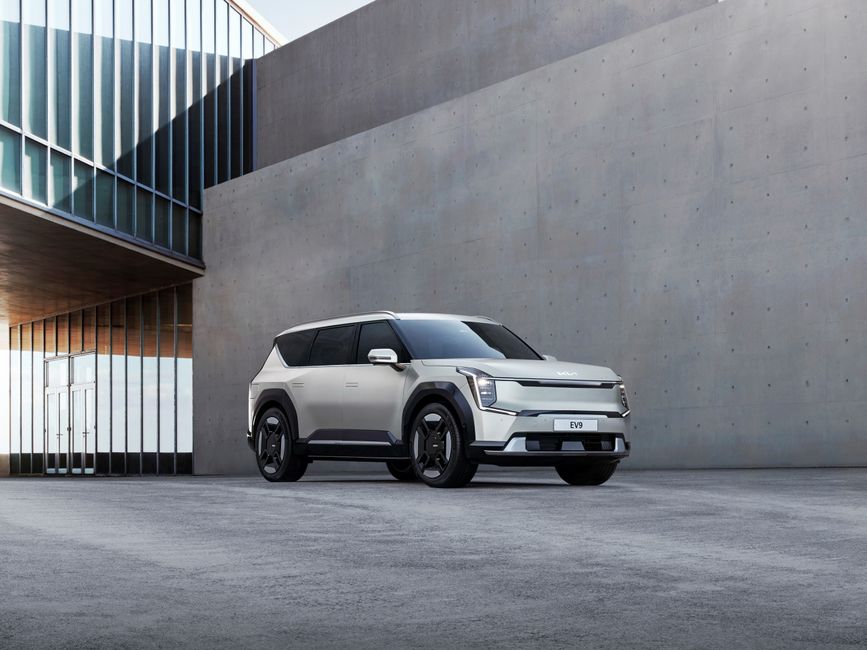
Hyundai Ioniq 9 vs Kia EV9: Comparing specs, range, pricing, and features of the top 3-row electric SUVs in 2026 to find the ultimate winner.
For families seeking a spacious, high-tech, and emissions-free vehicle, the three-row electric SUV market has officially matured. At the forefront of this evolution are two corporate siblings built on the same foundational platform: the newly launched 2026 Hyundai Ioniq 9 and the award-winning 2026 Kia EV9. While they share the same cutting-edge parent-company engineering, their executions target entirely different lifestyles and design philosophies. This comparison matters because choosing between them goes far beyond choosing a brand badge.
For the 2026 model year, both SUVs have received critical updates that directly solve the most prominent pain points of early EV ownership. Most notably, both the Ioniq 9 and the EV9 now come standard with native North American Charging Standard (NACS) ports, granting seamless access to over 21,500 Tesla Superchargers across the continent. Additionally, both vehicles are now fully assembled in the United States, qualifying both models for the full $7,500 federal EV tax credit at the point of sale.
On one side of the garage, the 2026 Hyundai Ioniq 9 represents a sleek, aerostethic approach, styling itself as a highly luxurious “mobile lounge” with maximum interior roominess. On the other side, the 2026 Kia EV9 leans into a bold, boxy, and futuristic aesthetic, reminiscent of a space-age off-roader. This detailed guide breaks down their pricing, specifications, real-world range, and interior features to help you decide which three-row electric SUV deserves a spot in your driveway.
Before diving into the fine-grained details, let us take an at-a-glance look at how the 2026 Hyundai Ioniq 9 and the 2026 Kia EV9 compare across key specifications, pricing tiers, and capabilities. This snapshot highlights where each sibling holds a distinct advantage.
| Specification | 2026 Hyundai Ioniq 9 | 2026 Kia EV9 |
|---|---|---|
| Starting MSRP (Base Trim) | $58,955 ($60,555 with destination) | $54,900 ($56,395 with destination) |
| Battery Options | 110.3 kWh Lithium-Ion (Standard on all trims) | 76.1 kWh (Base Light) / 99.8 kWh (All other trims) |
| EPA Estimated Range | 311 to 335 Miles | 230 to 305 Miles |
| Maximum Horsepower | 422 hp (Performance AWD) | 379 hp (GT-Line AWD) |
| Fast Charging (10% to 80%) | 24 minutes (350-kW DC fast charger) | 20 to 24 minutes (350-kW DC fast charger) |
| Charging Connection | Native NACS (Tesla style) + CCS Adapter Included | Native NACS (Tesla style) + CCS Adapter Sold Separately |
| Max Cargo Space (Seats Folded) | 86.9 Cubic Feet | 81.7 Cubic Feet |
| Wheelbase / Overall Length | 123.2 in / 199.2 in | 122.0 in / 197.2 in |
| US Assembly Location | HMG Metaplant America (Georgia) | Kia Assembly Plant (West Point, Georgia) |
Hyundai Ioniq 9 Pros: Higher base range (335 miles standard), larger interior passenger volume, comes standard with CCS adapters, and boasts a sliding center console.
Hyundai Ioniq 9 Cons: Higher starting price, polarizing bulbous exterior styling, and a heavier footprint that reduces tight cornering agility.
Kia EV9 Pros: Lower entry barrier price, sporty driving dynamics, highly recognizable boxy design, and a shorter overall length that simplifies garage parking.
Kia EV9 Cons: Base trim range is limited to 230 miles, less maximum cargo space, and smaller battery capacity on the higher trims.
The financial differences between these two family-movers begin at the dealership lot. For 2026, the Kia EV9 holds a distinct starting price advantage. The entry-level Kia EV9 Light RWD starts at an MSRP of $54,900. Meanwhile, the base Hyundai Ioniq 9 S RWD starts at $58,955. Kia’s $4,055 price advantage comes with a significant catch: the base EV9 uses a much smaller battery pack.
If you compare the mid-range and top-tier trims, the value equation begins to tilt back toward Hyundai. The Ioniq 9 offers six well-defined configurations: the base S ($58,955), the SE ($62,765), the SEL ($66,320), the Performance Limited ($71,250), the Performance Calligraphy ($74,990), and the flagship Performance Calligraphy Design ($76,490). Kia counters with five primary trims: the Light RWD ($54,900), the Light Long Range RWD ($59,395), the Wind AWD ($65,395), the Land AWD ($70,395), and the GT-Line AWD ($73,395). Because both are built in Georgia, both qualify for the $7,500 federal tax credit, making them highly competitive with traditional gas-powered premium SUVs.
Underneath their stylish sheet metal, both SUVs utilize the robust, modular E-GMP platform, yet they configure their electric motors differently. In its rear-wheel-drive configurations, the base Hyundai Ioniq 9 S delivers 215 horsepower and 258 lb-ft of torque. Kia offers a similar 215-horsepower setup in the base Light trim, but drops to 201 horsepower in the Light Long Range RWD to maximize efficiency.
When stepping up to all-wheel drive, the dynamics change dramatically. The mid-tier Ioniq 9 SE and SEL trims generate a combined 303 horsepower and 446 lb-ft of torque. Kia’s AWD trims, including the Wind and Land, push further to output a combined 379 horsepower and 443 lb-ft of torque. If speed is a top priority, Hyundai’s top-tier Performance trims (Limited and Calligraphy) dominate with a massive 422 horsepower and 516 lb-ft of torque, capable of hitting 0-60 mph in 4.9 seconds. Kia’s performance-oriented GT-Line AWD matches that torque at 516 lb-ft but retains the 379-horsepower cap.
Electric range is where the Hyundai Ioniq 9 asserts its dominance across the board. Hyundai has equipped every single Ioniq 9 trim with a massive 110.3-kWh battery pack. This generous battery configuration ensures that even the lowest-performing, power-heavy AWD Calligraphy trim gets a solid 311 miles of EPA-estimated range. The base Ioniq 9 S RWD leads the family with an exceptional EPA-estimated 335 miles of range.
By comparison, Kia utilizes a dual-battery strategy. The base Kia EV9 Light RWD uses a budget-friendly 76.1-kWh battery, limiting its range to just 230 miles—perfect for suburban driving, but restrictive for road trips. Stepping up to the 99.8-kWh battery unlocks 305 miles on the Light Long Range, which drops to 283 miles on AWD models and 280 miles on the high-end GT-Line AWD.
Charging both vehicles is incredibly fast thanks to their 800V architectures, allowing a 10% to 80% charge in just 24 minutes when using a 350-kW DC fast charger. Thanks to the native NACS ports integrated into both 2026 models, both vehicles plug directly into Tesla Superchargers. However, because older V3 Superchargers operate on a 400V system, both vehicles must use their onboard inverter to boost the voltage. This results in a slightly slower charge time of roughly 36 to 41 minutes at older Tesla stations, though newer V4 Superchargers will deliver the full fast-charging speed.
The battle for interior supremacy highlights the contrasting visions of these two brands. The Hyundai Ioniq 9 is longer and wider, leveraging its 123.2-inch wheelbase to maximize second- and third-row legroom. Its highlight feature is the Universal Island 2.0—a center console that slides back by up to 7.5 inches, giving second-row passengers easy access to cup holders, USB ports, and storage. The cabin is filled with organic curves, physical-feeling haptic buttons, a UV-C sterilization drawer, and available zero-gravity relaxation seats with dynamic massage systems. Cargo space is cavernous, offering up to 86.9 cubic feet with the rear rows folded flat.
The Kia EV9, while slightly more compact with a 122.0-inch wheelbase, utilizes its boxy roofline to offer impressive third-row headroom. Inside, the EV9 features a spectacular near-30-inch triple-panorama digital display, standard heated and ventilated front-row seats, and a premium 14-speaker Meridian sound system on upper trims. It offers up to 81.7 cubic feet of maximum cargo capacity. The EV9’s layout feels slightly more driver-focused and traditional, utilizing rugged materials and highly intuitive switches that will feel instantly familiar to those upgrading from gas-powered SUVs.
Choosing between these two top-tier electric vehicles comes down to identifying your family’s daily driving habits, budget limits, and stylistic preferences. Both offer exceptional safety profiles, but they fit different priorities.
Choose the Hyundai Ioniq 9 if:
Choose the Kia EV9 if:
Yes. Because both vehicles are built in the United States, they are eligible for the full $7,500 federal EV tax credit. Hyundai assembles the Ioniq 9 at its state-of-the-art Metaplant in Bryan County, Georgia, while Kia produces the EV9 at its plant in West Point, Georgia. This tax credit can be applied directly at the dealership to lower your purchase price or monthly lease payment.
Yes, for the 2026 model year, both the Hyundai Ioniq 9 and Kia EV9 come standard with native North American Charging Standard (NACS) ports. This allows you to plug directly into Tesla Supercharger cables without needing a cumbersome physical adapter. Hyundai also includes a CCS adapter with the purchase of the Ioniq 9 to allow charging at older public fast-charging stations.
The Hyundai Ioniq 9 is the clear winner when it comes to interior space. It has a longer wheelbase (123.2 inches vs. 122.0 inches) and more overall length than the EV9. This translates to better legroom in the second and third rows and a larger maximum cargo capacity of 86.9 cubic feet compared to the EV9’s 81.7 cubic feet.
Using a Level 2 (240V) home charger connected to a 50-amp breaker, both vehicles can charge from 10% to 100% overnight. This typically takes about 7 to 9.5 hours depending on the battery size (the Ioniq 9’s larger 110.3-kWh battery takes slightly longer to completely fill than the EV9’s 99.8-kWh pack).
Both the 2026 Hyundai Ioniq 9 and the 2026 Kia EV9 are phenomenal family vehicles that represent the very best of modern electric vehicle technology. They charge incredibly fast, offer beautiful interiors, and eliminate range anxiety with native Tesla Supercharger access. However, when comparing them head-to-head, there can only be one overall winner.
The Hyundai Ioniq 9 is our recommendation as the best overall 3-row electric SUV for 2026. By making the massive 110.3-kWh battery standard across all trims, Hyundai ensures that every buyer gets premium range (above 311 miles) regardless of how much they spend. When you combine that exceptional range with its superior cargo space, sliding center console, and highly luxurious cabin, the Ioniq 9 edges out its sibling as the ultimate electric family hauler.
That said, if you want a bold aesthetic or want to keep your starting price as close to $50,000 as possible, the Kia EV9 remains a spectacular, budget-conscious alternative that delivers nearly identical fast-charging performance.
Prices and features mentioned are accurate as of the date of publication. Always check the official provider website for the most current pricing and availability.




