Physical Address
304 North Cardinal St.
Dorchester Center, MA 02124
Physical Address
304 North Cardinal St.
Dorchester Center, MA 02124

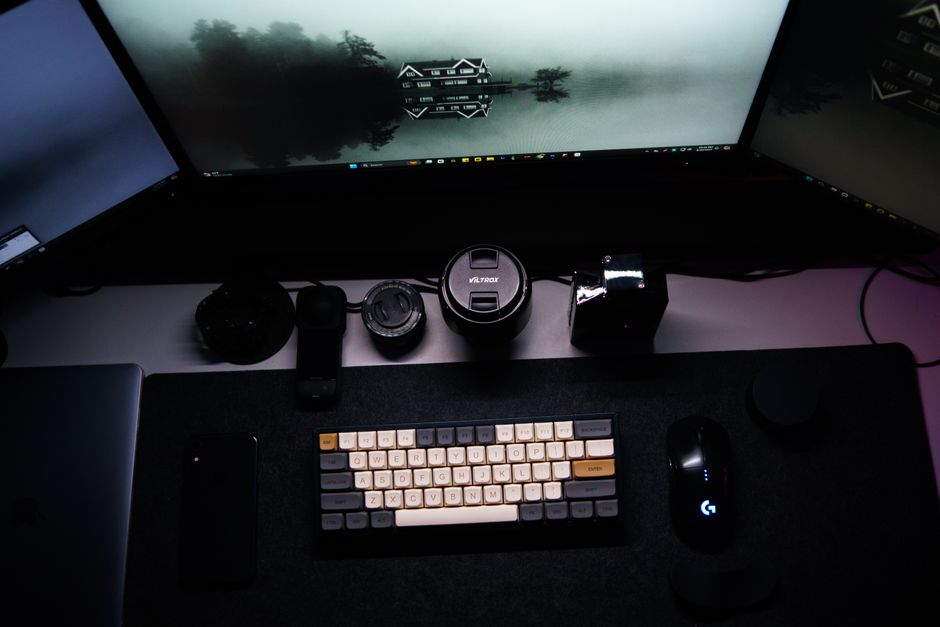
We compare the 2026 Logitech G Pro X2 Superstrike and Razer Viper V4 Pro. Discover which flagship gaming mouse rules in specs, price, and performance.
When it comes to competitive PC gaming, the mouse is more than just a pointer—it is an extension of your hand, a critical interface where milliseconds decide the line between virtual glory and sudden defeat. Over the years, we have seen major shifts in peripheral design, from the race for higher DPI numbers to the quest for lighter shells. However, 2026 has brought us to a fascinating new crossroads. The industry’s two titans, Logitech and Razer, have released their absolute best flagship hardware to date, but they have taken fundamentally different paths to reach gaming perfection.
On one side stands the Logitech G Pro X2 Superstrike, a retail marvel priced at $179.99 that completely reimagines how a mouse button functions. By introducing the Haptic Inductive Trigger System (HITS), Logitech has done away with traditional mechanical microswitches, introducing customizable click actuation and rapid trigger points that mimic the revolution of Hall Effect gaming keyboards. On the other side is the Razer Viper V4 Pro, a $159.99 performance weapon designed for esports purists who prioritize weight and raw speed. Weighing in at an incredible 49 grams, the Viper V4 Pro features a state-of-the-art Focus Pro 50K Gen-3 sensor and fourth-generation optical switches, refined to extract every drop of tracking accuracy and physical responsiveness.
For serious gamers, choosing between these two giants in 2026 is no easy task. It is no longer just a question of which mouse feels more comfortable; it is a choice between Logitech’s groundbreaking analog click customization and Razer’s ultra-lightweight, high-polling-rate masterclass. In this comprehensive comparison, we will break down the specifications, the real-world performance, and the unique tech that defines both mice to help you decide which one deserves a permanent place on your desk.
Before diving into the intricate details of each mouse, it is helpful to look at how they compare on paper. While specifications do not tell the entire story, they highlight the divergent design philosophies of Logitech and Razer in 2026. Below is an at-a-glance comparison of the Logitech G Pro X2 Superstrike and the Razer Viper V4 Pro.
| Specification | Logitech G Pro X2 Superstrike | Razer Viper V4 Pro |
|---|---|---|
| Launch Price | $179.99 USD | $159.99 USD |
| Weight | 61 grams (60g without puck) | 49 grams (52g for Esports Green) |
| Sensor Type | HERO 2 Optical Sensor | Focus Pro 50K Optical Gen-3 |
| Maximum DPI | 44,000 DPI | 50,000 DPI |
| Max Tracking Speed & Acceleration | 888 IPS / 88 G | 930 IPS / 90 G |
| Max Polling Rate | Up to 8,000 Hz (LIGHTSPEED) | Up to 8,000 Hz (HyperSpeed) |
| Switch Technology | Haptic Inductive Trigger System (HITS) | Razer Gen-4 Optical Switches |
| Battery Life | Up to 90 hours | Up to 180 hours (1,000 Hz) / 45 hours (8,000 Hz) |
| Dimensions | 125.0 mm x 63.5 mm x 40.0 mm | 127.1 mm x 63.9 mm x 39.9 mm |
| Software Utility | Logitech G Hub | Web-based Razer Synapse |
Logitech G Pro X2 Superstrike Pros:
Logitech G Pro X2 Superstrike Cons:
Razer Viper V4 Pro Pros:
Razer Viper V4 Pro Cons:
The biggest story in gaming peripherals in 2026 is Logitech’s departure from standard physical microswitches in the G Pro X2 Superstrike. For decades, mice have relied on mechanical or optical switches that close an electrical circuit when pressed. While these switches have become incredibly fast, they still suffer from physical limitations, including pre-travel, post-travel, and the necessity of bounce delay to prevent double-clicking. Logitech solved this by developing the Haptic Inductive Trigger System, or HITS. This technology replaces traditional switches with an analog sensor that tracks exactly how far you have depressed the main mouse button, coupled with a highly precise haptic motor that simulates the crisp snap of a physical click.
The real-world implications of HITS are profound. In the companion software, users can configure the actuation distance of their left and right clicks with ten different levels, starting as shallow as 0.1mm. For perspective, standard mice require about 0.6mm of travel before registering a click. By reducing physical movement to almost zero, Logitech has effectively eliminated physical switch click latency. Additionally, the G Pro X2 Superstrike offers five rapid-trigger reset points. This allows the button to reset the moment your finger begins to lift, enabling lightning-fast click repetition that was previously physically impossible.
Beyond the HITS click mechanism, the G Pro X2 Superstrike is equipped with Logitech’s HERO 2 sensor. Offering sensitivity up to 44,000 DPI, 888 IPS tracking speed, and 88 G of acceleration, the tracking is flawless. It supports wireless polling rates up to 8,000 Hz via Logitech’s Lightspeed technology. Despite the power-hungry haptic motors and 8,000 Hz polling, the built-in rechargeable battery manages to deliver up to 90 hours of run time, a highly commendable feat given the complex tech packed inside. Weighing in at 61 grams, it is not the lightest mouse on the market in 2026, but the structural integrity is robust, and the classic, safe G Pro shape remains highly comfortable for claw and palm grip users alike.
Razer’s response to Logitech’s analog trigger is the Viper V4 Pro, a masterpiece of lightweight engineering that aims to refine the competitive formula to absolute perfection. In an era where competitive players examine every fraction of a gram, Razer has managed to shave the Viper down to an astonishing 49 grams. Unlike ultra-lightweight mice from niche boutique brands, the Viper V4 Pro achieves this sub-50g weight without relying on honeycomb holes, maintaining a solid, premium shell that is built to withstand intense, high-stress gaming sessions.
Underneath the hood, the Viper V4 Pro packs Razer’s third-generation Focus Pro 50K optical sensor. While 50,000 DPI is far beyond what any human player needs, the underlying technology yields phenomenal tracking benefits. The sensor features unmatched accuracy with 90 G acceleration and a tracking speed of 930 IPS. What truly sets Razer’s tracking apart is Frame Sync, a technology that synchronizes the mouse’s sensor reports precisely with your computer monitor’s refresh cycles. This ensures that the tracking on your screen feels incredibly smooth, particularly during high-speed tracking scenarios in fast-paced shooters like Apex Legends.
To actuate clicks, the Viper V4 Pro relies on Razer Gen-4 Optical Mouse Switches. Rated for over 100 million clicks, these optical switches completely avoid double-clicking issues and deliver ultra-low input latency. However, they are exceptionally loud and tactile, which has divided some users who prefer a quieter acoustic profile. For wireless connectivity, the Viper V4 Pro includes the HyperSpeed Gen-2 dongle, allowing the mouse to hit a native 8,000 Hz polling rate right out of the box. Battery life is also a major highlight, reaching up to 180 hours at a standard 1,000 Hz polling rate, and up to 45 hours at 8,000 Hz.
One of the most pleasant surprises of the Viper V4 Pro in 2026 is Razer’s shift toward a web-based Synapse utility. Rather than forcing players to install a resource-heavy desktop application, users can now adjust DPI, polling rates, and calibrate their mouse directly through a clean, fast web-based browser interface. This is a massive quality-of-life improvement for competitive players who frequently travel to tournaments or dislike background system bloat.
Selecting between the Logitech G Pro X2 Superstrike and the Razer Viper V4 Pro requires looking beyond pure specifications to examine how each mouse aligns with your hand size, grip style, and competitive needs.
The first major factor to consider is the ergonomics and shape of the shells. The Logitech G Pro X2 Superstrike retains the legendary, safe, and somewhat bulbous shape that has defined the G Pro lineup for years. Its high middle hump provides comfortable palm support, making it an excellent all-rounder for hybrid claw-palm grips. In contrast, the Razer Viper V4 Pro is significantly flatter and lower-profile. This low-profile design is tailored specifically for players who utilize aggressive claw grips or fingertip grips, allowing for rapid, micro-adjustments using only the fingers.
The second factor is weight and glide. At 49 grams, the Razer Viper V4 Pro glides across mousepads with almost zero friction, which is highly advantageous for low-sensitivity players who make sweeping arm movements. If your competitive edge relies on fast-paced, flick-heavy aim, the lighter mass of the Viper V4 Pro will likely reduce wrist fatigue over long hours. Conversely, the 61-gram Logitech G Pro X2 Superstrike offers a slightly more grounded, stable feel. Players who struggle with over-flicking or who prefer a bit of physical resistance to stabilize their tracking may find the 61-gram weight profile to be the perfect sweet spot.
Finally, you must choose between click innovation and classic click tactility. If you are intrigued by the prospect of customizing your click depth down to 0.1mm and want to experience the cutting-edge of solid-state trigger technology, the Logitech G Pro X2 Superstrike is the clear choice. Its HITS technology provides an incredibly fast and tunable response that feels unlike any other mouse on the market. However, if you prefer the highly deliberate, loud, mechanical-feeling crunch of a traditional optical microswitch, the Razer Viper V4 Pro is the better fit.
What is HITS on the Logitech G Pro X2 Superstrike, and how does it work?
HITS stands for Haptic Inductive Trigger System. It replaces traditional mechanical switches with analog inductive sensors that track the exact physical travel of the mouse buttons. This allows users to set custom click-activation points (as low as 0.1mm) in the software. A miniature haptic motor beneath the button vibrates to simulate a physical click, giving near-instant click registration with the tactile feel of a traditional switch.
Is an 8,000 Hz polling rate actually noticeable?
While the difference between 1,000 Hz and 8,000 Hz is subtle, competitive players using high-refresh-rate monitors will notice a smoother cursor path and reduced micro-stuttering. However, running your mouse at 8,000 Hz consumes significantly more CPU resources and reduces battery life on both mice. For casual gaming, 1,000 Hz or 2,000 Hz is usually more than sufficient.
How long do the batteries last on these mice?
The Razer Viper V4 Pro is the battery champion, offering up to 180 hours of use at a standard 1,000 Hz polling rate, which drops to around 45 hours at 8,000 Hz. The Logitech G Pro X2 Superstrike delivers up to 90 hours of battery life. Keep in mind that using high-polling-rate modes and aggressive haptic feedback settings on the Logitech will drain the battery faster.
Which mouse is better for claw-grip gamers?
Both mice are highly capable for claw grips, but they suit different hand sizes and humps. The Razer Viper V4 Pro is lower-profile, making it ideal for pure claw or fingertip grips, especially for medium-to-small hands. The Logitech G Pro X2 Superstrike features a taller hump in the middle, making it better suited for palm-claw hybrid grips or players with larger hands who want more palm support.
In 2026, the battle for the best gaming mouse has yielded two phenomenal, yet distinctly different contenders. Deciding on a winner comes down to what you value more: revolutionary click customization or ultra-lightweight esports refinement.
If you are looking for the absolute peak of modern technological innovation, the Logitech G Pro X2 Superstrike is our highly recommended winner. By introducing the Haptic Inductive Trigger System (HITS), Logitech has fundamentally advanced how a mouse communicates with a PC. The ability to tune actuation down to 0.1mm, paired with five rapid-trigger reset points, delivers a tangible, competitive advantage in click speed that optical switches simply cannot match. It represents the first major shift in mouse-click mechanics in decades, making its $179.99 asking price well worth it for players seeking the bleeding edge of performance.
However, if you are an esports purist who believes that a mouse should be as light and unobstructed as possible, the Razer Viper V4 Pro is an incredible alternative. At 49 grams, it is a marvel of solid-shell design, boasting a flawless 50,000 DPI sensor, exceptional 180-hour battery life, and the convenience of web-based software configuration. While it lacks the customizable analog click depth of the Logitech, its ultra-lightweight physics and lower $159.99 price point make it the ultimate weapon for fast-paced, low-sensitivity FPS players.
Ultimately, both Logitech and Razer have set new benchmarks for 2026. If you want a mouse that feels like a weightless feather, go with Razer. If you want a mouse that redefines mechanical speed with customizable analog clicks, make the Logitech G Pro X2 Superstrike your weapon of choice.
Prices and features mentioned are accurate as of the date of publication. Always check the official provider website for the most current pricing and availability.