Physical Address
304 North Cardinal St.
Dorchester Center, MA 02124
Physical Address
304 North Cardinal St.
Dorchester Center, MA 02124

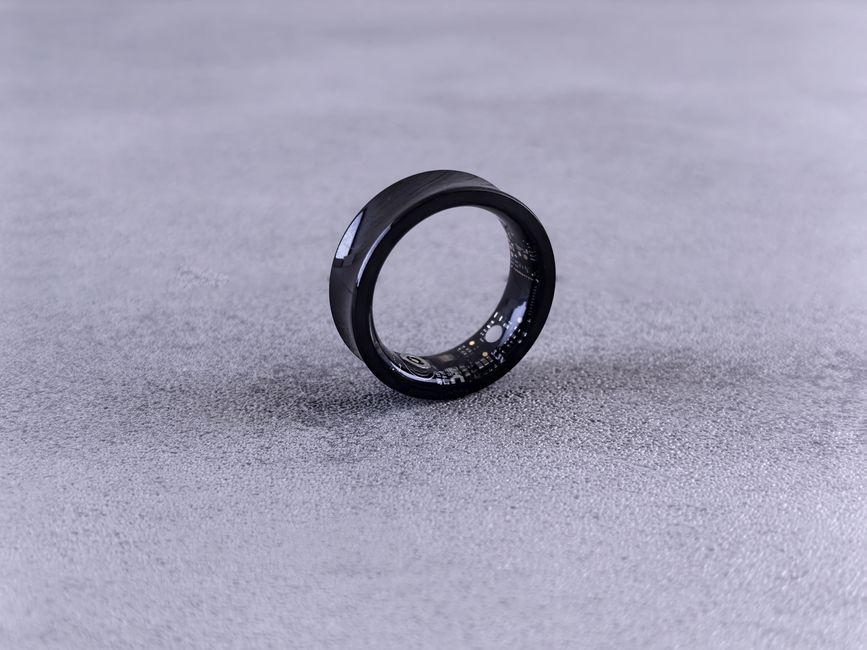
Compare Oura Ring 4, Samsung Galaxy Ring, and RingConn Gen 2. Read our deep dive into specs, pricing, battery life, and find the best smart ring in 2026.
For years, smartwatches dominated the wearable technology landscape. However, by 2026, a quiet revolution has taken place. The screen-free, highly discrete smart ring has officially gone mainstream, offering a lightweight alternative for 24/7 health tracking. Many users now prefer these sleek, jewelry-like bands over bulky watches.
Because fingers contain digital arteries close to the skin’s surface, these rings can capture incredibly clean biometric signals. This unique design often surpasses wrist-based trackers in raw accuracy for sleep and recovery data. They also eliminate the distraction of constant screen notifications, promoting a more mindful lifestyle.
Today, the smart ring market is more competitive than ever. While premium new releases like the Oura Ring 5 and the RingConn Gen 3 have recently debuted in mid-2026, their immediate predecessors have quickly become the absolute sweet spot for smart ring buyers. The Oura Ring 4, Samsung Galaxy Ring, and RingConn Gen 2 are now widely available, highly stable, and frequently discounted.
These three models represent distinct philosophies in wearable tech. You can choose the uncompromised, data-heavy ecosystem, the seamless hardware companion, or the budget-friendly battery king. At ComparisonMath, we believe in looking past marketing hype to evaluate the hard numbers.
In this comprehensive comparison, we will break down the features, real-world battery life, biometric accuracy, and—critically—the long-term cost of ownership for these top rings. By the end of this guide, you will know exactly which smart ring deserves a spot on your hand.
Before diving into our detailed breakdown, here is a high-level look at how these three smart rings stack up in 2026 across pricing, dimensions, and core features.
| Feature | Oura Ring 4 | Samsung Galaxy Ring | RingConn Gen 2 |
|---|---|---|---|
| Launch Price | $349.00 (Often discounted in 2026) | $399.99 | $299.00 |
| Subscription Fee | $5.99/mo or $69.99/year | Free (No Subscription) | Free (No Subscription) |
| Estimated Battery Life | Up to 8 days | Up to 7 days | 10 to 12 days |
| Charging Case | Puck charger (USB-C) | Clam-shell case (with built-in battery) | Earbud-style case (up to 150 days total) |
| Material & Design | Full titanium, flat inner shell | Titanium, concave exterior shell | Titanium and epoxy, ultra-thin (2mm) |
| Weight | 3.3g to 5.2g | 2.3g to 3.0g | 2.0g to 3.0g |
| OS Compatibility | iOS and Android | Android Only (Best with Galaxy) | iOS and Android |
| Key Standout Feature | Smart Sensing (18-path biometrics) | Double-pinch gestures & Galaxy AI | Sleep Apnea monitoring & insane battery |
Each of these three rings targets a slightly different audience. In this section, we will explore the design, sensor accuracy, software ecosystem, and long-term performance of each device to reveal where they truly excel.
Released in late 2024, the Oura Ring 4 has spent the last year and a half establishing itself as the undisputed king of biometric accuracy. Oura achieved this by redesigning its sensor layout to implement a revolutionary architecture called Smart Sensing. Instead of using raised physical nodes inside the ring that press into your skin, the Oura Ring 4 features recessed, completely flat sensors.
Powered by an 18-path multi-wavelength photoplethysmography (PPG) subsystem, the ring automatically adapts to your finger’s movement and rotation. This ensures constant skin contact and research-grade accuracy throughout the day and night. The ring is exceptionally broad in its sizing, ranging from US size 4 up to size 15.
The exterior is crafted from lightweight titanium, weighing between 3.3 and 5.2 grams depending on the size, with a uniform thickness of 2.88mm. In terms of battery, it comfortably lasts up to 8 days on a single charge. However, the most significant hurdle for Oura remains its ongoing business model.
While the ring starts at $349, unlocking your detailed sleep, stress, and recovery trends requires a mandatory subscription of $5.99 per month or $69.99 per year. Without this subscription, the companion app only displays basic, high-level daily scores. This recurring fee is a major point of consideration for budget-conscious buyers.
Where Oura dominates the competition is in its companion software. The app doesn’t just display raw metrics; it provides actionable, personalized coaching. It excels in women’s health tracking via Cycle Insights and natural temperature monitoring. It also features a highly praised Daytime Stress metric, which monitors heart rate variability (HRV) and skin temperature to pinpoint when you are pushing too hard.
Now that the Oura Ring 5 has launched in mid-2026, the Oura Ring 4 is frequently found on discount. This makes its premium, highly polished hardware more accessible than ever before. It remains the top choice for pure health enthusiasts.
Launched in July 2024, the Samsung Galaxy Ring represents a major tech giant’s first true foray into the smart ring space. Designed to be a lightweight, comfortable companion for 24/7 wear, the Galaxy Ring is remarkably sleek. It features a unique concave outer design, which actively helps minimize scratches from everyday objects like keys or gym equipment.
It is incredibly light, weighing a mere 2.3 to 3.0 grams, and comes in nine sizes ranging from US 5 to 13. On paper, its battery lasts up to 7 days. It charges inside an elegant, clear clam-shell charging case that features its own built-in battery, allowing you to charge your ring on the go.
Perhaps the biggest appeal of the Samsung Galaxy Ring is its financial model. There are absolutely no subscription fees. All of your health metrics, AI-driven insights, and sleep tracking are included for the flat purchase price of $399.99.
However, this financial freedom comes with severe platform lock-in. The Galaxy Ring is entirely incompatible with iPhones; you must have an Android device running Android 11 or higher to use it. Furthermore, its most innovative features are locked exclusively to Samsung Galaxy phones.
For example, the double-pinch gesture that lets you take a photo or dismiss an alarm by tapping your thumb and ring finger together requires a Galaxy device. The Energy Score powered by Galaxy AI is also optimized specifically for users within the Samsung ecosystem. If you are an iOS user, this immediately removes the Galaxy Ring from your list.
While the Galaxy Ring is an outstanding, low-maintenance tracker, long-term reviews in 2026 have highlighted a few areas of concern. Some long-term users have reported noticeable battery degradation after nearly two years of continuous use. Additionally, while the integration with Samsung Health is beautiful, the depth of its fitness and recovery coaching is slightly simplified compared to Oura’s mature software platform.
If you are looking for maximum hardware value and industry-leading battery life, the RingConn Gen 2 is the standout champion of 2026. Originally launched via Kickstarter in late 2024, the RingConn Gen 2 shook the market by offering high-end features at a very reasonable $299 price tag. Even more impressively, it did so with absolutely zero subscription fees.
At just 2.0mm thick and weighing between 2.0 and 3.0 grams, it is thinner and lighter than both the Oura Ring 4 and the Galaxy Ring. This makes it incredibly comfortable for overnight wear and high-grip activities. It is available in sizes 6 to 14.
The headline feature of the RingConn Gen 2 is its incredible battery performance. While its competitors brag about a week of battery life, the RingConn Gen 2 comfortably runs for 10 to 12 days on a single charge. When you do eventually need to charge it, the included earbud-style charging case holds enough juice to extend your total time away from a wall outlet to an astonishing 150 days.
This makes it the ultimate wearable for frequent travelers or those who suffer from charger anxiety. But RingConn didn’t sacrifice functionality for battery life. The Gen 2 is famous for being a pioneer in sleep health, introducing a deep-learning sleep apnea monitoring algorithm that operates with a validated 90.7% accuracy rate.
It tracks heart rate, HRV, blood oxygen (SpO2), and skin temperature variations throughout the night. While the companion app is slightly less visually polished than Oura’s, it provides incredibly transparent, raw data. Now that the RingConn Gen 3 has made its debut in mid-2026, the Gen 2 remains a highly sought-after device for those looking for elite sleep tracking under $300.
Choosing the best smart ring comes down to your primary phone, your budget, and how you prefer to digest your health data. Let us break down the mathematical and practical considerations to help you choose the right fit.
Your smartphone choice might make this decision for you immediately. If you are an iPhone user, the Samsung Galaxy Ring is completely off the table. Your choice lies between the premium, subscription-supported ecosystem of the Oura Ring 4 and the ultra-efficient, fee-free RingConn Gen 2.
Conversely, if you are a dedicated Samsung Galaxy user who already wears a Galaxy Watch, the Galaxy Ring integrates beautifully into your existing Samsung Health app. It provides a unified Energy Score while dynamically sharing tracking duties with your smartwatch to save battery.
For budget-conscious buyers, it is vital to calculate the total cost of ownership over a standard two-year lifecycle. Many buyers overlook Oura’s monthly subscription fee, which dramatically shifts the financial equation over time.
Over two years, the RingConn Gen 2 costs exactly $299 upfront with $0 subscription. The Samsung Galaxy Ring sits at $399 upfront with $0 subscription. Meanwhile, the Oura Ring 4 costs $349 upfront plus $143.76 in subscription fees, totaling $492.76.
Mathematically, the RingConn Gen 2 is nearly $200 cheaper than the Oura Ring 4 over two years. Even if you manage to grab the Oura Ring 4 on a 2026 discount for around $249, the ongoing subscription means it will still eventually cost more than the RingConn. If you plan to wear your ring for three or four years, that price gap only continues to widen.
Consider what you actually want your ring to do. If you want elite sleep coaching and women’s health tracking, choose the Oura Ring 4. Oura’s years of software development shine through in its cycle tracking and its ability to turn raw metrics into daily Readiness guides.
If you want to monitor sleep quality and potential breathing issues, choose the RingConn Gen 2. Its sleep apnea detection and SpO2 tracking algorithms are top-tier, and its lighter design makes it the easiest to wear to bed. If you want a low-profile, passive daily tracker, choose the Samsung Galaxy Ring. It blends seamlessly into the background, requires no active maintenance, and works wonderfully alongside Android health apps.
Technically, no, but practically, yes. Without the active $5.99/month Oura Membership, the companion app will only show you three high-level daily scores: Sleep, Readiness, and Activity. You will be completely locked out of detailed heart rate graphs, sleep stage breakdowns, HRV trends, stress tracking, and historical data. If you do not want to pay a subscription, we highly recommend choosing the RingConn Gen 2 or the Samsung Galaxy Ring instead.
While all three rings are made of highly durable titanium, we strongly advise against wearing them during heavy weightlifting or pull-up routines. Metal-on-metal contact will inevitably cause micro-scratches on your premium ring’s finish. Furthermore, gripping heavy barbells can cause the ring to press painfully into your finger, risking skin pinching or a dangerous condition known as ring avulsion. It is best to slip the ring off during strength training and rely on a smartwatch or manual logging.
The RingConn Gen 2 uses a proprietary deep-learning algorithm trained on hundreds of clinical sleep studies. In internal laboratory trials, its Obstructive Sleep Apnea (OSA) screening feature achieved a 90.7% accuracy rate in identifying apnea events compared to professional polysomnography (PSG) setups. While it is an outstanding tool for proactive screening and identifying nightly breathing disruptions, it should not replace a medical-grade, doctor-ordered sleep study if you suspect you have a chronic condition.
No, none of these smart rings have a built-in GPS receiver. Including a GPS chip would severely compromise the battery life and require a much bulkier design. Instead, all three rings use connected GPS, meaning they rely on your smartphone’s GPS to map your outdoor runs, walks, or cycling sessions. You must bring your phone with you if you want to track your route.
In 2026, the smart ring market has matured to a point where all three of these devices are exceptional. However, there is a clear winner depending on your specific profile:
The Best Smart Ring Overall is the Oura Ring 4. Despite its recurring subscription fee, the Oura Ring 4 remains the most accurate, polished, and insightful health wearable on the market. Its Smart Sensing technology provides flawless data, and the companion app is years ahead of the competition in terms of actionable coaching. If you want the absolute best and are willing to pay for the subscription, this is the ring to buy.
The Best Value Smart Ring is the RingConn Gen 2. For those who refuse to pay a subscription fee, the RingConn Gen 2 is a masterpiece of modern engineering. With a 12-day battery life, an included portable charging case, an ultra-thin 2.0mm profile, and groundbreaking sleep apnea detection, it offers 90% of Oura’s capabilities at a fraction of the long-term price.
The Best for Android Ecosystem Loyalists is the Samsung Galaxy Ring. If you are fully integrated into the Samsung universe, the Galaxy Ring is a beautiful, low-maintenance accessory. With its clear charging case, zero subscription fees, and smart gesture controls, it is the perfect companion to a Galaxy phone.
Prices and features mentioned are accurate as of the date of publication. Always check the official provider website for the most current pricing and availability.