Physical Address
304 North Cardinal St.
Dorchester Center, MA 02124
Physical Address
304 North Cardinal St.
Dorchester Center, MA 02124

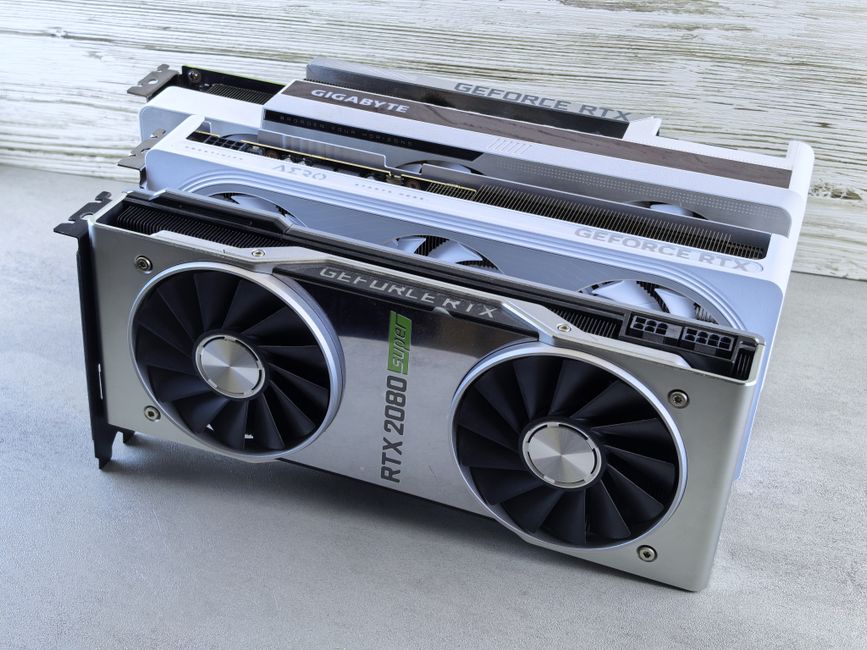
NVIDIA's RTX 5070 vs AMD's RX 9070 XT. Compare 2026 specs, benchmarks, and retail prices to find the best mid-range graphics card for your PC build.
The mid-range graphics card market in 2026 is nothing short of a battleground. For years, PC gamers have sought the sweet spot where performance, thermals, and price converge to deliver stellar 1440p and entry-level 4K experiences. This year, that battle is fought fiercely between NVIDIA’s Blackwell-based GeForce RTX 5070 and AMD’s RDNA 4-powered Radeon RX 9070 XT. Released within a day of each other in early March 2025, these two cards have had ample time to mature, settle on driver updates, and display their real-world capabilities to the PC building community.
However, the economic landscape of 2026 has introduced a massive wild card to this classic rivalry. A dramatic spike in memory and storage prices, coupled with intense AI-datacenter demand, has driven GPU prices wild. This ‘RAMpocalypse’ has caused the price of Team Green’s cards to skyrocket on the retail market, whereas Team Red’s offerings have managed to remain relatively close to their initial launching prices. Comparing these cards isn’t just a matter of matching on-paper specifications; it requires examining what these GPUs actually cost today in late 2026 and how they perform across contemporary games.
Whether you are upgrading an older setup or configuring a fresh system, deciding between NVIDIA’s software ecosystem and AMD’s raw power-per-dollar ratio is a critical decision. In this guide, we will break down the architectural differences, real-world benchmarks, and exact pricing to help you make the right investment. Let us dive into the ultimate mid-range GPU showdown of 2026.
To give you an immediate overview of how these two mid-range giants stack up, we have compiled their key technical specifications, launch pricing, and current 2026 market values below:
| Feature / Spec | NVIDIA GeForce RTX 5070 | AMD Radeon RX 9070 XT |
|---|---|---|
| Architecture | Blackwell (TSMC 4N Custom) | RDNA 4 (TSMC N4P, 4nm) |
| Release Date | March 5, 2025 | March 6, 2025 |
| Launch MSRP | $549 USD | $599 USD |
| Current Retail Price (August 2026) | $750 – $899 USD (Inflated) | $549 – $709 USD (More Stable) |
| VRAM Capacity & Type | 12 GB GDDR7 | 16 GB GDDR6 |
| Memory Bus | 192-bit | 256-bit |
| Cores (Shaders) | 6,144 CUDA Cores | 4,096 Stream Processors |
| Ray Tracing Cores | 48 (4th Gen) | 64 (RDNA 4 Enhanced) |
| AI / Tensor Cores | 192 (5th Gen) / 988 TOPS | 128 Matrix Cores |
| Total Board Power (TBP) | 250W | 304W |
| Primary Upscaling Technology | DLSS 4 (Multi Frame Generation) | FSR 4 (AI-based Frame Gen) |
To truly understand how these GPUs perform, we must look beyond basic numbers and analyze their respective architectures, hardware strengths, and current pricing strategies in today’s market.
The NVIDIA GeForce RTX 5070 is built on the advanced Blackwell architecture, marking a monumental shift in how Team Green structures its mid-range catalog. Utilizing a TSMC custom 4N node, the card houses 6,144 CUDA cores and is paired with a highly progressive 12 GB of GDDR7 memory. While the 192-bit bus width is somewhat narrow, the ultra-fast GDDR7 memory boasts an effective speed of 28 Gbps, pushing overall bandwidth to an impressive 672 GB/s. This helps alleviate potential bottlenecks at higher resolutions like 1440p and entry-level 4K.
One of the card’s greatest selling points is its cutting-edge neural processing capability. Equipped with 192 fifth-generation Tensor Cores and delivering up to 988 TOPS of AI compute, the RTX 5070 excels in artificial intelligence workloads. It also introduces support for DLSS 4 with Multi Frame Generation, a game-changing software suite that creates smooth, high-fidelity frames using deep learning. For ray tracing enthusiasts, the card features 48 fourth-generation RT cores that handle complex global illumination and path tracing far better than its predecessors.
However, the real controversy surrounding the RTX 5070 in 2026 is its actual retail pricing. Although NVIDIA launched the card with an attractive $549 MSRP, massive retail price hikes in mid-2026 have shifted its market position. Due to severe shortages and a surge in secondary demand, the median price for a new RTX 5070 on Newegg has spiked to around $899.99, while third-party sellers on Amazon list it closer to $750. This premium makes it difficult to justify for budget-conscious gamers, pushing the Blackwell GPU into a higher pricing tier than originally intended.
AMD took a very different approach with the Radeon RX 9070 XT, utilizing the RDNA 4 architecture to target pure value and rasterization supremacy. Built on TSMC’s 4nm N4P process, the RX 9070 XT features 4,096 Stream Processors and a monolithic Navi 48 die. Unlike NVIDIA’s 12 GB offering, AMD has generously equipped the RX 9070 XT with 16 GB of GDDR6 VRAM running on a wider 256-bit bus. Even though GDDR6 lacks the raw speed of GDDR7, the massive 16 GB frame buffer ensures the card can load ultra-high-resolution textures in modern games without stuttering.
In terms of raw rasterization performance, the RX 9070 XT is a beast. In traditional non-ray-traced games, it consistently outperforms the RTX 5070 by approximately 17% to 23%, and in several instances, it goes toe-to-toe with the more expensive RTX 5070 Ti. Furthermore, AMD’s RDNA 4 architecture introduces heavily upgraded ray tracing engines. While historically a weak point for Team Red, the RX 9070 XT features 64 hardware RT acceleration cores that drastically reduce the performance penalty of turning on ray-traced reflections and lighting. AMD’s newly updated FSR 4 also relies on neural processing to handle frame generation, closing the feature gap with NVIDIA’s DLSS.
Financially, AMD represents the smarter choice for most builders in 2026. While launched at a $599 MSRP, the RX 9070 XT’s pricing has remained incredibly stable compared to its NVIDIA rival. It is frequently found on Amazon and Newegg between $599 and $709, and lucky buyers have even spotted deals dropping it down to $549 at retailers like Walmart. This stability makes the RX 9070 XT an incredibly attractive option, offering excellent 1440p and native 4K gaming performance without the steep premium currently demanded by Team Green.
Selecting the right mid-range graphics card in 2026 comes down to assessing your gaming preferences, hardware requirements, and budget constraints. Both cards have distinct characteristics that suit different types of PC builders.
Is 12 GB of VRAM enough for gaming in 2026?
While 12 GB of VRAM is still highly capable for modern 1440p gaming, some AAA titles on ultra settings are beginning to push past this limit. AMD’s 16 GB on the RX 9070 XT offers much better longevity and smoother rendering for high-resolution textures in the long term.
What power supply do I need for these GPUs?
For the NVIDIA RTX 5070, a high-quality 650W power supply is sufficient. For the AMD Radeon RX 9070 XT, which has a higher total board power of 304W, we recommend at least a 750W to 800W PSU to safely handle system-wide power spikes.
Does FSR 4 compare well against DLSS 4 in 2026?
Yes, AMD’s FSR 4 represents a massive leap forward by utilizing AI-based upscaling and frame generation. While NVIDIA’s DLSS 4 still holds a slight edge in image clarity and motion handling, FSR 4 has closed the quality gap significantly, making upscaling a viable option on both platforms.
Why are GPU prices so high right now in late 2026?
The hardware market is currently experiencing a ‘RAMpocalypse,’ where the rising cost of memory and high demand for AI hardware have inflated retail prices. NVIDIA GPUs have been affected most severely, driving up the retail price of the RTX 5070 well past its original launch MSRP.
Both the NVIDIA GeForce RTX 5070 and AMD Radeon RX 9070 XT are outstanding mid-range graphics cards, but the winner of this 2026 comparison is dictated by current market realities. Under normal pricing circumstances, the choice would be a toss-up between NVIDIA’s superior feature set and AMD’s raw power. However, with the RTX 5070 frequently selling at a premium of $750 to $899, it is incredibly difficult to recommend to the average PC builder.
Therefore, the AMD Radeon RX 9070 XT is the clear winner as the Best Mid-Range GPU of 2026. It offers 16 GB of future-proof VRAM, delivers 17% to 23% faster raw gaming performance than the RTX 5070, and maintains a much more stable price point close to its original $599 MSRP. Unless you absolutely depend on professional AI software or refuse to play games without heavy path tracing, AMD’s RDNA 4 powerhouse provides the absolute best value for your hard-earned money in 2026.
Prices and features mentioned are accurate as of the date of publication. Always check the official provider website for the most current pricing and availability.




