Physical Address
304 North Cardinal St.
Dorchester Center, MA 02124
Physical Address
304 North Cardinal St.
Dorchester Center, MA 02124

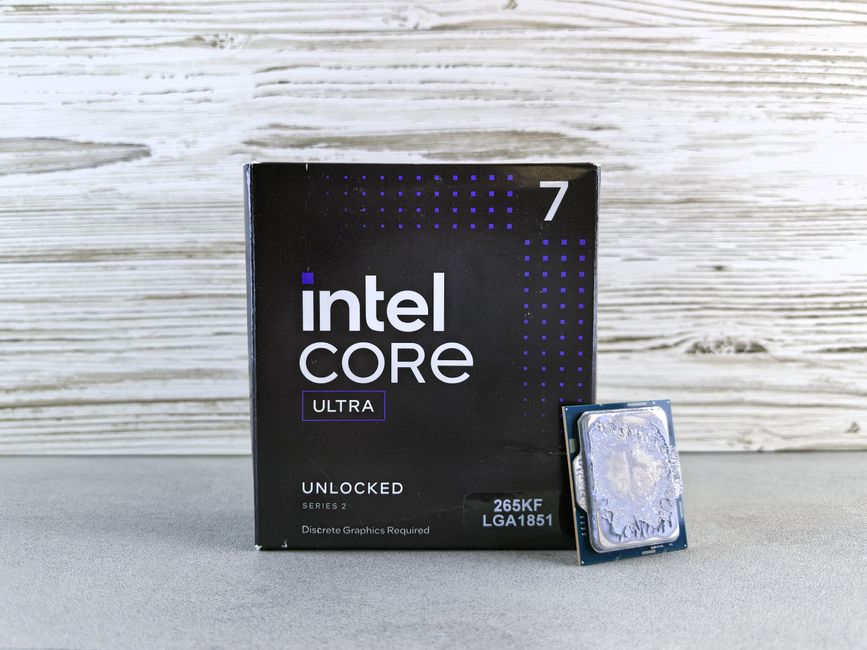
AMD Ryzen 7 9800X3D vs Intel Core Ultra 9 285K. Discover which is the best high-end desktop CPU for gaming and productivity in 2026.
As we navigate through 2026, the desktop processor market has settled into an incredibly exciting groove. Over a year after their initial late-2024 debuts, AMD’s Zen 5 architecture and Intel’s Arrow Lake platform have fully matured. Consistent BIOS updates, refined microcode, and critical operating system patches have maximized the performance of both architectures. Most importantly for builders, pricing has normalized, creating a highly competitive retail landscape where older stock is discounted and current models are readily available.
At the center of this battleground sit two absolute titans: the AMD Ryzen 7 9800X3D and the Intel Core Ultra 9 285K. These processors target the high-end enthusiast segment but approach performance from entirely different philosophies. AMD uses its specialized, large-capacity 3D V-Cache to optimize gaming execution times. In contrast, Intel delivers an efficient, high-core-count tile architecture aimed at heavy multitasking, localized artificial intelligence, and professional creator workloads.
This comparison matters because choosing between them isn’t just about raw speed. It is about understanding where your workloads lie, how you value platform longevity, and how much you want to spend on cooling and power. Additionally, with the 2026 launch of the marginally faster Ryzen 7 9850X3D, the value dynamics have shifted, making the discounted 9800X3D a uniquely attractive option. This detailed, hands-on comparison will help you decide which CPU deserves a spot in your 2026 build.
Before diving into the architectural details, let’s take an at-a-glance look at the key specifications, pricing, and pros and cons of these two powerhouse processors in 2026.
| Feature / Specification | AMD Ryzen 7 9800X3D | Intel Core Ultra 9 285K |
|---|---|---|
| Architecture | Zen 5 (Granite Ridge with 3D V-Cache) | Arrow Lake-S (3nm TSMC Node) |
| Cores / Threads | 8 Cores / 16 Threads | 24 Cores / 24 Threads (8P + 16E) |
| Base / Boost Clock | 4.7 GHz / 5.2 GHz | 3.7 GHz / 5.7 GHz (P-core Boost) |
| Total L3 Cache | 96 MB (featuring 2nd-Gen 3D V-Cache) | 36 MB |
| Motherboard Socket | Socket AM5 | Socket LGA 1851 |
| Base TDP / Max Power | 120W (TDP) | 125W (Base) / 250W (Max Turbo) |
| Launch MSRP | $479 | $589 |
| Current 2026 Retail Price | ~$409 – $425 | ~$496 – $515 |
AMD Ryzen 7 9800X3D Pros:
AMD Ryzen 7 9800X3D Cons:
Intel Core Ultra 9 285K Pros:
Intel Core Ultra 9 285K Cons:
To truly understand how these chips compare, we must look beyond their spec sheets and examine how their architectural designs influence real-world performance in 2026.
The AMD Ryzen 7 9800X3D is widely recognized as the gold standard for gaming. It utilizes AMD’s highly refined Zen 5 architecture combined with their innovative 2nd-generation 3D V-Cache technology. Unlike older X3D designs, which stacked the cache die directly on top of the CPU cores and restricted thermal dissipation, AMD reversed this layout for the 9800X3D. Placing the cache underneath the core complex die allows the processor to transfer heat directly to the metal heat spreader, enabling full, unrestricted overclocking and higher sustained clock speeds.
In 2026, the pricing of the 9800X3D has dropped beautifully. Initially launched at $479, it can regularly be found retailing between $409 and $425. Although AMD introduced the Ryzen 7 9850X3D early in 2026 with a $499 price tag, the newer chip offers only a minor 400 MHz boost clock improvement, leading to a negligible 2% to 3% difference in actual gaming frame rates. This minor performance gap makes the discounted 9800X3D the absolute best-value purchase for pure gaming enthusiasts in today’s market.
From a gaming perspective, the 96 MB of L3 cache works wonders. Because modern gaming is incredibly sensitive to memory latency, having a massive cache pool right on the processor reduces the need to pull data from system RAM. In CPU-bound competitive multiplayer games like Valorant and Counter-Strike 2, as well as complex simulation titles like Microsoft Flight Simulator, the Ryzen 7 9800X3D delivers unparalleled frame pacing and remarkably stable 1% lows. Additionally, because the cache acts as a buffer, the CPU is remarkably tolerant of slower memory, showing less than a 1% performance variance when comparing standard DDR5-4800 to high-end DDR5-6000.
While AMD optimized its chip for gaming, Intel engineered the Core Ultra 9 285K as a masterclass in hybrid computing. Moving away from the high-temperature designs of the previous Raptor Lake generation, Intel utilized TSMC’s cutting-edge 3nm process node to construct the Core Ultra series. It boasts a massive physical layout consisting of 8 high-performance “Lion Cove” P-cores and 16 high-efficiency “Skymont” E-cores. To optimize architectural efficiency and thermals, Intel controversially removed Hyper-Threading, meaning this chip operates with 24 physical cores and 24 threads.
The Core Ultra 9 285K debuted at $589 but has stabilized at a retail price of around $496 in 2026. This price correction makes it a highly competitive alternative to AMD’s creator-focused Ryzen 9 line. For professionals who use their computers to generate revenue, the 285K is incredibly powerful. In multi-core workloads like heavy 3D rendering in Blender, massive video exports in DaVinci Resolve, or extensive code compilation, the 285K easily outpaces the 8-core 9800X3D, scaling seamlessly across all 24 of its physical cores. It also houses an integrated Neural Processing Unit (NPU) to handle basic AI tasks natively, saving system resources for other demands.
However, when it comes to gaming, the Core Ultra 9 285K cannot keep pace with the massive L3 cache buffer of AMD’s X3D line. Without a hyper-dense cache structure, the 285K is frequently bottlenecked by standard memory latency. While it still delivers highly competent high-end gaming experiences—comfortably driving any modern AAA title when paired with a powerful GPU—it trails the 9800X3D in overall frame rates and struggles to match its smooth frame delivery. For those who view gaming as a secondary hobby rather than a primary pursuit, the 285K remains an extraordinary workhorse.
Deciding between these two processors comes down to identifying your primary use case, assessing your platform expectations, and planning your system’s overall budget.
If your computer is primarily a gaming machine, your decision is straightforward. The Ryzen 7 9800X3D is the superior choice. Whether you are aiming for maximum refresh rates at 1080p, smooth frame delivery at 1440p, or flawless performance in virtual reality, the 3D V-Cache provides concrete benefits that Intel simply cannot match. It guarantees superior frame consistency, which directly translates to a smoother, stutter-free visual experience.
Conversely, if your PC is a tool for content creation, professional workflows, or highly complex multi-tasking, the Intel Core Ultra 9 285K is the ideal candidate. The 24-core layout thrives under continuous, heavy processing loads. While the 9800X3D can handle basic video editing and casual rendering, it will feel noticeably slower than the 285K when processing heavy export queues, compiling complex software packages, or managing multiple virtual machines simultaneously.
Another major deciding factor is the underlying motherboard platform. The Ryzen 7 9800X3D slots into AMD’s Socket AM5. AMD has committed to support AM5 with new CPU releases through at least 2027. This means that if you purchase an AM5 motherboard in 2026, you will likely be able to upgrade directly to future Zen 6 or Zen 7 processors down the line without needing to buy a new motherboard.
Intel’s Core Ultra 9 285K requires a newer LGA 1851 motherboard. Historically, Intel tends to support its motherboard sockets for only two generations before moving to a new pin design. While LGA 1851 motherboards offer top-tier native connectivity, including widespread support for fast PCIe Gen 5 SSDs and robust DDR5-6400+ memory profiles, your long-term upgrade options on this socket are far more limited compared to AMD’s AM5 platform.
In 2026, building a quiet and energy-efficient PC is highly desirable. During gaming workloads, the Ryzen 7 9800X3D is incredibly efficient, often drawing less than 80 to 90 watts of power. Because of this, it is easy to cool using a high-quality dual-tower air cooler or a standard 240mm liquid AIO cooler, keeping your overall build costs down.
The Core Ultra 9 285K is significantly more efficient than its predecessor, but it is still a large 24-core processor. Under heavy multi-threaded productivity loads, it can easily pull up to 250 watts of power. To prevent thermal throttling and maintain its high 5.7 GHz boost clocks, you will need to budget for a premium cooling solution, such as a high-end 360mm AIO liquid cooler. This requirement, combined with the slightly higher price of LGA 1851 motherboards, typically makes an Intel-based system more expensive to build and operate.
No, the Core Ultra 9 285K is not a bad gaming CPU. It is a highly capable, top-tier processor that will deliver excellent, high-framerate gameplay in any modern AAA game. However, when compared directly to the Ryzen 7 9800X3D, it lags behind in raw gaming framerates and frame-pacing smoothness due to AMD’s specialized, game-boosting 3D V-Cache technology.
In 2026, the Ryzen 7 9800X3D represents a far better value. While the Ryzen 7 9850X3D is technically the fastest gaming CPU available, it only offers a minor clock boost that yields a 2% to 3% gaming improvement over the 9800X3D. Because the 9800X3D has dropped in price to around $409, whereas the 9850X3D retails for $499, you are better off saving the money and choosing the 9800X3D.
For the Ryzen 7 9800X3D, you do not need expensive, high-speed RAM. Because of its massive 96 MB L3 cache, the CPU rarely has to retrieve data from system memory, resulting in virtually identical gaming performance when using standard DDR5-4800 versus premium DDR5-6000. Conversely, the Intel Core Ultra 9 285K relies heavily on high-speed memory scaling and benefits significantly from faster kits, such as DDR5-6400 or DDR5-7200.
Intel removed Hyper-Threading to prioritize overall power efficiency and reduce thermal output. By using a hybrid architecture with 8 physical performance cores and 16 efficient cores, the processor can distribute workloads more effectively. Removing Hyper-Threading reduced processing overhead, allowing the 285K to achieve outstanding multi-threaded performance while running cooler than previous generations.
In 2026, the battle between AMD and Intel has never been clearer, with both manufacturers successfully carving out distinct areas of dominance.
If you are building a PC with a primary focus on gaming, the AMD Ryzen 7 9800X3D is the clear and undisputed winner. It delivers class-leading gaming performance, superb energy efficiency, and resides on an AM5 platform that offers excellent future upgrade options. At its matured 2026 pricing of approximately $409, it is the smartest hardware investment any gamer can make.
However, if you are a professional content creator, a video editor, or someone who runs highly demanding, multi-threaded workloads while gaming on the side, the Intel Core Ultra 9 285K is the superior tool. Its 24 physical cores, integrated NPU, and stabilized 2026 price of under $500 make it an outstanding multi-purpose engine for serious computational work.
Prices and features mentioned are accurate as of the date of publication. Always check the official provider website for the most current pricing and availability.