Physical Address
304 North Cardinal St.
Dorchester Center, MA 02124
Physical Address
304 North Cardinal St.
Dorchester Center, MA 02124

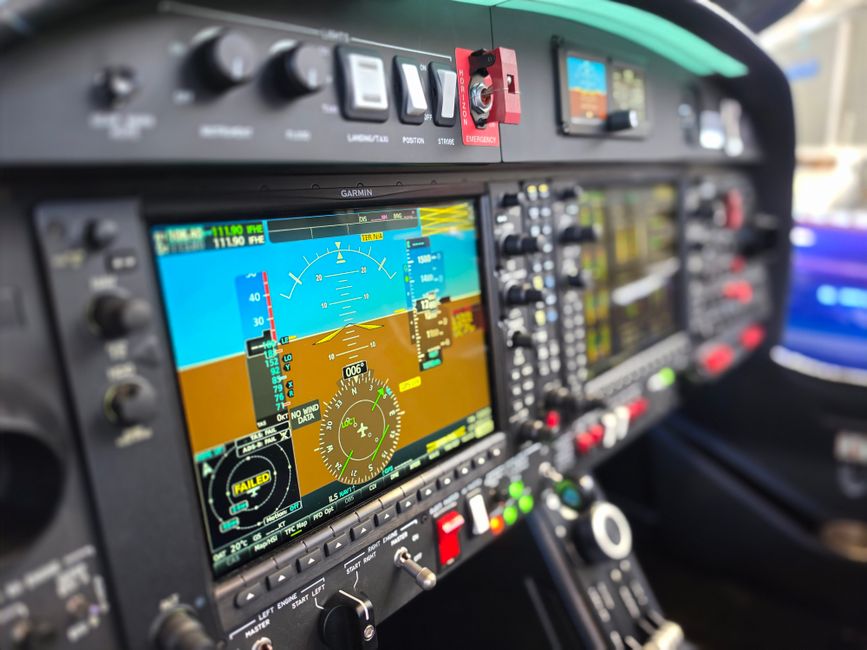
Compare the DIY Stratux and the Garmin GDL 50 in 2026. Discover pricing, specs, ADS-B In features, and find out which receiver is best for your cockpit.
In modern aviation, situational awareness is paramount. Equipping your cockpit with a reliable portable ADS-B In receiver transforms your electronic flight bag (EFB) into a powerful safety net, delivering real-time traffic, weather, and GPS data right to your tablet. For years, pilots navigating the market have faced a classic choice: do you build a budget-friendly, open-source DIY unit, or do you invest in a polished, premium commercial device?
That battle ultimately boils down to two standout contenders in 2026: the community-driven Stratux and the feature-packed Garmin GDL 50. Both systems serve the same core purpose of broadcasting ADS-B In data to apps like ForeFlight, Garmin Pilot, and iFly GPS, but they approach hardware, reliability, and cost from completely opposite angles.
Whether you are flying a weekend cross-country in a Cessna 172 or managing complex instrument approaches in a high-performance single, choosing the right receiver impacts how you process traffic and weather data in flight. This in-depth comparison examines the current pricing, performance specifications, build quality, and ecosystem compatibility of both units to help you make an informed decision for your cockpit.
At ComparisonMath, we believe in giving you the critical facts at a glance. The table below outlines how the Stratux and the Garmin GDL 50 stack up against each other across key metrics in late 2026.
| Feature | Stratux (Pre-assembled Kit) | Garmin GDL 50 |
|---|---|---|
| Price | Approx. $200 – $250 | Approx. $699 |
| Build Type | Open-source hardware / DIY or pre-built | Ruggedized commercial-grade enclosure |
| Dual-Band (978 MHz / 1090 MHz) | Yes | Yes |
| AHRS (Pitch/Roll) | Optional (integrated via module) | Built-in high-precision AHRS |
| GPS Receiver | Integrated WAAS GPS | Integrated WAAS GPS |
| Battery Life | Varies (typically 4-6 hours via external pack) | Up to 7 hours internal rechargeable battery |
| App Ecosystem | ForeFlight, AvPlan, FltPlan Go, iFly GPS, etc. | Garmin Pilot, ForeFlight, and select third-party apps |
To truly understand which portable ADS-B receiver fits your flying style, we need to look under the hood of both the Stratux and the Garmin GDL 50. Each device targets a very different segment of the general aviation community.
The Stratux project began as an open-source initiative to bring low-cost ADS-B In to the masses. By utilizing Raspberry Pi architecture, dual radio dongles, and a custom software build, makers and aviators could assemble a dual-band receiver for a fraction of commercial prices. Today in 2026, while you can still solder and program your own parts from online component lists, most pilots purchase pre-assembled units from reputable third-party vendors such as RocketRoute or Latitude Technologies partners.
A fully built Stratux unit typically costs between $200 and $250. It features dual-band capability (receiving both 978 MHz UAT and 1090 MHz ES traffic), an integrated internal WAAS GPS, and an optional Attitude Heading Reference System (AHRS) chip. The AHRS module enables synthetic vision on supported EFB applications like ForeFlight. However, because Stratux relies on modular components, its physical enclosure is often plastic, and cooling can occasionally be a concern during hot summer flights in un-airconditioned bubbles.
On the other end of the spectrum sits the Garmin GDL 50, priced right around $699. As a dedicated, commercial-grade aviation product, the GDL 50 is built to last. It features a rugged, impact-resistant casing designed to withstand the harsh thermal and physical environments of a GA cockpit. The unit includes dual-band ADS-B In traffic reception, subscription-free FIS-B weather, and a highly accurate internal WAAS GPS.
One of the standout hardware features of the Garmin GDL 50 is its integrated, high-precision AHRS. Garmin’s proprietary sensor processing delivers smooth, zero-latency pitch and roll information to apps like Garmin Pilot and ForeFlight. Furthermore, the GDL 50 houses a robust internal lithium-ion battery that delivers up to 7 hours of continuous operation on a single charge. Bluetooth and serial connectivity options allow you to pair multiple devices simultaneously, meaning both the pilot and copilot can view data streams on separate tablets.
Choosing between the Stratux and the Garmin GDL 50 ultimately comes down to your budget, your preferred EFB ecosystem, and your tolerance for hardware tinkering.
If you fly on a strict budget, rent aircraft occasionally, or love open-source technology, the Stratux is a compelling option. It provides 90% of the functionality of a high-end commercial receiver at roughly one-third of the price. For recreational pilots who want traffic and weather without breaking the bank, a pre-assembled Stratux gets the job done reliably.
Conversely, if you fly professionally, log heavy instrument hours, or operate within the Garmin ecosystem (using Garmin Pilot or a panel-mounted GTN series navigator), the Garmin GDL 50 is the superior choice. Its build quality, dependable internal battery, flawless AHRS integration, and manufacturer backing provide a level of operational confidence that DIY hardware simply cannot match.
Consider your cockpit setup as well. If you have limited dash space or prefer wireless charging solutions, the sleek form factor of the GDL 50 slips easily onto a side ledge or glare shield without messy external battery packs dangling from wires.
No. Both the Stratux and the Garmin GDL 50 receive subscription-free broadcast data from the FAA’s nationwide network of ground stations. You will only need to pay for your chosen EFB app subscription, such as ForeFlight or Garmin Pilot.
Yes. Both units support multiple Wi-Fi and Bluetooth connections simultaneously. You can stream traffic and weather data to both the pilot’s yoke-mounted tablet and the copilot’s kneeboard device at the same time.
Does the Stratux include an internal battery?
Most Stratux units require an external USB battery pack (such as an Anker power bank) for power, though some third-party pre-built variants include integrated rechargeable cells. The Garmin GDL 50 features a built-in rechargeable lithium-ion battery rated for up to 7 hours of use.
Yes. Both the Stratux and the Garmin GDL 50 integrate seamlessly with ForeFlight on Apple iOS devices, providing traffic, weather, and AHRS-driven synthetic vision.
The portable ADS-B receiver market in 2026 offers phenomenal choices for every type of aviator. If cost is your primary constraint and you want reliable dual-band traffic paired with subscription-free weather, the Stratux remains the undisputed king of value in the budget category.
However, for pilots seeking uncompromised reliability, commercial build quality, superior AHRS performance, and seamless integration with high-end EFBs, the Garmin GDL 50 is our clear overall winner. Its robust internal battery and rugged engineering make it a permanent, dependable asset for any serious cockpit.
Prices and features mentioned are accurate as of the date of publication. Always check the official provider website for the most current pricing and availability.