Physical Address
304 North Cardinal St.
Dorchester Center, MA 02124
Physical Address
304 North Cardinal St.
Dorchester Center, MA 02124

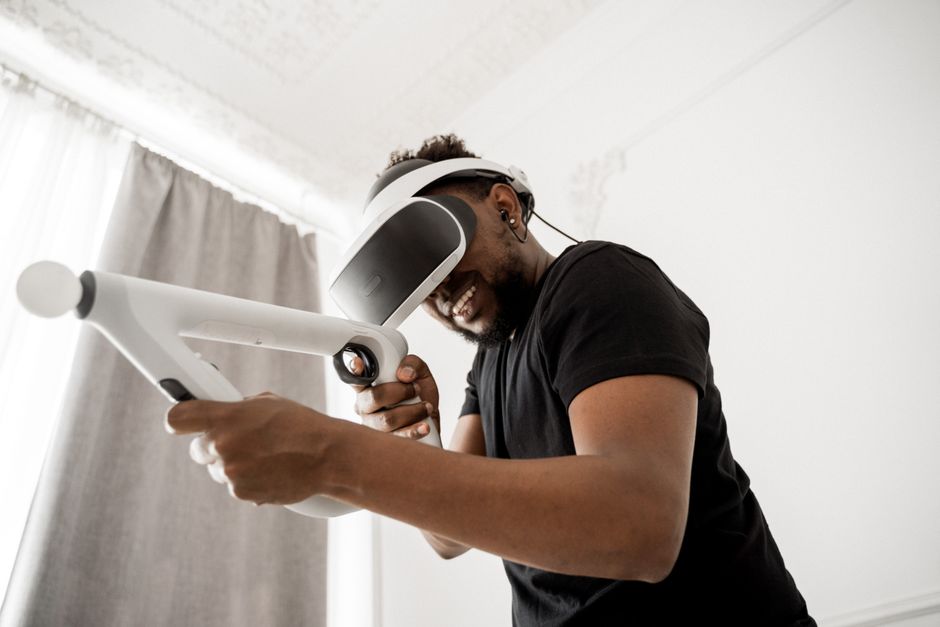
Our in-depth 2026 comparison of the VITURE Beast vs XREAL One Pro. Discover the best AR glasses for gaming, productivity, specs, and pricing.
The year 2026 has officially cemented augmented reality (AR) and extended reality (XR) smart glasses as the ultimate portable displays. No longer restricted to niche tech enthusiasts, these lightweight glasses are now replacing secondary monitors for remote professionals and transforming the mobile gaming landscape. Whether you want to play games on the newly released Nintendo Switch 2, stream movies from a cramped airplane seat, or expand your MacBook Air workspace into a multi-monitor environment, the hardware of 2026 is fully mature and ready to deliver. Among the fierce competition, two heavyweight flagships dominate the industry: the VITURE Beast and the XREAL One Pro.
Both of these wearable displays represent the pinnacle of consumer-grade spatial computing, yet they take drastically different approaches to deliver their giant virtual screens. VITURE, renowned for its gaming-centric ecosystems and vibrant imagery, has launched the VITURE Beast ($549)—a spec-sheet monster featuring a wider 58-degree field of view (FOV), a 1200p resolution, and a blinding 1250 nits of perceived brightness. On the other side stands XREAL, the industry pioneer whose refined XREAL One Pro ($599) focuses on hardware-level spatial computing. Powered by a custom in-house X1 spatial co-processor, the One Pro emphasizes ultra-low latency, rock-solid screen anchoring, and optional 6DoF expansion.
This comprehensive comparison will dissect every angle of the VITURE Beast and XREAL One Pro. We will break down their optical stacks, spatial tracking architectures, audio systems, real-world ergonomics, and accessory ecosystems to help you decide which set of glasses deserves a spot in your tech arsenal in 2026.
To get an immediate sense of how these two powerhouse XR glasses stack up against one another, here is a breakdown of their primary technical specifications and pricing in 2026:
| Feature | VITURE Beast | XREAL One Pro |
|---|---|---|
| Retail Price (2026) | $549 | $599 (Cut from $649) |
| Display Resolution | 1920 x 1200 per eye (1200p) | 1920 x 1080 per eye (1080p) |
| Field of View (FOV) | 58-degree diagonal | 57-degree diagonal |
| Virtual Screen Size | 174-inch screen (at 4 meters) | 171-inch screen (at 4 meters) |
| Refresh Rate | 120Hz | 120Hz |
| Peak Brightness | 1250 nits | 700 nits (1100+ nits peak APL boost) |
| Spatial Tracking | Built-in 3DoF (Software optimized) | Native 3DoF (X1 Spatial Chip) / 6DoF (with XREAL Eye) |
| Dimming Technology | 9-level electrochromic dimming | 14-step electrochromic dimming |
| Audio Integration | Harman-Kardon AudioEFX | Sound by Bose (Spatial Audio) |
| Weight | Approximately 85g | Approximately 87g |
To fully appreciate the differences between the VITURE Beast and the XREAL One Pro, we must look past the spec sheets and evaluate how these technologies perform in real-world environments. Let’s analyze their key performance vectors in detail.
The VITURE Beast features dual Sony Micro-OLED panels running at a resolution of 1920 x 1200 per eye. Crucially, the 16:10 aspect ratio provides extra vertical screen space, making it exceptionally practical for reading documents, writing code, and gaming on handhelds like the Steam Deck. VITURE boasts a staggering 1250 nits of perceived brightness, making it the brightest display in its category and ensuring a clear, high-contrast picture even in bright daylight. However, pushing the boundaries of its massive 58-degree FOV has a trade-off. Some users have reported noticeable chromatic aberration and minor edge blurriness. While the center of the display is incredibly sharp, the very edges can sometimes suffer from visual distortion, especially when viewing fine text near the corners.
XREAL’s One Pro takes a slightly different approach to display design. It utilizes a 0.55-inch Sony Micro-OLED display running at 1920 x 1080 per eye (16:9 aspect ratio) paired with custom 57-degree ‘X-P Prism’ optics. While its baseline brightness is officially rated at 700 nits, independent spectrum tests show that its adaptive Average Picture Level (APL) boost allows peak white levels to exceed 1100 nits in high-contrast scenes. What the One Pro loses in a tiny fraction of FOV and a few vertical pixels, it gains back in outstanding edge-to-edge clarity. There is virtually no fringing or blurriness on the sides. This makes XREAL’s offering much better suited for displaying crisp, readable text across a virtual desktop, while VITURE’s punchier colors shine during cinematic video playback.
The standout feature of the XREAL One Pro is its proprietary X1 Spatial Co-processor. Most AR glasses rely on the connected host device (like a phone or laptop running specialized software) to handle the intense calculations required to anchor a screen in mid-air. The X1 chip changes this entirely by processing 3DoF (Three Degrees of Freedom) calculations locally on the glasses with an ultra-low latency of just 3ms. This results in a virtually lag-free, drift-free screen anchor that stays exactly where you pin it—even when connected to ‘dumb’ USB-C video sources. Additionally, XREAL offers the ‘XREAL Eye’ ($99), a detachable dual-camera accessory that unlocks full 6DoF (Six Degrees of Freedom) tracking, bringing the One Pro closer to a true spatial computing headset.
The VITURE Beast features built-in 3DoF tracking with features like Auto Transparency and Smart Recentering, but it relies more heavily on host-side software optimization. While the Beast’s ‘smooth follow’ and ‘anchor’ modes work exceptionally well when paired with compatible mobile platforms using the SpaceWalker app, users on Windows or certain handheld consoles have reported minor display wobble and gradual spatial drift over extended sessions. When it comes to pure spatial stability and tracking reliability, XREAL’s hardware-first approach remains the gold standard in 2026.
The VITURE Beast is built around a premium full-metal aluminum-magnesium alloy frame. While this gives the glasses a highly durable, luxurious feel, metal is highly conductive. As a result, the glasses can become noticeably warm to the touch near the nose bridge during long 120Hz gaming sessions. To address diverse eye-spacing requirements, VITURE split the Beast into two distinct hardware sizes: Regular (fitting IPDs up to 70mm) and Large (supporting IPDs up to 74mm). Unlike some of VITURE’s older models, the Beast does not feature built-in diopter dials; instead, users who require vision correction must purchase VITURE’s magnetic snap-on prescription lens inserts ($79).
The XREAL One Pro weighs a featherlight 87 grams and is constructed from premium plastic-composite materials, which dissipate heat much more effectively than metal. It also offers Medium (IPD 57-66mm) and Large (66-75mm) physical frames. Crucially, the One Pro features highly flexible temples that adjust up to 40 degrees inward and outward to comfortably fit wider head profiles. In terms of long-term thermal comfort and physical adjustability, XREAL holds a slight advantage, making the One Pro exceptionally easy to wear for multi-hour flights or intensive workdays.
When it comes to gaming and media ecosystems, VITURE is tough to beat. The Beast is designed to integrate seamlessly with the Pro Mobile Dock ($99), which packs a massive 13,000mAh battery, HDMI-to-USB-C bridging, and dedicated mounts designed for handheld gaming. This setup makes the Beast an absolute powerhouse for gaming on the Nintendo Switch 2 or Steam Deck, as the dock keeps both the glasses and the console powered for hours. Additionally, VITURE features customized HARMAN AudioEFX speakers built right into the temples, providing rich, punchy sound that creates a highly immersive gaming bubble.
XREAL counters with its premium audio partner, offering Sound by Bose. The spatial audio performance on the One Pro is spectacular, offering wider separation and depth than VITURE’s system. To expand its software functionality, XREAL relies heavily on the Beam Pro ($199), an Android-based companion device that acts as an offline streaming powerhouse, spatial camera, and tracking controller. While the Beam Pro is an excellent standalone spatial terminal, it represents an extra cost if you want to unlock the full potential of XREAL’s ecosystem.
Choosing between these two high-end AR glasses in 2026 depends on your primary use case and preferences:
No, neither the VITURE Beast nor the XREAL One Pro features an internal battery. Both devices are bus-powered, meaning they draw power directly from the connected USB-C host device (such as your phone, laptop, or handheld console). To prevent draining your host device’s battery, you can use specialized charging adapters like the VITURE Pro Mobile Dock or the XREAL Hub to charge your host device while using the glasses.
Yes, both brands have excellent solutions for prescription wearers. The VITURE Beast features magnetic prescription lens inserts ($79) that snap easily into the nose bridge. The XREAL One Pro includes an insert frame in the box; you can take this frame to a local optician or order custom prescription lenses from XREAL’s official partners (like Lensology) to slide directly into the glasses.
The XREAL One Pro features an onboard custom X1 chip that processes 3DoF calculation on the glasses themselves, resulting in ultra-stable, zero-lag tracking. The VITURE Beast handles tracking through a mix of built-in sensors and software algorithms, which is highly responsive but prone to slight drift or wobble over time.
Yes, both glasses are fully compatible with iPhone 15/16 models and any modern MacBook with a USB-C port that supports DisplayPort Alt Mode. Both brands also offer dedicated spatial apps (SpaceWalker for VITURE, Nebula for XREAL) to enable advanced multi-screen and spatial features.
The VITURE Beast and the XREAL One Pro represent two distinct visions of where AR glasses stand in 2026. If you want the brightest, most vibrant screen for media consumption and handheld gaming, the VITURE Beast is a phenomenal product. At $549, it delivers staggering peak brightness, a generous 16:10 aspect ratio, and a fantastic accessory ecosystem tailored perfectly for gamers.
However, if you are looking for the absolute best all-around AR glasses for spatial computing, the XREAL One Pro is our top recommendation. For $599, it offers unmatched optical clarity across the entire display, a rock-solid hardware-based 3DoF tracking experience via the X1 chip, and a pathway to full 6DoF tracking. While it is slightly more expensive, its superior text readability and thermal comfort make it the definitive winner for professionals and power users in 2026.
Prices and features mentioned are accurate as of the date of publication. Always check the official provider website for the most current pricing and availability.