Physical Address
304 North Cardinal St.
Dorchester Center, MA 02124
Physical Address
304 North Cardinal St.
Dorchester Center, MA 02124

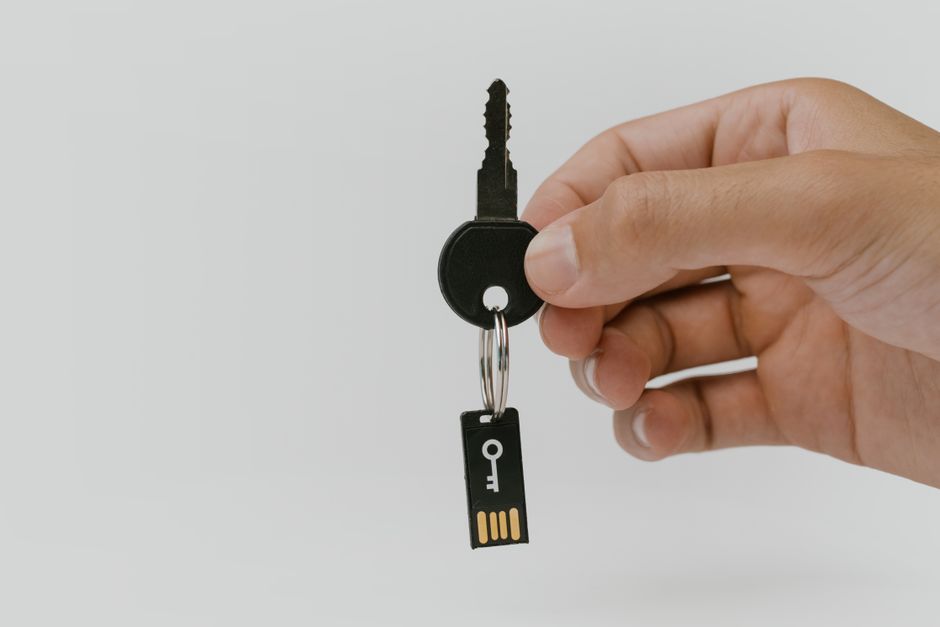
Compare YubiKey 5C NFC vs Google Titan Security Key in 2026. Discover specs, pricing, pros, cons, and passkey storage to choose the best security key.
The cybersecurity landscape of 2026 demands a complete overhaul of how we approach online safety. Traditional multi-factor authentication (MFA) methods, such as SMS verification codes and mobile authenticator apps, are no longer foolproof. Cybercriminals now deploy sophisticated, AI-driven real-time phishing and SIM-swapping operations that easily bypass these software-based defenses. To achieve bulletproof, phishing-resistant account protection, cybersecurity experts and enterprise administrators agree on one gold standard: physical hardware security keys.
These compact devices utilize public-key cryptography to cryptographically verify your identity and ensure you are interacting with a legitimate website. By requiring a physical touch on the hardware key, they eliminate the risk of remote account takeovers. When looking at the best security keys available in 2026, two giants lead the market: the premium, ultra-versatile Yubico YubiKey 5C NFC ($58) and the streamlined, high-capacity Google Titan Security Key ($35). Both devices represent top-tier security engineering, but they cater to fundamentally different philosophies.
While both keys utilize USB-C and NFC connection standards to protect your high-value personal and professional accounts, their internal capabilities differ. Yubico approaches the market with a robust, multi-protocol philosophy, offering deep enterprise integration and indestructible hardware. Google focuses on streamlined consumer adoption, offering massive passkey storage at an affordable entry price. This comprehensive comparison will break down their specifications, pricing, unique limitations, and real-world performance to help you decide which physical key deserves a spot on your keychain.
Before diving into the technical details, let’s look at a high-level overview of how these two leading security keys stack up against each other across essential metrics in 2026.
| Feature / Specification | Yubico YubiKey 5C NFC | Google Titan Security Key (USB-C) |
|---|---|---|
| MSRP (2026 Price) | $58.00 | $35.00 |
| Connectivity | USB-C & contactless NFC | USB-C & contactless NFC |
| Protocol Support | FIDO2/WebAuthn, FIDO U2F, Smart Card (PIV), OpenPGP, HOTP/TOTP, Yubico OTP, Static Password | FIDO2/WebAuthn & FIDO U2F only |
| Passkey Storage Capacity | Up to 100 resident credentials (passkeys) | Up to 250 resident credentials (passkeys) |
| Credential Management | Full support (view, manage, and delete individual passkeys) | No support (cannot view or selectively delete; requires full device factory reset) |
| Durability & Build | Glass-fiber reinforced plastic, IP68 dust- & waterproof, crush-proof | Standard durable plastic, solid build but not IP68 certified |
| Companion Application | Yes (Yubico Authenticator 7 app) | No official dedicated companion application |
| Manufacturing Origin | Designed in Sweden, manufactured in Sweden & USA | Designed by Google, manufactured by Feitan |
As the comparison table illustrates, the YubiKey 5C NFC represents a highly versatile, premium, and manageable security tool. In contrast, the Google Titan positions itself as an affordable, high-capacity key designed solely for FIDO2/passkey authentication, albeit with notable software and management compromises.
Under the hood of the $58 YubiKey 5C NFC lies the absolute pinnacle of physical cryptographic technology. In 2026, Yubico ships these keys with the latest 5.7 firmware series, representing a massive generational leap. Previously, YubiKeys were criticized for their modest passkey storage limits, which capped resident credentials at just 25. The updated firmware completely addresses this bottleneck, expanding local storage to accommodate up to 100 device-bound passkeys, 64 OATH-TOTP seeds, 24 PIV smart card certificates, and 2 OTP seeds simultaneously.
The standout characteristic of the YubiKey 5C NFC is its unparalleled protocol versatility. Rather than focusing solely on web-based passkeys, it operates as a secure cryptographic multi-tool. Developers and systems administrators can utilize the integrated OpenPGP standard to secure git commits, code signing, and SSH terminals. For larger corporate deployments, the Personal Identity Verification (PIV) smart card standards facilitate seamless integration with Active Directory, corporate VPNs, and physical building security access systems. Additionally, legacy environments can still take advantage of Yubico’s proprietary OTP and HMAC-challenge-response mechanisms.
Yubico complements its stellar hardware with the refined Yubico Authenticator 7 app. Available across desktop and mobile, this software lets users securely view, label, and organize their credentials. Because the YubiKey 5C NFC fully supports the modern FIDO2 Client-to-Authenticator Protocol (CTAP) 2.1, managing credentials is a breeze. Users can leverage browser settings or the Yubico app to view exactly which passkeys are saved on the key and selectively delete them. This modular control prevents the key from ever becoming cluttered.
Finally, the physical build quality is legendary. Constructed from glass-fiber reinforced plastic, the key is completely sealed, yielding an IP68 dust- and water-resistance rating. It features no moving parts and operates entirely without a battery, meaning there is zero chance of hardware failure due to water submersion, crushing, or general wear. Knowing your primary gatekeeper can survive a trip through the washing machine or years on a heavy keychain provides immense peace of mind.
In contrast, Google’s hardware security key focuses on consumer accessibility, streamlined modern standards, and sheer storage volume. The USB-C and NFC variant of the Titan Security Key is priced at just $35 (with a USB-A counterpart available for $30), making it significantly cheaper than Yubico’s flagship offering. This lower price point lowers the barrier to entry, allowing security-conscious individuals and families to deploy physical MFA across all their accounts without breaking the bank.
The primary selling point of the modern Google Titan key is its massive, class-leading storage capacity. It is capable of housing up to 250 unique FIDO2 passkeys (resident credentials) directly on the device. This is more than double the capacity of the YubiKey 5C NFC, making it highly attractive to consumers who wish to store a passkey for every single website and digital service they use. The Titan key is built around Google’s custom-engineered secure element chip, which is physically hardened to resist physical side-channel attacks designed to extract secret cryptographic materials.
However, the Google Titan Security Key suffers from a glaring and highly publicized usability flaw. Despite its ability to house up to 250 passkeys, Google chose not to implement the FIDO2 credential management protocol extension (known as credMgmt) into the key’s firmware. Consequently, there is absolutely no software, browser interface, or application that can list or manage individual passkeys saved on the key. If you close an online account, change a username, or eventually fill up the key, you cannot selectively delete a single credential. To remove any passkey, you must perform a complete factory reset, which erases all 250 passkeys from the key at once.
Additionally, the Titan is strictly a FIDO-focused key. It supports modern FIDO2 (WebAuthn) and legacy FIDO U2F, but contains absolutely no support for OpenPGP, PIV smart cards, or TOTP (authenticator code generation). This makes the key incredibly proficient at protecting standard web-based accounts like Google, Microsoft, GitHub, and Apple. However, it is entirely useless for corporate VPN systems, SSH terminals, and legacy security environments that require traditional one-time password protocols. The build quality, while durable enough for everyday carry, uses standard consumer-grade plastic that does not possess Yubico’s ruggedized IP68 waterproof rating.
Choosing between the YubiKey 5C NFC and the Google Titan Security Key in 2026 comes down to evaluating your specific technical workflow, budget, and risk tolerance.
First, evaluate your protocol and integration requirements. If you are an IT professional, developer, system administrator, or enterprise employee, you will almost certainly require the YubiKey 5C NFC’s smart card (PIV) or OpenPGP capabilities to authenticate into secure SSH terminals, corporate networks, and code repositories. Conversely, if you are a casual consumer looking to secure personal email, online banking, social media profiles, and shopping accounts, the basic FIDO2 protocols supported by both keys are more than sufficient.
Second, weigh the importance of credential management versus total passkey storage. If you want the ability to audit, label, and selectively prune your passkeys over time, the YubiKey 5C NFC is the superior option. While it stores fewer passkeys than the Titan (100 vs 250), the ability to manage those 100 credentials individually via the Yubico Authenticator 7 app protects you from logistical headaches. If you only plan to register a dozen high-value passkeys (such as your password manager master key) and rely on cloud keychains for minor services, the Titan’s lack of a delete function is less of an issue, and its $35 price tag becomes highly attractive.
Third, consider your physical durability requirements. If you intend to carry your security key on a heavy keyring, take it on rugged outdoor trips, or travel extensively, the YubiKey’s glass-fiber reinforced, IP68 waterproof chassis is worth the premium. While the Google Titan is perfectly suitable for office environments, its consumer-grade plastic shell is more prone to physical wear and cracking over time under heavy keyring stress. Ultimately, the extra $23 for Yubico’s legendary durability is a sound investment for a device tasked with protecting your entire digital identity.
1. What happens if I lose my physical hardware security key?
If you lose your hardware security key, you run the risk of being permanently locked out of your accounts. This is why security experts strongly advise buying and registering at least two security keys: a primary key (like the YubiKey 5C NFC) that you carry with you, and a backup key (such as a second YubiKey or a cheaper Google Titan) stored in a secure location at home. Most websites allow you to register multiple hardware keys under a single account.
2. Can I use these keys on both my phone and my computer?
Yes. Both the YubiKey 5C NFC and the Google Titan Security Key are designed with modern multi-platform connectivity. You can plug them directly into any USB-C port on a laptop, tablet, or smartphone. For mobile devices without an accessible port, you can authenticate wirelessly by tapping the key against the back of your phone, utilizing contactless Near Field Communication (NFC) technology.
3. Does the Google Titan key support 2FA authenticator codes (TOTP)?
No. The Google Titan key is strictly limited to FIDO2/WebAuthn and FIDO U2F protocols. It cannot generate time-based one-time passwords (TOTP) like those found in Google Authenticator or Authy. If you want a physical key capable of acting as a hardware-backed authenticator app, you must choose the YubiKey 5C NFC, which holds up to 64 TOTP seeds managed securely via the Yubico Authenticator 7 app.
4. Why is the Google Titan key unable to delete individual passkeys?
This limitation exists because Google did not include the FIDO2 credential management extension (credMgmt) in the Titan key’s fused firmware. Because this specific feature is missing, web browsers and management software cannot query the device to list or selectively edit its stored credentials. If you need to remove a passkey, you must perform a complete factory reset of the Titan key.
5. Are these hardware security keys waterproof?
The YubiKey 5C NFC is rated IP68, meaning it is completely dust-proof and waterproof, capable of surviving deep water submersion. The Google Titan Security Key is highly durable and can withstand minor spills or sweat, but it is not officially IP68 certified and should not be submerged in water or subjected to harsh outdoor environments.
The Google Titan Security Key remains an admirable entry-point device for the passwordless era. At just $35 for the USB-C version, it offers an incredibly affordable gateway to physical security, backed by a custom-engineered Google cryptographic chip and an impressive 250-passkey capacity. For casual consumers looking to secure their personal Google, Microsoft, and social media accounts without spending a fortune, the Titan key is a solid, budget-conscious choice.
However, in 2026, the Yubico YubiKey 5C NFC remains the undisputed king of hardware security keys. Its premium $58 price tag is fully justified by its legendary IP68 rugged durability, comprehensive multi-protocol support, and seamless software integration. Most importantly, the YubiKey’s implementation of the FIDO2 credential management extension allows users to view and selectively delete up to 100 passkeys, avoiding the catastrophic “all-or-nothing” factory resets required by the Google Titan. For power users, enterprise professionals, and anyone who refuses to compromise on digital defense, the YubiKey 5C NFC is the ultimate investment in your cybersecurity posture.
Prices and features mentioned are accurate as of the date of publication. Always check the official provider website for the most current pricing and availability.