Physical Address
304 North Cardinal St.
Dorchester Center, MA 02124
Physical Address
304 North Cardinal St.
Dorchester Center, MA 02124

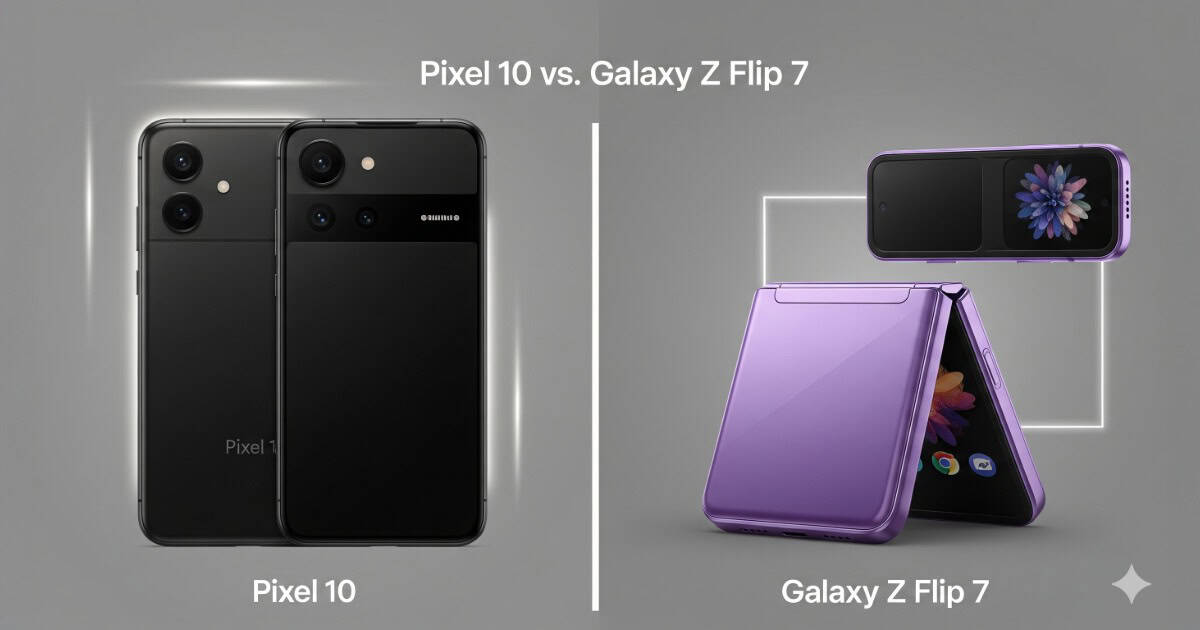
Are you weighing your options for the next big mobile upgrade in 2025? The smartphone landscape is more diverse than ever, with traditional powerhouses battling innovative newcomers. Today, we dive deep into the showdown between two of the most anticipated devices: the Google Pixel 10 and the Samsung Galaxy Z Flip 7. This in-depth comparison will help you navigate their unique features, from cutting-edge AI to revolutionary designs, so you can choose the best smartphone for your needs.
This article aims to provide a comprehensive Pixel 10 vs Galaxy Z Flip 7 analysis, covering everything from performance to camera capabilities. Whether you’re interested in the robust Pixel 10 specs or looking for a detailed Z Flip 7 review, we’ve got you covered. It’s a true battle of the foldable vs. slab phone.
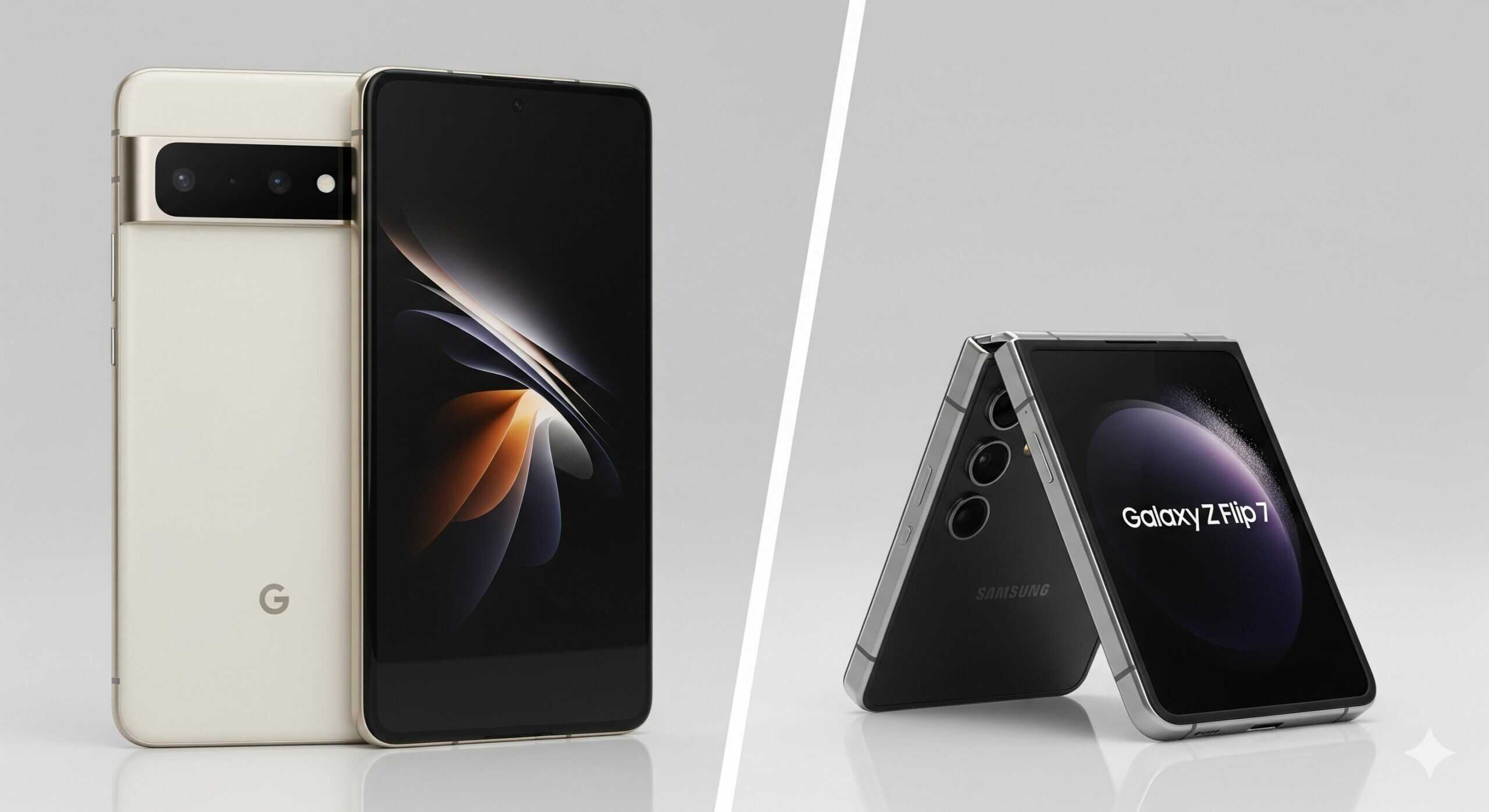
The most immediate difference when comparing the Google Pixel 10 and the Samsung Galaxy Z Flip 7 is their physical presence. The Pixel 10 is a testament to the “if it ain’t broke, don’t fix it” school of thought, refining the classic slab design. It offers a sleek, premium design with a satin-finish metal frame and a polished glass back. Its IP68 water and dust resistance rating provides reassuring durability. This is a phone built to last, a familiar and dependable companion, perfect for users seeking reliability.
The Samsung Galaxy Z Flip 7 however, is a conversation starter. It’s slimmer and lighter than its predecessors, a modern marvel of engineering. The new “Armor FlexHinge” creates a near-gapless closure, making it feel less like a gadget and more like a high-tech accessory. The 4.1-inch, edge-to-edge Super AMOLED FlexWindow on the front is a game-changer, allowing you to check notifications, take selfies, and even interact with certain apps without ever opening the phone.
The trade-off for this innovation is in durability. While Samsung has made significant strides with its new hinge and materials, a recent teardown video from JerryRigEverything revealed that despite its IP48 rating, the hinge can still accumulate dirt and sand, which could potentially cause long-term issues. This highlights a key aspect of the foldable vs. slab phone debate.
| Feature | Google Pixel 10 | Samsung Galaxy Z Flip 7 |
|---|---|---|
| Form Factor | Classic “Slab” Design | Compact Foldable (Clamshell) |
| Materials | Satin-finish metal frame, polished glass back | Advanced Armour Aluminium, Armor FlexHinge |
| Durability Rating | IP68 Water & Dust Resistance | IP48 Water Resistance (No Dust Resistance) |
| Cover Screen | N/A (Standard front display) | 4.1-inch Edge-to-edge Super AMOLED FlexWindow |
| Key Design Trait | Refined, robust, familiar feel | Innovative, compact, statement piece |
Under the hood, both these top-tier smartphones are powered by cutting-edge silicon, but with fundamentally different goals. The Google Pixel 10 features Google’s new custom-built Tensor G5 chip. While it’s a powerful octa-core processor, its main purpose isn’t to win benchmark races. Co-designed with Google DeepMind, the G5 is a silicon engine built to run complex, on-device AI models with remarkable efficiency. This makes the Pixel 10 exceptionally smart at handling everyday tasks and improving user experience with AI.
In contrast, the Samsung Galaxy Z Flip 7‘s Exynos 2500 is an unapologetic powerhouse. With a deca-core CPU, it’s designed for raw, unbridled performance. It delivers top-tier speeds for demanding mobile games, complex multitasking, and anything else you can throw at it. For those focused on a pure performance Z Flip 7 review, the Exynos 2500 stands out. This brings us to a key point in the Pixel 10 vs Galaxy Z Flip 7 performance debate, highlighting their distinct priorities.
*Conceptual representation of processing focus, not exact benchmark scores.
This is where the two phones’ philosophies truly diverge, making the Pixel 10 vs Galaxy Z Flip 7 comparison particularly fascinating. The Google Pixel 10 is a phone where AI is not just a feature, but a fundamental part of the operating system. It’s the first phone to run Google’s newest and most powerful Gemini Nano model natively. This enables features like “Magic Cue,” which proactively surfaces useful information within apps and conversations, or “Camera Coach,” an on-device AI that analyzes scenes and offers real-time suggestions for better photos. AI here is central to how the Pixel 10 aims to fix common user frustrations and enhance daily interactions.
Samsung has also heavily invested in AI with its “Galaxy AI” suite, which is smarter and more intuitive than ever on the Galaxy Z Flip 7. It offers practical tools like “AI Select” for quick image editing and “live translation” for phone calls. The Z Flip 7 can also run the newest Gemini models, but Samsung’s approach is more about providing a polished suite of tools that you can choose to use, rather than making AI the central, proactive experience. Both devices showcase the advanced capabilities of best smartphones 2025 through their AI.
Deeply Integrated & Proactive AI
Powerful & User-Controlled AI Suite
Both devices offer top-tier camera systems, but their approach to capturing memories is distinctly different, adding another layer to the Pixel 10 vs Galaxy Z Flip 7 discussion. The Google Pixel 10‘s strength lies in its computational photography. It boasts a versatile triple-camera system, with impressive Pixel 10 specs including a 48 MP wide, 13 MP ultra-wide, and a new 10.8 MP 5x telephoto lens. The hardware is impressive, but the real magic comes from the Tensor G5’s ability to process images in a way that no other phone can, resulting in stunning detail, vivid colors, and industry-leading features like “Super Res Zoom” up to 20x.
The new “Actua display” on the Pixel 10 also gets a huge upgrade, now reaching a scorching 3000 nits of peak brightness for effortless viewing in direct sunlight.
The Samsung Galaxy Z Flip 7, on the other hand, relies on impressive hardware. It features a new 50 MP main camera and a 12 MP ultrawide, delivering flagship-level clarity, as noted in many a Z Flip 7 review. However, its most unique camera feature is the ability to use its much higher-quality main cameras for selfies, with the FlexWindow acting as a viewfinder. This “Rear Camera Selfie” functionality, combined with the flexible “FlexCam” mode that lets you take hands-free shots, gives the Galaxy Z Flip 7 a creative edge. This is a prime example of the innovative design of best smartphones 2025.
| Feature | Google Pixel 10 | Samsung Galaxy Z Flip 7 |
|---|---|---|
| Main Camera | 48 MP Wide (Computational Focus) | 50 MP Wide (Hardware Focus) |
| Ultra-Wide Camera | 13 MP | 12 MP |
| Telephoto Camera | 10.8 MP (5x Optical Zoom) | N/A (Relies on digital zoom / main sensor crop) |
| Display Type | “Actua Display” (Flat) | Foldable Dynamic AMOLED 2X |
| Peak Brightness | Up to 3000 nits | Typical 1750 nits (peak higher) |
| Unique Camera Feature | Super Res Zoom, Magic Eraser | Rear Camera Selfie, FlexCam |
The battle between the Google Pixel 10 and the Samsung Galaxy Z Flip 7 is a microcosm of the entire smartphone industry. It’s a choice between two equally valid and compelling visions of the future, representing the best smartphones 2025 has to offer. This Pixel 10 vs Galaxy Z Flip 7 comparison ultimately comes down to personal preference for a foldable vs. slab phone.
In the end, there is no single “winner.” Both phones are masterpieces of their own kind. The Google Pixel 10 is the perfected slab, while the Samsung Galaxy Z Flip 7 is the perfected foldable. The real question is not which phone is better, but which vision of the future you want to hold in your hand.
A: The Pixel 10 has a significantly larger battery capacity (likely around 4,870 mAh) compared to the Galaxy Z Flip 7 (4,300 mAh). This, combined with Google’s software optimizations, generally gives the Pixel 10 a longer all-day battery life, a common point in any Pixel 10 vs Galaxy Z Flip 7 discussion.
A: The Google Pixel 10 has a full IP68 rating for water and dust resistance, making it one of the most durable phones on the market. The Galaxy Z Flip 7 has an IP48 rating, which means it is resistant to water splashes but not dust. For overall durability, the Pixel 10 is the more robust choice, reflecting the differences in a foldable vs. slab phone build.
A: While Samsung has made significant improvements to its hinge and flexible display, a slight crease is still visible under certain lighting conditions. However, for most users, it is not a major issue and is hardly noticeable during normal use, as detailed in our Z Flip 7 review insights.
A: The Galaxy Z Flip 7 is generally considered better for mobile gaming. Its Exynos 2500 chipset is designed for raw performance and can handle graphics-intensive games with ease. While the Pixel 10 is powerful, its Tensor G5 chip is optimized more for AI and everyday tasks than for peak gaming performance, a key distinction in the Pixel 10 vs Galaxy Z Flip 7 comparison.
A: The Pixel 10 is typically more affordable than the Galaxy Z Flip 7. Foldable phone technology is still premium, and its innovative design commands a higher price point. The Pixel 10 is positioned as a high-end flagship, but at a more competitive price, making its Pixel 10 specs an attractive value proposition.
A: This is where the Galaxy Z Flip 7 has a unique advantage. While the Pixel 10 has a dedicated front camera, the Galaxy Z Flip 7‘s ability to use its much higher-quality main cameras for selfies (with the cover screen as a viewfinder) gives it a significant edge. This “Rear Camera Selfie” feature results in remarkably detailed and high-quality self-portraits, often highlighted in a positive Z Flip 7 review.
Prices and features mentioned are accurate as of the date of publication. Always check the official provider website for the most current pricing and availability.




