Physical Address
304 North Cardinal St.
Dorchester Center, MA 02124
Physical Address
304 North Cardinal St.
Dorchester Center, MA 02124

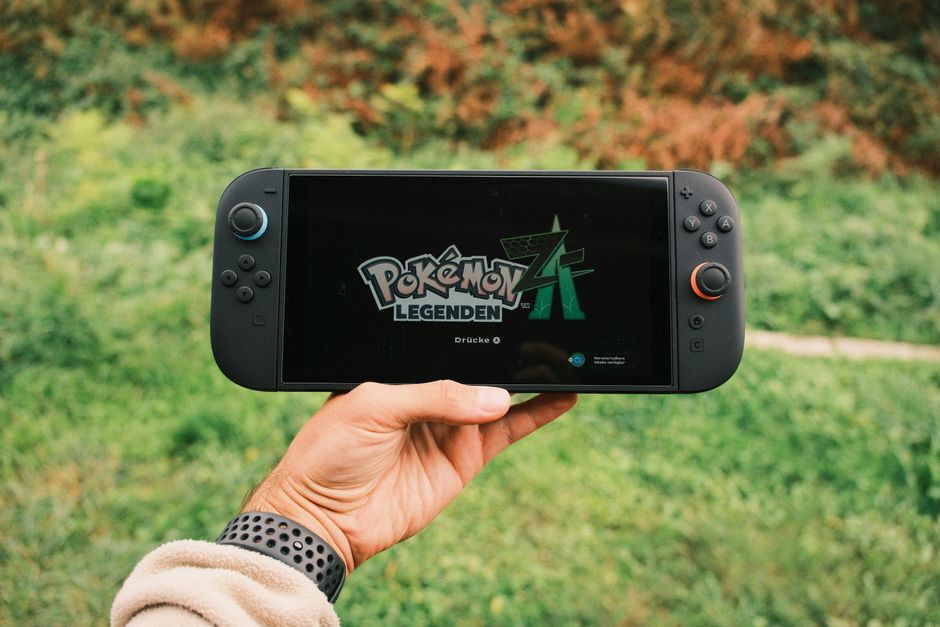
We compare the Nintendo Switch 2, Steam Deck OLED, and ROG Xbox Ally X in 2026. Find out which gaming handheld is worth your money after recent price hikes.
Handheld gaming in 2026 has reached a fascinating, albeit expensive, crossroads. What once started as a niche market of portable companion devices has matured into a multi-billion-dollar industry of pocket-sized powerhouses. Today, gamers expect desktop-class graphics, gorgeous high-refresh-rate displays, and flawless software optimization on devices they can carry in a backpack.
However, navigating the hardware market in 2026 is trickier than ever. A global shortage of DRAM and NAND flash memory has caused unprecedented price hikes across almost all major hardware manufacturers. Valve’s beloved Steam Deck OLED has seen steep price increases, and even Nintendo is implementing a significant price hike for its year-old Switch 2. Meanwhile, ASUS, in partnership with Microsoft, has launched a premium, top-tier powerhouse with the ROG Xbox Ally X, offering a different approach to mobile play.
Whether you want to play first-party Nintendo blockbusters, take your massive Steam library on the road, or enjoy native Xbox Game Pass experiences on Windows 11, there is a device tailored specifically for you. In this comprehensive 2026 comparison, we break down the specs, real-world performance, software experience, and current pricing of the Nintendo Switch 2, Steam Deck OLED, and ROG Xbox Ally X to help you decide where to invest your hard-earned money.
With hardware prices fluctuating rapidly in 2026, here is an at-a-glance look at how these three leading handhelds stack up in terms of hardware, software, and cost.
| Feature | Nintendo Switch 2 | Steam Deck OLED | ROG Xbox Ally X |
|---|---|---|---|
| Starting Price (Mid-2026) | $449.99 (Increasing to $499.99 on Sept 1, 2026) | $789 (512GB) / $949 (1TB) | $999.99 (1TB / 24GB RAM) |
| Display | 7.9-inch LCD, 1080p, 120Hz, HDR10, VRR (4K docked) | 7.4-inch HDR OLED, 90Hz, 800 nits (SDR) / 1000 nits (HDR) | 7.4-inch, 120Hz, Variable Refresh Rate (VRR) |
| Processor / Graphics | Custom Nvidia Tegra T239 (Drake), 1,536 Ampere CUDA Cores | 6nm AMD APU (Zen 2 CPU, RDNA 2 GPU) | AMD Ryzen AI Z2 Extreme (Zen 5/RDNA 3.5), XDNA NPU |
| Memory / RAM | 12GB LPDDR5X | 16GB LPDDR5 | 24GB LPDDR5X |
| Storage Options | 256GB UFS 3.1 (Expandable up to 2TB via microSD Express) | 512GB or 1TB NVMe SSD | 1TB PCIe Gen 4 SSD |
| Operating System | Proprietary Nintendo Switch OS | SteamOS (Linux-based) | Windows 11 Home with Xbox Full Screen Experience |
| Key Pros | Nintendo exclusive games, seamless hybrid TV docking, most affordable entry cost. | Spectacular OLED screen contrast, class-leading battery life, polished SteamOS. | Desktop-class gaming performance, 24GB memory, native Xbox Game Pass integration. |
| Key Cons | LCD display (not OLED), upcoming price hike, proprietary system constraints. | Severe 2026 price hikes, aging CPU/GPU tech, lack of official Windows compatibility. | High price tag, Windows 11 setup can feel clunky, power-hungry battery drain. |
Released on June 5, 2025, the Nintendo Switch 2 has continued Nintendo’s legacy of dominant hybrid gaming, racking up nearly 24 million units sold by mid-2026. However, due to rising memory costs, Nintendo will raise the price from $449.99 to $499.99 on September 1, 2026. Gamers in Canada, Europe, and Japan are facing similar price bumps, making summer 2026 the final window to buy at its original price.
Hardware-wise, the Switch 2 is a massive leap. It features a larger, highly vibrant 7.9-inch LCD panel capable of a 120Hz refresh rate, with HDR10 and VRR support. Under the hood lies a custom Nvidia Tegra T239 “Drake” processor featuring an octa-core CPU and Ampere-based graphics. Thanks to this architecture, the Switch 2 supports Nvidia DLSS, enabling games to output at up to 1080p in handheld mode and a crisp 4K at 60Hz when docked to an external TV.
The system is equipped with 12GB of LPDDR5X RAM and 256GB of fast UFS 3.1 storage. Nintendo has also introduced format-split pricing for first-party titles, selling digital editions for $59.99 while physical cards retail for $69.99. The library is incredibly strong, highlighted by current blockbusters like Metroid Prime 4: Beyond, Splatoon Raiders, and Pokémon Pokopia.
For years, Valve’s Steam Deck was praised as the undisputed king of handheld value. Unfortunately, the economic realities of 2026 have shifted. Due to a severe global DRAM and NAND flash shortage, Valve hiked prices in late May 2026. The 512GB Steam Deck OLED now costs $789, while the 1TB model has climbed to $949. While it remains a premium piece of hardware, it is no longer the budget-friendly alternative it once was.
Despite the high cost, the Steam Deck OLED is still an engineering marvel. Its 7.4-inch HDR OLED display remains the best screen on any gaming handheld, offering perfect black levels, a 90Hz refresh rate, and up to 1,000 nits of peak brightness. For indie games and emulation, nothing beats the visual pop of this display. Battery life is also excellent, with the efficient 6nm AMD APU delivering between 3 and 12 hours of playtime.
The main drawback in 2026 is performance headroom. Powered by an older AMD Zen 2 CPU and RDNA 2 graphics, it struggles slightly with demanding 2026 AAA releases, requiring aggressive resolution scaling to maintain smooth frame rates. However, for players who value console-like simplicity and whisper-quiet operation, SteamOS remains an unmatched joy.
If raw power and flexibility are your top priorities, the ROG Xbox Ally X is the undisputed champion of 2026. Launched in late 2025 as a premium collaboration between ASUS and Microsoft, this high-end device retails for $999.99. While it is a significant investment, the Ally X offers hardware specifications that make its price tag much easier to swallow, especially compared to the inflated pricing of the 1TB Steam Deck OLED.
The heart of the ROG Xbox Ally X is the cutting-edge AMD Ryzen AI Z2 Extreme processor. This is paired with an incredible 24GB of high-speed LPDDR5X RAM and a massive 1TB PCIe Gen 4 SSD. In 2026, having 24GB of RAM is a game-changer, allowing the system to allocate ample memory to the graphics card while leaving plenty of system memory for demanding games.
The Ally X features a 7.4-inch 120Hz display with full VRR support. Running Windows 11 Home, the device utilizes the streamlined “Xbox Full Screen Experience” overlay, fixing the clunky Windows navigation of previous generations. This provides direct access to Xbox Game Pass, the Epic Games Store, and Steam out of the box, making the ROG Xbox Ally X an absolute beast.
Selecting the best gaming handheld in 2026 depends entirely on your gaming habits, budget, and the ecosystem of games you already own:
1. Assess Your Budget and Value: Prior to 2026, the Steam Deck was the clear value choice. However, with the 512GB Steam Deck OLED now at $789 and the Switch 2 rising to $499.99, the pricing landscape has changed. If you want the most affordable entry point into high-quality gaming, you should buy the Nintendo Switch 2 before the September price hike. If you are willing to spend close to $1,000, the extra $50 jump from a 1TB Steam Deck ($949) to the ROG Xbox Ally X ($999.99) is highly recommended, as the Ally X offers significantly superior processing power and 8GB more RAM.
2. Consider Game Compatibility: If you love Nintendo’s first-party franchises like Mario, Zelda, and Pokémon, the Switch 2 is your only option. For PC gamers, the choice comes down to catalog depth. The Steam Deck OLED is perfect for Steam users who play indies, older titles, and verified games. However, if you are a subscriber to Xbox Game Pass or regularly purchase games on Epic, the Windows-powered ROG Xbox Ally X runs these platforms natively without complex workarounds.
3. Prioritize Portability and Battery Life: If you play primarily away from power outlets, the Steam Deck OLED is the winner thanks to its massive battery efficiency. The Nintendo Switch 2 is also highly portable, though its larger screen and Tegra processor result in shorter battery runtimes than the original Switch. The ROG Xbox Ally X is power-hungry; despite its improved battery capacity over the original Ally, playing demanding AAA titles at high settings will drain the battery in under two hours.
Q1: Why did the prices of the Steam Deck OLED and Nintendo Switch 2 increase in 2026?
Both Valve and Nintendo have been heavily impacted by an ongoing global shortage of DRAM and NAND flash memory chips. These components have skyrocketed in price due to massive industrial demand for AI-related hardware, forcing manufacturers to pass the increased costs onto consumers.
Q2: Is the Nintendo Switch 2 backward compatible with original Switch games?
Yes, the Nintendo Switch 2 is fully backward compatible with physical Switch game cards and digital library purchases. Additionally, many older Switch games receive automatic performance and resolution enhancements when played on the new hardware.
Q3: Can the Steam Deck OLED run Windows games from launchers other than Steam?
The Steam Deck OLED runs SteamOS, which is Linux-based. While you can install third-party launchers like Epic Games using community tools, they do not run natively. Games requiring aggressive anti-cheat software (like Destiny 2 or Fortnite) will not run on SteamOS at all.
Q4: Why does the ROG Xbox Ally X have 24GB of RAM instead of 16GB?
Modern AAA games in 2026 are highly demanding. Traditional 16GB handhelds must split their RAM between the system CPU and GPU, often starving the system. By providing 24GB of memory, the ROG Xbox Ally X allows the GPU to utilize up to 8GB of dedicated video memory while leaving a robust 16GB for system tasks.
The handheld gaming market of 2026 is more competitive, powerful, and expensive than ever before. After analyzing the current pricing, performance, and software ecosystems, we have crowned our winners.
The ROG Xbox Ally X is the Best Overall PC Gaming Handheld of 2026. With Valve’s 1TB Steam Deck OLED price jumping to $949, the $999.99 ROG Xbox Ally X is now the far better purchase for PC enthusiasts. Its Ryzen AI Z2 Extreme processor, 24GB of RAM, and VRR-supported screen offer a generational leap in performance and future-proofing that the older Steam Deck hardware simply cannot match.
However, if you want the absolute best overall value and family-friendly gaming, the Nintendo Switch 2 remains the Best Hybrid Console. At $449.99 (or even at its upcoming $499.99 price point), it offers an unmatched library of exclusive first-party games, hassle-free TV docking, and highly optimized local multiplayer experiences that PC handhelds cannot replicate.
Lastly, the Steam Deck OLED remains the Best Handheld for Indie Games and Battery Life. If you can find a used unit or don’t mind paying the premium new price, its stunning OLED screen and polished SteamOS software experience provide a level of portable comfort and seamlessness that Windows-based rivals are still struggling to match.
Prices and features mentioned are accurate as of the date of publication. Always check the official provider website for the most current pricing and availability.




