Physical Address
304 North Cardinal St.
Dorchester Center, MA 02124
Physical Address
304 North Cardinal St.
Dorchester Center, MA 02124

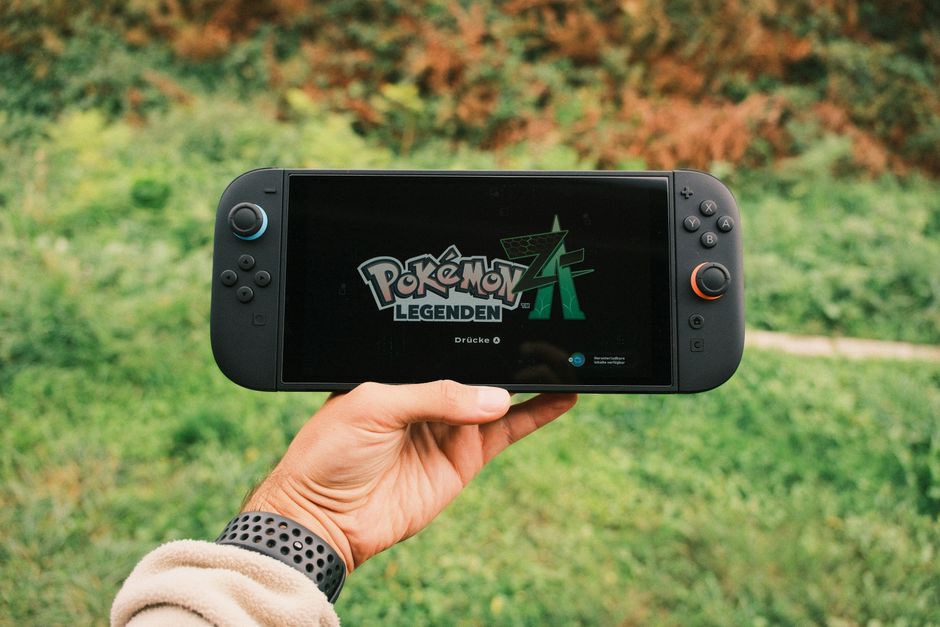
In 2026, the Nintendo Switch 2 and Steam Deck OLED face massive price hikes. We compare specs, prices, libraries, and screens to help you choose the best.
The handheld gaming landscape has experienced a monumental shift over the past year. In 2026, portable gaming is no longer a niche alternative; it is a primary battleground for hardware giants. With the Nintendo Switch 2 hitting its stride since its June 2025 release and Valve’s Steam Deck OLED remaining a juggernaut for PC enthusiasts, choosing between these two systems has never been harder.
However, the financial reality of 2026 has added a major twist to this rivalry. A global memory and storage crisis, alongside rising component tariffs, has forced both companies to hike their prices. Nintendo announced a price jump of the Switch 2 to $499.99 effective September 1, 2026, while Valve stunned the market in May 2026 by raising the Steam Deck OLED models to $789 and $949.
This comparison is no longer just about choosing your favorite library; it is about assessing hardware value under current economic pressures. In this comprehensive breakdown, we pit the Nintendo Switch 2 against the Steam Deck OLED to help you decide which powerhouse deserves your hard-earned cash in 2026.
For years, gamers’ dreams of portable, high-fidelity gaming were split between two vastly different philosophies. Nintendo prioritized seamless hybrid versatility and polished first-party ecosystems, whereas Valve championed open-source PC freedom and raw performance. Today, those boundaries are blurring, yet the distinct identities of both consoles remain stronger than ever.
With hardware costs soaring, making the right purchasing decision requires a deep look at both the upfront investments and the long-term software costs. Whether you are looking for the absolute best display on the go, or a system that can elegantly transition from a handheld to a 4K living room console, we have you covered.
Before we dive into the granular details of processing power, screen technologies, and game libraries, let’s take an at-a-glance look at how these two titans stack up side-by-side in 2026.
| Feature | Nintendo Switch 2 | Steam Deck OLED |
|---|---|---|
| Starting Price (2026) | $499.99 (256GB) | $789.00 (512GB) / $949.00 (1TB) |
| Display | 7.9-inch LCD, 1080p, up to 120Hz, HDR10, VRR | 7.4-inch HDR OLED, 1280×800, up to 90Hz, 1,000 nits |
| Processor (SoC) | Custom Nvidia Tegra T239 (‘Drake’) | 6nm AMD APU (Zen 2 / RDNA 2) |
| System Memory | 12 GB LPDDR5X | 16 GB LPDDR5 |
| Internal Storage | 256 GB UFS 3.1 (expandable via microSD Express) | 512 GB or 1 TB NVMe SSD (user-upgradable) |
| Docked Output | Up to 4K at 60Hz via HDMI with DLSS/upscaling | Up to 4K at 60Hz / 1440p at 120Hz via USB-C Dock |
| Game Library | Nintendo First-Party, Switch 1 backwards compatibility | Steam PC Library, massive indie and emulation support |
Nintendo’s next-generation hardware has proven to be a massive commercial success since its debut on June 5, 2025. By mid-2026, the console has already moved over 23 million units globally. Under the hood, Nintendo made significant strides to ensure the system is built for the future of gaming, ditching the underpowered limitations of its predecessor.
Powering the Switch 2 is a custom Nvidia Tegra T239 processor, codenamed ‘Drake’. It features an octa-core ARM Cortex-A78C CPU paired with 1,536 Ampere-based CUDA cores. This setup is supported by 12 GB of high-speed LPDDR5X memory. While it runs at a conservative clock rate in handheld mode to preserve battery life, docking the console unleashes its full potential, enabling Nvidia’s Deep Learning Super Sampling (DLSS) to upscale supported games to a crisp 4K resolution at 60 Hz.
The physical hardware has also received a premium facelift. The Switch 2 features a spacious 7.9-inch LCD screen. While some hardware purists were disappointed by the lack of an OLED panel, Nintendo compensated by including a 120Hz refresh rate, HDR10 support, and a Variable Refresh Rate (VRR) to eliminate screen tearing. Furthermore, storage has been drastically upgraded to a swift 256 GB of UFS 3.1 storage, which can be expanded up to 2 TB using next-generation microSD Express cards.
Ergonomically, the console introduces the Joy-Con 2 controllers, which connect via magnetic rails for a firmer, more seamless snap. A new ‘C’ button on the controller handles ‘GameChat,’ a social suite that leverages a built-in microphone at the top of the console. This makes voice chat and real-time screen-sharing easier than ever before on a Nintendo platform.
However, this premium experience comes at a cost. Due to the ongoing global memory crisis and tariff fluctuations, Nintendo announced a price hike. Starting September 1, 2026, the base price of the Nintendo Switch 2 in the United States rises from its introductory $449.99 to $499.99. Even with this increase, it remains a highly compelling, streamlined hybrid console with a robust slate of 2026 exclusive releases like Fire Emblem: Fortune’s Weave and the highly anticipated Legend of Zelda: Ocarina of Time remake.
Valve’s Steam Deck OLED has long been celebrated as the gold standard for handheld PC gaming. However, 2026 has been a turbulent year for PC hardware pricing. In late May 2026, Valve stunned the industry by raising the price of its OLED models by over 40%. The 512GB OLED model now sits at $789, while the 1TB model has climbed to a premium price of $949.
Valve cited industry-wide semiconductor shortages, particularly the dramatic rise in DRAM and high-density SSD costs, as the main drivers behind this price correction. While these price hikes have severely impacted its standing as a budget-friendly value king, the actual hardware remains a technical marvel that PC gamers swear by.
The centerpiece of the device is its gorgeous 7.4-inch HDR OLED display. Running at a native 1280 x 800 resolution with a 90Hz refresh rate, this panel offers infinite contrast ratios, true pitch-blacks, and a brilliant 1,000 nits of peak brightness. Visually, games look stunningly rich and colorful, easily outshining the Switch 2’s larger but less vibrant LCD screen in pure handheld mode.
Internally, the Steam Deck OLED relies on a custom 6nm AMD APU containing a Zen 2 processor and RDNA 2 graphics architecture. Backed by 16 GB of LPDDR5 RAM, it offers robust raw compute power for running demanding modern PC titles. Unlike a traditional console, the Steam Deck runs SteamOS—a Linux-based system that uses Valve’s Proton compatibility layer to run Windows PC games seamlessly.
Furthermore, Valve’s system is an open playground. Users can boot into a full desktop mode, install third-party applications, configure deep emulation systems, and even swap out the internal M.2 2230 SSD. However, with the 2026 storage crisis pushing SSD prices to record highs, upgrading storage yourself has become a premium luxury rather than a cheap DIY project.
Deciding between these two incredible systems in 2026 comes down to your gaming preferences, your budget, and how you prefer to play. Let’s break down the key deciding factors.
If you intend to play primarily on your television, the Nintendo Switch 2 is the clear victor. Thanks to its modern Nvidia architecture and DLSS upscaling, the Switch 2 outputs clean 1080p, 1440p, or upscaled 4K visuals on a big screen. The Steam Deck OLED, while capable of outputting to external displays via a USB-C dock, is limited by its native 800p targeting. Pushing modern PC games to higher resolutions on a TV requires aggressive setting compromises that can severely impact performance.
When playing in handheld mode, the narrative flips. The Steam Deck’s 7.4-inch OLED display is simply spectacular. The true blacks and HDR capabilities provide an immersive depth that the Switch 2’s 7.9-inch LCD simply cannot replicate. Even though the Switch 2 supports a faster 120Hz refresh rate and VRR, the vibrant colors and perfect contrast of Valve’s OLED screen make it the superior visual experience for pure on-the-go gaming.
Software is the ultimate decider. The Nintendo Switch 2 is the home of iconic exclusives you cannot play anywhere else legally. It is also fully backward compatible with physical and digital Switch 1 games, ensuring your existing library carries over. On the other hand, the Steam Deck gives you instant access to your pre-existing Steam library. PC games are historically much cheaper than console games, and the platform lacks the paywalls for online multiplayer that Nintendo enforces. Furthermore, the Steam Deck is an emulation powerhouse, capable of running classic games from dozens of legacy consoles.
Budget is a massive differentiator in 2026. At $499.99, the Nintendo Switch 2 represents a much lower barrier to entry. Valve’s Steam Deck OLED starting at $789 is a steep financial commitment. However, you must weigh this against software costs. Nintendo has introduced a dual pricing structure where digital games cost $59.99 but physical cartridges can run $69.99 or higher. Meanwhile, Steam’s seasonal sales and deep discounts mean a Steam Deck owner can build a massive library of games for a fraction of what a Switch 2 owner will spend on first-party software.
To help you make your final decision, here are some of the most common questions gamers are asking about these devices in 2026.
Yes, the Nintendo Switch 2 is fully backward compatible with physical Switch game cards and digital purchases from the Nintendo eShop. Some games may even receive automatic performance and resolution boosts when played on the newer hardware.
Valve raised the prices of the 512GB and 1TB OLED models by over 40% due to an industry-wide shortage of DRAM and flash storage, combined with rising supply chain and tariff costs. Valve can no longer subsidize the hardware at its original launch pricing.
Yes, but only when docked. The Switch 2 uses an Nvidia Tegra T239 chip with DLSS (Deep Learning Super Sampling) to upscale and output games at up to 4K resolution at 60 Hz on compatible televisions.
The Steam Deck OLED features a robust 50Whr battery that can deliver between 3 and 12 hours of gameplay depending on the game’s intensity. While the Switch 2 has excellent power efficiency, the Steam Deck OLED generally holds an edge for lighter indie titles and emulation due to the low-power consumption of its OLED panel.
Both the Nintendo Switch 2 and the Steam Deck OLED are phenomenal machines that represent the absolute pinnacle of handheld engineering in 2026. However, their drastically different price points and ecosystems draw a clear line in the sand.
If you are a PC gamer with an existing Steam library, value screen quality above all else, and have the budget to absorb the hefty $789 starting price, the Steam Deck OLED is an enthusiast’s dream come true. Its open architecture and breathtaking screen deliver an unmatched premium portable PC experience.
However, for the vast majority of gamers, the Nintendo Switch 2 is our top recommendation for 2026. At $499.99, it is significantly more affordable, offers effortless hybrid docking, features seamless social integration via Joy-Con 2, and boasts a legendary lineup of exclusive games. It is the most versatile, polished, and accessible handheld console on the market today.
Prices and features mentioned are accurate as of the date of publication. Always check the official provider website for the most current pricing and availability.