Physical Address
304 North Cardinal St.
Dorchester Center, MA 02124
Physical Address
304 North Cardinal St.
Dorchester Center, MA 02124

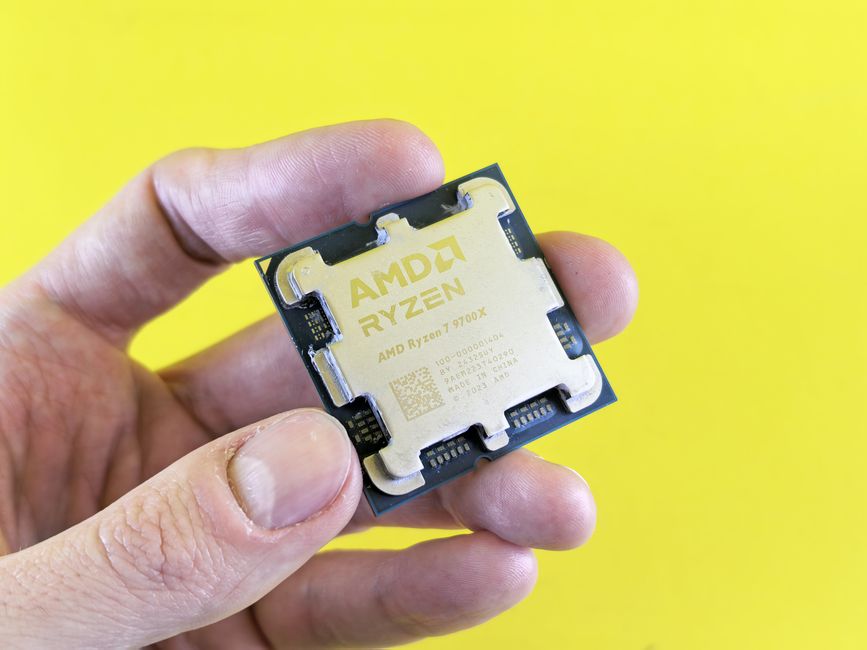
We compare AMD's Ryzen 7 9850X3D and Intel's Core Ultra 7 270K Plus. Find out which 2026 CPU wins in gaming, productivity, and value.
The year 2026 has ushered in one of the most fiercely contested battles in desktop processor history. Gamers, streamers, and PC hardware enthusiasts are witnessing two giant silicon designers clash with completely contrasting philosophies. On one side, AMD seeks to cement its absolute dominance in the gaming sphere with the newly launched Ryzen 7 9850X3D, a refined 3D V-Cache powerhouse built to extract maximum frame rates. On the other side, Intel has fought back aggressively with the Core Ultra 7 270K Plus, an optimized Arrow Lake-S Refresh chip designed to offer unmatched multi-threaded value and versatile everyday performance.
This comparison is far more nuanced than a simple frame-rate battle. In 2026, building a high-end system requires a careful look at platform longevity, power efficiency, RAM scaling, and total platform cost. While AMD doubles down on physical cache and drop-in upgrade paths, Intel has radically adjusted its pricing structure to make its 24-core beast incredibly tempting for budget-conscious builders. We have thoroughly analyzed the latest 2026 real-world benchmarks, power consumption metrics, and retail pricing to help you decide which processor deserves a spot in your next PC build.
Before diving into the detailed benchmarks and architectural deep dives, let us take a look at the technical specifications, launch pricing, and current retail reality of both chips in mid-2026.
| Specification / Feature | AMD Ryzen 7 9850X3D | Intel Core Ultra 7 270K Plus |
| :— | :— | :— |
| **Architecture** | Zen 5 (Granite Ridge) | Arrow Lake-S Refresh (Plus Line) |
| **Socket Compatibility** | Socket AM5 | Socket LGA 1851 |
| **Manufacturing Node** | 4nm (TSMC) | 3nm (TSMC) |
| **Cores / Threads** | 8 Cores / 16 Threads | 24 Cores (8 P-Cores + 16 E-Cores) / 24 Threads |
| **Base Clock Speed** | 4.7 GHz | 3.7 GHz (P-Cores) / 3.0 GHz (E-Cores) |
| **Maximum Boost Clock** | Up to 5.6 GHz | Up to 5.5 GHz (P-Cores) / 4.7 GHz (E-Cores) |
| **L3 Cache Amount** | 96 MB (with 2nd Gen 3D V-Cache) | 36 MB |
| **Thermal Design Power (TDP)** | 120W (Peak PPT ~162W) | 125W Base (Peak PL2 ~250W) |
| **Memory Support** | DDR5 (Native 5600 MT/s) | DDR5 (Native 7200 MT/s) |
| **Launch MSRP** | $499.99 | $299.99 (Revised to $349.99) |
| **Current Street Price (Mid-2026)** | ~$454 – $469 | ~$265 – $310 |
| **Best Suited For** | Uncompromising High-FPS Gaming | Heavy Multi-tasking & Creative Workloads |
The technical differences highlight two vastly different designs. AMD relies on a lean, high-frequency 8-core design backed by a massive L3 cache layer, while Intel floods the motherboard with 24 physical cores split across performance and efficiency tiles to dominate raw computational workloads.
AMD officially launched the Ryzen 7 9850X3D on January 29, 2026, with an MSRP of $499.99. Designed to sit directly above the highly successful 9800X3D, the 9850X3D utilizes TSMC’s refined 4nm process node and is built on the Zen 5 architecture. The big structural upgrade in this model is AMD’s binning process. While the older 9800X3D was capped at a 5.2 GHz boost frequency, the superior silicon selection on the 9850X3D allows it to comfortably reach a blistering 5.6 GHz out of the box, addressing the single-threaded performance deficit that historically held back older X3D chips.
The secret behind its unmatched gaming performance remains the second-generation 3D V-Cache technology. By stacking 64MB of high-speed SRAM directly on top of the CCD, AMD supplies this 8-core processor with a massive 96MB pool of L3 cache. In modern games like Baldur’s Gate 3, Starfield, and Cyberpunk 2077, this massive cache significantly reduces the frequency of the CPU needing to fetch data from the system’s RAM. The results in CPU-bound scenarios are phenomenal. In 1080p testing alongside next-gen graphics cards like the GeForce RTX 5090, the Ryzen 7 9850X3D dominates, securing 15% to 25% higher average frame rates and much smoother 1% low frame times compared to the best Intel has to offer.
Furthermore, the 9850X3D is incredibly resilient against slow memory configurations. Because the 3D V-Cache handles the bulk of the processor’s active data needs, gaming performance remains almost identical whether you pair it with cheap DDR5-4800 or high-end, tuned DDR5-6000. This means builders can save significant cash on system RAM while still getting the best possible frame rates. Finally, because it uses the established AM5 socket, the 9850X3D represents a fantastic upgrade path. AMD has committed to supporting AM5 through at least 2027, ensuring you can drop in a future Zen 6 CPU without swapping your motherboard.
Intel’s journey with its Core Ultra desktop line has been a rollercoaster. The original Arrow Lake processors that debuted in late 2024 were widely criticized for underwhelming gaming metrics and microcode latency issues. To correct course, Intel released the “Core Ultra 200S Plus” refresh in March 2026, spearheaded by the Core Ultra 7 270K Plus. Built on a cutting-edge 3nm TSMC node, the 270K Plus features 24 physical cores (8 Performance cores and 16 Efficient cores) and, notable for this generation, discards hyperthreading entirely. This means the 24 cores process exactly 24 simultaneous threads, boosting overall instruction-per-clock efficiency.
Intel originally launched the 270K Plus at an incredibly aggressive $299.99 MSRP to disrupt AMD’s market hold. Although Intel quietly adjusted the official price guidance to $349.99 in July 2026, heavy retail competition has kept actual store prices at major retailers like Amazon and Newegg sitting comfortably between $265 and $310. At this price point, the multi-threaded capabilities of the 270K Plus are absolutely unmatched. In workloads like Blender rendering, file compression via 7-Zip, and Chromium code compilation, the 270K Plus routinely beats the Ryzen 7 9850X3D by 40% to 50%.
Gaming performance has also taken a massive step forward compared to the original 200S lineup. Thanks to Intel’s new “iBot” (Intel Binary Optimization Tool) and direct hardware scheduler improvements, latency has been slashed. While it still cannot quite match the raw gaming frame rates of AMD’s 3D V-Cache at 1080p, the gap shrinks to single-digit percentages at realistic 1440p and 4K resolutions. For content creators who edit 4K video in DaVinci Resolve or stream on OBS using the chip’s integrated Xe-LPG graphics engine and QuickSync, the 270K Plus is a flawless general-purpose powerhouse.
Choosing between these two incredible 2026 processors comes down to identifying your primary use case and budget. Consider the following scenarios:
No. One of the greatest benefits of AMD’s 2nd Gen 3D V-Cache is its independence from system memory speeds. Benchmark data in 2026 shows that the gaming performance difference between budget-friendly DDR5-4800 RAM and high-end DDR5-6000 RAM is less than 1% on the Ryzen 7 9850X3D. This allows you to save money on memory without sacrificing frames.
Yes, from an upgradability standpoint. Industry reports indicate that Intel’s upcoming next-generation “Nova Lake” architecture will transition to a completely new socket design. Buying a Core Ultra 7 270K Plus on the LGA 1851 platform today means that any future CPU upgrade down the line will require purchasing a new motherboard as well.
The Ryzen 7 9850X3D is a highly binned, higher-clocked version of the 9800X3D. Both share the same underlying Zen 5 architecture, 8-core/16-thread configuration, and 96MB of L3 cache. However, due to superior silicon binning, the 9850X3D boosts up to 5.6 GHz out of the box compared to the 9800X3D’s 5.2 GHz, resulting in a modest 3% to 8% gaming performance improvement depending on the title.
While Intel’s shift to TSMC’s 3nm node has made the Core Ultra 7 270K Plus run much cooler than older 13th and 14th Gen processors, it is still a powerful chip that can draw up to 250W under sustained multi-threaded workloads. To prevent thermal throttling during heavy productivity tasks, a high-quality 240mm or 360mm AIO liquid cooler is highly recommended.
The crown for the Absolute Best Gaming CPU of 2026 firmly belongs to the AMD Ryzen 7 9850X3D. If your PC is primarily a gaming machine and you want to ensure your graphics card is never bottlenecked, the 3D V-Cache technology remains unmatched. Combine that with the lower power draw and the peace of mind that comes with the long-lived AM5 socket upgrade path, and AMD has delivered a spectacular enthusiast product.
However, the Intel Core Ultra 7 270K Plus is easily the Best Value and Productivity CPU of 2026. For roughly $280 on the street, Intel is offering a 24-core powerhouse that absolutely demolishes AMD in creative, professional, and multi-threaded applications. If you use your computer for work, content creation, and high-tier gaming at 1440p or 4K, the massive cost savings and multi-tasking dominance of the 270K Plus make it the most logical real-world purchase for the vast majority of PC builders today.
Prices and features mentioned are accurate as of the date of publication. Always check the official provider website for the most current pricing and availability.