Physical Address
304 North Cardinal St.
Dorchester Center, MA 02124
Physical Address
304 North Cardinal St.
Dorchester Center, MA 02124
Learn the BMI formula, understand your results, and use our interactive calculator for instant health insights.
Your body mass index (BMI) is one of the most important health metrics you should monitor. Whether you’re starting a fitness journey, visiting your doctor, or simply curious about your health status, understanding your BMI and what it means is crucial for making informed decisions about your wellbeing.
In this comprehensive guide, we’ll explain everything you need to know about calculating BMI, interpreting your results, and taking action based on your findings. Plus, we’ve included an interactive BMI calculator below that gives you instant results along with personalized health insights.
Body Mass Index (BMI) is a simple numerical value that estimates body composition by comparing your weight to your height. It’s calculated using a standardized formula recognized by health organizations worldwide, including the World Health Organization (WHO) and the Centers for Disease Control and Prevention (CDC).
The BMI calculator helps healthcare professionals and individuals identify potential weight-related health risks. Research shows that BMI correlates with body fat percentage and can indicate whether you’re at a healthy weight for your height. Knowing your BMI score allows you to:
The BMI calculation is straightforward and uses metric measurements:
BMI = Weight (kg) ÷ [Height (m)]²
Let’s say you weigh 70 kg and are 1.75 meters (175 cm) tall:
If you prefer using imperial measurements:
BMI = [Weight (lbs) ÷ Height (in)²] × 703
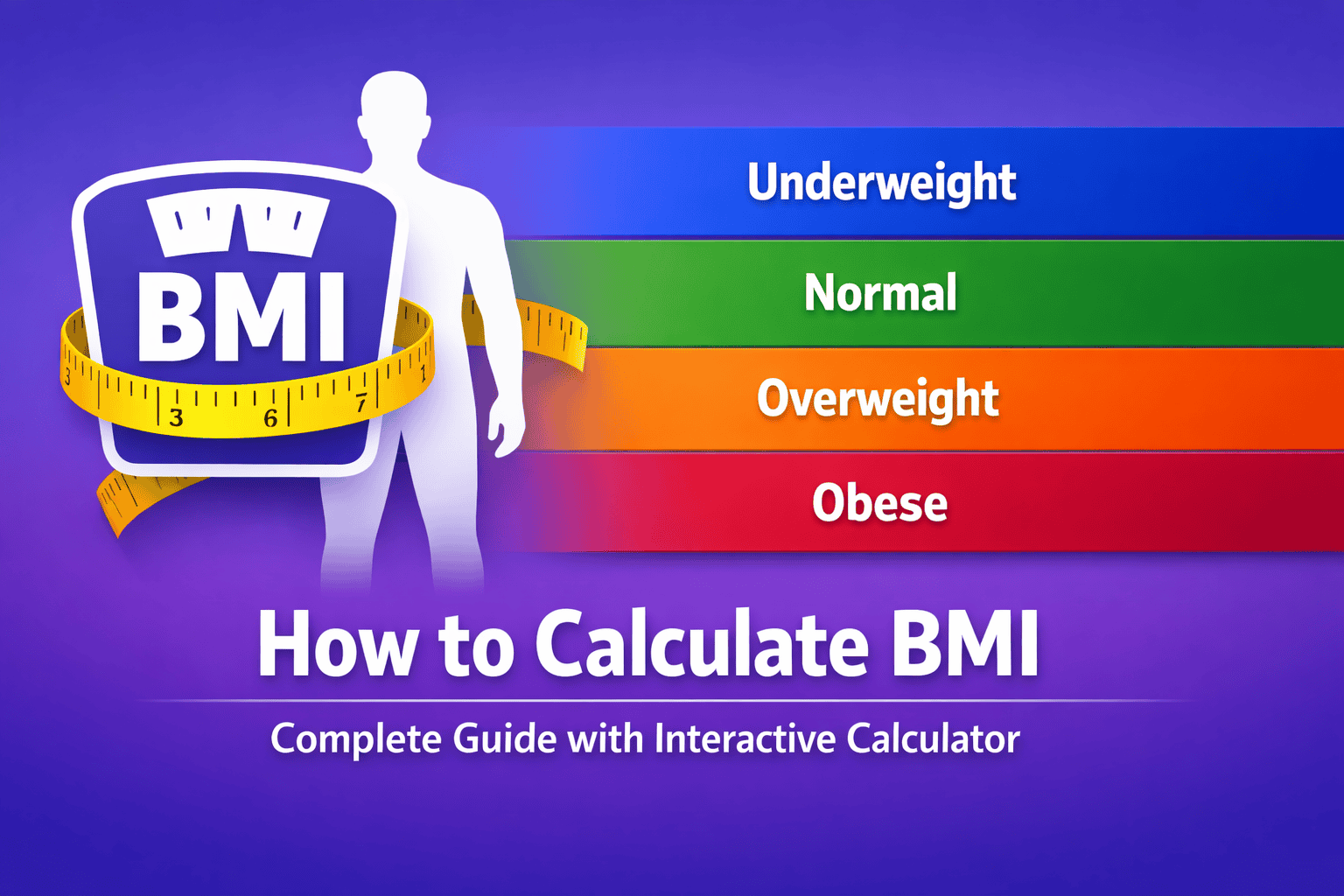
Once you calculate your BMI, the next step is understanding what your number means. The WHO standards classify BMI into four main categories:
| BMI Category | BMI Range | Health Status | Risk Level |
|---|---|---|---|
| Underweight | Below 18.5 | Below healthy range | Low (nutritional concerns) |
| Normal Weight | 18.5 – 24.9 | Healthy range | Low |
| Overweight | 25.0 – 29.9 | Above healthy range | Moderate |
| Obese | 30.0 and above | Significantly above range | High |
An underweight BMI classification may indicate insufficient calorie intake or underlying health conditions. If your BMI calculator shows you’re underweight, consult a healthcare provider to ensure you’re meeting nutritional needs.
This is the healthy BMI range where most health risks are minimized. People in this category typically have lower risks of weight-related diseases when combined with regular exercise and good nutrition.
An overweight BMI suggests your weight is above the healthy range for your height. This category often precedes obesity and may increase the risk of type 2 diabetes, heart disease, and other conditions.
An obese BMI classification indicates significant weight concerns requiring lifestyle changes or medical intervention. Healthcare professionals often recommend weight management strategies for people in this category.
Use the calculator below to instantly determine your BMI score and get personalized health insights:
Find Your Body Mass Index & Health Status
Based on WHO Standards
Disclaimer: This calculator provides estimates based on standard BMI calculations. It is intended for informational purposes only and should not be considered medical advice. Please consult with a healthcare professional for personalized health guidance.
How to use:
1. Enter your weight in kilograms
2. Enter your height in centimeters
3. Click “Calculate BMI”
4. View your results and health recommendations
While the BMI calculator is a useful screening tool, it has important limitations:
The BMI calculation doesn’t distinguish between muscle and fat. Athletes with high muscle mass may have a high BMI score despite having low body fat, resulting in potentially inaccurate health assessments.
People with the same BMI can have different health profiles depending on where they carry weight, age, gender, and ethnic background.
BMI calculations work differently for children and teens, who use age and sex-specific percentiles rather than fixed categories.
Certain conditions (hormonal disorders, medications, genetics) can affect BMI scores without necessarily indicating poor health choices.
Focus on whole foods: fruits, vegetables, lean proteins, and whole grains. Avoid processed foods high in added sugars and unhealthy fats.
Aim for at least 150 minutes of moderate-intensity exercise weekly, combined with strength training 2-3 times per week.
Check your BMI monthly to track progress and adjust lifestyle habits as needed.
Poor sleep disrupts hormones that regulate hunger and metabolism. Aim for 7-9 hours nightly.
Chronic stress increases cortisol levels, which can lead to weight gain. Practice meditation, yoga, or other relaxation techniques.
Consider working with a nutritionist or personal trainer for personalized guidance based on your BMI and health goals.
The BMI calculation is reasonably accurate for population-level screening but has limitations for individuals, especially athletes or very muscular people. It’s best used alongside other health assessments.
A BMI of 25 falls into the overweight category. While this doesn’t guarantee health problems, it suggests considering lifestyle improvements. Consult your doctor for personalized advice.
Check your BMI score monthly to track trends, but don’t obsess over small fluctuations. Weight naturally varies day-to-day due to water retention, meals, and hormones.
Children’s BMI calculations use the same formula but are interpreted differently using age and sex-specific growth charts. Consult pediatricians for children’s health assessments.
A normal BMI score doesn’t guarantee health. Consider fitness level, diet quality, mental health, sleep, and stress. Consult healthcare providers for comprehensive assessment.
This varies by individual. Use this formula: Calculate your current weight, then determine the target weight for your desired BMI range based on your height. A professional can help create realistic goals.
No, the BMI calculation treats all weight equally. Athletes may have higher BMI scores despite lower body fat percentages due to muscle mass.
The healthy BMI range is 18.5-24.9 according to WHO standards. However, individual optimal BMI varies based on genetics, age, and fitness level.
Significant BMI changes within weeks may suggest medical issues, medication side effects, or unsustainable dieting. Consult a healthcare provider if you notice sudden changes.
No, they’re different metrics. BMI estimates weight relative to height, while body fat percentage measures actual fat tissue. Body composition analysis provides more detailed information than BMI calculations alone.
Understanding your BMI is the first step toward better health. Use our interactive BMI calculator above to get your personalized score and recommendations. Remember, a healthy BMI combined with regular exercise, balanced nutrition, adequate sleep, and stress management creates the foundation for lasting wellness.
Your health matters. Calculate your BMI today and take control of your wellbeing.
Disclaimer: This guide provides information based on standard BMI calculations and WHO guidelines. It is intended for informational purposes only and should not replace professional medical advice. Always consult with a healthcare professional for personalized health guidance based on your individual circumstances.
Prices and features mentioned are accurate as of the date of publication. Always check the official provider website for the most current pricing and availability.