Physical Address
304 North Cardinal St.
Dorchester Center, MA 02124
Physical Address
304 North Cardinal St.
Dorchester Center, MA 02124

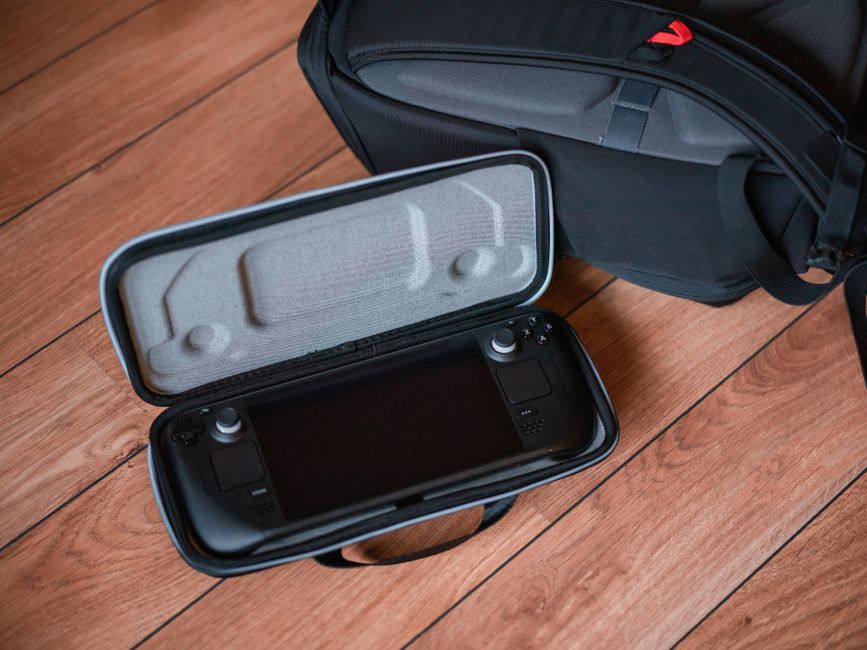
Compare the Lenovo Legion Go 2 and Steam Deck OLED. We analyze 2026 prices, specs, performance, displays, and software to help you choose the best.
The handheld PC gaming landscape has matured rapidly, transforming from a niche enthusiast market into a mainstream battlefield. In 2026, we are witnessing some of the most advanced, visually stunning, and powerful portable systems ever engineered. Two of the most talked-about devices in this space are the newly released Lenovo Legion Go 2 and the fan-favorite Steam Deck OLED.
While the original models established these brands as major competitors, their latest iterations represent entirely different philosophies of mobile gaming. Lenovo has doubled down on absolute performance, offering a spec-heavy powerhouse equipped with AMD’s next-generation silicon and a massive display. Meanwhile, Valve continues to rely on seamless software integration, unmatched ergonomics, and a beautiful, highly efficient screen.
Choosing between these two heavyweights has also become a trickier financial equation due to massive market changes. Recent supply chain realities and memory price hikes in mid-2026 have led to significant price jumps for both devices, shifting the value proposition for potential buyers. In this comprehensive head-to-head comparison, we will break down the displays, performance, software, ergonomics, and battery life to help you decide which premium handheld deserves your hard-earned money.
To give you an immediate snapshot of how these two premium devices stack up, we have compiled their key specifications and current 2026 retail prices side by side. This table highlights the stark differences between Lenovo’s focus on high-end raw hardware and Valve’s focus on tailored, balanced efficiency.
| Feature | Lenovo Legion Go 2 | Steam Deck OLED |
|---|---|---|
| Display | 8.8-inch PureSight OLED, 144Hz, VRR, 1920×1200, 1100 nits | 7.4-inch HDR OLED, 90Hz, 1280×800, 1000 nits |
| Processor (APU) | AMD Ryzen Z2 or Z2 Extreme (Zen 5 / RDNA 3.5) | Custom AMD “Sephiroth” APU (6nm Zen 2 / RDNA 2) |
| RAM | 16GB or 32GB LPDDR5X (8000MHz) | 16GB LPDDR5 (6400MHz) |
| Storage Options | 1TB or 2TB PCIe Gen 4 SSD | 512GB or 1TB NVMe SSD |
| Operating System | Windows 11 Home or SteamOS (Pre-installed option) | SteamOS 3.0 (Linux-based) |
| Battery Capacity | 74Wh (Super Rapid Charge) | 50Wh |
| Weight | 2.2 lbs (approx. 1 kg) | 1.4 lbs (approx. 640 grams) |
| Starting Price (2026) | $1,099 to $1,200 (Z2 Base); $1,349 to $1,700 (Z2 Extreme) | $789 (512GB OLED); $949 (1TB OLED) |
As the table demonstrates, the Lenovo Legion Go 2 leans heavily into raw power and display real estate, while the Steam Deck OLED aims for a lighter, more streamlined, and slightly more affordable gaming experience.
Both devices boast gorgeous organic light-emitting diode (OLED) panels, but their implementations are vastly different. The Steam Deck OLED features a 7.4-inch screen with a 1280×800 resolution and a 90Hz refresh rate. While that resolution might seem modest on paper, it is incredibly well-suited for a screen of this size, producing sharp, vibrant visuals while keeping the performance demands on the processor low. The panel also supports stunning HDR with a peak brightness of 1000 nits, which makes modern titles with high dynamic range look breathtakingly deep and colorful.
Lenovo, on the other hand, has engineered a visual masterpiece with the Legion Go 2. It features a massive 8.8-inch PureSight OLED display running at a crisp 1920×1200 resolution. Not only is it larger and sharper, but it also supports a blazing-fast 144Hz refresh rate and, crucially, Variable Refresh Rate (VRR). VRR is a massive upgrade over the original Legion Go, as it smoothly eliminates screen tearing and judder when frame rates fluctuate. Reaching up to 1100 nits of peak brightness, the Legion Go 2 offers one of the most immersive, colorful, and fluid viewing experiences of any handheld console ever made.
Under the hood, these handhelds exist in different performance eras. The Steam Deck OLED relies on Valve’s custom “Sephiroth” APU, built on a 6nm process with Zen 2 CPU cores and RDNA 2 graphics. While Valve has highly optimized SteamOS to squeeze every drop of performance from this chip, it struggles with the most demanding AAA releases of 2026. It is an exceptional engine for indie titles, emulation, and mid-tier older games, but it requires substantial settings compromises to play heavy games like Black Myth: Wukong or Cyberpunk 2077 at stable frame rates.
The Lenovo Legion Go 2 is an absolute performance monster. It is powered by AMD’s cutting-edge Ryzen Z2 Extreme processor (or the base Ryzen Z2 in entry models), built on AMD’s advanced “Zen 5” CPU and RDNA 3.5 graphics architectures. This chip delivers a generational leap in computing power and graphical capability, effortlessly outperforming the Steam Deck OLED in side-by-side gaming benchmarks. Furthermore, the high-end Legion Go 2 models pack up to 32GB of ultra-fast LPDDR5X RAM clocked at 8000MHz. This massive pool of high-speed memory ensures that modern AAA titles have plenty of headroom for both system processes and dedicated VRAM, leading to much smoother frame rates and faster loading times.
Portability is where the Steam Deck OLED shines brightest. Weighing in at just 1.4 lbs, it is comfortable to hold for hours at a time. The ergonomics are masterfully designed, with deep, comfortable grips and a button layout that places all controls within easy reach. One of Valve’s defining design choices is the inclusion of dual capacitive trackpads. These trackpads make navigating desktop menus, playing strategy games, and aiming in shooters infinitely easier, serving as a standout feature for PC gaming enthusiasts.
The Lenovo Legion Go 2 is a much heavier beast, tipping the scales at 2.2 lbs. This extra weight is the trade-off for its massive screen and robust cooling solution. While it can feel fatiguing during long, unsupported play sessions, Lenovo has refined the ergonomics of its detachable TrueStrike controllers compared to the first generation. The controllers feature drift-free, frictionless Hall Effect sensors and can be detached completely. One of the most innovative features is “FPS Mode,” where you can slot the right controller into an included magnetic base and use it as a highly accurate vertical ergonomic mouse. Additionally, the Legion Go 2 features a sturdy, fully adjustable built-in kickstand on the back, allowing you to prop it up on a table and play comfortably with the controllers detached.
The software experience has historically been a major dividing line between these two platforms. The Steam Deck OLED runs SteamOS, a customized Linux-based operating system designed specifically for a console-like experience. Booting the Steam Deck feels exactly like turning on a dedicated gaming console. It is clean, fast, and incredibly reliable. Valve’s Proton compatibility layer handles translating Windows games to Linux beautifully, making the vast majority of Steam games playable with a single click. However, it does struggle with certain games that utilize aggressive kernel-level anti-cheat software, such as Destiny 2 or Call of Duty.
The Lenovo Legion Go 2 natively runs Windows 11 Home, overlaid with Lenovo’s custom Legion Space software. Windows 11 gives you absolute freedom: you can install any storefront, including Xbox Game Pass, Epic Games Store, Battle.net, and GOG, without jumping through complex workarounds. It also means you can play every single anti-cheat-protected multiplayer game without issue. However, Windows 11 is not natively designed for small touchscreens, which can make navigation clunky and frustrating compared to the seamless nature of SteamOS. Interestingly, in June 2026, Lenovo launched an official SteamOS-preinstalled variant of the Legion Go 2 starting at $1,199. This gives buyers the best of both worlds, letting them enjoy the premium Lenovo hardware with Valve’s highly optimized, console-like operating system straight out of the box.
Battery life is the Achilles’ heel of high-performance handhelds, but both manufacturers have made admirable strides. The Steam Deck OLED features a 50Wh battery. Because the Sephiroth APU and the 800p screen are incredibly power-efficient, the Steam Deck OLED can achieve between 3 to 12 hours of gameplay depending on the intensity of the game. For lighter indie titles or older emulation, you can easily go a whole afternoon without needing a charger.
To combat the massive power draw of its Zen 5 processor and 144Hz screen, the Lenovo Legion Go 2 features a massive 74Wh battery. While this is one of the largest batteries in a mainstream handheld, the power-hungry hardware means real-world battery life is highly dependent on your power profile. When running the device at its full 35-Watt TDP (Thermal Design Power) mode for maximum performance in demanding AAA games, the battery will drain in just over an hour. However, if you drop the settings and TDP to match the Steam Deck’s output, the 74Wh battery can easily deliver 4 to 6 hours of gaming. Lenovo also includes Super Rapid Charge technology, allowing you to quickly top up the battery in between gaming sessions.
The financial math of buying a handheld PC has shifted dramatically in mid-2026. Valve recently announced a substantial price hike for the Steam Deck OLED due to rising component and memory costs. The 512GB model now costs $789, while the 1TB model has climbed to $949. While it is still a compelling package, it is no longer the undisputed budget-friendly king of the market.
The Lenovo Legion Go 2 sits firmly in the luxury, enthusiast price bracket. The base model (Ryzen Z2, 16GB RAM, 1TB SSD) starts between $1,099 and $1,200. The highly coveted Ryzen Z2 Extreme version, packed with 32GB of LPDDR5X RAM and a 1TB or 2TB SSD, originally launched around $1,349 but has frequently seen pricing push up to $1,700 due to global RAM supply constraints. Additionally, the pre-installed SteamOS model launched in June 2026 is priced at $1,199. Lenovo is clearly positioning the Legion Go 2 as a premium, “no-compromise” machine for gamers willing to pay a significant premium for top-tier specs.
Deciding between the Lenovo Legion Go 2 and the Steam Deck OLED ultimately comes down to your budget, your technical comfort level, and how you plan to play. Both are world-class devices, but they cater to very different types of gamers.
You should choose the Steam Deck OLED if:
You should choose the Lenovo Legion Go 2 if:
No. While the Steam Deck OLED runs thousands of games via Proton, it cannot natively run games requiring Windows-based kernel anti-cheat (like Call of Duty, Destiny 2, and Fortnite). The Windows-based Lenovo Legion Go 2 runs these games without issue. However, if you purchase the SteamOS version of the Legion Go 2, you will face similar OS-based limitations unless you dual-boot into Windows.
Yes. Lenovo upgraded the Legion Go 2 to an 8.8-inch PureSight OLED panel that supports a 144Hz refresh rate and Variable Refresh Rate (VRR). VRR is crucial for handhelds as it synchronizes the screen’s refresh rate with game performance, eliminating screen tearing and making gameplay feel incredibly smooth.
Both Valve and Lenovo adjusted prices due to rising component costs, particularly for high-speed LPDDR5X RAM and SSDs, alongside logistical challenges. Valve officially raised the Steam Deck OLED price in May 2026, pushing the 512GB model to $789 and the 1TB model to $949. Similarly, Lenovo’s Z2 Extreme configurations have seen retail prices rise up to $1,700.
In the battle between the Lenovo Legion Go 2 and the Steam Deck OLED, there is no single “correct” answer, as both devices represent the absolute pinnacle of their respective design philosophies. However, based on our rigorous evaluation, we have a clear recommendation depending on your budget and expectations.
If you are looking for the absolute best overall value and a seamless, console-like gaming experience, the Steam Deck OLED remains our top recommendation for the everyday gamer. Despite Valve’s recent 2026 price hike to $789, SteamOS provides an incredibly polished, efficient, and user-friendly ecosystem. The physical ergonomics, dual trackpads, and excellent battery life make it the superior choice for true on-the-go gaming.
However, if you have a flexible budget and refuse to compromise on visual fidelity or raw power, the Lenovo Legion Go 2 is the ultimate luxury gaming powerhouse. With its jaw-dropping 8.8-inch 144Hz VRR OLED display, next-generation AMD Ryzen Z2 Extreme APU, and up to 32GB of lightning-fast RAM, it delivers a level of performance that the Steam Deck simply cannot touch. If you want a future-proof, versatile machine that can tackle any modern AAA game and double as a Windows 11 productivity tool, the Legion Go 2 is well worth its premium price tag.
Prices and features mentioned are accurate as of the date of publication. Always check the official provider website for the most current pricing and availability.