Physical Address
304 North Cardinal St.
Dorchester Center, MA 02124
Physical Address
304 North Cardinal St.
Dorchester Center, MA 02124

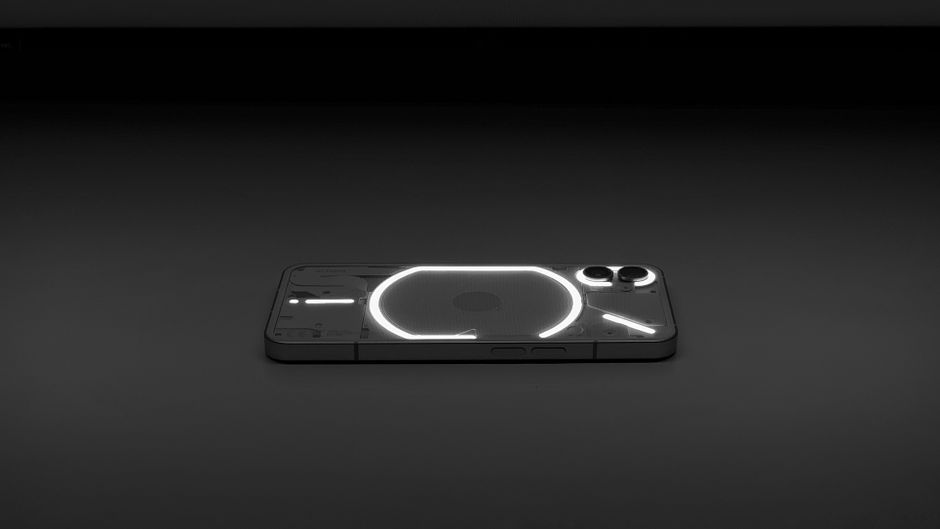
We compare the 2026 Nothing Phone 4a Pro and Google Pixel 10a. Learn which $499 mid-range titan wins in performance, cameras, AI, and battery life.
In 2026, the mid-range smartphone landscape has officially reached a boiling point. Flagship pricing continues to climb toward the stratosphere, leaving everyday consumers looking for premium features at a reasonable cost. This has set the stage for one of the most exciting tech face-offs of the year: the brand-new Nothing Phone 4a Pro versus the Google Pixel 10a. Both phones retail for a starting price of exactly $499, yet they represent entirely different philosophies of mobile design and functionality.
On one side, Nothing is continuing its relentless pursuit of design-first innovation. Under its new cultural direction, the young London-based tech brand has retired the all-plastic and hyper-translucent designs of its previous generation. Instead, the Nothing Phone 4a Pro introduces an incredibly sleek, aircraft-grade aluminum unibody that stands as the thinnest metal unibody phone on the market in 2026. Coupled with a revised, highly functional “Glyph Matrix” micro-LED notification array and a dedicated periscope telephoto lens, Nothing is proving that mid-range does not have to mean compromise.
On the other side, Google’s Pixel 10a represents the ultimate safe bet. Sticking to its tried-and-true formula, Google has delivered a compact, ultra-reliable smartphone centered on world-class computational photography, stock Android integration, and unmatched software support. With the Pixel 10a, Google has also tweaked its physical blueprint, creating a completely flush, bump-free back that feels exceptionally comfortable in the hand. Rather than chasing flashy raw specifications, Google is leaning heavily into its custom Tensor G4 chipset and suite of Gemini-powered artificial intelligence tools to define its value.
This detailed comparison from ComparisonMath dives deep into the specifications, performance, camera qualities, software commitments, and battery endurances of both devices. Our goal is to dissect which of these $499 heavyweights deserves a spot in your pocket as the best mid-range phone of 2026.
To help you understand the hardware differences at a glance, here is a detailed breakdown of the Nothing Phone 4a Pro and Google Pixel 10a technical specifications:
| Feature | Nothing Phone (4a) Pro | Google Pixel 10a |
|---|---|---|
| Starting Price | $499 (8GB/128GB) / $599 (12GB/256GB) | $499 (8GB/128GB) / $599 (8GB/256GB) |
| Dimensions & Weight | 163.7 x 76.6 x 8.0 mm, 210g | 153.9 x 73.0 x 9.0 mm, 183g |
| Build Materials | Gorilla Glass 7i front, Aircraft-grade aluminum unibody back and frame | Gorilla Glass 7i front, Aluminum frame, Matte plastic composite back |
| Dust/Water Protection | IP65 (dust tight and low-pressure water jets) | IP68 (full immersion up to 1.5m for 30 min) |
| Display | 6.83-inch AMOLED, 1.5K (1260×2800), 144Hz, 5000 nits peak | 6.3-inch Actua pOLED, FHD+ (1080×2424), 120Hz, 3000 nits peak |
| Processor | Qualcomm Snapdragon 7 Gen 4 (4nm) | Google Tensor G4 (4nm) |
| RAM & Storage | 8GB or 12GB LPDDR4X RAM | 128GB or 256GB UFS 3.1 | 8GB LPDDR5X RAM | 128GB or 256GB UFS 3.1 |
| Rear Cameras | 50MP Main (Sony, OIS) + 50MP Periscope Telephoto (3.5x optical, OIS) + 8MP Ultra-wide | 48MP Main (OIS) + 13MP Ultra-wide |
| Front Camera | 32MP, f/2.2 | 13MP, f/2.2 (ultrawide) |
| Software & Lifecycle | Android 16, Nothing OS 4.1 (3 OS upgrades, 6 years security) | Android 16 (7 years of OS & security updates) |
| Battery & Charging | 5,080 mAh battery, 50W wired charging (No wireless charging) | 5,100 mAh battery, 30W wired, 10W wireless charging |
To truly understand how these two devices compare, we must look beyond the specification sheets. Each phone has been designed to prioritize different user demographics, meaning their strengths and weaknesses manifest in very distinct ways during daily use.
The design differences between these two phones are night and day. The Nothing Phone 4a Pro features an incredibly bold, techno-brutalist aesthetic. Switching from the plastic backs of older generations, Nothing has utilized an aircraft-grade aluminum unibody that measures a razor-thin 7.95mm. It is currently the slimmest full-metal phone on the market, giving it an incredibly premium, rigid, and cold-to-the-touch feel. However, the aluminum unibody design means that repairability is relatively low, and wireless charging is entirely absent. The back of the phone also showcases the redesigned Glyph Matrix, composed of 137 individually programmable mini-LEDs. This array is larger and twice as bright as previous generations, serving as a functional notification tracker for things like Uber arrivals, timers, and volume levels.
In contrast, the Google Pixel 10a embraces minimalist simplicity. Google has moved away from the prominent protruding camera bar of older Pixels, opting instead for a completely flush back. The rear panel is made of a matte composite plastic that mimics glass incredibly well, surrounded by a sturdy aluminum frame. The Pixel 10a is significantly more compact, lightweight, and ergonomic than the Nothing, making it a joy to use with one hand. It also features superior IP68 dust and water resistance, which allows it to survive full submersion. While the Pixel 10a’s display borders are noticeably thicker than the Nothing’s, its understated and durable chassis is highly appealing to users who want a practical device that doesn’t scream for attention.
When it comes to the display, Nothing has pulled out all the stops to dominate the mid-range segment. The Phone 4a Pro is equipped with a massive 6.83-inch 1.5K AMOLED display that features an adaptive 144Hz refresh rate. Navigating through Nothing OS 4.1 feels buttery smooth, and the screen can reach an astonishing peak brightness of 5,000 nits. This means that even under direct summer sunlight, HDR content remains incredibly vibrant and easy to view. The bezels are razor-thin, and the high screen-to-body ratio provides an immersive multimedia experience that rivals phones costing twice as much.
Google’s Pixel 10a takes a much more conservative route. It features a smaller 6.3-inch Actua pOLED display with a 120Hz refresh rate. While the resolution is limited to FHD+ and the peak brightness tops out at a still-impressive 3,000 nits, the screen is sharp, accurate, and gets plenty bright for outdoor usage. However, the chunky black bezels around the display feel somewhat dated in 2026, especially when placed next to the near-borderless screen of the Nothing Phone 4a Pro. If you watch a lot of video content or play mobile games, the expansive and ultra-bright display of the Nothing is the clear winner here, though those who prefer a smaller, pocket-friendly screen will find the Pixel perfectly adequate.
Under the hood, these devices utilize entirely different processing philosophies. The Nothing Phone 4a Pro is powered by the Qualcomm Snapdragon 7 Gen 4. This 4nm chipset is built for sustained high performance and thermal efficiency. During heavy multitasking or gaming sessions, the Snapdragon 7 Gen 4 keeps the device cool, utilizing its aluminum unibody to dissipate heat efficiently. It handles demanding 3D games with ease, maintaining high frame rates without aggressive thermal throttling. Additionally, Nothing offers up to 12GB of RAM, ensuring that background applications remain cached in memory for long periods.
The Google Pixel 10a relies on the Google Tensor G4, which is the same chip found in Google’s flagship Pixel 10 series counterparts. While the Tensor G4 is highly capable, it is not designed to win raw benchmark competitions. Instead, its architecture is heavily optimized for machine learning tasks and local AI processing. The Pixel 10a excels at processing voice recognition, on-device translation, and complex photographic algorithms almost instantaneously. However, when it comes to high-end gaming or sustained heavy workloads, the Tensor G4 runs hotter and throttles its performance quicker than the Snapdragon. With only 8GB of RAM available, the Pixel 10a is a reliable daily driver but is not the best choice for power users or mobile gamers.
Camera performance is often the deciding factor for mid-range buyers, and this comparison highlights two completely different strategies. The Nothing Phone 4a Pro introduces a remarkably versatile triple-camera setup. It features a 50MP main sensor with optical image stabilization (OIS), a 50MP periscope telephoto lens with 3.5x optical zoom, and an 8MP ultra-wide lens. The dedicated periscope telephoto lens is a massive addition for a $499 phone, allowing users to take sharp, stabilized zoom shots and utilize Nothing’s TrueLens Engine 4 to achieve impressive digital zoom. Photos from the main sensor are sharp and rich, leaning toward a slightly moody, high-contrast aesthetic. The only real weak point is the 8MP ultra-wide, which loses detail around the edges of the frame.
The Google Pixel 10a sticks to a dual-camera system, consisting of a 48MP main sensor and a 13MP ultra-wide. There is no physical telephoto lens, meaning any zoom shots rely entirely on Google’s Super Res Zoom crop. Despite the lack of dedicated zoom hardware, the Pixel 10a remains the king of point-and-shoot consistency. Google’s computational photography algorithms are second to none, delivering perfect dynamic range, realistic skin tones, and unmatched low-light performance through Night Sight. It also includes flagship-tier AI editing tools like Magic Eraser, Best Take, and Zoom Enhance. If you want a phone that guarantees a great photo every single time you press the shutter button, the Pixel 10a is unmatched. However, if you want the creative freedom of a physical optical zoom lens, the Nothing Phone 4a Pro provides incredible hardware versatility.
On the software front, both brands offer clean, bloatware-free interfaces, but their long-term commitments are vastly different. The Nothing Phone 4a Pro runs Android 16 with Nothing OS 4.1. This software skin is highly customized with Nothing’s signature dot-matrix theme, custom widgets, and smooth, interpolated animations. It includes handy features like “Essential Search” (a comprehensive on-device search tool) and “Essential Space” for organizing files. Unfortunately, Nothing only promises 3 major Android OS upgrades and 6 years of security patches. While this is decent, it falls short of the industry leaders.
Google’s Pixel 10a is the gold standard for software longevity. Out of the box, it runs a pristine version of Android 16 and is backed by Google’s legendary 7-year update promise. This means the Pixel 10a will continue to receive major operating system upgrades and security patches all the way until 2033, ensuring the phone remains secure and feature-rich for its entire lifespan. Furthermore, the Pixel 10a is deeply integrated with Google’s Gemini AI ecosystem. Features like Gemini Live, real-time call screening, and Satellite SOS are seamlessly built into the core experience. For users who plan on keeping their phones for several years, Google’s software support is an unbeatable advantage.
Battery and charging specifications represent another set of trade-offs. The Nothing Phone 4a Pro features a 5,080 mAh battery (which is boosted to 5,400 mAh for the Indian market). Combined with the efficient Snapdragon 7 Gen 4, the phone easily delivers outstanding battery life, frequently lasting through a day and a half of heavy usage. When it is time to charge, the 50W fast wired charging can top the battery up to 50% in under 25 minutes. However, because of the phone’s thick aluminum unibody, Nothing had to omit wireless charging entirely, which may be a dealbreaker for some users.
The Google Pixel 10a contains a slightly larger 5,100 mAh battery. Because the Tensor G4 can be somewhat power-hungry under load, the Pixel’s battery life is comparable to the Nothing, easily securing a full day of mixed usage but rarely pushing deep into a second day. Google has improved charging speeds on the Pixel 10a, offering 30W wired charging that reaches 50% in roughly 30 minutes. Crucially, the Pixel 10a retains 10W wireless charging support, offering a level of convenience that the Nothing Phone 4a Pro simply cannot match.
Deciding between the Nothing Phone 4a Pro and the Google Pixel 10a ultimately depends on what you value most in a smartphone. Since both devices are priced at $499, your decision should be guided by your lifestyle and daily usage patterns.
Choose the Nothing Phone 4a Pro if:
Choose the Google Pixel 10a if:
No, the Nothing Phone 4a Pro does not support wireless charging. This omission is primarily due to the phone’s aircraft-grade aluminum unibody construction, which blocks the electromagnetic fields required for wireless power transfer. If wireless charging is an essential feature for your daily routine, the Google Pixel 10a is the better option, as it supports 10W Qi wireless charging.
The answer depends on what you are looking for. The Nothing Phone 4a Pro is more physically versatile because it features a dedicated 50MP periscope telephoto lens with 3.5x optical zoom. However, the Google Pixel 10a delivers superior overall photo consistency, better low-light performance through Night Sight, and more advanced AI editing software. For simple point-and-shoot photography, the Pixel wins, but for creative zoom photography, the Nothing is superior.
The Google Pixel 10a is the clear winner here, offering a class-leading 7 years of major Android OS and security updates (running all the way to 2033). The Nothing Phone 4a Pro offers 3 major Android OS updates and 6 years of security patches. While both phones ship with Android 16, the Pixel will remain supported for much longer.
The Pixel 10a can run most modern mobile games, but it is not optimized for prolonged, high-intensity gaming sessions. The Google Tensor G4 processor tends to run warm under heavy stress and will throttle performance to control thermals. The Nothing Phone 4a Pro, powered by the Snapdragon 7 Gen 4 and housed in a heat-dissipating aluminum unibody, offers a much better gaming experience with sustained frame rates and a smoother 144Hz refresh rate display.
Choosing a winner between these two mid-range powerhouses is incredibly difficult, as both the Nothing Phone 4a Pro and the Google Pixel 10a are stellar devices that offer incredible value at their respective $499 price points.
However, for the vast majority of consumers, the Google Pixel 10a remains the recommended choice and our best overall mid-range phone of 2026. Google has created a remarkably balanced package. By combining unmatched point-and-shoot camera consistency, a highly ergonomic flush-back design, robust IP68 protection, and an outstanding 7-year software commitment, the Pixel 10a is a safe, reliable, and incredibly smart investment that will easily last you for years to come.
With that said, if you are a tech enthusiast who is tired of boring, iterative smartphones, the Nothing Phone 4a Pro is an absolute triumph. It looks, feels, and performs like a flagship phone that should cost twice as much. Its stunning aircraft-grade aluminum chassis, near-borderless 144Hz display, and dedicated periscope telephoto lens are specs you simply do not see at this price tier. If you can live without wireless charging and prefer raw performance over long-term software updates, the Nothing Phone 4a Pro is the most exciting $499 phone you can buy in 2026.
Prices and features mentioned are accurate as of the date of publication. Always check the official provider website for the most current pricing and availability.